Loading...
Abu Bakr vs Afonso de Albuquerque
Afonso de Albuquerque leads by 2.5 pts · 2 figures compared
…
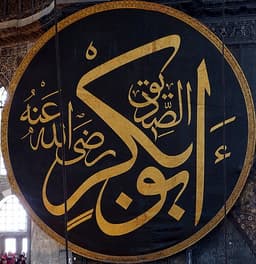
Abu Bakr
Emperor · Medieval
77.1Total
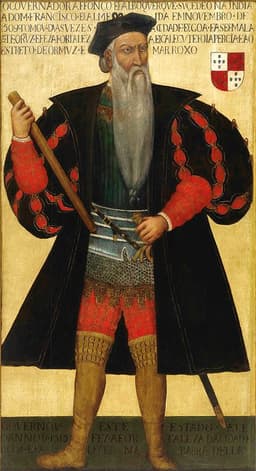
Afonso de Albuquerque
General · Medieval
79.6Total
Basic Information
Born
573
1453
Died
634
1515
Era
Medieval
Medieval
Nationality
Rashidun Caliphate
Portugal
Occupation
Emperor
General
Civilization
Middle Eastern
Western
Score Comparison
Military (10%)
74.7
77.5
Political (20%)
62.7
88.0
Influence (20%)
88.0
80.0
Legacy (20%)
80.0
75.0
Leadership (15%)
77.2
78.0
Strategy (15%)
66.3
82.0
TOTAL
77.1
79.6
Abu Bakr — Complete Timeline
632 AD
Ridda Wars (Apostasy Wars)War◆ Major
Abu Bakr launched military campaigns against Arabian tribes that renounced Islam or refused to pay zakat after Muhammad's death. The wars, led by generals like Khalid ibn al-Walid, reestablished Muslim control over Arabia and consolidated the caliphate.
Ridda WarsConsolidationRashidun
Impact: regional
Election as First CaliphPolitical Action
After the death of Muhammad, Abu Bakr was elected as the first caliph (successor) at Saqifah. His election unified the Muslim community, though it caused controversy among some supporters of Ali. He became the leader of the nascent Islamic state.
CaliphateSuccessionRashidun
Impact: global
633 AD
Compilation of the QuranCultural◆ Major
Abu Bakr ordered the compilation of the Quran into a single written manuscript after many memorizers died in the Ridda Wars. Zayd ibn Thabit collected verses from various sources, creating the first official codex, which later served as the basis for Uthman's standard text.
QuranCompilationRashidun
Impact: globalconstructive
634 AD
Death of Abu BakrPolitical Action◆ Major
Abu Bakr died after a brief illness, having designated Umar as his successor. His caliphate lasted only two years but established the foundations of the Islamic state, including the expansion beyond Arabia and the preservation of the Quran.
DeathSuccessionRashidun
Impact: global
Afonso de Albuquerque — Complete Timeline
1503 AD
First voyage to IndiaWar◆ Major
Afonso de Albuquerque led a fleet to India, establishing the first Portuguese fort at Cochin. This voyage laid the foundation for Portuguese control of the Indian Ocean trade.
ExplorationColonialismIndia
Impact: global
1510 AD
Conquest of GoaWar◆ Major
Albuquerque captured Goa from the Sultan of Bijapur. He made Goa the capital of Portuguese India, a position it held for over 400 years.
ConquestColonialismIndia
Impact: regional
1511 AD
Conquest of MalaccaWar◆ Major
Albuquerque led a Portuguese fleet to capture the strategic port of Malacca. This gave Portugal control of the spice trade route between the Indian Ocean and the Pacific.
ConquestSpice TradeSoutheast Asia
Impact: global
1513 AD
Siege of AdenWar
Albuquerque attempted to capture Aden in Yemen but failed. This failure prevented Portugal from controlling the entrance to the Red Sea and limited their influence in the region.
SiegeFailureRed Sea
Impact: regional
1515 AD
Death at seaOther◆ Major
Afonso de Albuquerque died at sea off the coast of Goa, possibly from illness or poison. His death left the Portuguese Empire in the Indian Ocean without its most capable leader.
DeathLeadershipEmpire
Impact: regionaltragic
Expert Analysis
Origins
Afonso de Albuquerque (1453–1515) was born in Alhandra, Portugal, to a noble family with military traditions. His early career included service in North Africa under King Afonso V, where he honed his naval and combat skills. Abu Bakr (c. 573–634) was born in Mecca to the Quraysh tribe, a wealthy merchant clan. He was an early convert to Islam and a close companion of Prophet Muhammad, earning the title "As-Siddiq" (the truthful). Both men rose from privileged backgrounds but in vastly different contexts: Albuquerque in a maritime imperial power, Abu Bakr in a nascent religious community.
Rise to Power
Albuquerque rose through merit and royal favor. He participated in the first Portuguese voyage to India in 1503 and later was appointed governor of Portuguese India in 1509. His strategic brilliance led to the conquest of Goa in 1510 and Malacca in 1511, establishing Portuguese dominance in the Indian Ocean. Abu Bakr's rise was tied to his unwavering support for Muhammad. After the Prophet's death in 632, Abu Bakr was elected as the first caliph despite opposition, unifying the Muslim community. He immediately faced the Ridda Wars (apostasy wars) against tribes that renounced Islam, which he crushed with military campaigns led by Khalid ibn al-Walid.
Leadership & Governance
Albuquerque was a visionary imperialist who built fortresses, established trade posts, and implemented a policy of mixing with local populations through marriage. He centralized power and enforced Portuguese law, but his harsh tactics earned him enemies. His governance focused on controlling spice routes and breaking Muslim trade networks. Abu Bakr's leadership was characterized by religious devotion and administrative consolidation. He compiled the Quran into a single book, expanded Islamic rule into Syria and Iraq, and maintained unity through strong military command. His caliphate lasted only two years but laid the foundation for the Rashidun expansion.
Triumph & Tragedy
Albuquerque's greatest triumphs were the conquests of Goa and Malacca, which secured Portugal's control of the Indian Ocean. His tragedy came in 1515 when he died at sea, likely from illness, after being recalled to Portugal by a rival court faction. He died embittered, believing his achievements were unappreciated. Abu Bakr's triumph was the successful suppression of the Ridda Wars and the compilation of the Quran, preserving Islam. His tragedy was his short reign; he died of illness in 634, leaving the caliphate to Umar, but his legacy was secure.
Character & Destiny
Albuquerque was ruthless, ambitious, and strategically brilliant. He famously said, "The more you conquer, the more you have to conquer." His destiny was to be a pioneer of European colonialism. Abu Bakr was known for his piety, humility, and decisiveness. He was called "the second of two in the cave" for his role in hiding with Muhammad. His destiny was as the first caliph, the successor to the Prophet.
Legacy
Albuquerque is considered the founder of the Portuguese Empire in Asia. His naval strategies influenced European imperialism for centuries. He is remembered in Portugal as a national hero, though modern critiques highlight his brutality. Abu Bakr is revered in Islam as one of the "Rightly Guided Caliphs" and a model of leadership. His compilation of the Quran ensured the preservation of Islamic scripture. The Ridda Wars cemented the unity of Arabia.
Conclusion
Both leaders were empire builders, but their contexts differ sharply. Albuquerque expanded a maritime empire through force and trade, while Abu Bakr unified a religious community through faith and war. In terms of lasting impact on global history, Abu Bakr's role in establishing Islam as a political and religious force arguably surpasses Albuquerque's colonial achievements. However, Albuquerque's strategic innovations directly shaped European expansion. Numerically, Albuquerque scores higher overall (78.5 vs 76.0), particularly in military prowess and political influence, but Abu Bakr's legacy is more profound in terms of religious and cultural continuity. The score gap of 2.5 reflects Albuquerque's edge in tangible empire-building, but Abu Bakr's intangible impact on billions of Muslims is immeasurable. Ultimately, both were transformative figures who shaped their worlds.
Rankings
🥇
Afonso de AlbuquerqueLeader
Mil: 77.5Pol: 88.0Inf: 80.0
79.6
🥈
Abu Bakr
Mil: 74.7Pol: 62.7Inf: 88.0
77.1
+2.5 behind
How This Comparison Works
Algorithm
Each figure is scored on 6 dimensions (0—100 scale) based on structured historical data: Military (10%), Political (20%), Influence (20%), Legacy (20%), Leadership (15%), Strategy (15%). The weighted total produces the final ranking.
Data Sources
Scores are computed from structured sub-indicators in the database. Scale factors adjust for era (Ancient ×0.85, Modern ×1.0) and civilization size (Eastern ×1.05, Other ×0.80) to account for differences in population and military scale.
Maximum 3 Figures
Comparisons are limited to 2—3 figures to ensure readability and statistical meaningfulness.
Error Margins
±5 points per dimension — Sub-scores are derived from historical records with inherent uncertainty. Two figures within 5 points on a dimension should be considered roughly equivalent in that area.
Total Score Accuracy
±3 points overall — The weighted combination of 6 dimensions produces a total score with approximately ±3 points of uncertainty. Differences of less than 3 points are not statistically significant— the figures are effectively tied.
Known Limitations
- Historical records are incomplete and uneven across civilizations
- Figures from oral-tradition societies may be underrepresented
- Occupation labels can misclassify multi-role figures
- Scores measure capability and impact, not moral character
- Quantitative scoring is a comparison tool, not absolute truth
Capability Radar
Military (10%) — Battles & Warfare
Battles
65
85
Win Rate
70
80
Expansion
85
95
Political (20%) — Governance & Reform
Reform
85
80
Diplomacy
80
85
Economy
70
80
Influence (20%) — Cultural & Global Reach
Cultural
70
70
Global
85
85
Legacy (20%) — Historical Impact
Historical
85
85
Longevity
90
80
Leadership (15%) — Power & Stability
Tenure
60
70
Stability
75
65
Strategy (15%) — Tactics & Innovation
Strategy
75
95
Tactics
60
90
Reform
80
75
Similar Comparisons
Comments & Discussion
No comments yet. Be the first to share your thoughts!