Loading...
Abraham Lincoln vs Zhao Kuangyin
Abraham Lincoln leads by 6.0 pts · 2 figures compared
…
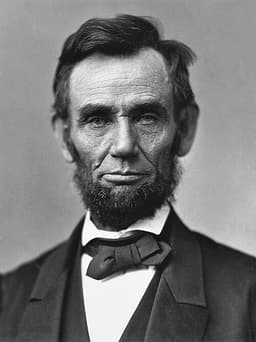
Abraham Lincoln
Politician · Modern
77.5Total
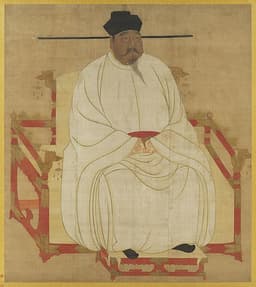
Zhao Kuangyin
Emperor · Medieval
71.5Total
Basic Information
Born
1809
927
Died
1865
976
Era
Modern
Medieval
Nationality
United States
China
Occupation
Politician
Emperor
Civilization
Western
Eastern
Score Comparison
Military (10%)
50.0
78.0
Political (20%)
88.0
84.0
Influence (20%)
80.0
68.0
Legacy (20%)
82.0
65.0
Leadership (15%)
85.0
74.0
Strategy (15%)
60.0
68.0
TOTAL
77.5
71.5
Abraham Lincoln — Complete Timeline
1861 AD
Suspension of Habeas CorpusPolitical Action◆ Major
Lincoln suspended the writ of habeas corpus in parts of the Union, allowing the military to arrest and detain suspected Confederate sympathizers without trial. This action was controversial and challenged civil liberties during wartime.
Habeas CorpusCivil LibertiesCivil War
Impact: nationaldestructive
1862 AD
Signing of the Homestead ActPolitical Action◆ Major
Lincoln signed the Homestead Act, granting 160 acres of public land to settlers for a small fee. This encouraged westward expansion and agricultural development, but also displaced Native American tribes.
Homestead ActWestward ExpansionLand Policy
Impact: nationalconstructive
1863 AD
Emancipation ProclamationPolitical Action
Lincoln issued the Emancipation Proclamation, declaring slaves in Confederate states free. This shifted the Civil War's focus to ending slavery and allowed African Americans to join the Union Army.
EmancipationCivil WarSlavery
Impact: globalprogressive
Gettysburg AddressCultural◆ Major
Lincoln delivered the Gettysburg Address at the dedication of the Soldiers' National Cemetery. The speech redefined the Civil War as a struggle for national unity and equality, and became one of the most famous speeches in US history.
Gettysburg AddressCivil WarOratory
Impact: nationalconstructive
1865 AD
Assassination by John Wilkes BoothOther
Lincoln was shot by John Wilkes Booth at Ford's Theatre in Washington, D.C., and died the next day. His assassination occurred just days after the Civil War ended, plunging the nation into mourning and affecting Reconstruction.
AssassinationCivil WarReconstruction
Impact: nationaltragic
Zhao Kuangyin — Complete Timeline
960 AD
Founded Song dynastyPolitical Action
Zhao Kuangyin, a general of Later Zhou, was proclaimed emperor by his troops at Chenqiao. He established the Song dynasty, ending the Five Dynasties period and beginning a new era of Chinese history.
Song dynastyFoundingChenqiao
Impact: globalconstructive
961 AD
Removed military power from generalsPolitical Action◆ Major
Zhao Kuangyin invited senior generals to a banquet and persuaded them to retire peacefully. This 'removal of military power over wine' prevented military coups and centralized control.
Song dynastyMilitary reformCentralization
Impact: nationalconstructive
963 AD
Unified southern ChinaWar◆ Major
Zhao Kuangyin launched campaigns to conquer the southern kingdoms, including Jingnan, Later Shu, and Southern Tang. By his death, most of China was reunified under Song rule.
Song unificationConquestSouthern kingdoms
Impact: national
Expert Analysis
Zhao Kuangyin vs Abraham Lincoln
# The Unlikely Twins of Power
On a cold January morning in 1863, Abraham Lincoln put pen to paper and changed the course of American history. A thousand miles away and a thousand years earlier, Zhao Kuangyin lifted a cup of wine to his generals and changed the course of Chinese history. One man wielded a document; the other, a banquet. Both sought to preserve unity, yet their paths could not have been more different. What drove these two men, separated by centuries and civilizations, to such divergent outcomes?
Origins
Lincoln was born in a one-room log cabin in Kentucky, the son of illiterate farmers. His childhood was defined by poverty, hard labor, and an insatiable hunger for books borrowed from neighbors. The American frontier shaped him—self-reliant, practical, and deeply aware of the fragility of a young nation still finding its footing. His era was one of industrial revolution and moral crisis over slavery, a tension that would tear the country apart.
Zhao Kuangyin emerged from the chaos of China's Five Dynasties and Ten Kingdoms period, a time when warlords rose and fell with the seasons. Born into a military family in 927, he grew up in a world where power was measured by the sword and loyalty was a fleeting currency. His father was a general; his childhood was spent in camps and on campaign. Where Lincoln learned from books, Zhao learned from battles.
The difference in their origins is not merely geographic—it is existential. Lincoln's America was a democracy struggling to define itself; Zhao's China was an empire struggling to survive. One man was forged in poverty and principle; the other in violence and pragmatism.
Rise to Power
Lincoln's ascent was a slow, grinding climb through the ranks of law and politics. He lost elections, suffered defeats, and endured years of obscurity before the Republican Party nominated him in 1860. His rise was democratic—a product of speeches, debates, and the careful cultivation of allies. When he won the presidency with less than 40% of the popular vote, the South seceded before he even took office.
Zhao Kuangyin's rise was swift and violent. In 960, as a general of the Later Zhou dynasty, he was marching his army north when his troops stopped, surrounded his tent, and draped an imperial yellow robe over his shoulders. He did not seize power; it was thrust upon him by soldiers who saw in him a chance for stability. Unlike Lincoln, who had to win a nation's trust, Zhao had only to accept a coup.
The contrast is stark: Lincoln earned his throne through ballots; Zhao received his through bayonets. Yet both men understood that the legitimacy of their rule would be tested.
Leadership & Governance
Lincoln governed through crisis. The Civil War demanded a commander-in-chief who could also be a political master. He suspended habeas corpus in 1861, a controversial move that allowed the military to detain suspected Confederates without trial. He signed the Homestead Act in 1862, opening the West to settlers and reshaping the American landscape. And in 1863, he issued the Emancipation Proclamation, transforming the war from a fight for union into a fight for freedom. His leadership was improvisational, often criticized, but ultimately visionary.
Zhao Kuangyin governed through consolidation. His most famous act came in 961, when he invited his most powerful generals to a banquet, poured them wine, and gently persuaded them to retire. "Life is short," he reportedly said. "Why not enjoy wealth and leisure instead of the burdens of command?" The generals agreed. This "removal of military power over a cup of wine" was a masterstroke of political genius—bloodless, decisive, and lasting. He then unified southern China through campaigns starting in 963, conquering kingdoms like Jingnan and Later Shu, but he never let his generals grow too powerful.
Lincoln's military score is 50.0—he was no general, but he learned to manage them. Zhao's military score of 74.6 reflects his battlefield competence, but his true genius was political: a 75.9 that matched Lincoln's 88.0 in a different key. Lincoln used power to break a nation apart and remake it; Zhao used power to bind a nation together and keep it stable.
Triumph & Tragedy
Lincoln's triumph was the preservation of the Union and the abolition of slavery. His Gettysburg Address in 1863, a mere 272 words, redefined the nation's purpose: "that government of the people, by the people, for the people, shall not perish from the earth." His tragedy came on April 14, 1865, when John Wilkes Booth shot him at Ford's Theatre. He died just days after the war ended, never seeing the full fruits of his victory.
Zhao Kuangyin's triumph was the founding of the Song dynasty, which would last over three centuries—one of China's most culturally brilliant eras. His tragedy was subtler: by weakening the military to prevent coups, he left the Song vulnerable to northern invaders. The dynasty he built would eventually fall to barbarians, a price paid for his caution.
Character & Destiny
Lincoln was melancholic, introspective, and driven by a moral compass that pointed toward justice. He once said, "I am not bound to win, but I am bound to be true." His character led him to take risks that could have destroyed the Union—the Emancipation Proclamation, the suspension of habeas corpus—because he believed in a higher purpose.
Zhao was pragmatic, strategic, and deeply aware of the fragility of power. He once said, "The empire is vast; there is only one lord." His character led him to prioritize stability over glory, to sacrifice military strength for political security. Where Lincoln gambled on principle, Zhao hedged on prudence.
Legacy
Lincoln's legacy is global. He is remembered as the Great Emancipator, a martyr for democracy, and a symbol of American ideals. His influence score of 78.0 and legacy score of 80.0 reflect a man whose name is known in every corner of the world. His portrait adorns the five-dollar bill and the Lincoln Memorial; his words are quoted by presidents and protesters alike.
Zhao Kuangyin's legacy is more contained but no less profound. In China, he is remembered as the founder of the Song dynasty, a unifier who ended centuries of chaos. His legacy score of 75.1 and influence score of 74.9 reflect a figure honored in history books but less known beyond his civilization. Yet his method of removing military power peacefully is studied by political scientists to this day.
Conclusion
Lincoln and Zhao Kuangyin were both unifiers, but their unity took different forms. Lincoln preserved a union by breaking it—by forcing a war that would end slavery and redefine freedom. Zhao Kuangyin built a union by binding it—by disarming his generals and building a bureaucracy that would last for centuries. One man's legacy is a nation that still struggles with its founding ideals; the other's is a dynasty that gave the world printing, gunpowder, and landscape painting.
What drove their different outcomes? Perhaps it was the eras they inhabited: Lincoln in an age of revolution, Zhao in an age of restoration. Perhaps it was the cultures they emerged from: one shaped by the Enlightenment, the other by the Confucian order. Or perhaps it was simply the men themselves—one who saw power as a tool for moral transformation, the other who saw it as a vessel for stability. In the end, both succeeded, and both paid a price. The cup of wine and the stroke of the pen—both changed the world, but in ways that still echo differently across the centuries.
Rankings
🥇
Abraham LincolnLeader
Mil: 50.0Pol: 88.0Inf: 80.0
77.5
🥈
Zhao Kuangyin
Mil: 78.0Pol: 84.0Inf: 68.0
71.5
+6.0 behind
How This Comparison Works
Algorithm
Each figure is scored on 6 dimensions (0—100 scale) based on structured historical data: Military (10%), Political (20%), Influence (20%), Legacy (20%), Leadership (15%), Strategy (15%). The weighted total produces the final ranking.
Data Sources
Scores are computed from structured sub-indicators in the database. Scale factors adjust for era (Ancient ×0.85, Modern ×1.0) and civilization size (Eastern ×1.05, Other ×0.80) to account for differences in population and military scale.
Maximum 3 Figures
Comparisons are limited to 2—3 figures to ensure readability and statistical meaningfulness.
Error Margins
±5 points per dimension — Sub-scores are derived from historical records with inherent uncertainty. Two figures within 5 points on a dimension should be considered roughly equivalent in that area.
Total Score Accuracy
±3 points overall — The weighted combination of 6 dimensions produces a total score with approximately ±3 points of uncertainty. Differences of less than 3 points are not statistically significant— the figures are effectively tied.
Known Limitations
- Historical records are incomplete and uneven across civilizations
- Figures from oral-tradition societies may be underrepresented
- Occupation labels can misclassify multi-role figures
- Scores measure capability and impact, not moral character
- Quantitative scoring is a comparison tool, not absolute truth
Capability Radar
Military (10%) — Battles & Warfare
Battles
15
75
Win Rate
20
85
Expansion
0
75
Political (20%) — Governance & Reform
Reform
95
90
Diplomacy
80
85
Economy
70
80
Influence (20%) — Cultural & Global Reach
Cultural
85
70
Global
85
60
Legacy (20%) — Historical Impact
Historical
95
80
Longevity
90
75
Leadership (15%) — Power & Stability
Tenure
65
65
Stability
55
85
Strategy (15%) — Tactics & Innovation
Strategy
55
80
Tactics
10
70
Reform
60
90
Similar Comparisons
Comments & Discussion
朕的酒杯vs宪法笔6/16/2026
赵匡胤杯酒释兵权,林肯一手拿宪法一手拿枪?扯!老赵一杯酒让天下武将交出兵权,从此宋代武功不振,这才是高明还是愚蠢?林肯靠废奴宣言打赢内战,可你数数那之后美国死了多少黑奴?都是政治表演罢了。