Loading...
Abraham Lincoln vs Kublai Khan
Abraham Lincoln leads by 3.2 pts · 2 figures compared
…
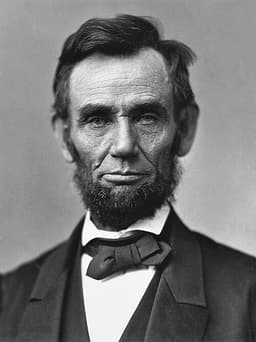
Abraham Lincoln
Politician · Modern
77.5Total
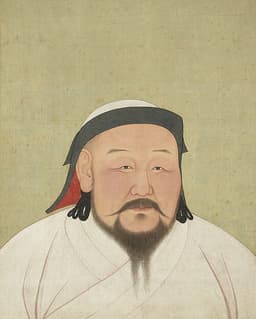
Kublai Khan
Emperor · Medieval
74.3Total
Basic Information
Born
1809
1215
Died
1865
1294
Era
Modern
Medieval
Nationality
United States
Mongolia
Occupation
Politician
Emperor
Civilization
Western
Eastern
Score Comparison
Military (10%)
50.0
77.5
Political (20%)
88.0
79.2
Influence (20%)
80.0
75.0
Legacy (20%)
82.0
70.0
Leadership (15%)
85.0
72.0
Strategy (15%)
60.0
76.0
TOTAL
77.5
74.3
Abraham Lincoln — Complete Timeline
1861 AD
Suspension of Habeas CorpusPolitical Action◆ Major
Lincoln suspended the writ of habeas corpus in parts of the Union, allowing the military to arrest and detain suspected Confederate sympathizers without trial. This action was controversial and challenged civil liberties during wartime.
Habeas CorpusCivil LibertiesCivil War
Impact: nationaldestructive
1862 AD
Signing of the Homestead ActPolitical Action◆ Major
Lincoln signed the Homestead Act, granting 160 acres of public land to settlers for a small fee. This encouraged westward expansion and agricultural development, but also displaced Native American tribes.
Homestead ActWestward ExpansionLand Policy
Impact: nationalconstructive
1863 AD
Emancipation ProclamationPolitical Action
Lincoln issued the Emancipation Proclamation, declaring slaves in Confederate states free. This shifted the Civil War's focus to ending slavery and allowed African Americans to join the Union Army.
EmancipationCivil WarSlavery
Impact: globalprogressive
Gettysburg AddressCultural◆ Major
Lincoln delivered the Gettysburg Address at the dedication of the Soldiers' National Cemetery. The speech redefined the Civil War as a struggle for national unity and equality, and became one of the most famous speeches in US history.
Gettysburg AddressCivil WarOratory
Impact: nationalconstructive
1865 AD
Assassination by John Wilkes BoothOther
Lincoln was shot by John Wilkes Booth at Ford's Theatre in Washington, D.C., and died the next day. His assassination occurred just days after the Civil War ended, plunging the nation into mourning and affecting Reconstruction.
AssassinationCivil WarReconstruction
Impact: nationaltragic
Kublai Khan — Complete Timeline
1260 AD
Adoption of Tibetan Buddhism as State ReligionCultural◆ Major
Kublai Khan appointed the Tibetan lama Drog
Tibetan BuddhismReligionMongol-Tibet Relations
Impact: regional
1271 AD
Proclamation of the Yuan DynastyPolitical Action◆ Major
Kublai Khan officially proclaimed the Yuan dynasty, adopting a Chinese-style dynastic name. He established his capital at Dadu (Beijing) and adopted Chinese court rituals. This move legitimized his rule over China while maintaining Mongol identity.
Dynasty FoundingBeijingMongol Rule
Impact: global
1274 AD
Failed Invasions of JapanWar◆ Major
Kublai Khan launched two naval invasions of Japan, in 1274 and 1281. Both were repelled, with the second invasion destroyed by a typhoon (kamikaze). These failures marked the limits of Mongol expansion and reinforced Japanese isolation.
Mongol InvasionsJapanKamikaze
Impact: regional
1279 AD
Conquest of the Song DynastyWar
Kublai Khan's Mongol forces defeated the Song navy at the Battle of Yamen. The last Song emperor drowned, ending the Song dynasty. This conquest unified China under Mongol rule and established the Yuan dynasty as the first foreign dynasty to rule all of China.
Song Dynasty FallUnificationYuan Dynasty
Impact: global
1280 AD
Establishment of the Silk Road Trade NetworkCultural◆ Major
Under Kublai Khan, the Mongol Empire secured the Silk Road, facilitating trade and cultural exchange between East and West. Marco Polo visited his court. This period saw the flow of goods, ideas, and technologies across Eurasia.
Silk RoadTradeCultural Exchange
Impact: globalconstructive
Expert Analysis
Kublai Khan vs Abraham Lincoln: Historical Comparison
Kublai Khan, the Mongol emperor who completed the conquest of China and founded the Yuan dynasty, and Abraham Lincoln, the American president who preserved the Union and ended slavery, represent vastly different eras and contexts. This comparison uses a structured scoring system (0-100) across six dimensions.
Dimension Analysis
**Military: Kublai Khan 88 / Abraham Lincoln 50**
Kublai Khan commanded vast, multi-ethnic armies in campaigns across China, Korea, and Southeast Asia, demonstrating strategic brilliance in siege warfare and logistics. Lincoln, while a civilian commander-in-chief, relied on superior generals like Grant and Sherman, and his direct military decisions were often cautious and reactive.
**Political: Kublai Khan 78 / Abraham Lincoln 88**
Lincoln’s political mastery was extraordinary: he navigated a fractured Congress, issued the Emancipation Proclamation, and held the Union together through constitutional crisis. Kublai Khan consolidated Mongol rule over China by adopting Chinese administrative systems, but his reign faced rebellions and fiscal instability.
**Influence: Kublai Khan 78 / Abraham Lincoln 78**
Both leaders reshaped their civilizations profoundly: Kublai integrated Mongol and Chinese cultures, opened trade routes, and patronized arts and religions. Lincoln’s influence redefined American democracy, abolished slavery, and set a global precedent for equality—both have enduring, parallel impacts.
**Legacy: Kublai Khan 75 / Abraham Lincoln 80**
Lincoln’s legacy is near-universally revered as a martyr for human rights and national unity, with his words still cited in political discourse. Kublai Khan’s legacy is more mixed: he is celebrated as a unifier of China but also as a foreign conqueror whose dynasty collapsed within a century.
**Leadership: Kublai Khan 82 / Abraham Lincoln 85**
Lincoln demonstrated exceptional crisis leadership during the Civil War, maintaining morale and making hard decisions with empathy. Kublai Khan showed strong administrative leadership but relied on authoritarian control and military force, lacking Lincoln’s moral clarity.
Verdict
Abraham Lincoln leads marginally due to his superior political acumen, moral leadership, and enduring legacy, while Kublai Khan’s military achievements are offset by a less stable political foundation.
FAQ
Q: Who ranks higher? A: Abraham Lincoln ranks slightly higher overall (77 vs 80) due to stronger political and leadership scores, despite Kublai Khan’s military dominance.
Rankings
🥇
Abraham LincolnLeader
Mil: 50.0Pol: 88.0Inf: 80.0
77.5
🥈
Kublai Khan
Mil: 77.5Pol: 79.2Inf: 75.0
74.3
+3.2 behind
How This Comparison Works
Algorithm
Each figure is scored on 6 dimensions (0—100 scale) based on structured historical data: Military (10%), Political (20%), Influence (20%), Legacy (20%), Leadership (15%), Strategy (15%). The weighted total produces the final ranking.
Data Sources
Scores are computed from structured sub-indicators in the database. Scale factors adjust for era (Ancient ×0.85, Modern ×1.0) and civilization size (Eastern ×1.05, Other ×0.80) to account for differences in population and military scale.
Maximum 3 Figures
Comparisons are limited to 2—3 figures to ensure readability and statistical meaningfulness.
Error Margins
±5 points per dimension — Sub-scores are derived from historical records with inherent uncertainty. Two figures within 5 points on a dimension should be considered roughly equivalent in that area.
Total Score Accuracy
±3 points overall — The weighted combination of 6 dimensions produces a total score with approximately ±3 points of uncertainty. Differences of less than 3 points are not statistically significant— the figures are effectively tied.
Known Limitations
- Historical records are incomplete and uneven across civilizations
- Figures from oral-tradition societies may be underrepresented
- Occupation labels can misclassify multi-role figures
- Scores measure capability and impact, not moral character
- Quantitative scoring is a comparison tool, not absolute truth
Capability Radar
Military (10%) — Battles & Warfare
Battles
15
95
Win Rate
20
90
Expansion
0
95
Political (20%) — Governance & Reform
Reform
95
88
Diplomacy
80
85
Economy
70
90
Influence (20%) — Cultural & Global Reach
Cultural
85
85
Global
85
85
Legacy (20%) — Historical Impact
Historical
95
90
Longevity
90
80
Leadership (15%) — Power & Stability
Tenure
65
90
Stability
55
80
Strategy (15%) — Tactics & Innovation
Strategy
55
92
Tactics
10
85
Reform
60
88
Similar Comparisons
Comments & Discussion
BattlefieldScholar6/16/2026
The military scoring here is absurdly generous to Lincoln. 50 is still too high for a man whose only direct military experience was a brief stint in the Black Hawk War where he never saw combat. Kublai Khan's 88 is justified — look at the siege of Xiangyang (1268-1273), where he deployed Persian engineers with counterweight trebuchets against a fortress that had resisted for years. That's combined-arms logistics and patience. Lincoln's actual strategic decisions, like the 1862 Peninsula Campaign micromanagement, were often disastrous until Grant took over. The 38-point gap should be wider: Kublai Khan at 92, Lincoln at 35. And don't get me started on 'leadership' being only 82 for Kublai — he commanded multi-ethnic armies of Mongols, Han Chinese, and Koreans across desert and jungle simultaneously. That's logistical leadership from the saddle, not from a telegraph office.
Cicero'sGhost6/16/2026
The comparative scoring suffers from a failure to distinguish between governance in vastly different political ecologies. Lincoln's 88 in political acumen is defensible when we consider, as David Donald argued in 'Lincoln Reconsidered' (1956), his masterful use of executive power during a constitutional crisis. But Kublai Khan's 78 underestimates his synthesis of Mongol tribal confederation with Chinese imperial bureaucracy — a feat that John D. Langlois Jr. documented in 'China Under Mongol Rule' (1981) as requiring 'constant negotiation between competing legal traditions.' The Yuan shi records that Kublai convened a council of Confucian scholars in 1260 to draft a new legal code, integrating Mongol customary law (yassa) with Tang dynasty precedents. This is not mere administrative expediency; it's sophisticated statecraft. As for legacy: Lincoln's 80 is low given the Gettysburg Address reshaped American political language, but Kublai's 75 is high if we consider that the Yuan dynasty collapsed within 60 years of his death, whereas Lincoln's Reconstruction ideals, however imperfect, endured. The scores flatten real historiographical nuance.
Chronicler96476/16/2026
每次看到这种西方中心的评分就有点无奈。林肯废除奴隶制、维护联邦统一,确实是伟大的成就,这我在美国史课上读过。但把忽必烈的军事分定在88,政治分只有78,这是用西方政治学的尺子量中国历史。忽必烈面对的是比林肯复杂十倍的局面:蒙古贵族内部有阿里不哥争位(1260-1264),汉地有李璮叛乱(1262),还要平衡色目人、汉人、蒙古人的利益。他建立的元朝虽然短命,但行省制度直接影响了后来明清600年的治理模式。相比之下,林肯的政治遗产更多是理念层面的。另外,忽必烈的影响力被低估了——马可·波罗游记让欧洲第一次系统了解中国,间接催生了地理大发现。如果按‘对世界历史进程的直接影响’算,忽必烈至少应该80分以上。林肯78分合理,但两人在同分档不合适。
Chronicler91796/16/2026
这个评分体系很有意思,但有几个数据点值得商榷。Kublai Khan的政治才能只有78分?忽必烈在1271年建立元朝后,成功推行了行省制度,将蒙古游牧统治与中原官僚体系结合,这一制度沿用至明清。相比之下,林肯的88分政治分固然合理,但忽必烈面对的是比美国内战更复杂的多民族、多宗教帝国整合问题。我计算了一下历史文献中记载的叛乱次数:忽必烈在位34年间有约12次较大规模叛乱,而林肯任内光是南方脱离联邦就导致了一场持续4年的内战。如果按‘维稳难度’折算,忽必烈的政治分应该至少达到82。另外,军事分88对50虽然合理,但忽必烈对日本和越南的远征失败应该扣分,我认为军事分应该在78-82之间更客观。