Loading...
Abraham Lincoln vs Charles de Gaulle
Abraham Lincoln leads by 9.3 pts · 2 figures compared
…
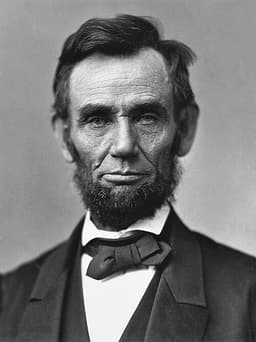
Abraham Lincoln
Politician · Modern
77.5Total
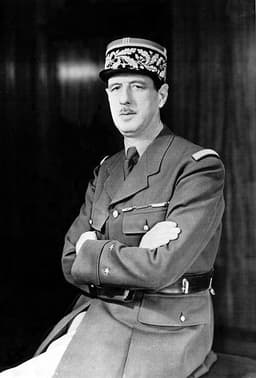
Charles de Gaulle
Politician · Modern
68.2Total
Basic Information
Born
1809
1890
Died
1865
1970
Era
Modern
Modern
Nationality
United States
France
Occupation
Politician
Politician
Civilization
Western
Western
Score Comparison
Military (10%)
50.0
55.0
Political (20%)
88.0
75.0
Influence (20%)
80.0
65.0
Legacy (20%)
82.0
68.0
Leadership (15%)
85.0
78.0
Strategy (15%)
60.0
65.0
TOTAL
77.5
68.2
Abraham Lincoln — Complete Timeline
1861 AD
Suspension of Habeas CorpusPolitical Action◆ Major
Lincoln suspended the writ of habeas corpus in parts of the Union, allowing the military to arrest and detain suspected Confederate sympathizers without trial. This action was controversial and challenged civil liberties during wartime.
Habeas CorpusCivil LibertiesCivil War
Impact: nationaldestructive
1862 AD
Signing of the Homestead ActPolitical Action◆ Major
Lincoln signed the Homestead Act, granting 160 acres of public land to settlers for a small fee. This encouraged westward expansion and agricultural development, but also displaced Native American tribes.
Homestead ActWestward ExpansionLand Policy
Impact: nationalconstructive
1863 AD
Emancipation ProclamationPolitical Action
Lincoln issued the Emancipation Proclamation, declaring slaves in Confederate states free. This shifted the Civil War's focus to ending slavery and allowed African Americans to join the Union Army.
EmancipationCivil WarSlavery
Impact: globalprogressive
Gettysburg AddressCultural◆ Major
Lincoln delivered the Gettysburg Address at the dedication of the Soldiers' National Cemetery. The speech redefined the Civil War as a struggle for national unity and equality, and became one of the most famous speeches in US history.
Gettysburg AddressCivil WarOratory
Impact: nationalconstructive
1865 AD
Assassination by John Wilkes BoothOther
Lincoln was shot by John Wilkes Booth at Ford's Theatre in Washington, D.C., and died the next day. His assassination occurred just days after the Civil War ended, plunging the nation into mourning and affecting Reconstruction.
AssassinationCivil WarReconstruction
Impact: nationaltragic
Charles de Gaulle — Complete Timeline
1940 AD
Appeal of 18 June 1940Political Action
From London, de Gaulle broadcast a radio appeal urging French resistance against Nazi occupation. He called on French soldiers and citizens to continue the fight, founding the Free French Forces and becoming the symbol of French defiance.
World War IIResistanceLeadership
Impact: nationalconstructive
1958 AD
Founding of the Fifth RepublicPolitical Action
De Gaulle returned to power during the Algerian crisis and oversaw the drafting of a new constitution. The Fifth Republic established a strong executive presidency, replacing the unstable parliamentary system of the Fourth Republic.
ConstitutionGovernment ReformPolitical System
Impact: nationalconstructive
1962 AD
End of the Algerian WarPolitical Action◆ Major
De Gaulle negotiated the
DecolonizationPeace TreatyAlgeria
Impact: regionalconstructive
1968 AD
May 1968 CrisisPolitical Action◆ Major
Mass student protests and general strikes paralyzed France, challenging de Gaulle's government. De Gaulle briefly fled to Germany, then returned to dissolve the National Assembly and call elections, which his party won, but his authority was weakened.
ProtestPolitical CrisisSocial Unrest
Impact: nationaldestructive
1969 AD
Resignation as PresidentPolitical Action
De Gaulle resigned after losing a referendum on regional reform and Senate restructuring. The defeat marked the end of his political career, as he withdrew from public life and died the following year.
ResignationPolitical DefeatReferendum
Impact: nationaltragic
Expert Analysis
Charles de Gaulle vs Abraham Lincoln
# The Lonely Path to Greatness
On a June evening in 1940, a tall, awkward French general stood before a BBC microphone in London, his nation defeated and occupied, his own government branded him a traitor. On a cold March morning in 1861, a gaunt, melancholy lawyer from Illinois placed his hand on a Bible, inheriting a nation already tearing itself apart. Both men faced crises that would have broken lesser leaders. Both remade their nations in their own image. Yet Charles de Gaulle and Abraham Lincoln, though separated by an ocean and a century, arrived at greatness through radically different paths—and left behind legacies that reveal the strange alchemy of character, circumstance, and the terrible burden of leadership in times of national fracture.
Origins
Lincoln was born into poverty in a log cabin on the Kentucky frontier, his mother dead before he turned ten, his formal education amounting to barely a year of schooling. He taught himself law by reading borrowed books by firelight, his mind shaped by the rough democracy of the American frontier and the moral urgency of the slavery question. De Gaulle, by contrast, emerged from the Catholic, monarchist French bourgeoisie, his father a professor of literature who instilled in him a sense of national destiny as ancient as Clovis. Where Lincoln's world was fluid, pragmatic, and relentlessly democratic, de Gaulle's was hierarchical, romantic, and haunted by the glory of Louis XIV and Napoleon.
These origins forged different souls. Lincoln developed a humility that bordered on self-deprecation, a patience that could endure years of defeat, and a faith in the people that survived every betrayal. De Gaulle cultivated a certainty that approached arrogance, a vision of France as a transcendent idea rather than a collection of citizens, and a cold willingness to walk alone. "France cannot be France without greatness," de Gaulle wrote. Lincoln, asked about his ambitions, replied with a story about a man who grew so tall he had to stoop to go through doors.
Rise to Power
Lincoln's path to the presidency was a masterclass in democratic politics—a series of calculated risks, strategic compromises, and an uncanny ability to read the national mood. He lost elections for the Illinois legislature, for Congress, for the Senate. He emerged from obscurity through the Lincoln-Douglas debates, not by winning a seat but by framing the slavery question in moral terms that electrified the North. In 1860, he won the presidency with less than forty percent of the popular vote, a minority president leading a divided nation into the abyss.
De Gaulle's rise was the opposite: he entered power through the barrel of a gun, or rather, through the silence of a radio. In 1940, he was a obscure brigadier general who had commanded a single tank division. When France fell, he refused to accept defeat. His Appeal of June 18 was heard by almost no one in France, but it became the founding myth of the Free French. For four years, he was a voice in the wilderness, dependent on British charity and American suspicion, his authority resting on nothing but his own will. "I am France," he told Churchill, who found him insufferable. But de Gaulle was right: in that dark hour, the idea of France lived only in him.
Leadership & Governance
Their governing styles could not have been more different. Lincoln ran a wartime cabinet of rivals, men who had openly despised him, and he tolerated their arrogance, their intrigues, their open contempt. He spent hours listening to petitioners, reading letters from ordinary soldiers, walking the streets of Washington at night, his shoulders stooped with the weight of a war that killed 600,000 Americans. He suspended habeas corpus, suppressed dissent, and stretched the Constitution to its breaking point—but he did so with visible anguish, always seeking to return to the rule of law.
De Gaulle governed from on high, his authority absolute, his distance from the people deliberate. He believed that a leader must be a "man of character," which meant solitude, mystery, and the willingness to make enemies. His Fifth Republic was designed to concentrate power in the presidency, to end the parliamentary chaos that had paralyzed France since 1870. He ended the Algerian War against the will of the French army, facing down a coup attempt with nothing but television broadcasts and the force of his personality. "The graveyards are full of indispensable men," he once said—but he did not believe it of himself.
Triumph & Tragedy
Lincoln's greatest moment was also his most tragic: the Emancipation Proclamation of January 1, 1863, which declared millions of enslaved people free. It was a military measure, a political necessity, and a moral revolution—all at once. His Gettysburg Address, delivered four months later, redefined the American experiment as a nation "conceived in Liberty, and dedicated to the proposition that all men are created equal." Yet he died at the moment of victory, assassinated by John Wilkes Booth on April 14, 1865, never to see the peace he had fought to build.
De Gaulle's triumph was the survival of France as an independent nation. He rebuilt its institutions, ended its colonial wars, and restored its place among the great powers. But his tragedy was the ingratitude of the people he saved. In May 1968, students and workers paralyzed France, and de Gaulle, the man who had defied Hitler, fled to Baden-Baden to consult with French generals. He returned, crushed the revolt, and then resigned a year later after losing a referendum on regional reform. The French, he said, were "a nation of critics and complainers." He left power not in a blaze of glory, but in a quiet, bitter exit.
Character & Destiny
What drove these different outcomes? Lincoln's character was forged in the crucible of defeat. He lost everything—his mother, his sister, his first love, two sons, and a nervous breakdown—and learned from each loss. This gave him a patience that seemed almost passive, but was in fact a profound strategic patience. He waited for the right moment, the right general, the right public mood. He understood that history moves slowly, and that a leader must move with it.
De Gaulle's character was forged in the crucible of exile. He learned that he could trust no one, that institutions would fail, that the people would abandon him. This made him imperious, solitary, and suspicious. He governed by fiat because he believed that democracy, left to itself, would destroy France. He was right in 1958, but by 1968, the France he saved had outgrown him.
Legacy
Lincoln's legacy is the American nation itself—not the Union he preserved, but the moral idea he gave it. The Gettysburg Address transformed a civil war into a crusade for human equality. The Emancipation Proclamation made the United States a different country. Today, he is remembered as the secular saint of American democracy, his image carved into Mount Rushmore, his words recited by schoolchildren.
De Gaulle's legacy is the French Republic—stable, independent, and proud. He gave France a constitution that lasted, a foreign policy that defied both superpowers, and a sense of national identity that survived the trauma of decolonization. But he is remembered with ambivalence: a hero who saved France, but also a figure who distrusted the French people themselves.
Conclusion
In the end, Lincoln and de Gaulle represent two models of leadership in crisis. Lincoln led by absorbing the suffering of his people, by becoming the nation's conscience. De Gaulle led by embodying the nation's will, by refusing to accept anything less than greatness. One was a democratic saint, the other a republican monarch. Both were indispensable. And both remind us that the quality of leadership is not measured by popularity, but by the willingness to bear the unbearable weight of history alone.
Rankings
🥇
Abraham LincolnLeader
Mil: 50.0Pol: 88.0Inf: 80.0
77.5
🥈
Charles de Gaulle
Mil: 55.0Pol: 75.0Inf: 65.0
68.2
+9.3 behind
How This Comparison Works
Algorithm
Each figure is scored on 6 dimensions (0—100 scale) based on structured historical data: Military (10%), Political (20%), Influence (20%), Legacy (20%), Leadership (15%), Strategy (15%). The weighted total produces the final ranking.
Data Sources
Scores are computed from structured sub-indicators in the database. Scale factors adjust for era (Ancient ×0.85, Modern ×1.0) and civilization size (Eastern ×1.05, Other ×0.80) to account for differences in population and military scale.
Maximum 3 Figures
Comparisons are limited to 2—3 figures to ensure readability and statistical meaningfulness.
Error Margins
±5 points per dimension — Sub-scores are derived from historical records with inherent uncertainty. Two figures within 5 points on a dimension should be considered roughly equivalent in that area.
Total Score Accuracy
±3 points overall — The weighted combination of 6 dimensions produces a total score with approximately ±3 points of uncertainty. Differences of less than 3 points are not statistically significant— the figures are effectively tied.
Known Limitations
- Historical records are incomplete and uneven across civilizations
- Figures from oral-tradition societies may be underrepresented
- Occupation labels can misclassify multi-role figures
- Scores measure capability and impact, not moral character
- Quantitative scoring is a comparison tool, not absolute truth
Capability Radar
Military (10%) — Battles & Warfare
Battles
15
60
Win Rate
20
55
Expansion
0
20
Political (20%) — Governance & Reform
Reform
95
95
Diplomacy
80
90
Economy
70
70
Influence (20%) — Cultural & Global Reach
Cultural
85
70
Global
85
80
Legacy (20%) — Historical Impact
Historical
95
85
Longevity
90
75
Leadership (15%) — Power & Stability
Tenure
65
85
Stability
55
75
Strategy (15%) — Tactics & Innovation
Strategy
55
85
Tactics
10
70
Reform
60
80
Similar Comparisons
Comments & Discussion
CROSSING SABRES6/16/2026
Lincoln's log-cabin pragmatism versus de Gaulle's aristocratic mystique—this comparison is dangerously romanticized. Lincoln was a political genius who mastered patronage, suspension of habeas corpus, and wartime press suppression. De Gaulle was a military strategist who actually lost at Sedan in 1940. The real lesson? Lincoln built a coalition, de Gaulle built a personality cult. One created a functioning government; the other spent 12 years in the political wilderness because even his own gene
历史的铁匠6/16/2026
说林肯是贫困中自学成才的圣人,这种美国神话早该过时了。林肯确实只上过一年学,但他有整整二十年州议会和国会生涯积累的政治经验,还有全美最优秀的律师团队为他撰写演讲稿。把他说成赤手空拳打天下的英雄,忽略了他作为辉格党精英的事实,这是对历史和普通人的双重不尊重。
THE BIFOCAL GENERAL6/16/2026
You're oversimplifying Lincoln's emotional evolution by contrasting his grief with de Gaulle's supposed steadiness during WWII. Lincoln's severe depression wasn't just personal—it mirrored a nation's trauma, and his dark humor in cabinet meetings was a survival mechanism. Meanwhile, de Gaulle's exile in London was cushioned by Churchill's hospitality and his own myth-making. Lincoln never had a safe harbor; every day in the White House was a battlefield. That's the difference between strategic r
数据拆解师6/16/2026
比较两位伟人的出身毫无意义——真正关键的变量是时间窗口。林肯有整整四年内战来塑造成果,而戴高乐的"自由法国"在1940到1944年间几乎没有领土控制权。如果林肯面对的是一场四年游击战而非正规军对决,他的历史地位会完全不同。把不同时空约束下的结果归因于个人特质,这种历史叙事既懒惰又危险。
LA GLOIRE ET LA DOULEUR6/16/2026
The comparison misses the critical aesthetic dimension: de Gaulle deliberately performed his own monumentality while Lincoln actively resisted self-mythology. Look at the statues—Lincoln slumps melancholy in his memorial, while de Gaulle stands rigid on the Champs-Élysées. De Gaulle understood that French national identity required theatrical grandeur; Lincoln knew American identity demanded authentic suffering. Different stages, different scripts, but both were masterful actors rewriting their