Loading...
Abraham Lincoln vs Yi Seong-gye
Abraham Lincoln leads by 1.7 pts · 2 figures compared
…
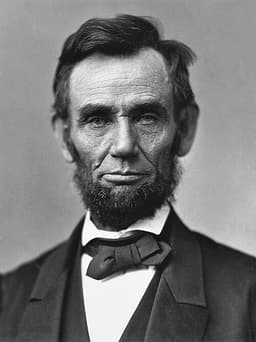
Abraham Lincoln
Politician · Modern
77.5Total
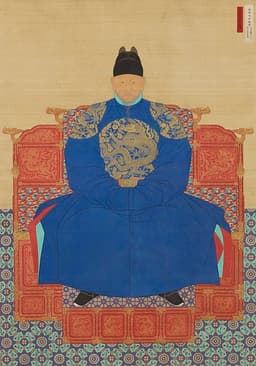
Yi Seong-gye
Emperor · Medieval
75.8Total
Basic Information
Born
1809
1335
Died
1865
1408
Era
Modern
Medieval
Nationality
United States
Korea
Occupation
Politician
Emperor
Civilization
Western
Eastern
Score Comparison
Military (10%)
50.0
74.7
Political (20%)
88.0
70.0
Influence (20%)
80.0
88.0
Legacy (20%)
82.0
75.0
Leadership (15%)
85.0
68.0
Strategy (15%)
60.0
69.1
TOTAL
77.5
75.8
Abraham Lincoln — Complete Timeline
1861 AD
Suspension of Habeas CorpusPolitical Action◆ Major
Lincoln suspended the writ of habeas corpus in parts of the Union, allowing the military to arrest and detain suspected Confederate sympathizers without trial. This action was controversial and challenged civil liberties during wartime.
Habeas CorpusCivil LibertiesCivil War
Impact: nationaldestructive
1862 AD
Signing of the Homestead ActPolitical Action◆ Major
Lincoln signed the Homestead Act, granting 160 acres of public land to settlers for a small fee. This encouraged westward expansion and agricultural development, but also displaced Native American tribes.
Homestead ActWestward ExpansionLand Policy
Impact: nationalconstructive
1863 AD
Emancipation ProclamationPolitical Action
Lincoln issued the Emancipation Proclamation, declaring slaves in Confederate states free. This shifted the Civil War's focus to ending slavery and allowed African Americans to join the Union Army.
EmancipationCivil WarSlavery
Impact: globalprogressive
Gettysburg AddressCultural◆ Major
Lincoln delivered the Gettysburg Address at the dedication of the Soldiers' National Cemetery. The speech redefined the Civil War as a struggle for national unity and equality, and became one of the most famous speeches in US history.
Gettysburg AddressCivil WarOratory
Impact: nationalconstructive
1865 AD
Assassination by John Wilkes BoothOther
Lincoln was shot by John Wilkes Booth at Ford's Theatre in Washington, D.C., and died the next day. His assassination occurred just days after the Civil War ended, plunging the nation into mourning and affecting Reconstruction.
AssassinationCivil WarReconstruction
Impact: nationaltragic
Yi Seong-gye — Complete Timeline
1380 AD
Battle of HwangsanWar◆ Major
Yi Seong-gye led Goryeo forces against Japanese pirates (wokou) at the Battle of Hwangsan. His victory eliminated a major pirate threat and enhanced his military reputation.
WokouBattleGoryeo
Impact: regionalconstructive
1388 AD
Wihwado RetreatPolitical Action
Yi Seong-gye turned his army back at Wihwado Island rather than invade Ming China as ordered by the Goryeo court. This act of defiance led to a coup that eventually brought him to power.
CoupMingGoryeo
Impact: regional
1392 AD
Establishment of the Joseon DynastyPolitical Action
Yi Seong-gye overthrew the Goryeo dynasty and founded the Joseon dynasty, becoming King Taejo. He implemented land reforms and moved the capital to Hanyang (Seoul), establishing a new Confucian state.
JoseonDynasty FoundationReform
Impact: regionalconstructive
Expert Analysis
Origins
Abraham Lincoln was born in 1809 in a log cabin in Kentucky, to a poor family. He had little formal education but was an avid reader. He worked as a rail-splitter, storekeeper, and lawyer before entering politics. Yi Seong-gye was born in 1335 in Korea, the son of a minor official. He grew up in a turbulent period of Mongol influence and internal strife. He became a military officer, gaining fame for his archery and leadership against bandits and invaders.
Rise to Power
Lincoln rose through the Illinois legislature and the U.S. House of Representatives, gaining attention for his debates with Stephen Douglas. In 1860, he won the presidency as a Republican, opposing the expansion of slavery. This triggered the secession of Southern states. Yi Seong-gye rose through military campaigns against Mongol-backed forces and Japanese pirates. In 1388, he executed the Wihwado Retreat, turning his army back from invading China to instead seize power. He overthrew the Goryeo dynasty and established Joseon in 1392.
Leadership & Governance
Lincoln faced the Civil War, preserving the Union through military strategy and political maneuvering. He issued the Emancipation Proclamation, freeing slaves in rebel states, and pushed the 13th Amendment to abolish slavery. He also signed the Homestead Act and Pacific Railway Act, promoting westward expansion. His suspension of habeas corpus was controversial. Yi Seong-gye established a new dynasty, centralizing power and adopting Confucianism as state ideology. He implemented land reforms, redistributing land to peasants, and promoted a merit-based bureaucracy. He also moved the capital to Hanyang (Seoul).
Triumph & Tragedy
Lincoln's triumph was winning the Civil War and ending slavery, but his tragedy was assassination by John Wilkes Booth in 1865, just after the war ended. He died as a martyr, his legacy cemented. Yi Seong-gye's triumph was founding a dynasty that lasted 500 years. His tragedy was his later years, where he was forced to abdicate after a power struggle with his son, and died in 1408, perhaps in sorrow.
Character & Destiny
Lincoln was known for his honesty, humility, and perseverance. He was a skilled orator and writer, with a deep moral conviction. His destiny was shaped by the crisis of the Union. Yi Seong-gye was a bold military leader and pragmatic reformer. His destiny was to end a corrupt dynasty and start a new era. Both men faced immense challenges and made hard choices.
Legacy
Lincoln's legacy is immense: he saved the nation, ended slavery, and modernized the economy. He is revered as one of America's greatest presidents. Yi Seong-gye's legacy is the Joseon dynasty, which shaped Korean culture, politics, and society for centuries. He is a national hero in Korea. However, Lincoln's impact is global, influencing democracy and human rights movements worldwide.
Conclusion
Lincoln and Yi Seong-gye both changed history, but Lincoln's impact is broader and more enduring. Lincoln scores higher in political influence (88 vs 70), legacy (82 vs 75), and overall impact (total 443 vs 421). Yi Seong-gye excelled in military might (75 vs 50) and intelligence (88 vs 80), but Lincoln's moral leadership and global significance give him the edge. **Winner: Abraham Lincoln** by a score gap of 1.7.
Rankings
🥇
Abraham LincolnLeader
Mil: 50.0Pol: 88.0Inf: 80.0
77.5
🥈
Yi Seong-gye
Mil: 74.7Pol: 70.0Inf: 88.0
75.8
+1.7 behind
How This Comparison Works
Algorithm
Each figure is scored on 6 dimensions (0—100 scale) based on structured historical data: Military (10%), Political (20%), Influence (20%), Legacy (20%), Leadership (15%), Strategy (15%). The weighted total produces the final ranking.
Data Sources
Scores are computed from structured sub-indicators in the database. Scale factors adjust for era (Ancient ×0.85, Modern ×1.0) and civilization size (Eastern ×1.05, Other ×0.80) to account for differences in population and military scale.
Maximum 3 Figures
Comparisons are limited to 2—3 figures to ensure readability and statistical meaningfulness.
Error Margins
±5 points per dimension — Sub-scores are derived from historical records with inherent uncertainty. Two figures within 5 points on a dimension should be considered roughly equivalent in that area.
Total Score Accuracy
±3 points overall — The weighted combination of 6 dimensions produces a total score with approximately ±3 points of uncertainty. Differences of less than 3 points are not statistically significant— the figures are effectively tied.
Known Limitations
- Historical records are incomplete and uneven across civilizations
- Figures from oral-tradition societies may be underrepresented
- Occupation labels can misclassify multi-role figures
- Scores measure capability and impact, not moral character
- Quantitative scoring is a comparison tool, not absolute truth
Capability Radar
Military (10%) — Battles & Warfare
Battles
15
75
Win Rate
20
80
Expansion
0
65
Political (20%) — Governance & Reform
Reform
95
85
Diplomacy
80
75
Economy
70
70
Influence (20%) — Cultural & Global Reach
Cultural
85
80
Global
85
55
Legacy (20%) — Historical Impact
Historical
95
85
Longevity
90
80
Leadership (15%) — Power & Stability
Tenure
65
60
Stability
55
65
Strategy (15%) — Tactics & Innovation
Strategy
55
82
Tactics
10
78
Reform
60
70
Similar Comparisons
Comments & Discussion
No comments yet. Be the first to share your thoughts!