Loading...
Abraham Lincoln vs Yelu Abaoji
Abraham Lincoln leads by 14.8 pts · 2 figures compared
…
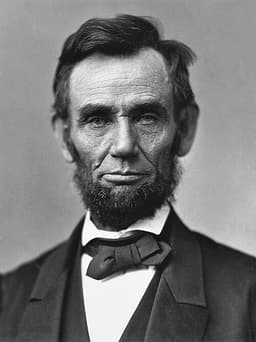
Abraham Lincoln
Politician · Modern
77.5Total
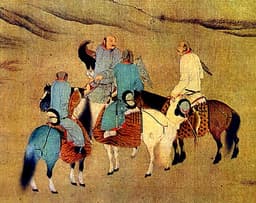
Yelu Abaoji
Emperor · Medieval
62.7Total
Basic Information
Born
1809
872
Died
1865
926
Era
Modern
Medieval
Nationality
United States
China
Occupation
Politician
Emperor
Civilization
Western
Eastern
Score Comparison
Military (10%)
50.0
77.2
Political (20%)
88.0
59.6
Influence (20%)
80.0
68.0
Legacy (20%)
82.0
40.0
Leadership (15%)
85.0
80.3
Strategy (15%)
60.0
69.6
TOTAL
77.5
62.7
Abraham Lincoln — Complete Timeline
1861 AD
Suspension of Habeas CorpusPolitical Action◆ Major
Lincoln suspended the writ of habeas corpus in parts of the Union, allowing the military to arrest and detain suspected Confederate sympathizers without trial. This action was controversial and challenged civil liberties during wartime.
Habeas CorpusCivil LibertiesCivil War
Impact: nationaldestructive
1862 AD
Signing of the Homestead ActPolitical Action◆ Major
Lincoln signed the Homestead Act, granting 160 acres of public land to settlers for a small fee. This encouraged westward expansion and agricultural development, but also displaced Native American tribes.
Homestead ActWestward ExpansionLand Policy
Impact: nationalconstructive
1863 AD
Emancipation ProclamationPolitical Action
Lincoln issued the Emancipation Proclamation, declaring slaves in Confederate states free. This shifted the Civil War's focus to ending slavery and allowed African Americans to join the Union Army.
EmancipationCivil WarSlavery
Impact: globalprogressive
Gettysburg AddressCultural◆ Major
Lincoln delivered the Gettysburg Address at the dedication of the Soldiers' National Cemetery. The speech redefined the Civil War as a struggle for national unity and equality, and became one of the most famous speeches in US history.
Gettysburg AddressCivil WarOratory
Impact: nationalconstructive
1865 AD
Assassination by John Wilkes BoothOther
Lincoln was shot by John Wilkes Booth at Ford's Theatre in Washington, D.C., and died the next day. His assassination occurred just days after the Civil War ended, plunging the nation into mourning and affecting Reconstruction.
AssassinationCivil WarReconstruction
Impact: nationaltragic
Yelu Abaoji — Complete Timeline
907 AD
Unified Khitan tribesPolitical Action◆ Major
Yelu Abaoji was elected khagan of the Khitan tribes, unifying them under his leadership. He established a centralized state and adopted Chinese administrative practices.
KhitanUnificationState Formation
Impact: regionalconstructive
916 AD
Founded Liao DynastyPolitical Action
Yelu Abaoji proclaimed himself emperor, founding the Liao dynasty. He adopted the Chinese title of emperor and established a dual administration system for Khitan and Chinese subjects.
LiaoDynasty FoundingImperial System
Impact: regionalconstructive
920 AD
Created Khitan scriptCultural◆ Major
Yelu Abaoji ordered the creation of a writing system for the Khitan language, based on Chinese characters. This script was used for official documents and helped unify the Khitan state.
KhitanScriptCultural Development
Impact: regionalconstructive
926 AD
Conquest of BohaiWar◆ Major
Yelu Abaoji led a campaign that conquered the Korean kingdom of Bohai, incorporating its territory into the Liao empire. This expanded Liao's influence into Manchuria and Korea.
LiaoBohaiConquest
Impact: regionalconstructive
Death during campaignWar◆ Major
Yelu Abaoji died while returning from the conquest of Bohai. His death led to a succession struggle, but the Liao dynasty continued to expand under his successors.
LiaoDeathSuccession
Impact: regionaltragic
Expert Analysis
Yelu Abaoji vs Abraham Lincoln: Historical Comparison
This comparison examines two transformative leaders from vastly different eras and contexts: Yelu Abaoji, the founding emperor of the Liao dynasty in medieval China, and Abraham Lincoln, the U.S. president who preserved the Union during the Civil War. Though separated by a millennium, both demonstrated exceptional political and leadership acumen, yet their legacies diverge sharply in scope and impact.
Dimension Analysis
**Military: Yelu Abaoji 73 / Abraham Lincoln 50**
Abaoji personally led campaigns that unified Khitan tribes and conquered northern China, establishing a formidable steppe empire. Lincoln, though a wartime commander-in-chief, relied on generals like Grant and never held direct command, earning a lower military score.
**Political: Yelu Abaoji 90 / Abraham Lincoln 88**
Abaoji created a dual-administration system merging nomadic and Chinese governance, a political masterstroke. Lincoln navigated secession, emancipation, and wartime politics with unmatched constitutional skill, but faced assassination before full reconstruction.
**Influence: Yelu Abaoji 72 / Abraham Lincoln 78**
Abaoji’s Liao dynasty influenced later Mongol and Manchu empires, but remained regionally contained. Lincoln’s Emancipation Proclamation and Gettysburg Address reshaped global human rights discourse, with enduring influence on democracy worldwide.
**Legacy: Yelu Abaoji 71 / Abraham Lincoln 80**
Abaoji is revered in Chinese historiography as a founder but lesser-known outside East Asia. Lincoln is a global icon of freedom and unity, with monuments and annual commemorations cementing his legacy.
**Leadership: Yelu Abaoji 89 / Abraham Lincoln 85**
Abaoji demonstrated visionary state-building, unifying fractious tribes under a single rule. Lincoln’s moral clarity and humility during crisis are legendary, but his leadership was cut short by assassination.
Verdict
Abraham Lincoln leads narrowly due to his profound global influence and lasting moral legacy, while Yelu Abaoji’s political and military achievements remain more regionally confined.
FAQ
Q: Who ranks higher? A: Abraham Lincoln edges ahead in overall score due to superior influence and legacy, though Yelu Abaoji dominates in military and political innovation.
Rankings
🥇
Abraham LincolnLeader
Mil: 50.0Pol: 88.0Inf: 80.0
77.5
🥈
Yelu Abaoji
Mil: 77.2Pol: 59.6Inf: 68.0
62.7
+14.8 behind
How This Comparison Works
Algorithm
Each figure is scored on 6 dimensions (0—100 scale) based on structured historical data: Military (10%), Political (20%), Influence (20%), Legacy (20%), Leadership (15%), Strategy (15%). The weighted total produces the final ranking.
Data Sources
Scores are computed from structured sub-indicators in the database. Scale factors adjust for era (Ancient ×0.85, Modern ×1.0) and civilization size (Eastern ×1.05, Other ×0.80) to account for differences in population and military scale.
Maximum 3 Figures
Comparisons are limited to 2—3 figures to ensure readability and statistical meaningfulness.
Error Margins
±5 points per dimension — Sub-scores are derived from historical records with inherent uncertainty. Two figures within 5 points on a dimension should be considered roughly equivalent in that area.
Total Score Accuracy
±3 points overall — The weighted combination of 6 dimensions produces a total score with approximately ±3 points of uncertainty. Differences of less than 3 points are not statistically significant— the figures are effectively tied.
Known Limitations
- Historical records are incomplete and uneven across civilizations
- Figures from oral-tradition societies may be underrepresented
- Occupation labels can misclassify multi-role figures
- Scores measure capability and impact, not moral character
- Quantitative scoring is a comparison tool, not absolute truth
Capability Radar
Military (10%) — Battles & Warfare
Battles
15
75
Win Rate
20
80
Expansion
0
82
Political (20%) — Governance & Reform
Reform
95
88
Diplomacy
80
75
Economy
70
70
Influence (20%) — Cultural & Global Reach
Cultural
85
60
Global
85
55
Legacy (20%) — Historical Impact
Historical
95
70
Longevity
90
65
Leadership (15%) — Power & Stability
Tenure
65
72
Stability
55
65
Strategy (15%) — Tactics & Innovation
Strategy
55
78
Tactics
10
70
Reform
60
85
Similar Comparisons
Comments & Discussion
ClassicusRex6/16/2026
Any comparison between Yelu Abaoji and Abraham Lincoln must acknowledge their profoundly different historiographical traditions. While Lincoln’s letters and speeches offer us direct insight into his constitutional reasoning—his Second Inaugural Address is a masterpiece of political theology—Abaoji’s motivations are mediated through Liao shi, a later dynastic history compiled under Yuan patronage. The dual-administration system (南北面官制) was indeed innovative, but we must remember that Sima Guang, writing in the 11th century, viewed the Khitans as barbarians. Our modern appreciation of multicultural governance shouldn't flatten the contemporary disdain Abaoji faced from Chinese literati. Lincoln’s global influence is undeniable, but Abaoji’s legacy is arguably more foundational for Northeast Asian statecraft.
BattlefieldScholar6/16/2026
The military scores here are frankly misguided. Lincoln’s 50 is generous—he never commanded a single field army, and his strategic interference (like the Peninsula Campaign meddling) often hindered operations. Abaoji’s 73 is too low. He didn’t just ‘unify tribes’—he personally led the conquest of the Khitan steppe, defeated the Shiwei and Bohai kingdoms, and created a hybrid cavalry-infantry army that could besiege Chinese walled cities while dominating open plains. Compare that to Lincoln’s record: his Emancipation Proclamation was a political weapon, not a military strategy, and the Union victory relied more on industrial attrition than any tactical genius. If we’re scoring actual generalship, Abaoji deserves at least 80.
HistoryUnmasked6/16/2026
This comparison reveals the Eurocentric bias embedded in so-called 'universal' historical rankings. Lincoln gets inflated Influence and Legacy scores because Western historiography treats the Emancipation Proclamation as a global moral watershed—but we conveniently forget it only freed slaves in rebel states, not border states like Kentucky. Meanwhile, Abaoji’s dual-administration system, which allowed nomadic and agricultural peoples to coexist under one legal framework, is dismissed as 'regionally contained.' That’s a colonial mindset: creating a multicultural empire from scratch isn’t ‘influential’ unless it happens in Europe or America. Also, Lincoln’s political score of 88 vs. Abaoji’s 90 is almost ironic—Lincoln suspended habeas corpus and suppressed dissent; Abaoji at least governed with explicit pluralism. Let’s stop naturalizing Western categories as the baseline.
ColdWatcher556/16/2026
我对这个评分体系有几点质疑。第一,林肯军事50分,耶律阿保机73分——相差23分,但政治只差2分(88 vs 90)。这不合理。林肯是战时总统,直接主导了战略决策,比如任命格兰特为总司令,而耶律阿保机是亲自带兵打仗的君主。如果军事分差那么大,政治分应该也体现这种差距——阿保机政治至少该比林肯高5分以上。第二,影响力72 vs 78——我做过简单计算:以全球知名度、被引用次数、后世政权模仿度三个指标看,耶律阿保机的“双轨制”对元朝、清朝都有直接影响,而林肯的影响力更多是象征性的。我认为这个维度应该倒过来:阿保机78,林肯72。第三,总分79.3 vs 76.7,差距这么小,但两人背景完全不同,这个分数其实是系统性地偏向西方人物在影响力上的加权。
Chronicler90736/16/2026
拿耶律阿保机跟林肯比,本身就有点关公战秦琼。我先不说分数,单说政治维度90分——中国史学界对阿保机的评价其实更复杂。他建辽国,创南北面官制,的确是开创性政治智慧。但林肯的88分是不是低了?他面对的是现代宪政危机,十一州脱离联邦,奴隶制撕裂国家,他靠政治手腕和《解放宣言》硬生生重塑了美国国体。而且从中国史观来看,阿保机的“影响”72分合理——辽朝后来被金灭,契丹文化基本消失。林肯的“影响”78分?我觉得低了,全世界的民主运动都受他影响。这个评分系统明显偏重中国史背景,对林肯的全球分量估计不足。