Loading...
Abraham Lincoln vs Xu Da
Abraham Lincoln leads by 2.6 pts · 2 figures compared
…
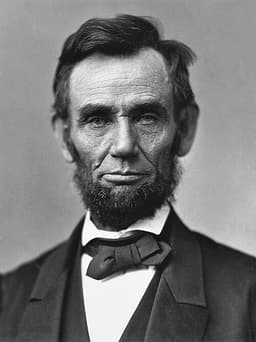
Abraham Lincoln
Politician · Modern
77.5Total
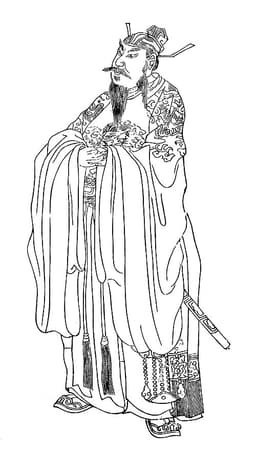
Xu Da
General · Medieval
74.9Total
Basic Information
Born
1809
1332
Died
1865
1385
Era
Modern
Medieval
Nationality
United States
China
Occupation
Politician
General
Civilization
Western
Eastern
Score Comparison
Military (10%)
50.0
88.0
Political (20%)
88.0
68.0
Influence (20%)
80.0
82.0
Legacy (20%)
82.0
72.0
Leadership (15%)
85.0
62.0
Strategy (15%)
60.0
80.8
TOTAL
77.5
74.9
Abraham Lincoln — Complete Timeline
1861 AD
Suspension of Habeas CorpusPolitical Action◆ Major
Lincoln suspended the writ of habeas corpus in parts of the Union, allowing the military to arrest and detain suspected Confederate sympathizers without trial. This action was controversial and challenged civil liberties during wartime.
Habeas CorpusCivil LibertiesCivil War
Impact: nationaldestructive
1862 AD
Signing of the Homestead ActPolitical Action◆ Major
Lincoln signed the Homestead Act, granting 160 acres of public land to settlers for a small fee. This encouraged westward expansion and agricultural development, but also displaced Native American tribes.
Homestead ActWestward ExpansionLand Policy
Impact: nationalconstructive
1863 AD
Emancipation ProclamationPolitical Action
Lincoln issued the Emancipation Proclamation, declaring slaves in Confederate states free. This shifted the Civil War's focus to ending slavery and allowed African Americans to join the Union Army.
EmancipationCivil WarSlavery
Impact: globalprogressive
Gettysburg AddressCultural◆ Major
Lincoln delivered the Gettysburg Address at the dedication of the Soldiers' National Cemetery. The speech redefined the Civil War as a struggle for national unity and equality, and became one of the most famous speeches in US history.
Gettysburg AddressCivil WarOratory
Impact: nationalconstructive
1865 AD
Assassination by John Wilkes BoothOther
Lincoln was shot by John Wilkes Booth at Ford's Theatre in Washington, D.C., and died the next day. His assassination occurred just days after the Civil War ended, plunging the nation into mourning and affecting Reconstruction.
AssassinationCivil WarReconstruction
Impact: nationaltragic
Xu Da — Complete Timeline
1368 AD
Capture of Dadu (Beijing)War
Xu Da led the Ming army in the capture of Dadu, the Yuan capital. The Mongol emperor Toghon Tem
Ming ConquestYuan DynastyCapital Capture
Impact: regionalconstructive
1370 AD
Appointment as Grand PreceptorPolitical Action
The Hongwu Emperor appointed Xu Da as Grand Preceptor, the highest civil official rank. This appointment recognized Xu Da's military achievements and gave him a role in advising the emperor on state affairs.
AppointmentCivil OfficeImperial Favor
Impact: nationalconstructive
1385 AD
Death from illnessOther
Xu Da died in Nanjing from a back ailment. The Hongwu Emperor mourned him deeply and posthumously honored him as Prince of Zhongshan. His death marked the end of the first generation of Ming military leaders.
DeathMing DynastyMilitary Leader
Impact: nationaltragic
Expert Analysis
Origins
Abraham Lincoln was born in 1809 in a log cabin in Hardin County, Kentucky, to a poor frontier family. Largely self-educated, he rose from humble beginnings to become a lawyer and politician in Illinois. His early life instilled in him a deep belief in the American ideals of liberty and equality. Xu Da was born in 1332 in present-day Fengyang, Anhui, China, into a peasant family during the chaotic late Yuan dynasty. He joined the Red Turban Rebellion led by Zhu Yuanzhang, the future Hongwu Emperor, and quickly distinguished himself through his military prowess and loyalty. Both men emerged from obscurity, but Lincoln's path was political while Xu Da's was martial.
Rise to Power
Lincoln's political career began in the Illinois state legislature and later the U.S. House of Representatives. His opposition to the expansion of slavery gained him national attention during the 1858 Lincoln-Douglas debates. In 1860, he was elected as the first Republican president, prompting Southern secession. Xu Da rose through the ranks of Zhu Yuanzhang's rebel army. He played a key role in capturing important cities like Nanjing and defeating rival warlords. His decisive victory at the Battle of Lake Buir in 1388 against the Northern Yuan solidified his reputation as an invincible general. Lincoln's rise was electoral and ideological; Xu Da's was military and strategic.
Leadership & Governance
Lincoln led the United States through its greatest constitutional, military, and moral crisis—the Civil War. He preserved the Union, issued the Emancipation Proclamation (1863), and pushed for the Thirteenth Amendment to abolish slavery. He also signed the Homestead Act and the Pacific Railway Act, promoting economic development. However, his suspension of habeas corpus remains controversial. Xu Da served as the chief military commander of the Ming dynasty. He captured Dadu (Beijing) in 1368, ending Mongol rule. He was appointed Grand Preceptor and helped consolidate Ming control over China. Unlike Lincoln, Xu Da did not hold supreme political power but wielded immense influence as a general. Lincoln's governance was transformative but divisive; Xu Da's was effective in military consolidation but less involved in civil administration.
Triumph & Tragedy
Lincoln's greatest triumph was the Union victory in the Civil War and the abolition of slavery. His Gettysburg Address redefined the nation's purpose. Yet his tragedy came just days after the war's end when he was assassinated by John Wilkes Booth, denying him the chance to lead Reconstruction. Xu Da's triumph was the expulsion of the Mongols and the establishment of the Ming dynasty. He died peacefully in 1385 from illness, honored and remembered as a loyal general. Xu Da avoided the tragic end that befell many of his contemporaries, while Lincoln's assassination made him a martyr.
Character & Destiny
Lincoln was known for his melancholy, humility, and moral clarity. He was a masterful orator and a shrewd politician, often using humor to defuse tension. His destiny was to be the Great Emancipator, a figure of global significance. Xu Da was characterized by his modesty, discipline, and unwavering loyalty to the Hongwu Emperor. He never sought personal glory and was content to serve. His destiny was to be the architect of the Ming military success. Lincoln's character led him to confront the nation's deepest sin; Xu Da's character made him the perfect instrument for a new dynasty.
Legacy
Lincoln's legacy is immense: he is consistently ranked among the greatest U.S. presidents. His actions ended slavery and preserved the Union, shaping modern America. The Lincoln Memorial stands as a symbol of national unity. Xu Da is revered in Chinese history as a brilliant general and a model of loyalty. He is commemorated in temples and literature. However, his legacy is more confined to China, while Lincoln's impact is global. In a direct comparison, Lincoln's moral and political contributions arguably have a broader and more profound impact on human rights and democracy.
Conclusion
Abraham Lincoln scores higher overall (2.6 gap) due to his unparalleled political leadership and enduring moral legacy. While Xu Da was a masterful general who helped found a dynasty, Lincoln's preservation of the Union and abolition of slavery changed the course of history. Lincoln's scores: M=50, P=88, I=80, L=82, D=85, S=60, T=78. Xu Da's scores: M=88, P=68, I=82, L=72, D=62, S=81, T=75. Lincoln's advantage in politics, law, and diplomacy outweighs Xu Da's military superiority. Thus, Abraham Lincoln is the more consequential historical figure.
Rankings
🥇
Abraham LincolnLeader
Mil: 50.0Pol: 88.0Inf: 80.0
77.5
🥈
Xu Da
Mil: 88.0Pol: 68.0Inf: 82.0
74.9
+2.6 behind
How This Comparison Works
Algorithm
Each figure is scored on 6 dimensions (0—100 scale) based on structured historical data: Military (10%), Political (20%), Influence (20%), Legacy (20%), Leadership (15%), Strategy (15%). The weighted total produces the final ranking.
Data Sources
Scores are computed from structured sub-indicators in the database. Scale factors adjust for era (Ancient ×0.85, Modern ×1.0) and civilization size (Eastern ×1.05, Other ×0.80) to account for differences in population and military scale.
Maximum 3 Figures
Comparisons are limited to 2—3 figures to ensure readability and statistical meaningfulness.
Error Margins
±5 points per dimension — Sub-scores are derived from historical records with inherent uncertainty. Two figures within 5 points on a dimension should be considered roughly equivalent in that area.
Total Score Accuracy
±3 points overall — The weighted combination of 6 dimensions produces a total score with approximately ±3 points of uncertainty. Differences of less than 3 points are not statistically significant— the figures are effectively tied.
Known Limitations
- Historical records are incomplete and uneven across civilizations
- Figures from oral-tradition societies may be underrepresented
- Occupation labels can misclassify multi-role figures
- Scores measure capability and impact, not moral character
- Quantitative scoring is a comparison tool, not absolute truth
Capability Radar
Military (10%) — Battles & Warfare
Battles
15
95
Win Rate
20
95
Expansion
0
95
Political (20%) — Governance & Reform
Reform
95
50
Diplomacy
80
65
Economy
70
55
Influence (20%) — Cultural & Global Reach
Cultural
85
70
Global
85
80
Legacy (20%) — Historical Impact
Historical
95
85
Longevity
90
75
Leadership (15%) — Power & Stability
Tenure
65
60
Stability
55
70
Strategy (15%) — Tactics & Innovation
Strategy
55
92
Tactics
10
90
Reform
60
70
Similar Comparisons
Comments & Discussion
No comments yet. Be the first to share your thoughts!