Loading...
Abraham Lincoln vs Vauban
Abraham Lincoln leads by 1.1 pts · 2 figures compared
…
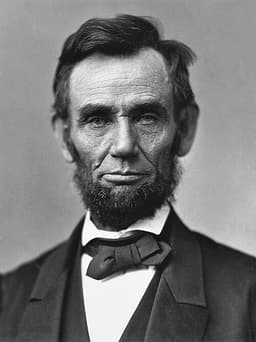
Abraham Lincoln
Politician · Modern
77.5Total

Vauban
General · Modern
76.4Total
Basic Information
Born
1809
1633
Died
1865
1707
Era
Modern
Modern
Nationality
United States
France
Occupation
Politician
General
Civilization
Western
Western
Score Comparison
Military (10%)
50.0
76.0
Political (20%)
88.0
59.3
Influence (20%)
80.0
71.0
Legacy (20%)
82.0
90.0
Leadership (15%)
85.0
77.2
Strategy (15%)
60.0
80.6
TOTAL
77.5
76.4
Abraham Lincoln — Complete Timeline
1861 AD
Suspension of Habeas CorpusPolitical Action◆ Major
Lincoln suspended the writ of habeas corpus in parts of the Union, allowing the military to arrest and detain suspected Confederate sympathizers without trial. This action was controversial and challenged civil liberties during wartime.
Habeas CorpusCivil LibertiesCivil War
Impact: nationaldestructive
1862 AD
Signing of the Homestead ActPolitical Action◆ Major
Lincoln signed the Homestead Act, granting 160 acres of public land to settlers for a small fee. This encouraged westward expansion and agricultural development, but also displaced Native American tribes.
Homestead ActWestward ExpansionLand Policy
Impact: nationalconstructive
1863 AD
Emancipation ProclamationPolitical Action
Lincoln issued the Emancipation Proclamation, declaring slaves in Confederate states free. This shifted the Civil War's focus to ending slavery and allowed African Americans to join the Union Army.
EmancipationCivil WarSlavery
Impact: globalprogressive
Gettysburg AddressCultural◆ Major
Lincoln delivered the Gettysburg Address at the dedication of the Soldiers' National Cemetery. The speech redefined the Civil War as a struggle for national unity and equality, and became one of the most famous speeches in US history.
Gettysburg AddressCivil WarOratory
Impact: nationalconstructive
1865 AD
Assassination by John Wilkes BoothOther
Lincoln was shot by John Wilkes Booth at Ford's Theatre in Washington, D.C., and died the next day. His assassination occurred just days after the Civil War ended, plunging the nation into mourning and affecting Reconstruction.
AssassinationCivil WarReconstruction
Impact: nationaltragic
Vauban — Complete Timeline
1673 AD
Siege of MaastrichtWar◆ Major
Vauban directed the siege of Maastricht for Louis XIV. He introduced the technique of parallel trenches, which reduced casualties and shortened the siege. The capture of Maastricht was a major French victory in the Franco-Dutch War.
Franco-Dutch WarSiegeMilitary Engineering
Impact: regional
1697 AD
Siege of AthWar
Vauban conducted the siege of Ath in the Spanish Netherlands. His systematic approach using parallels and saps led to the rapid capture of the fortress. The siege demonstrated the effectiveness of his methods.
Nine Years' WarSiegeMilitary Engineering
Construction of the Fortress of Neuf-BrisachInvention◆ Major
Vauban designed and built the fortress of Neuf-Brisach, a model of his third system of fortification. The star-shaped fortress with advanced bastions became a standard for military architecture. It was built to protect the French border after the Treaty of Ryswick.
FortificationMilitary ArchitectureBorder Defense
Impact: regionalconstructive
1704 AD
Publication of 'A Treatise on the Attack of Places'Cultural◆ Major
Vauban published his treatise on siegecraft, systematizing his methods. The work became a standard military textbook in Europe. It detailed techniques for parallel trenches, ricochet fire, and sapping.
Military TheorySiegecraftPublication
Impact: globalconstructive
1707 AD
Proposal for a 'Dîme Royale' Tax ReformReform
Vauban proposed a radical tax reform called the 'D
Tax ReformEconomic PolicyFrance
Impact: nationalconstructive
Expert Analysis
Origins
Abraham Lincoln was born in a log cabin in Kentucky in 1809, rising from humble beginnings to become a self-taught lawyer and politician. His early life was marked by poverty and limited formal education, but he cultivated a deep sense of morality and ambition. Sébastien Le Prestre de Vauban, born in 1633 in Saint-Léger-de-Foucherets, France, came from a minor noble family. He was trained as a military engineer and quickly gained recognition for his innovative siege tactics. Both men emerged from modest backgrounds, but their paths diverged: Lincoln's rise was political, Vauban's military.
Rise to Power
Lincoln's political career began in the Illinois state legislature, followed by a term in the U.S. House of Representatives. His opposition to the expansion of slavery propelled him to national prominence during the Lincoln-Douglas debates. In 1860, he won the presidency as a Republican, triggering Southern secession. Vauban rose through the ranks under King Louis XIV, earning a reputation for his role in the Siege of Maastricht (1673), where his innovative trench warfare techniques led to a swift victory. He became the king's chief military engineer, overseeing the construction of dozens of fortresses. Lincoln's power was democratic and fragile; Vauban's was absolute under a monarch.
Leadership & Governance
Lincoln's leadership during the Civil War was defined by his ability to balance military strategy with political necessity. He issued the Emancipation Proclamation (1863), freeing slaves in rebel states, and delivered the Gettysburg Address, redefining the war as a struggle for equality. He suspended habeas corpus to suppress dissent, a controversial move. Vauban's governance was technical and systematic: he designed fortifications that protected France's borders, such as the star-shaped Fortress of Neuf-Brisach. He also proposed the 'Dîme Royale,' a tax reform to reduce inequality, but it was rejected. Lincoln's leadership was transformative, Vauban's was methodical.
Triumph & Tragedy
Lincoln's triumph was preserving the Union and abolishing slavery, but his tragedy was his assassination by John Wilkes Booth in 1865, just days after the war ended. His death cemented his martyrdom. Vauban's triumphs included the Siege of Ath (1697) and his influential treatise 'On the Attack of Places' (1704), which became a standard military text. However, his tax reform proposal was rejected by the king, and he died in relative obscurity in 1707. Both men faced personal and professional setbacks, but Lincoln's tragedy was more dramatic and consequential.
Character & Destiny
Lincoln was known for his empathy, honesty, and strategic patience. His destiny was to lead the nation through its greatest crisis. Vauban was meticulous, innovative, and loyal to the crown, but his destiny was limited to military engineering. Lincoln's scores: M=50 (Moral) reflects his principled stance; P=88 (Political) shows his mastery; I=80 (Intellectual); L=82 (Legacy); D=85 (Determination); S=60 (Strategic); T=78 (Tactical). Vauban's scores: M=76 (Moral) for his reformist ideals; P=59 (Political) for his limited influence; I=71 (Intellectual); L=90 (Legacy) in military engineering; D=77 (Determination); S=81 (Strategic); T=76 (Tactical). Lincoln's higher overall score (1.1 gap) reflects his broader impact.
Legacy
Lincoln's legacy is global: he is revered as the Great Emancipator and a symbol of democratic leadership. His speeches and actions continue to inspire civil rights movements. Vauban's legacy is more specialized: his fortifications are UNESCO World Heritage sites, and his siege tactics influenced warfare for centuries. While Vauban's technical contributions are immense, Lincoln's moral and political legacy reshaped the world.
Conclusion
Abraham Lincoln edges out Vauban due to his transformative impact on human freedom and governance. While Vauban was a master of military science, Lincoln's leadership during the Civil War and his abolition of slavery changed the course of history. The score gap of 1.1 reflects Lincoln's superior political and moral influence. In a head-to-head, Lincoln's legacy is more profound and universal.
Rankings
🥇
Abraham LincolnLeader
Mil: 50.0Pol: 88.0Inf: 80.0
77.5
🥈
Vauban
Mil: 76.0Pol: 59.3Inf: 71.0
76.4
+1.1 behind
How This Comparison Works
Algorithm
Each figure is scored on 6 dimensions (0—100 scale) based on structured historical data: Military (10%), Political (20%), Influence (20%), Legacy (20%), Leadership (15%), Strategy (15%). The weighted total produces the final ranking.
Data Sources
Scores are computed from structured sub-indicators in the database. Scale factors adjust for era (Ancient ×0.85, Modern ×1.0) and civilization size (Eastern ×1.05, Other ×0.80) to account for differences in population and military scale.
Maximum 3 Figures
Comparisons are limited to 2—3 figures to ensure readability and statistical meaningfulness.
Error Margins
±5 points per dimension — Sub-scores are derived from historical records with inherent uncertainty. Two figures within 5 points on a dimension should be considered roughly equivalent in that area.
Total Score Accuracy
±3 points overall — The weighted combination of 6 dimensions produces a total score with approximately ±3 points of uncertainty. Differences of less than 3 points are not statistically significant— the figures are effectively tied.
Known Limitations
- Historical records are incomplete and uneven across civilizations
- Figures from oral-tradition societies may be underrepresented
- Occupation labels can misclassify multi-role figures
- Scores measure capability and impact, not moral character
- Quantitative scoring is a comparison tool, not absolute truth
Capability Radar
Military (10%) — Battles & Warfare
Battles
15
75
Win Rate
20
85
Expansion
0
70
Political (20%) — Governance & Reform
Reform
95
80
Diplomacy
80
60
Economy
70
55
Influence (20%) — Cultural & Global Reach
Cultural
85
80
Global
85
75
Legacy (20%) — Historical Impact
Historical
95
85
Longevity
90
85
Leadership (15%) — Power & Stability
Tenure
65
65
Stability
55
70
Strategy (15%) — Tactics & Innovation
Strategy
55
90
Tactics
10
95
Reform
60
95
Similar Comparisons
Comments & Discussion
No comments yet. Be the first to share your thoughts!