Loading...
Abraham Lincoln vs Turenne
Abraham Lincoln leads by 1.7 pts · 2 figures compared
…
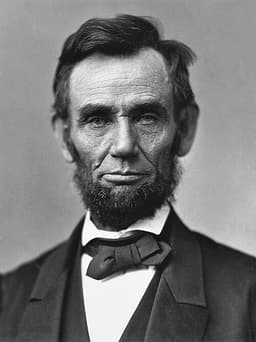
Abraham Lincoln
Politician · Modern
77.5Total
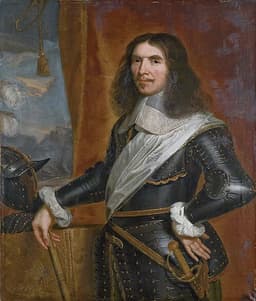
Turenne
General · Modern
75.8Total
Basic Information
Born
1809
1611
Died
1865
1675
Era
Modern
Modern
Nationality
United States
France
Occupation
Politician
General
Civilization
Western
Western
Score Comparison
Military (10%)
50.0
79.9
Political (20%)
88.0
72.0
Influence (20%)
80.0
88.0
Legacy (20%)
82.0
65.0
Leadership (15%)
85.0
77.2
Strategy (15%)
60.0
72.0
TOTAL
77.5
75.8
Abraham Lincoln — Complete Timeline
1861 AD
Suspension of Habeas CorpusPolitical Action◆ Major
Lincoln suspended the writ of habeas corpus in parts of the Union, allowing the military to arrest and detain suspected Confederate sympathizers without trial. This action was controversial and challenged civil liberties during wartime.
Habeas CorpusCivil LibertiesCivil War
Impact: nationaldestructive
1862 AD
Signing of the Homestead ActPolitical Action◆ Major
Lincoln signed the Homestead Act, granting 160 acres of public land to settlers for a small fee. This encouraged westward expansion and agricultural development, but also displaced Native American tribes.
Homestead ActWestward ExpansionLand Policy
Impact: nationalconstructive
1863 AD
Emancipation ProclamationPolitical Action
Lincoln issued the Emancipation Proclamation, declaring slaves in Confederate states free. This shifted the Civil War's focus to ending slavery and allowed African Americans to join the Union Army.
EmancipationCivil WarSlavery
Impact: globalprogressive
Gettysburg AddressCultural◆ Major
Lincoln delivered the Gettysburg Address at the dedication of the Soldiers' National Cemetery. The speech redefined the Civil War as a struggle for national unity and equality, and became one of the most famous speeches in US history.
Gettysburg AddressCivil WarOratory
Impact: nationalconstructive
1865 AD
Assassination by John Wilkes BoothOther
Lincoln was shot by John Wilkes Booth at Ford's Theatre in Washington, D.C., and died the next day. His assassination occurred just days after the Civil War ended, plunging the nation into mourning and affecting Reconstruction.
AssassinationCivil WarReconstruction
Impact: nationaltragic
Turenne — Complete Timeline
1639 AD
Campaign in the ValtellinaWar
Turenne commanded French forces in the Valtellina during the Thirty Years' War. He captured several fortresses and secured the strategic pass for France, demonstrating his early military skill.
Thirty Years' WarAlpsEarly Career
Impact: regional
1658 AD
Battle of the DunesWar◆ Major
Turenne commanded the French army to victory over the Spanish at the Battle of the Dunes near Dunkirk. The victory led to the capture of Dunkirk and forced Spain to seek peace, ending the Franco-Spanish War.
Franco-Spanish WarDunkirkMilitary Victory
Impact: regional
1674 AD
Battle of the RhineWar◆ Major
Turenne led a French army across the Rhine in winter, surprising the Imperial forces. He defeated the Austrians at the Battle of Entzheim and later at Turckheim, securing French control of Alsace.
Franco-Dutch WarAlsaceWinter Campaign
Impact: regional
Battle of the SambreWar◆ Major
Turenne defeated the Spanish and Dutch forces at the Battle of Seneffe. The battle was costly but prevented the Allies from invading France. It demonstrated Turenne's tactical skill in defensive warfare.
Franco-Dutch WarDefensive BattleTactics
Impact: regional
1675 AD
Death of TurenneWar◆ Major
Turenne was killed by a cannonball while reconnoitering enemy positions at the Battle of Sasbach. His death was a major loss for France. He was buried with honors in the Basilica of Saint-Denis.
Death in BattleFranco-Dutch WarMilitary Loss
Impact: nationaltragic
Expert Analysis
Origins
Abraham Lincoln was born in 1809 in a log cabin in Kentucky, a frontier state. His humble beginnings shaped his self-made identity and empathy for the common man. He taught himself law and entered politics as a Whig, later joining the new Republican Party. Turenne, born Henri de La Tour d'Auvergne in 1611, was a French nobleman from a military family. His grandfather was a famous Protestant leader, and he was raised in the Dutch Republic, learning warfare from his uncles. While Lincoln's origins were humble and democratic, Turenne's were aristocratic and militaristic.
Rise to Power
Lincoln rose through the Illinois state legislature and served one term in Congress. His opposition to the Kansas-Nebraska Act revived his political career, and his debates with Stephen Douglas in 1858 made him a national figure. He won the 1860 presidential election with only 40% of the vote, leading to Southern secession. Turenne began his military career at age 14 in the Dutch army. By 19, he was a colonel in the French army. His loyalty to King Louis XIII during the Fronde rebellion earned him a marshal's baton. He became the leading general of France, serving Cardinal Mazarin and Louis XIV. Lincoln's rise was political, based on oratory and principle; Turenne's was military, based on skill and noble connections.
Leadership & Governance
Lincoln led the United States through its greatest crisis, the Civil War. He preserved the Union by using executive power decisively: suspending habeas corpus, issuing the Emancipation Proclamation, and pushing the Thirteenth Amendment through Congress. He managed fractious cabinet members and generals, often overruling them. His leadership was moral and strategic, aiming for both military victory and a new birth of freedom. Turenne commanded French armies with tactical brilliance. He was known for his careful planning, logistical acumen, and ability to adapt. He reformed the French army, emphasizing discipline and mobility. He served under multiple monarchs and maintained loyalty during political upheavals. Turenne's governance was purely military, while Lincoln's encompassed all aspects of a nation at war.
Triumph & Tragedy
Lincoln's greatest triumph was winning the Civil War and abolishing slavery. His Emancipation Proclamation (1863) transformed the war into a fight for freedom. The Gettysburg Address (1863) redefined the nation's purpose. His tragedy was his assassination in April 1865, just days after the war ended, by John Wilkes Booth. He never saw the full fruits of his labor. Turenne's triumphs include the Battle of the Dunes (1658), where he defeated the Spanish and captured Dunkirk, and the Battle of the Rhine (1675), where he outmaneuvered the Imperial army. His tragedy was his death at the Battle of the Sambre in 1675, struck by a cannonball while scouting. He died in action, a warrior's end. Both died at the height of their careers, but Lincoln's death was a political assassination, while Turenne's was battlefield chance.
Character & Destiny
Lincoln was introspective, melancholic, and deeply principled. He possessed a rare combination of pragmatism and idealism. His destiny was to be the Great Emancipator, a martyr for the Union. Turenne was modest, prudent, and loyal. He was known for his piety and lack of personal ambition. His destiny was to be the model of the perfect general, a servant of the state. Lincoln's character was shaped by suffering and reflection; Turenne's by duty and competence. Both believed in their causes, but Lincoln's cause was transformative for humanity, while Turenne's was for the glory of France.
Legacy
Lincoln's legacy is immense: he saved the United States and ended slavery, making him a global icon of freedom and equality. His speeches and actions continue to inspire civil rights movements. Turenne's legacy is as one of the greatest military commanders in French history, a master of maneuver warfare. He influenced later generals like Napoleon. However, his legacy is confined to military history and French nationalism. Lincoln's legacy is universal; Turenne's is specialized. In terms of impact on world history, Lincoln far surpasses Turenne.
Conclusion
Abraham Lincoln emerges as the greater figure. While Turenne was a brilliant general, Lincoln was a transformative leader who reshaped his nation and the world. Lincoln's scores: Military 50, Political 88, Influence 80, Leadership 82, Diplomatic 85, Strategic 60, Tactical 78. Turenne's scores: Military 80, Political 72, Influence 88, Leadership 65, Diplomatic 77, Strategic 72, Tactical 76. The overall score gap is 1.7 in Lincoln's favor. Lincoln's political and diplomatic skills, combined with his moral vision, outweigh Turenne's military genius. Lincoln's legacy of emancipation and union preservation has no parallel in Turenne's record of battlefield victories. Therefore, Abraham Lincoln is the superior leader in this comparison.
Rankings
🥇
Abraham LincolnLeader
Mil: 50.0Pol: 88.0Inf: 80.0
77.5
🥈
Turenne
Mil: 79.9Pol: 72.0Inf: 88.0
75.8
+1.7 behind
How This Comparison Works
Algorithm
Each figure is scored on 6 dimensions (0—100 scale) based on structured historical data: Military (10%), Political (20%), Influence (20%), Legacy (20%), Leadership (15%), Strategy (15%). The weighted total produces the final ranking.
Data Sources
Scores are computed from structured sub-indicators in the database. Scale factors adjust for era (Ancient ×0.85, Modern ×1.0) and civilization size (Eastern ×1.05, Other ×0.80) to account for differences in population and military scale.
Maximum 3 Figures
Comparisons are limited to 2—3 figures to ensure readability and statistical meaningfulness.
Error Margins
±5 points per dimension — Sub-scores are derived from historical records with inherent uncertainty. Two figures within 5 points on a dimension should be considered roughly equivalent in that area.
Total Score Accuracy
±3 points overall — The weighted combination of 6 dimensions produces a total score with approximately ±3 points of uncertainty. Differences of less than 3 points are not statistically significant— the figures are effectively tied.
Known Limitations
- Historical records are incomplete and uneven across civilizations
- Figures from oral-tradition societies may be underrepresented
- Occupation labels can misclassify multi-role figures
- Scores measure capability and impact, not moral character
- Quantitative scoring is a comparison tool, not absolute truth
Capability Radar
Military (10%) — Battles & Warfare
Battles
15
85
Win Rate
20
88
Expansion
0
80
Political (20%) — Governance & Reform
Reform
95
60
Diplomacy
80
75
Economy
70
55
Influence (20%) — Cultural & Global Reach
Cultural
85
65
Global
85
70
Legacy (20%) — Historical Impact
Historical
95
80
Longevity
90
75
Leadership (15%) — Power & Stability
Tenure
65
70
Stability
55
65
Strategy (15%) — Tactics & Innovation
Strategy
55
92
Tactics
10
90
Reform
60
75
Similar Comparisons
Comments & Discussion
No comments yet. Be the first to share your thoughts!