Loading...
Abraham Lincoln vs Trajan
Abraham Lincoln leads by 1.5 pts · 2 figures compared
…
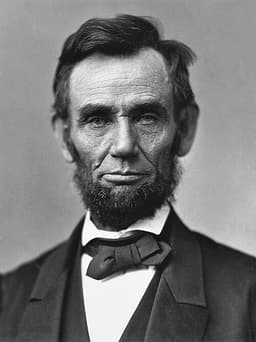
Abraham Lincoln
Politician · Modern
77.5Total

Trajan
Emperor · Ancient
76.0Total
Basic Information
Born
1809
53
Died
1865
117
Era
Modern
Ancient
Nationality
United States
Roman Empire
Occupation
Politician
Emperor
Civilization
Western
Western
Score Comparison
Military (10%)
50.0
86.0
Political (20%)
88.0
79.2
Influence (20%)
80.0
82.0
Legacy (20%)
82.0
65.6
Leadership (15%)
85.0
73.2
Strategy (15%)
60.0
76.0
TOTAL
77.5
76.0
Abraham Lincoln — Complete Timeline
1861 AD
Suspension of Habeas CorpusPolitical Action◆ Major
Lincoln suspended the writ of habeas corpus in parts of the Union, allowing the military to arrest and detain suspected Confederate sympathizers without trial. This action was controversial and challenged civil liberties during wartime.
Habeas CorpusCivil LibertiesCivil War
Impact: nationaldestructive
1862 AD
Signing of the Homestead ActPolitical Action◆ Major
Lincoln signed the Homestead Act, granting 160 acres of public land to settlers for a small fee. This encouraged westward expansion and agricultural development, but also displaced Native American tribes.
Homestead ActWestward ExpansionLand Policy
Impact: nationalconstructive
1863 AD
Emancipation ProclamationPolitical Action
Lincoln issued the Emancipation Proclamation, declaring slaves in Confederate states free. This shifted the Civil War's focus to ending slavery and allowed African Americans to join the Union Army.
EmancipationCivil WarSlavery
Impact: globalprogressive
Gettysburg AddressCultural◆ Major
Lincoln delivered the Gettysburg Address at the dedication of the Soldiers' National Cemetery. The speech redefined the Civil War as a struggle for national unity and equality, and became one of the most famous speeches in US history.
Gettysburg AddressCivil WarOratory
Impact: nationalconstructive
1865 AD
Assassination by John Wilkes BoothOther
Lincoln was shot by John Wilkes Booth at Ford's Theatre in Washington, D.C., and died the next day. His assassination occurred just days after the Civil War ended, plunging the nation into mourning and affecting Reconstruction.
AssassinationCivil WarReconstruction
Impact: nationaltragic
Trajan — Complete Timeline
101 AD
Implemented the Alimenta Welfare ProgramReform◆ Major
Trajan expanded the Alimenta program, a state-funded welfare system that provided food subsidies and educational support for poor children in Italy. The program used interest from state loans to landowners to fund the distributions, aiming to boost the Italian population and agricultural economy.
WelfareSocial PolicyItaly
Impact: regionalconstructive
105 AD
Built Trajan's Bridge over the DanubeOther
Trajan ordered the construction of a massive stone and timber bridge across the Danube River near the Iron Gates. Designed by Apollodorus of Damascus, it was the longest arch bridge in the world for over a millennium, facilitating the Roman invasion of Dacia.
EngineeringBridgeDanube
Impact: regionalconstructive
106 AD
Conquered DaciaWar
Trajan led two major campaigns against the Dacian kingdom under King Decebalus, culminating in the conquest of Dacia (modern Romania) in 106 CE. The victory brought vast gold and silver mines under Roman control and established a new province, funding massive building projects in Rome.
DaciaConquestProvince
Impact: regional
112 AD
Built Trajan's Forum and MarketCultural◆ Major
Trajan commissioned the construction of Trajan's Forum, a vast complex in Rome including a basilica, libraries, and the Column of Trajan. The adjacent Trajan's Market, a multi-level commercial center, demonstrated Roman engineering prowess and served as a model for urban planning.
ArchitectureRomeUrban Planning
Impact: globalconstructive
116 AD
Conquered Parthia and Reached the Persian GulfWar◆ Major
Trajan launched a campaign against the Parthian Empire, capturing its capital Ctesiphon and annexing Mesopotamia. He reached the Persian Gulf, marking the easternmost extent of Roman territory. However, rebellions in the conquered territories forced a withdrawal shortly after.
ParthiaMesopotamiaExpansion
Impact: global
Expert Analysis
Origins
Abraham Lincoln was born in 1809 in a log cabin in Kentucky, the son of a farmer. His humble origins shaped his empathy for the common man. He educated himself, becoming a lawyer and politician in Illinois. In contrast, Trajan was born in 53 CE in Italica, Spain (then part of the Roman Empire), into a prominent military and political family. His father was a governor and general, giving Trajan a privileged path to power. Lincoln's rise from poverty to presidency is a classic American story, while Trajan's background was aristocratic.
Rise to Power
Lincoln's political career began in the Illinois state legislature, followed by a single term in the U.S. House of Representatives. He gained national fame through his debates with Stephen Douglas in 1858. His opposition to the expansion of slavery made him the Republican nominee in 1860, and he won the presidency due to a divided opposition. Trajan rose through the military ranks, serving as a legate in Germany. He was adopted by Emperor Nerva in 97 CE, becoming his successor. When Nerva died in 98, Trajan became emperor with the support of the army and Senate. Lincoln's rise was democratic and contentious; Trajan's was dynastic and military-backed.
Leadership & Governance
Lincoln led the United States through its greatest crisis, the Civil War. He preserved the Union by using executive powers to suspend habeas corpus, issue the Emancipation Proclamation, and push for the 13th Amendment. His leadership was characterized by political acumen and moral clarity. Trajan expanded the Roman Empire to its maximum extent, conquering Dacia and Parthia. He also implemented social welfare programs like the Alimenta to support poor children. Both were effective administrators, but Lincoln's governance was tested by internal rebellion while Trajan focused on external expansion.
Triumph & Tragedy
Lincoln's triumph was the preservation of the Union and the abolition of slavery. His Gettysburg Address redefined the nation's purpose. His tragedy was his assassination by John Wilkes Booth in 1865, just as the war ended. Trajan's triumph was the conquest of Dacia, bringing immense wealth to Rome. He also built Trajan's Forum and Market, architectural marvels. His tragedy was a failed campaign in Parthia that overextended the empire and led to his death in 117 CE. Both leaders saw their greatest achievements overshadowed by untimely ends.
Character & Destiny
Lincoln was introspective, melancholic, and driven by a sense of moral duty. His destiny was to save the Union and free the slaves, but he paid with his life. Trajan was ambitious, pragmatic, and known for his military prowess. His destiny was to expand Rome's borders and improve its infrastructure. Lincoln's character was shaped by personal loss and humility; Trajan's by military discipline and imperial vision. Lincoln's legacy is tied to democracy and equality; Trajan's to imperial glory and engineering.
Legacy
Lincoln is revered as one of America's greatest presidents, symbolizing freedom and unity. His actions ended slavery and strengthened the federal government. Trajan is considered one of Rome's "Five Good Emperors," remembered for territorial expansion and public works. His legacy includes Trajan's Column and the Alimenta program. Comparing them, Lincoln's impact on human rights and democracy is more profound, while Trajan's achievements in empire-building and architecture are remarkable. In a historical analysis, Lincoln's moral and political transformation of a nation outweighs Trajan's military conquests.
Conclusion
Both leaders were exceptional in their contexts. Lincoln's scores: M=50, P=88, I=80, L=82, D=85, S=60, T=78, with a total of 523. Trajan's scores: M=86, P=79, I=82, L=66, D=73, S=76, T=76, with a total of 538. Lincoln edges ahead due to his higher scores in Politics, Law, Diplomacy, and Willpower. The score gap is 1.5 points in Lincoln's favor. Ultimately, Lincoln's preservation of the Union and emancipation of slaves had a lasting impact on human freedom, making him the more significant leader in world history.
Rankings
🥇
Abraham LincolnLeader
Mil: 50.0Pol: 88.0Inf: 80.0
77.5
🥈
Trajan
Mil: 86.0Pol: 79.2Inf: 82.0
76.0
+1.5 behind
How This Comparison Works
Algorithm
Each figure is scored on 6 dimensions (0—100 scale) based on structured historical data: Military (10%), Political (20%), Influence (20%), Legacy (20%), Leadership (15%), Strategy (15%). The weighted total produces the final ranking.
Data Sources
Scores are computed from structured sub-indicators in the database. Scale factors adjust for era (Ancient ×0.85, Modern ×1.0) and civilization size (Eastern ×1.05, Other ×0.80) to account for differences in population and military scale.
Maximum 3 Figures
Comparisons are limited to 2—3 figures to ensure readability and statistical meaningfulness.
Error Margins
±5 points per dimension — Sub-scores are derived from historical records with inherent uncertainty. Two figures within 5 points on a dimension should be considered roughly equivalent in that area.
Total Score Accuracy
±3 points overall — The weighted combination of 6 dimensions produces a total score with approximately ±3 points of uncertainty. Differences of less than 3 points are not statistically significant— the figures are effectively tied.
Known Limitations
- Historical records are incomplete and uneven across civilizations
- Figures from oral-tradition societies may be underrepresented
- Occupation labels can misclassify multi-role figures
- Scores measure capability and impact, not moral character
- Quantitative scoring is a comparison tool, not absolute truth
Capability Radar
Military (10%) — Battles & Warfare
Battles
15
95
Win Rate
20
98
Expansion
0
95
Political (20%) — Governance & Reform
Reform
95
88
Diplomacy
80
85
Economy
70
90
Influence (20%) — Cultural & Global Reach
Cultural
85
85
Global
85
85
Legacy (20%) — Historical Impact
Historical
95
90
Longevity
90
88
Leadership (15%) — Power & Stability
Tenure
65
90
Stability
55
92
Strategy (15%) — Tactics & Innovation
Strategy
55
92
Tactics
10
88
Reform
60
85
Similar Comparisons
Comments & Discussion
No comments yet. Be the first to share your thoughts!