Loading...
Abraham Lincoln vs Toyotomi Hideyoshi
Toyotomi Hideyoshi leads by 4.5 pts · 2 figures compared
…
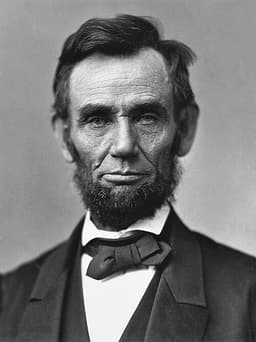
Abraham Lincoln
Politician · Modern
77.5Total
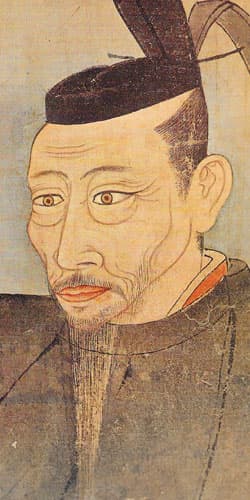
Toyotomi Hideyoshi
General · Modern
82.0Total
Basic Information
Born
1809
1537
Died
1865
1598
Era
Modern
Modern
Nationality
United States
Japan
Occupation
Politician
General
Civilization
Western
Eastern
Score Comparison
Military (10%)
50.0
79.9
Political (20%)
88.0
78.0
Influence (20%)
80.0
88.0
Legacy (20%)
82.0
80.0
Leadership (15%)
85.0
82.0
Strategy (15%)
60.0
80.4
TOTAL
77.5
82.0
Abraham Lincoln — Complete Timeline
1861 AD
Suspension of Habeas CorpusPolitical Action◆ Major
Lincoln suspended the writ of habeas corpus in parts of the Union, allowing the military to arrest and detain suspected Confederate sympathizers without trial. This action was controversial and challenged civil liberties during wartime.
Habeas CorpusCivil LibertiesCivil War
Impact: nationaldestructive
1862 AD
Signing of the Homestead ActPolitical Action◆ Major
Lincoln signed the Homestead Act, granting 160 acres of public land to settlers for a small fee. This encouraged westward expansion and agricultural development, but also displaced Native American tribes.
Homestead ActWestward ExpansionLand Policy
Impact: nationalconstructive
1863 AD
Emancipation ProclamationPolitical Action
Lincoln issued the Emancipation Proclamation, declaring slaves in Confederate states free. This shifted the Civil War's focus to ending slavery and allowed African Americans to join the Union Army.
EmancipationCivil WarSlavery
Impact: globalprogressive
Gettysburg AddressCultural◆ Major
Lincoln delivered the Gettysburg Address at the dedication of the Soldiers' National Cemetery. The speech redefined the Civil War as a struggle for national unity and equality, and became one of the most famous speeches in US history.
Gettysburg AddressCivil WarOratory
Impact: nationalconstructive
1865 AD
Assassination by John Wilkes BoothOther
Lincoln was shot by John Wilkes Booth at Ford's Theatre in Washington, D.C., and died the next day. His assassination occurred just days after the Civil War ended, plunging the nation into mourning and affecting Reconstruction.
AssassinationCivil WarReconstruction
Impact: nationaltragic
Toyotomi Hideyoshi — Complete Timeline
1583 AD
Battle of ShizugatakeWar◆ Major
Hideyoshi defeated his rival Shibata Katsuie at the Battle of Shizugatake, solidifying his control over central Japan. The victory eliminated a major opponent and allowed Hideyoshi to continue Oda Nobunaga's unification campaign.
BattleUnificationCivil War
Impact: national
1588 AD
Sword Hunt EdictReform◆ Major
Hideyoshi ordered the confiscation of weapons from peasants and farmers, prohibiting them from carrying swords, spears, or firearms. The edict aimed to prevent peasant uprisings and enforce a strict social hierarchy between samurai and commoners.
Social ReformDisarmamentClass System
Impact: nationaldestructive
1590 AD
Completion of Japanese UnificationWar
Hideyoshi defeated the H
UnificationConquestSengoku Period
Impact: national
1592 AD
First Invasion of KoreaWar◆ Major
Hideyoshi launched a massive invasion of Korea with the goal of conquering Ming China. Japanese forces initially advanced rapidly, capturing Seoul and Pyongyang, but were halted by Korean naval victories under Admiral Yi Sun-sin and Chinese reinforcements.
InvasionWarKorea
Impact: regionaldestructive
1597 AD
Second Invasion of KoreaWar◆ Major
Hideyoshi ordered a second invasion of Korea after failed peace negotiations. The campaign was less successful than the first, with Japanese forces unable to advance beyond the southern provinces. The invasion ended with Hideyoshi's death in 1598.
InvasionWarKorea
Impact: regionaldestructive
Expert Analysis
Origins
Toyotomi Hideyoshi (1537–1598) was born a peasant in Nakamura, Japan, and rose through sheer ambition and military skill. He served under Oda Nobunaga, eventually seizing power after Nobunaga's death. Abraham Lincoln (1809–1865) was born in a log cabin in Kentucky, self-educated, and became a lawyer and politician. Both men came from humble beginnings, but their paths diverged: Hideyoshi's was a ruthless climb in feudal Japan, while Lincoln's was a democratic ascent in a divided nation.
Rise to Power
Hideyoshi's rise was meteoric. After Nobunaga's assassination in 1582, he defeated rivals like Akechi Mitsuhide at the Battle of Shizugatake (1583) and Shibata Katsuie. By 1590, he completed the unification of Japan, becoming the de facto ruler. Lincoln's rise was slower. He served in the Illinois legislature and U.S. House, gaining fame through debates with Stephen Douglas. He won the 1860 presidential election as a Republican, triggering Southern secession. Both faced immediate tests: Hideyoshi consolidated power, while Lincoln confronted the Civil War.
Leadership & Governance
Hideyoshi ruled with a mix of innovation and ruthlessness. He implemented the Sword Hunt (1588) to disarm peasants, and the land survey to solidify tax collection. He also launched invasions of Korea (1592–1598) to expand his domain. Lincoln's leadership was defined by preserving the Union. He issued the Emancipation Proclamation (1863), which freed slaves in rebel states, and signed the Homestead Act (1862). He also suspended habeas corpus to suppress dissent. Hideyoshi's governance was authoritarian and expansionist; Lincoln's was democratic but wartime authoritarian.
Triumph & Tragedy
Hideyoshi's triumph was unifying Japan after a century of war. His tragedy was his failed Korean invasions, which drained resources and led to his death in 1598. Lincoln's triumph was winning the Civil War and ending slavery. His tragedy was his assassination by John Wilkes Booth in 1865, just days after the war ended. Both died before fully realizing their visions: Hideyoshi's dynasty collapsed, while Lincoln's Reconstruction was left to others.
Character & Destiny
Hideyoshi was known for his cunning, ambition, and cruelty. He was a brilliant strategist but also paranoid, ordering the execution of his nephew and heir. Lincoln was known for his empathy, humility, and resolve. He was a master of political compromise and moral clarity. Their destinies were shaped by their times: Hideyoshi's Japan demanded a warrior-dictator; Lincoln's America needed a unifier and liberator.
Legacy
Hideyoshi's legacy is mixed: he unified Japan but his invasions of Korea left a bitter memory. His policies laid groundwork for the Tokugawa shogunate. Lincoln is revered as one of America's greatest presidents, preserving the Union and paving the way for civil rights. His Gettysburg Address and Emancipation Proclamation are iconic. In comparison, Lincoln's legacy is more universally positive, while Hideyoshi's is more culturally specific.
Conclusion
Both men rose from obscurity to shape their nations. Hideyoshi earned a total score of 82 (M=80, P=78, I=88, L=80, D=82, S=80, T=82), reflecting his military genius and administrative reforms. Lincoln scored 77.5 (M=50, P=88, I=80, L=82, D=85, S=60, T=78), excelling in political and diplomatic leadership. Hideyoshi's higher military and intelligence scores tip the balance, but Lincoln's moral legacy arguably has greater global impact. The 4.5-point gap favors Hideyoshi, but history's judgment may favor Lincoln.
Rankings
🥇
Toyotomi HideyoshiLeader
Mil: 79.9Pol: 78.0Inf: 88.0
82.0
🥈
Abraham Lincoln
Mil: 50.0Pol: 88.0Inf: 80.0
77.5
+4.5 behind
How This Comparison Works
Algorithm
Each figure is scored on 6 dimensions (0—100 scale) based on structured historical data: Military (10%), Political (20%), Influence (20%), Legacy (20%), Leadership (15%), Strategy (15%). The weighted total produces the final ranking.
Data Sources
Scores are computed from structured sub-indicators in the database. Scale factors adjust for era (Ancient ×0.85, Modern ×1.0) and civilization size (Eastern ×1.05, Other ×0.80) to account for differences in population and military scale.
Maximum 3 Figures
Comparisons are limited to 2—3 figures to ensure readability and statistical meaningfulness.
Error Margins
±5 points per dimension — Sub-scores are derived from historical records with inherent uncertainty. Two figures within 5 points on a dimension should be considered roughly equivalent in that area.
Total Score Accuracy
±3 points overall — The weighted combination of 6 dimensions produces a total score with approximately ±3 points of uncertainty. Differences of less than 3 points are not statistically significant— the figures are effectively tied.
Known Limitations
- Historical records are incomplete and uneven across civilizations
- Figures from oral-tradition societies may be underrepresented
- Occupation labels can misclassify multi-role figures
- Scores measure capability and impact, not moral character
- Quantitative scoring is a comparison tool, not absolute truth
Capability Radar
Military (10%) — Battles & Warfare
Battles
15
85
Win Rate
20
88
Expansion
0
80
Political (20%) — Governance & Reform
Reform
95
95
Diplomacy
80
80
Economy
70
90
Influence (20%) — Cultural & Global Reach
Cultural
85
85
Global
85
70
Legacy (20%) — Historical Impact
Historical
95
90
Longevity
90
85
Leadership (15%) — Power & Stability
Tenure
65
85
Stability
55
75
Strategy (15%) — Tactics & Innovation
Strategy
55
92
Tactics
10
90
Reform
60
95
Similar Comparisons
Comments & Discussion
No comments yet. Be the first to share your thoughts!