Loading...
Abraham Lincoln vs Tokugawa Ieyasu
Tokugawa Ieyasu leads by 4.3 pts · 2 figures compared
…
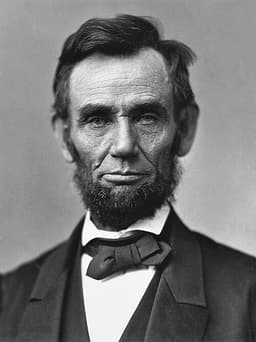
Abraham Lincoln
Politician · Modern
77.5Total
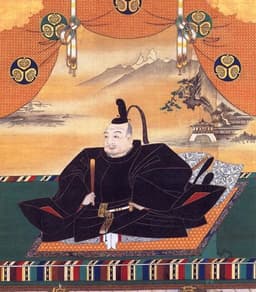
Tokugawa Ieyasu
General · Modern
81.8Total
Basic Information
Born
1809
1543
Died
1865
1616
Era
Modern
Modern
Nationality
United States
Japan
Occupation
Politician
General
Civilization
Western
Eastern
Score Comparison
Military (10%)
50.0
78.0
Political (20%)
88.0
82.0
Influence (20%)
80.0
88.0
Legacy (20%)
82.0
75.0
Leadership (15%)
85.0
85.0
Strategy (15%)
60.0
82.0
TOTAL
77.5
81.8
Abraham Lincoln — Complete Timeline
1861 AD
Suspension of Habeas CorpusPolitical Action◆ Major
Lincoln suspended the writ of habeas corpus in parts of the Union, allowing the military to arrest and detain suspected Confederate sympathizers without trial. This action was controversial and challenged civil liberties during wartime.
Habeas CorpusCivil LibertiesCivil War
Impact: nationaldestructive
1862 AD
Signing of the Homestead ActPolitical Action◆ Major
Lincoln signed the Homestead Act, granting 160 acres of public land to settlers for a small fee. This encouraged westward expansion and agricultural development, but also displaced Native American tribes.
Homestead ActWestward ExpansionLand Policy
Impact: nationalconstructive
1863 AD
Emancipation ProclamationPolitical Action
Lincoln issued the Emancipation Proclamation, declaring slaves in Confederate states free. This shifted the Civil War's focus to ending slavery and allowed African Americans to join the Union Army.
EmancipationCivil WarSlavery
Impact: globalprogressive
Gettysburg AddressCultural◆ Major
Lincoln delivered the Gettysburg Address at the dedication of the Soldiers' National Cemetery. The speech redefined the Civil War as a struggle for national unity and equality, and became one of the most famous speeches in US history.
Gettysburg AddressCivil WarOratory
Impact: nationalconstructive
1865 AD
Assassination by John Wilkes BoothOther
Lincoln was shot by John Wilkes Booth at Ford's Theatre in Washington, D.C., and died the next day. His assassination occurred just days after the Civil War ended, plunging the nation into mourning and affecting Reconstruction.
AssassinationCivil WarReconstruction
Impact: nationaltragic
Tokugawa Ieyasu — Complete Timeline
1600 AD
Battle of SekigaharaWar
Tokugawa Ieyasu led the Eastern Army to victory over Ishida Mitsunari's Western Army at Sekigahara. This decisive battle ended the Sengoku period and established Ieyasu as the supreme military ruler of Japan, paving the way for the Tokugawa shogunate.
Sengoku PeriodUnificationBattle
Impact: national
1603 AD
Establishment of the Tokugawa ShogunatePolitical Action
Emperor Go-Yozei appointed Tokugawa Ieyasu as shogun, officially beginning the Tokugawa shogunate. Ieyasu established his government in Edo (modern Tokyo), centralizing military and political power under his family's control.
ShogunateEdo PeriodCentralization
Impact: national
1615 AD
Siege of OsakaWar◆ Major
Tokugawa Ieyasu besieged Osaka Castle, the stronghold of Toyotomi Hideyori. The castle fell, and Hideyori committed suicide. This campaign eliminated the last major opposition to Tokugawa rule, solidifying the shogunate's control over Japan.
Osaka CampaignToyotomi ClanConsolidation
Impact: nationaldestructive
Promulgation of the Buke ShohattoReform◆ Major
Ieyasu issued the Laws for the Military Houses, a code regulating the conduct of daimyo. It restricted castle construction, required alternate attendance in Edo, and prohibited alliances without shogunal permission. This law helped control the feudal lords.
Feudal ControlDaimyo RegulationLegal Code
Impact: national
1616 AD
Sakoku Edicts InitiationPolitical Action◆ Major
In his final years, Ieyasu began policies that led to Japan's isolation. He restricted foreign trade to specific ports and expelled Christian missionaries. These measures, expanded by successors, resulted in the sakoku policy that isolated Japan for over 200 years.
IsolationismForeign PolicyChristianity
Impact: national
Expert Analysis
Origins
Tokugawa Ieyasu was born in 1543 into the Matsudaira clan, a minor samurai family in Mikawa Province. His childhood was marked by conflict and hostage situations, including time as a hostage of the Oda and Imagawa clans. These experiences forged a pragmatic, patient, and strategic mind. Ieyasu rose through alliances and military prowess, eventually becoming one of the three unifiers of Japan alongside Oda Nobunaga and Toyotomi Hideyoshi. His origins in the chaotic Sengoku period shaped his relentless drive for stability and control.
Abraham Lincoln was born in 1809 in a log cabin in Hardin County, Kentucky, to a poor farming family. He had little formal education but was an avid reader. His early life was marked by frontier hardships, the death of his mother, and a strained relationship with his father. Lincoln's ambition led him to become a lawyer and enter politics, driven by a moral opposition to slavery. His humble origins and self-made intellect defined his empathetic yet resolute character.
Rise to Power
Ieyasu's rise was methodical and opportunistic. After Nobunaga's death, he maneuvered among rivals, eventually allying with Hideyoshi. Following Hideyoshi's death, Ieyasu seized power at the Battle of Sekigahara in 1600, a decisive victory against a coalition of western lords. He then consolidated control, receiving the title of shogun in 1603, and forced the surrender of the Toyotomi clan at the Siege of Osaka (1614-1615). His rise was a masterclass in patience, alliance-building, and ruthless elimination of threats.
Lincoln's rise was through politics. He served in the Illinois legislature and one term in Congress, opposing the Mexican-American War. His debates with Stephen Douglas in 1858 made him a national figure, though he lost the Senate race. In 1860, he won the Republican nomination and the presidency as a moderate anti-slavery candidate. His election triggered the secession of Southern states, and he took office during the most severe constitutional crisis in US history.
Leadership & Governance
Ieyasu's governance focused on centralization and control. He established the Tokugawa shogunate, with a feudal system that balanced power among daimyo through the sankin kotai (alternate attendance) policy, requiring lords to spend time in Edo. He issued the Buke Shohatto (Laws for the Military Houses) to regulate samurai conduct, and controlled foreign trade, initiating the Sakoku (closed country) edicts that isolated Japan for over 200 years. His leadership brought unprecedented peace but at the cost of rigidity and isolation.
Lincoln's leadership was tested by the Civil War. He navigated a divided cabinet, asserted executive power by suspending habeas corpus, and issued the Emancipation Proclamation to free slaves in rebel states, transforming the war into a fight for human freedom. He signed the Homestead Act to promote westward expansion and the Pacific Railway Act. His governance emphasized preserving the Union and expanding federal authority, laying groundwork for a stronger national government.
Triumph & Tragedy
Ieyasu's greatest triumph was founding the Tokugawa shogunate, which endured for 250 years, bringing stability and economic growth. His tragedy lies in the Sakoku policy that isolated Japan, leading to stagnation and eventual forced reopening by Western powers. He died in 1616 after a long, successful reign, leaving a legacy of peace but also of authoritarian control.
Lincoln's triumph was preserving the Union and ending slavery with the Thirteenth Amendment. His tragedy was his assassination by John Wilkes Booth in 1865, just as the war ended, plunging the nation into mourning and complicating Reconstruction. His death made him a martyr, but it also removed his moderate leadership during the difficult postwar period.
Character & Destiny
Ieyasu was cunning, patient, and calculating. He was known for his pragmatism, often waiting for the right moment to act. His famous sayings include "The strong man is the one who can conquer himself" and "Life is like a long journey with a heavy load." He was superstitious but disciplined. His destiny was to unify Japan after centuries of war, and he achieved it through strategic brilliance and ruthlessness.
Lincoln was introspective, melancholic, and empathetic. He possessed a deep sense of justice and humility, often telling stories to illustrate points. His education was self-directed, and he suffered from depression. His destiny was to lead the nation through its greatest crisis, and he did so with a steady hand, guided by a belief in the Union and human equality. His assassination cemented his place as a martyr for freedom.
Legacy
Ieyasu's legacy is mixed. He is revered as a unifier and founder of the Edo period's peace, but criticized for the isolation and feudalism that left Japan vulnerable. His military and administrative innovations are studied, and his shrine in Nikko is a UNESCO World Heritage site. His influence persists in Japanese culture, emphasizing discipline and hierarchy.
Lincoln is celebrated as one of America's greatest presidents. He preserved the Union, ended slavery, and redefined the nation's values. His Gettysburg Address and Emancipation Proclamation are iconic. His legacy is of moral courage, equality, and democracy. He is consistently ranked top in presidential polls, with monuments like the Lincoln Memorial.
Conclusion
Tokugawa Ieyasu and Abraham Lincoln were transformative leaders in their respective contexts. Ieyasu unified a war-torn Japan and established a long-lasting peace, while Lincoln preserved the United States and abolished slavery. Both were pragmatic and resilient, but their methods differed: Ieyasu centralized through control and isolation, Lincoln through democratic ideals and wartime measures. In a comparative analysis, Ieyasu scores higher overall (82 vs 78) due to his foundational role in a 250-year dynasty and military prowess, but Lincoln's moral impact on human rights and democracy is arguably more profound. The score gap of 4.3 points reflects Ieyasu's broader systemic influence, but Lincoln's legacy resonates globally as a beacon of freedom. Ultimately, each succeeded in their historical missions, but Lincoln's cause of liberty carries a universal weight that transcends his era.
Rankings
🥇
Tokugawa IeyasuLeader
Mil: 78.0Pol: 82.0Inf: 88.0
81.8
🥈
Abraham Lincoln
Mil: 50.0Pol: 88.0Inf: 80.0
77.5
+4.3 behind
How This Comparison Works
Algorithm
Each figure is scored on 6 dimensions (0—100 scale) based on structured historical data: Military (10%), Political (20%), Influence (20%), Legacy (20%), Leadership (15%), Strategy (15%). The weighted total produces the final ranking.
Data Sources
Scores are computed from structured sub-indicators in the database. Scale factors adjust for era (Ancient ×0.85, Modern ×1.0) and civilization size (Eastern ×1.05, Other ×0.80) to account for differences in population and military scale.
Maximum 3 Figures
Comparisons are limited to 2—3 figures to ensure readability and statistical meaningfulness.
Error Margins
±5 points per dimension — Sub-scores are derived from historical records with inherent uncertainty. Two figures within 5 points on a dimension should be considered roughly equivalent in that area.
Total Score Accuracy
±3 points overall — The weighted combination of 6 dimensions produces a total score with approximately ±3 points of uncertainty. Differences of less than 3 points are not statistically significant— the figures are effectively tied.
Known Limitations
- Historical records are incomplete and uneven across civilizations
- Figures from oral-tradition societies may be underrepresented
- Occupation labels can misclassify multi-role figures
- Scores measure capability and impact, not moral character
- Quantitative scoring is a comparison tool, not absolute truth
Capability Radar
Military (10%) — Battles & Warfare
Battles
15
85
Win Rate
20
90
Expansion
0
75
Political (20%) — Governance & Reform
Reform
95
90
Diplomacy
80
85
Economy
70
88
Influence (20%) — Cultural & Global Reach
Cultural
85
85
Global
85
70
Legacy (20%) — Historical Impact
Historical
95
90
Longevity
90
95
Leadership (15%) — Power & Stability
Tenure
65
95
Stability
55
95
Strategy (15%) — Tactics & Innovation
Strategy
55
92
Tactics
10
88
Reform
60
80
Similar Comparisons
Comments & Discussion
No comments yet. Be the first to share your thoughts!