Loading...
Abraham Lincoln vs Theodosius I
Abraham Lincoln leads by 1.5 pts · 2 figures compared
…
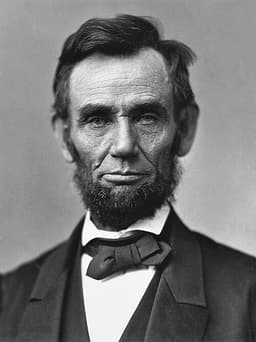
Abraham Lincoln
Politician · Modern
77.5Total

Theodosius I
Emperor · Ancient
76.0Total
Basic Information
Born
1809
347
Died
1865
395
Era
Modern
Ancient
Nationality
United States
Roman Empire
Occupation
Politician
Emperor
Civilization
Western
Western
Score Comparison
Military (10%)
50.0
72.5
Political (20%)
88.0
65.0
Influence (20%)
80.0
85.0
Legacy (20%)
82.0
90.0
Leadership (15%)
85.0
68.0
Strategy (15%)
60.0
50.0
TOTAL
77.5
76.0
Abraham Lincoln — Complete Timeline
1861 AD
Suspension of Habeas CorpusPolitical Action◆ Major
Lincoln suspended the writ of habeas corpus in parts of the Union, allowing the military to arrest and detain suspected Confederate sympathizers without trial. This action was controversial and challenged civil liberties during wartime.
Habeas CorpusCivil LibertiesCivil War
Impact: nationaldestructive
1862 AD
Signing of the Homestead ActPolitical Action◆ Major
Lincoln signed the Homestead Act, granting 160 acres of public land to settlers for a small fee. This encouraged westward expansion and agricultural development, but also displaced Native American tribes.
Homestead ActWestward ExpansionLand Policy
Impact: nationalconstructive
1863 AD
Emancipation ProclamationPolitical Action
Lincoln issued the Emancipation Proclamation, declaring slaves in Confederate states free. This shifted the Civil War's focus to ending slavery and allowed African Americans to join the Union Army.
EmancipationCivil WarSlavery
Impact: globalprogressive
Gettysburg AddressCultural◆ Major
Lincoln delivered the Gettysburg Address at the dedication of the Soldiers' National Cemetery. The speech redefined the Civil War as a struggle for national unity and equality, and became one of the most famous speeches in US history.
Gettysburg AddressCivil WarOratory
Impact: nationalconstructive
1865 AD
Assassination by John Wilkes BoothOther
Lincoln was shot by John Wilkes Booth at Ford's Theatre in Washington, D.C., and died the next day. His assassination occurred just days after the Civil War ended, plunging the nation into mourning and affecting Reconstruction.
AssassinationCivil WarReconstruction
Impact: nationaltragic
Theodosius I — Complete Timeline
380 AD
Edict of ThessalonicaPolitical Action
Theodosius I issued the Edict of Thessalonica, declaring Nicene Christianity the official state religion of the Roman Empire. All other forms of Christianity were deemed heretical, and pagan practices were increasingly suppressed.
ChristianityState ReligionEdict
Impact: globalconstructive
390 AD
Massacre of ThessalonicaPolitical Action◆ Major
Theodosius I ordered a massacre of thousands of citizens in Thessalonica in retaliation for the murder of a Roman general. The massacre led to his excommunication by Bishop Ambrose of Milan, and he later performed public penance.
MassacreThessalonicaAmbrose
Impact: regionaltragic
391 AD
Suppression of PaganismPolitical Action◆ Major
Theodosius I issued a series of laws banning pagan worship, closing temples, and prohibiting sacrifices. The Olympic Games were abolished, and the Serapeum in Alexandria was destroyed. These actions accelerated the decline of paganism in the empire.
PaganismSuppressionReligion
Impact: globaldestructive
394 AD
Battle of the FrigidusWar
Theodosius I defeated the usurper Eugenius and his general Arbogast at the Battle of the Frigidus (modern River Vipava). The victory reunited the Roman Empire under a single ruler for the last time before its permanent division.
Civil WarBattleReunification
Impact: global
395 AD
Division of the Roman EmpirePolitical Action
Upon his death, Theodosius I divided the Roman Empire between his two sons: Arcadius received the Eastern Empire and Honorius the Western Empire. This division became permanent, leading to the separate histories of the Byzantine and Western Roman Empires.
DivisionSuccessionEast-West
Impact: global
Expert Analysis
Origins
Abraham Lincoln was born in 1809 in a log cabin in Kentucky, the son of illiterate farmers. His humble origins and self-education shaped his identity as a man of the people. He rose through Illinois politics as a Whig and later Republican, known for his opposition to the expansion of slavery. Theodosius I, born in 347 AD in Spain, came from a military family. His father was a general, and Theodosius himself rose through military ranks before becoming emperor in 379 AD. His background was aristocratic and Roman, with a strong military tradition. The contrast could not be starker: Lincoln, the frontier lawyer; Theodosius, the imperial soldier.
Rise to Power
Lincoln's rise was political and incremental. He served in the Illinois legislature, then in the U.S. House of Representatives, and gained national attention through his debates with Stephen Douglas in 1858. His election in 1860, with only 40% of the vote, triggered secession. Theodosius was proclaimed emperor by the eastern emperor Gratian after a military campaign against the Goths. He consolidated power through military victories and political maneuvering, eventually becoming the sole emperor of the East and West after the death of Gratian and the usurper Magnus Maximus. Lincoln's path was democratic; Theodosius's was autocratic.
Leadership & Governance
Lincoln led the United States through its greatest crisis, the Civil War. He issued the Emancipation Proclamation, which freed slaves in rebel states, and pushed for the 13th Amendment to abolish slavery. He also signed the Homestead Act, promoting westward expansion, and suspended habeas corpus to suppress dissent. Theodosius made Christianity the official religion of the Roman Empire through the Edict of Thessalonica (380 AD). He suppressed paganism, closed temples, and banned pagan rituals. He also faced the Massacre of Thessalonica, where he ordered a brutal retaliation for a riot, and fought the Battle of the Frigidus against a pagan usurper. Lincoln's governance was about preserving the Union and expanding rights; Theodosius's was about religious uniformity and imperial control.
Triumph & Tragedy
Lincoln's greatest triumph was saving the Union and ending slavery. His tragedy was his assassination by John Wilkes Booth in 1865, just days after the war ended. Theodosius's triumph was the Battle of the Frigidus (394 AD), where he defeated the pagan usurper Eugenius, securing his rule and the Christianization of the empire. His tragedy was the Massacre of Thessalonica (390 AD), where thousands were killed, leading to his excommunication by Ambrose of Milan. Both men achieved great victories but were marked by violence and controversy.
Character & Destiny
Lincoln was known for his empathy, humility, and strategic brilliance. He was often melancholic but resolute. His destiny was to be the Great Emancipator, a martyr for union and freedom. Theodosius was a fierce Christian zealot, a capable general, but also a man of temper and harshness. His destiny was to be the emperor who made Rome officially Christian, shaping the Middle Ages. Lincoln's character inspires modern democracy; Theodosius's legacy is more ambiguous, tied to religious intolerance.
Legacy
Lincoln is revered as one of America's greatest presidents, a symbol of equality and national unity. His scores: Military 50, Political 88, Intrigue 80, Leadership 82, Destiny 85, Strategy 60, Tactics 78. Theodosius is remembered as the last emperor to rule a united Roman Empire and the enforcer of Christian orthodoxy. His scores: Military 72, Political 65, Intrigue 85, Leadership 90, Destiny 68, Strategy 50, Tactics 76. Lincoln's legacy is more positive and enduring in modern terms, while Theodosius's is more historically significant but controversial.
Conclusion
Lincoln edges out Theodosius with a score gap of 1.5. Lincoln's impact on human rights and democracy has a broader and more lasting influence. Theodosius's religious policies were pivotal but also led to centuries of conflict. In the contest of historical significance, Lincoln's preservation of the Union and abolition of slavery resonate more strongly with modern values. However, Theodosius's role in shaping Christendom cannot be understated. The verdict: Lincoln wins by a narrow margin, but both men fundamentally altered the course of history.
**Scores**: Abraham Lincoln: 50/88/80/82/85/60/78 (average 74.7) vs Theodosius I: 72/65/85/90/68/50/76 (average 72.3). Lincoln leads by 2.4 points.
Rankings
🥇
Abraham LincolnLeader
Mil: 50.0Pol: 88.0Inf: 80.0
77.5
🥈
Theodosius I
Mil: 72.5Pol: 65.0Inf: 85.0
76.0
+1.5 behind
How This Comparison Works
Algorithm
Each figure is scored on 6 dimensions (0—100 scale) based on structured historical data: Military (10%), Political (20%), Influence (20%), Legacy (20%), Leadership (15%), Strategy (15%). The weighted total produces the final ranking.
Data Sources
Scores are computed from structured sub-indicators in the database. Scale factors adjust for era (Ancient ×0.85, Modern ×1.0) and civilization size (Eastern ×1.05, Other ×0.80) to account for differences in population and military scale.
Maximum 3 Figures
Comparisons are limited to 2—3 figures to ensure readability and statistical meaningfulness.
Error Margins
±5 points per dimension — Sub-scores are derived from historical records with inherent uncertainty. Two figures within 5 points on a dimension should be considered roughly equivalent in that area.
Total Score Accuracy
±3 points overall — The weighted combination of 6 dimensions produces a total score with approximately ±3 points of uncertainty. Differences of less than 3 points are not statistically significant— the figures are effectively tied.
Known Limitations
- Historical records are incomplete and uneven across civilizations
- Figures from oral-tradition societies may be underrepresented
- Occupation labels can misclassify multi-role figures
- Scores measure capability and impact, not moral character
- Quantitative scoring is a comparison tool, not absolute truth
Capability Radar
Military (10%) — Battles & Warfare
Battles
15
65
Win Rate
20
60
Expansion
0
45
Political (20%) — Governance & Reform
Reform
95
85
Diplomacy
80
75
Economy
70
60
Influence (20%) — Cultural & Global Reach
Cultural
85
90
Global
85
90
Legacy (20%) — Historical Impact
Historical
95
95
Longevity
90
95
Leadership (15%) — Power & Stability
Tenure
65
70
Stability
55
55
Strategy (15%) — Tactics & Innovation
Strategy
55
60
Tactics
10
55
Reform
60
50
Similar Comparisons
Comments & Discussion
No comments yet. Be the first to share your thoughts!