Loading...
Abraham Lincoln vs Suleiman the Magnificent
Abraham Lincoln leads by 4.3 pts · 2 figures compared
…
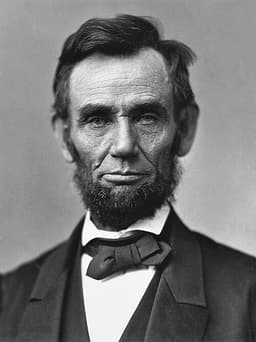
Abraham Lincoln
Politician · Modern
77.5Total
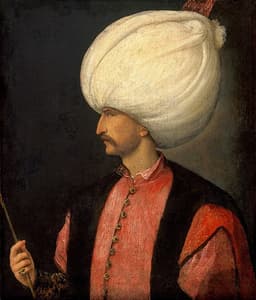
Suleiman the Magnificent
Emperor · Medieval
73.2Total
Basic Information
Born
1809
1494
Died
1865
1566
Era
Modern
Medieval
Nationality
United States
Ottoman Empire
Occupation
Politician
Emperor
Civilization
Western
Middle Eastern
Score Comparison
Military (10%)
50.0
85.0
Political (20%)
88.0
78.0
Influence (20%)
80.0
72.0
Legacy (20%)
82.0
68.0
Leadership (15%)
85.0
72.0
Strategy (15%)
60.0
72.0
TOTAL
77.5
73.2
Abraham Lincoln — Complete Timeline
1861 AD
Suspension of Habeas CorpusPolitical Action◆ Major
Lincoln suspended the writ of habeas corpus in parts of the Union, allowing the military to arrest and detain suspected Confederate sympathizers without trial. This action was controversial and challenged civil liberties during wartime.
Habeas CorpusCivil LibertiesCivil War
Impact: nationaldestructive
1862 AD
Signing of the Homestead ActPolitical Action◆ Major
Lincoln signed the Homestead Act, granting 160 acres of public land to settlers for a small fee. This encouraged westward expansion and agricultural development, but also displaced Native American tribes.
Homestead ActWestward ExpansionLand Policy
Impact: nationalconstructive
1863 AD
Emancipation ProclamationPolitical Action
Lincoln issued the Emancipation Proclamation, declaring slaves in Confederate states free. This shifted the Civil War's focus to ending slavery and allowed African Americans to join the Union Army.
EmancipationCivil WarSlavery
Impact: globalprogressive
Gettysburg AddressCultural◆ Major
Lincoln delivered the Gettysburg Address at the dedication of the Soldiers' National Cemetery. The speech redefined the Civil War as a struggle for national unity and equality, and became one of the most famous speeches in US history.
Gettysburg AddressCivil WarOratory
Impact: nationalconstructive
1865 AD
Assassination by John Wilkes BoothOther
Lincoln was shot by John Wilkes Booth at Ford's Theatre in Washington, D.C., and died the next day. His assassination occurred just days after the Civil War ended, plunging the nation into mourning and affecting Reconstruction.
AssassinationCivil WarReconstruction
Impact: nationaltragic
Suleiman the Magnificent — Complete Timeline
1522 AD
Siege of RhodesWar◆ Major
Suleiman personally led a massive Ottoman campaign against the Knights Hospitaller on Rhodes. After a six-month siege, the knights surrendered and were allowed to leave. This victory secured Ottoman control over the eastern Mediterranean.
SiegeMediterraneanKnights Hospitaller
Impact: regional
1526 AD
Battle of MohácsWar
Suleiman's Ottoman army defeated the Hungarian forces of King Louis II at Moh
BattleHungaryOttoman expansion
Impact: regional
1529 AD
Siege of ViennaWar◆ Major
Suleiman besieged Vienna, the Habsburg capital, with a large army. The siege failed due to supply issues, disease, and strong defenses. This defeat halted Ottoman expansion into central Europe and marked the empire's furthest advance westward.
SiegeViennaDefeat
Impact: regional
1530 AD
Codification of Ottoman lawReform◆ Major
Suleiman oversaw the compilation and standardization of Ottoman legal codes, known as Kanun. These laws regulated criminal justice, land tenure, and taxation, creating a unified legal system that balanced sharia with secular law. He earned the title 'Kanuni' (the Lawgiver).
Legal reformKanunOttoman Empire
Impact: nationalconstructive
1536 AD
Execution of Ibrahim PashaPolitical Action◆ Major
Suleiman ordered the execution of his grand vizier and close friend Ibrahim Pasha, who had served for 13 years. The reasons remain debated, but likely involved Ibrahim's growing power and conflicts with Suleiman's wife, Hurrem Sultan. This event demonstrated the absolute power of the sultan.
ExecutionCourt politicsPower
Impact: nationaltragic
Expert Analysis
Abraham Lincoln vs Suleiman the Magnificent
# The Lawgiver and the Liberator
On a September morning in 1529, Suleiman the Magnificent stood before the walls of Vienna, a city that would remain beyond his grasp. Three centuries later, in November 1863, Abraham Lincoln stood on a battlefield in Pennsylvania, speaking words that would outlast any empire. One man commanded armies that stretched from Budapest to Baghdad; the other commanded a fractured nation through its darkest hour. Both reshaped history, but in profoundly different ways. What drove these two leaders—one a sultan born to absolute power, the other a frontier lawyer who rose from obscurity—toward such divergent destinies?
Origins
Suleiman entered the world in 1494 as the only surviving son of Sultan Selim I, inheritor of a dynasty that had already conquered Constantinople and dominated three continents. From childhood, he was groomed for rule: trained in the arts of war, steeped in Islamic jurisprudence, and schooled in the poetry and philosophy that would later define his patronage of the arts. The Ottoman Empire he would inherit was already a colossus, yet it remained, in many ways, a medieval state held together by the sword and the faith of its sultan.
Lincoln was born in 1809 into a log cabin in Kentucky, the son of illiterate farmers. His mother died when he was nine, and his formal education amounted to less than a year of school. Where Suleiman learned statecraft from viziers, Lincoln learned from books borrowed from neighbors—Blackstone's *Commentaries*, the Bible, Shakespeare. The world he would lead was not an empire but a young republic, already torn by the contradiction of slavery in a land dedicated to liberty.
Rise to Power
Suleiman ascended the throne at age twenty-six following his father's death in 1520, without opposition. There was no election, no debate—only the ancient law of succession and the sword that enforced it. His first major act as sultan was to launch a campaign against Belgrade, signaling that the new ruler would expand the empire's frontiers with the same ferocity as his predecessors.
Lincoln's path could not have been more different. He lost his first bid for public office at twenty-three, suffered a nervous breakdown, and failed repeatedly in business. His election to the presidency in 1860 came with less than 40 percent of the popular vote and triggered the secession of eleven Southern states. Where Suleiman inherited a unified empire, Lincoln inherited a nation already dissolving.
Leadership & Governance
Suleiman governed through codification. In 1530, he oversaw the compilation of the *Kanun*, a unified legal code that harmonized secular law with Islamic Sharia. This was no small achievement: the Ottoman Empire was a mosaic of ethnicities, religions, and legal traditions, and Suleiman's laws brought order to everything from taxation to criminal punishment. He earned the title "the Lawgiver" among his own people, though Western chroniclers would remember him as "the Magnificent" for his military campaigns.
Lincoln governed through conviction in the face of constitutional crisis. In 1861, he suspended habeas corpus to suppress dissent—a decision that remains controversial. Yet he also signed the Homestead Act of 1862, giving 160 acres of public land to settlers, transforming the American West. His Emancipation Proclamation of 1863 was a masterstroke of political strategy and moral clarity: it declared freedom for slaves in Confederate states, shifting the war's purpose from preserving the Union to destroying slavery.
On the battlefield, Suleiman was both commander and strategist. His victory at Mohács in 1526 shattered the Kingdom of Hungary and killed King Louis II, opening Central Europe to Ottoman influence. The siege of Rhodes in 1522 demonstrated his patience and logistical prowess—a six-month campaign that ended with the Knights Hospitaller evacuating the island with full honors. But his failure at Vienna in 1529 revealed the limits of his power: supply lines stretched too thin, disease ravaged his army, and the city's walls held.
Lincoln was no military commander. He learned war by reading books and questioning generals, often overruling them with a strategic instinct that proved sound. His choice of Ulysses S. Grant as commanding general was perhaps his greatest military decision—a man who understood, as Lincoln did, that total war required total commitment.
Triumph & Tragedy
Suleiman's greatest triumph was the empire he built—an Ottoman golden age of law, art, and architecture that saw the construction of the Süleymaniye Mosque, the patronage of the poet Baki, and the expansion of Ottoman power from the Danube to the Nile. His greatest tragedy was personal: the execution of his grand vizier and closest friend, Ibrahim Pasha, in 1536, ordered on suspicion of ambition. Later, he would order the execution of his own son, Mustafa, on similar fears—a decision that haunted the dynasty.
Lincoln's triumph was the preservation of the Union and the abolition of slavery. The Gettysburg Address, delivered in 1863, redefined the nation's purpose: "that government of the people, by the people, for the people, shall not perish from the earth." His tragedy came on April 14, 1865, when John Wilkes Booth's bullet ended his life days after the Confederate surrender. He died having seen the war won but not the peace secured.
Character & Destiny
Suleiman was a man of contradictions: a poet who wrote verses of love, a ruler who ordered the deaths of those closest to him; a patron of the arts who led armies across continents. His personality was shaped by the absolute power he wielded—a power that ultimately isolated him from human connection. The execution of Ibrahim Pasha was not an act of madness but of cold calculation: in an empire where the sultan's word was law, even friendship could become a threat.
Lincoln was shaped by his own contradictions: a man who suffered from depression, who told jokes to mask his pain, who held the Union together with a will of iron and a heart that seemed, at times, too soft for the work. His character was forged in defeat and failure, and it gave him a humility rare among leaders. "I am not bound to win," he once said, "but I am bound to be true."
Legacy
Suleiman's legacy is an empire that reached its zenith under his rule and then, slowly, began its long decline. The *Kanun* remained the law of the land for centuries, and the mosques he built still dominate Istanbul's skyline. But his successors lacked his vision, and the Ottoman Empire eventually became the "sick man of Europe." His military conquests, however magnificent, proved ephemeral.
Lincoln's legacy is a nation reborn. The Emancipation Proclamation and the Thirteenth Amendment ended slavery; the Homestead Act settled the continent; the Gettysburg Address gave the American experiment a new moral purpose. His assassination made him a martyr, but it was his life—his choices, his words, his leadership—that secured his place in history.
Conclusion
Suleiman the Magnificent and Abraham Lincoln governed worlds apart, and yet both faced the same fundamental challenge: how to lead a diverse and divided people toward a common future. The sultan answered with law and conquest, the president with conviction and compromise. One built an empire that crumbled; the other saved a republic that endures. In the end, perhaps the difference is not in their ambitions but in the nature of the societies they led—one built on submission to a single will, the other on the consent of the governed. And that, perhaps, is the most lasting lesson of all.
Rankings
🥇
Abraham LincolnLeader
Mil: 50.0Pol: 88.0Inf: 80.0
77.5
🥈
Suleiman the Magnificent
Mil: 85.0Pol: 78.0Inf: 72.0
73.2
+4.3 behind
How This Comparison Works
Algorithm
Each figure is scored on 6 dimensions (0—100 scale) based on structured historical data: Military (10%), Political (20%), Influence (20%), Legacy (20%), Leadership (15%), Strategy (15%). The weighted total produces the final ranking.
Data Sources
Scores are computed from structured sub-indicators in the database. Scale factors adjust for era (Ancient ×0.85, Modern ×1.0) and civilization size (Eastern ×1.05, Other ×0.80) to account for differences in population and military scale.
Maximum 3 Figures
Comparisons are limited to 2—3 figures to ensure readability and statistical meaningfulness.
Error Margins
±5 points per dimension — Sub-scores are derived from historical records with inherent uncertainty. Two figures within 5 points on a dimension should be considered roughly equivalent in that area.
Total Score Accuracy
±3 points overall — The weighted combination of 6 dimensions produces a total score with approximately ±3 points of uncertainty. Differences of less than 3 points are not statistically significant— the figures are effectively tied.
Known Limitations
- Historical records are incomplete and uneven across civilizations
- Figures from oral-tradition societies may be underrepresented
- Occupation labels can misclassify multi-role figures
- Scores measure capability and impact, not moral character
- Quantitative scoring is a comparison tool, not absolute truth
Capability Radar
Military (10%) — Battles & Warfare
Battles
15
95
Win Rate
20
90
Expansion
0
95
Political (20%) — Governance & Reform
Reform
95
90
Diplomacy
80
88
Economy
70
85
Influence (20%) — Cultural & Global Reach
Cultural
85
90
Global
85
88
Legacy (20%) — Historical Impact
Historical
95
92
Longevity
90
85
Leadership (15%) — Power & Stability
Tenure
65
95
Stability
55
85
Strategy (15%) — Tactics & Innovation
Strategy
55
92
Tactics
10
85
Reform
60
80
Similar Comparisons
Comments & Discussion
No comments yet. Be the first to share your thoughts!