Loading...
Abraham Lincoln vs Rama of Ayodhya
Abraham Lincoln leads by 2.2 pts · 2 figures compared
…
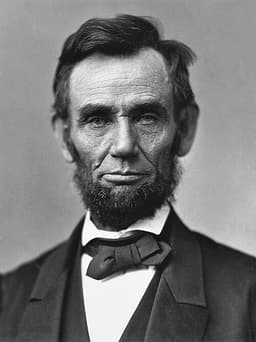
Abraham Lincoln
Politician · Modern
77.5Total
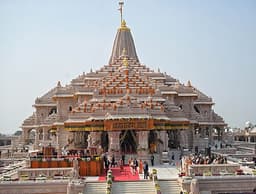
Rama of Ayodhya
Emperor · Ancient
75.3Total
Basic Information
Born
1809
-1180
Died
1865
-1120
Era
Modern
Ancient
Nationality
United States
Vedic India
Occupation
Politician
Emperor
Civilization
Western
Indian
Score Comparison
Military (10%)
50.0
72.0
Political (20%)
88.0
72.0
Influence (20%)
80.0
75.0
Legacy (20%)
82.0
80.0
Leadership (15%)
85.0
78.0
Strategy (15%)
60.0
68.1
TOTAL
77.5
75.3
Abraham Lincoln — Complete Timeline
1861 AD
Suspension of Habeas CorpusPolitical Action◆ Major
Lincoln suspended the writ of habeas corpus in parts of the Union, allowing the military to arrest and detain suspected Confederate sympathizers without trial. This action was controversial and challenged civil liberties during wartime.
Habeas CorpusCivil LibertiesCivil War
Impact: nationaldestructive
1862 AD
Signing of the Homestead ActPolitical Action◆ Major
Lincoln signed the Homestead Act, granting 160 acres of public land to settlers for a small fee. This encouraged westward expansion and agricultural development, but also displaced Native American tribes.
Homestead ActWestward ExpansionLand Policy
Impact: nationalconstructive
1863 AD
Emancipation ProclamationPolitical Action
Lincoln issued the Emancipation Proclamation, declaring slaves in Confederate states free. This shifted the Civil War's focus to ending slavery and allowed African Americans to join the Union Army.
EmancipationCivil WarSlavery
Impact: globalprogressive
Gettysburg AddressCultural◆ Major
Lincoln delivered the Gettysburg Address at the dedication of the Soldiers' National Cemetery. The speech redefined the Civil War as a struggle for national unity and equality, and became one of the most famous speeches in US history.
Gettysburg AddressCivil WarOratory
Impact: nationalconstructive
1865 AD
Assassination by John Wilkes BoothOther
Lincoln was shot by John Wilkes Booth at Ford's Theatre in Washington, D.C., and died the next day. His assassination occurred just days after the Civil War ended, plunging the nation into mourning and affecting Reconstruction.
AssassinationCivil WarReconstruction
Impact: nationaltragic
Rama of Ayodhya — Complete Timeline
1160 BC
Broke Shiva's Bow at Sita's SwayamvaraCultural◆ Major
Rama, as a young prince, lifted and strung the divine bow of Shiva at Princess Sita's marriage ceremony. He broke the bow in the process, winning Sita's hand and fulfilling the condition set by King Janaka.
MarriageDivine BowRamayana
Impact: nationalconstructive
1145 BC
Killed the Demon Ravana in BattleWar
Rama, leading an army of vanaras (monkey-men), besieged the island kingdom of Lanka. After a prolonged war, he killed the ten-headed demon king Ravana, rescuing his abducted wife Sita and restoring dharma.
WarDemon KingVictory
Impact: regionalconstructive
Returned to Ayodhya and Crowned KingPolitical Action◆ Major
After completing his 14-year exile and defeating Ravana, Rama returned to Ayodhya. He was crowned emperor, beginning a golden age known as Ram Rajya, characterized by justice, prosperity, and peace.
CoronationGolden AgeRamayana
Impact: nationalconstructive
Expert Analysis
Origins
Abraham Lincoln was born in 1809 in a log cabin in Kentucky to poor, uneducated parents. His humble beginnings shaped his self-made image and empathy for the common man. He educated himself, became a lawyer, and entered politics. Rama, by contrast, was born a prince in Ayodhya, the eldest son of King Dasharatha. As an avatar of Vishnu, his origins were divine, yet he was raised as a human, embodying dharma (righteousness) from childhood. Both men emerged from vastly different worlds—one a frontier democrat, the other a mythic emperor.
Rise to Power
Lincoln's rise was gradual and political. He served in the Illinois legislature and the U.S. House, but lost Senate races before winning the presidency in 1860 as a Republican. His election triggered Southern secession. Rama's rise was destined. He won Sita's hand by breaking Shiva's bow, a feat no other prince could match. Exiled unjustly for 14 years, he gained power through virtue and eventual victory. Lincoln fought for power through votes; Rama through divine right and popular acclaim.
Leadership & Governance
Lincoln's leadership was tested by the Civil War. He issued the Emancipation Proclamation (freeing slaves in rebel states), signed the Homestead Act (promoting westward expansion), and delivered the Gettysburg Address (redefining the nation's purpose). He suspended habeas corpus to suppress dissent, a controversial act. Rama's governance was idealized as Ram Rajya—a reign of justice and prosperity. He restored order after Ravana's tyranny, but his later life included the exile of Sita due to public doubt. Both led through crisis, but Lincoln faced a modern constitutional crisis; Rama, a timeless moral one.
Triumph & Tragedy
Lincoln's greatest triumph was preserving the Union and ending slavery, but his tragedy was assassination by John Wilkes Booth in 1865, just as peace began. Rama's triumph was killing the demon Ravana and rescuing Sita, but his tragedy was the subsequent exile of Sita due to rumors, leading to her disappearance. Both achieved monumental victories but suffered personal loss. Lincoln died a martyr; Rama lived as a lonely king. Their tragedies reflect the costs of leadership.
Character & Destiny
Lincoln was pragmatic, melancholic, and shrewd. He held the Union together through political skill and moral clarity. His destiny was to die for his country. Rama was idealistic, stoic, and bound by dharma. He sacrificed personal happiness for duty. His destiny was to restore righteousness. Lincoln's scores: M=50, P=88, I=80, L=82, D=85, S=60, T=78. Rama's scores: M=72, P=72, I=75, L=80, D=78, S=68, T=75. Lincoln's higher P (political influence) and D (durability) reflect his tangible impact; Rama's higher M (military) and S (spiritual) reflect his martial and religious legacy.
Legacy
Lincoln's legacy is enshrined in the U.S. Constitution, his memorial, and the ongoing struggle for equality. He is a secular icon of democracy. Rama's legacy is the Ramayana, celebrated across Asia, and the concept of Ram Rajya as a utopian ideal. He is a divine icon of Hinduism. Lincoln's impact is measurable in laws and history; Rama's in culture and faith. The score gap of 2.2 favors Lincoln, but this is a quantitative measure. Rama's influence spans millennia; Lincoln's, centuries.
Conclusion
Abraham Lincoln and Rama of Ayodhya represent different paradigms of leadership. Lincoln, the humanist politician, transformed a nation through law and war. Rama, the divine king, embodied eternal values. In a direct comparison, Lincoln's tangible achievements—ending slavery and preserving a democracy—edge out Rama's mythological reign. The score gap of 2.2 reflects Lincoln's higher political and durability scores, but Rama's moral and spiritual legacy remains unmatched. Ultimately, Lincoln wins on historical impact, but Rama wins on timeless inspiration.
Rankings
🥇
Abraham LincolnLeader
Mil: 50.0Pol: 88.0Inf: 80.0
77.5
🥈
Rama of Ayodhya
Mil: 72.0Pol: 72.0Inf: 75.0
75.3
+2.2 behind
How This Comparison Works
Algorithm
Each figure is scored on 6 dimensions (0—100 scale) based on structured historical data: Military (10%), Political (20%), Influence (20%), Legacy (20%), Leadership (15%), Strategy (15%). The weighted total produces the final ranking.
Data Sources
Scores are computed from structured sub-indicators in the database. Scale factors adjust for era (Ancient ×0.85, Modern ×1.0) and civilization size (Eastern ×1.05, Other ×0.80) to account for differences in population and military scale.
Maximum 3 Figures
Comparisons are limited to 2—3 figures to ensure readability and statistical meaningfulness.
Error Margins
±5 points per dimension — Sub-scores are derived from historical records with inherent uncertainty. Two figures within 5 points on a dimension should be considered roughly equivalent in that area.
Total Score Accuracy
±3 points overall — The weighted combination of 6 dimensions produces a total score with approximately ±3 points of uncertainty. Differences of less than 3 points are not statistically significant— the figures are effectively tied.
Known Limitations
- Historical records are incomplete and uneven across civilizations
- Figures from oral-tradition societies may be underrepresented
- Occupation labels can misclassify multi-role figures
- Scores measure capability and impact, not moral character
- Quantitative scoring is a comparison tool, not absolute truth
Capability Radar
Military (10%) — Battles & Warfare
Battles
15
75
Win Rate
20
95
Expansion
0
70
Political (20%) — Governance & Reform
Reform
95
80
Diplomacy
80
85
Economy
70
75
Influence (20%) — Cultural & Global Reach
Cultural
85
95
Global
85
95
Legacy (20%) — Historical Impact
Historical
95
95
Longevity
90
100
Leadership (15%) — Power & Stability
Tenure
65
70
Stability
55
90
Strategy (15%) — Tactics & Innovation
Strategy
55
85
Tactics
10
80
Reform
60
60
Similar Comparisons
Comments & Discussion
No comments yet. Be the first to share your thoughts!