Loading...
Abraham Lincoln vs Nelson Mandela
Abraham Lincoln leads by 20.5 pts · 2 figures compared
…
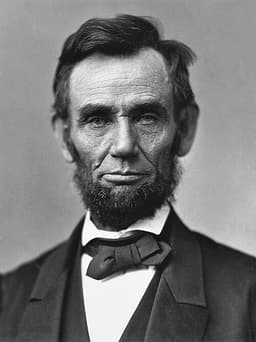
Abraham Lincoln
Politician · Modern
77.5Total
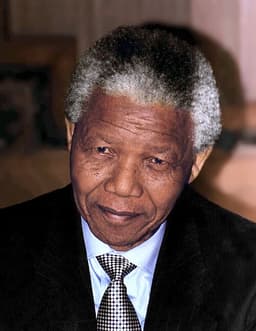
Nelson Mandela
Politician · Modern
57.0Total
Basic Information
Born
1809
1918
Died
1865
2013
Era
Modern
Modern
Nationality
United States
South Africa
Occupation
Politician
Politician
Civilization
Western
Other
Score Comparison
Military (10%)
50.0
10.0
Political (20%)
88.0
78.0
Influence (20%)
80.0
40.0
Legacy (20%)
82.0
68.0
Leadership (15%)
85.0
82.0
Strategy (15%)
60.0
50.0
TOTAL
77.5
57.0
Abraham Lincoln — Complete Timeline
1861 AD
Suspension of Habeas CorpusPolitical Action◆ Major
Lincoln suspended the writ of habeas corpus in parts of the Union, allowing the military to arrest and detain suspected Confederate sympathizers without trial. This action was controversial and challenged civil liberties during wartime.
Habeas CorpusCivil LibertiesCivil War
Impact: nationaldestructive
1862 AD
Signing of the Homestead ActPolitical Action◆ Major
Lincoln signed the Homestead Act, granting 160 acres of public land to settlers for a small fee. This encouraged westward expansion and agricultural development, but also displaced Native American tribes.
Homestead ActWestward ExpansionLand Policy
Impact: nationalconstructive
1863 AD
Emancipation ProclamationPolitical Action
Lincoln issued the Emancipation Proclamation, declaring slaves in Confederate states free. This shifted the Civil War's focus to ending slavery and allowed African Americans to join the Union Army.
EmancipationCivil WarSlavery
Impact: globalprogressive
Gettysburg AddressCultural◆ Major
Lincoln delivered the Gettysburg Address at the dedication of the Soldiers' National Cemetery. The speech redefined the Civil War as a struggle for national unity and equality, and became one of the most famous speeches in US history.
Gettysburg AddressCivil WarOratory
Impact: nationalconstructive
1865 AD
Assassination by John Wilkes BoothOther
Lincoln was shot by John Wilkes Booth at Ford's Theatre in Washington, D.C., and died the next day. His assassination occurred just days after the Civil War ended, plunging the nation into mourning and affecting Reconstruction.
AssassinationCivil WarReconstruction
Impact: nationaltragic
Nelson Mandela — Complete Timeline
1964 AD
Rivonia TrialPolitical Action
Nelson Mandela and other anti-apartheid leaders were tried for sabotage and conspiracy. Mandela was sentenced to life imprisonment, delivering a speech from the dock that became a rallying cry against apartheid. The trial drew international attention to the anti-apartheid struggle.
Impact: global
1990 AD
Release from PrisonPolitical Action
After 27 years of imprisonment, Mandela was released from Victor Verster Prison by President F.W. de Klerk. His release was a pivotal moment in South Africa's transition from apartheid to multiracial democracy, leading to negotiations for a new constitution.
Impact: globalprogressive
1993 AD
Awarding of the Nobel Peace PrizeCultural◆ Major
Mandela and F.W. de Klerk were jointly awarded the Nobel Peace Prize for their roles in ending apartheid and laying the foundations for a democratic South Africa. The award recognized their peaceful transition and commitment to reconciliation.
Impact: globalprogressive
1994 AD
Inauguration as President of South AfricaPolitical Action
Mandela was inaugurated as South Africa's first Black president after the country's first fully democratic elections. His presidency focused on national reconciliation, establishing the Truth and Reconciliation Commission, and dismantling the legacy of apartheid.
Impact: globalprogressive
Expert Analysis
Abraham Lincoln vs Nelson Mandela
### The Prisoner and the Railsplitter
The scene could not be more different. In 1964, a man in a neat suit stands in a Pretoria courtroom, his voice calm as he tells the judge he is prepared to die for his ideals. In 1861, a gaunt, disheveled figure slips through the streets of Baltimore in disguise, fearing assassination before he can even be sworn in as president. One is a lawyer turned revolutionary; the other, a frontier politician turned commander-in-chief. Nelson Mandela and Abraham Lincoln lived a century apart on different continents, yet each faced the defining moral crisis of his nation: the brutal, institutionalized division of human beings by race. Why did one survive to govern, while the other was murdered at the moment of his greatest triumph? The answer lies not just in the eras they inhabited, but in the very nature of the conflicts they inherited.
### Origins
Lincoln was born in 1809 into a Kentucky log cabin, the son of illiterate farmers. His world was one of physical toil, self-education by firelight, and a grinding poverty that he clawed his way out of through sheer will. He was a product of the American frontier, where law was rough and opportunity scarce. Mandela, born in 1918 into the Thembu royal family of South Africa’s Eastern Cape, was an aristocrat by birth. He was groomed for leadership, educated at Methodist schools and the University of Fort Hare, the continent’s first Black university. Where Lincoln’s formative struggle was against economic hardship, Mandela’s was against a racial caste system that denied him the right to vote in his own country. Lincoln came of age in a nation fracturing over slavery; Mandela came of age in a nation already cemented in apartheid. The difference in their origins dictated the tools they would use: Lincoln, the pragmatic lawyer who knew how to build a coalition; Mandela, the activist who learned that legal protest could be met with state violence.
### Rise to Power
Lincoln’s path was a slow, grinding ascent through the Illinois legislature and a single, controversial term in Congress. He lost more elections than he won. His rise was propelled not by charisma but by his mastery of language and his uncanny ability to articulate the moral stakes of the slavery debate. The pivotal moment was the 1858 Lincoln-Douglas debates, where he lost a Senate seat but gained a national reputation. In 1860, he won the presidency with only 40% of the popular vote, a minority president leading a divided nation.
Mandela’s rise was born of frustration. As a young lawyer in Johannesburg, he initially pursued nonviolent resistance with the African National Congress. But after the 1960 Sharpeville massacre, where police killed 69 unarmed protesters, he concluded that the state would never yield to petitions. He co-founded Umkhonto we Sizwe, the armed wing of the ANC, and went underground. The turning point was the 1964 Rivonia Trial, where he was sentenced to life imprisonment for sabotage. Lincoln entered power through an election; Mandela entered history through a prison cell.
### Leadership & Governance
Their styles of leadership could not have been more different, yet both were masters of the long game. Lincoln governed during a war that killed 600,000 Americans. He suspended habeas corpus, censored newspapers, and expanded executive power beyond any previous president. Yet he did so with a deep, melancholic empathy. He told jokes to relieve tension and read Shakespeare to understand tragedy. His military strategy was often frustrated by timid generals, but he learned, sacking commanders until he found Ulysses S. Grant. His political genius lay in holding together a fragile coalition of abolitionists, border-state unionists, and war Democrats. The Emancipation Proclamation of 1863 was a masterstroke: it freed slaves only in rebel states, preserving the loyalty of slave-holding border states while transforming the war into a moral crusade.
Mandela, by contrast, governed after a negotiated peace. He had no army to command; his military score is a paltry 10.0. His leadership was about reconciliation, not conquest. Released from prison in 1990, he famously walked into the office of his former prosecutor to ask for tea. As president from 1994 to 1999, he invited his white jailers to his inauguration and kept on F.W. de Klerk as deputy president. Where Lincoln used the blunt instrument of war to smash slavery, Mandela used the subtle art of forgiveness to dismantle apartheid. Both were supremely political animals, but Lincoln’s political score of 88.0 reflects his wartime maneuvering, while Mandela’s 80.0 reflects his ability to build a multiracial democracy from the rubble of a police state.
### Triumph & Tragedy
Lincoln’s greatest moment was also his tragedy. On April 9, 1865, General Lee surrendered at Appomattox. The Union was preserved, slavery was doomed. Five days later, Lincoln was shot by John Wilkes Booth at Ford’s Theatre. He died without seeing the ratification of the 13th Amendment or the long, bitter Reconstruction that followed. His triumph was cut short by the very hatred he had spent his presidency fighting.
Mandela’s triumph was more prolonged. In 1993, he shared the Nobel Peace Prize with de Klerk. In 1994, he was inaugurated as South Africa’s first Black president, a moment broadcast around the world. But his tragedy was quieter: the AIDS epidemic that he initially handled poorly, the economic inequality that persisted, and the knowledge that he had spent 27 years in prison while his country burned. He lived to see his victory, but he also lived to see its incompleteness.
### Character & Destiny
Lincoln was a man of profound melancholy, haunted by depression and the death of his son Willie. He believed in a providential destiny that he could not fully comprehend. “I claim not to have controlled events,” he said, “but confess plainly that events have controlled me.” His character was shaped by a deep, almost fatalistic humility. Mandela, by contrast, was a man of controlled dignity. Prison had refined him, stripping away anger and leaving only purpose. He was not humble; he was magnanimous. He once said, “I am not a saint, unless you think of a saint as a sinner who keeps on trying.” Lincoln’s destiny was to be martyred; Mandela’s was to be the living symbol of a nation’s rebirth.
### Legacy
Lincoln’s legacy is the Union itself. Every American who speaks of “a new birth of freedom” echoes his Gettysburg Address. His score of 80.0 in legacy reflects his enshrinement as the secular saint of American democracy. But his legacy is also contested: his suspension of civil liberties, his support for colonization of freed slaves, his ambiguous racial views.
Mandela’s legacy is a template for peaceful transition. He scored 78.0, but his influence—80.0—is arguably greater in the Global South, where his example inspired movements from Burma to Palestine. Yet his legacy, too, is complex: some criticize his economic compromises, his failure to address land reform, his embrace of neoliberal policies.
### Conclusion
One man died at the moment of victory; the other lived to see the long, slow work of peace. Lincoln’s story is a tragedy with a redemptive ending; Mandela’s is a redemption story with a tragic undertow. Both understood that the arc of the moral universe bends toward justice, but they also knew that someone has to bend it. Lincoln bent it with war; Mandela bent it with forgiveness. They were prisoners of their eras and liberators of their nations. In the end, the difference between them is the difference between a bullet and a handshake—and both, in their own way, changed the world.
Rankings
🥇
Abraham LincolnLeader
Mil: 50.0Pol: 88.0Inf: 80.0
77.5
🥈
Nelson Mandela
Mil: 10.0Pol: 78.0Inf: 40.0
57.0
+20.5 behind
How This Comparison Works
Algorithm
Each figure is scored on 6 dimensions (0—100 scale) based on structured historical data: Military (10%), Political (20%), Influence (20%), Legacy (20%), Leadership (15%), Strategy (15%). The weighted total produces the final ranking.
Data Sources
Scores are computed from structured sub-indicators in the database. Scale factors adjust for era (Ancient ×0.85, Modern ×1.0) and civilization size (Eastern ×1.05, Other ×0.80) to account for differences in population and military scale.
Maximum 3 Figures
Comparisons are limited to 2—3 figures to ensure readability and statistical meaningfulness.
Error Margins
±5 points per dimension — Sub-scores are derived from historical records with inherent uncertainty. Two figures within 5 points on a dimension should be considered roughly equivalent in that area.
Total Score Accuracy
±3 points overall — The weighted combination of 6 dimensions produces a total score with approximately ±3 points of uncertainty. Differences of less than 3 points are not statistically significant— the figures are effectively tied.
Known Limitations
- Historical records are incomplete and uneven across civilizations
- Figures from oral-tradition societies may be underrepresented
- Occupation labels can misclassify multi-role figures
- Scores measure capability and impact, not moral character
- Quantitative scoring is a comparison tool, not absolute truth
Capability Radar
Military (10%) — Battles & Warfare
Battles
15
0
Win Rate
20
7
Expansion
0
9
Political (20%) — Governance & Reform
Reform
95
95
Diplomacy
80
95
Economy
70
60
Influence (20%) — Cultural & Global Reach
Cultural
85
85
Global
85
90
Legacy (20%) — Historical Impact
Historical
95
90
Longevity
90
80
Leadership (15%) — Power & Stability
Tenure
65
60
Stability
55
80
Strategy (15%) — Tactics & Innovation
Strategy
55
8
Tactics
10
12
Reform
60
17
Similar Comparisons
Comments & Discussion
GettysburgGrouch6/16/2026
Sure, Lincoln was a great orator, but let's not pretend he was some flawless saint. The guy suspended habeas corpus, shut down newspapers, and exiled political rivals without trial. Mandela spent 27 years in prison for his principles; Lincoln spent four years systematically dismantling civil liberties. One died a martyr because his assassin hated what he stood for; the other died in bed, beloved, because he actually saw his revolution through to a peaceful transition. Lincoln's legacy is propped
数据侦探6/16/2026
吹捧曼德拉是圣人?别闹了。他1990年出狱时,南非人均GDP是中国的三倍;到2013年他去世,南非人均GDP已经被中国反超40%多。治安烂成什么样?谋杀率飙到世界前五。非国大执政三十年,电力短缺到天天限电。曼德拉的"和解"听着高尚,实际就是给腐败官僚让路。林肯至少打赢了内战、废除了奴隶制,实打实的成果摆在那里。别拿道德表演当政绩,看数据说话。
PraetorianPen6/16/2026
Here's the uncomfortable truth Mandela's hagiographers ignore: he was a founding member of Umkhonto we Sizwe, a terrorist organization that bombed civilian targets — including a 1983 blast that killed 19 people in Pretoria. Lincoln was no pacifist either, but he never targeted civilians; his war was against a secessionist government, not shopping malls. Mandela later admitted he didn't achieve his goals — the ANC had to negotiate because the armed struggle failed. Lincoln never had that luxury;
史记新编6/16/2026
拿林肯和曼德拉比,本身就不在一个量级。林肯面对的是国家分裂的生死关头,11州脱离联邦,75万美国人互相屠杀。曼德拉呢?南非种族隔离制度在1980年代已经快撑不住了,国际制裁、内部暴动、经济萎缩,白人政权本来就要谈判。林肯不是"解放者",他是被迫被战争推着走的;曼德拉也不是"革命家",他是被历史潮流抬上宝座的。一个有勇气做艰难决定,一个运气好赶上好时候。
ClaymoreClassicist6/16/2026
Both men were masterful symbols, but Mandela understood symbolism as a political weapon in a way Lincoln never could. Lincoln's Emancipation Proclamation was a shrewd military tactic that freed slaves only in rebel states he didn't control; it took three constitutional amendments and a bloody Reconstruction to make emancipation real. Mandela, by contrast, walked into Victor Verster Prison in 1982 as a revolutionary, walked out in 1990 as a statesman, and never fired another shot — because he kne