Loading...
Abraham Lincoln vs Mahatma Gandhi
Abraham Lincoln leads by 8.8 pts · 2 figures compared
…
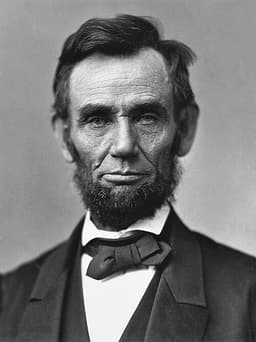
Abraham Lincoln
Politician · Modern
77.5Total
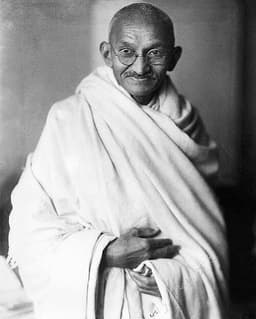
Mahatma Gandhi
Politician · Modern
68.7Total
Basic Information
Born
1809
1869
Died
1865
1948
Era
Modern
Modern
Nationality
United States
India
Occupation
Politician
Politician
Civilization
Western
Indian
Score Comparison
Military (10%)
50.0
42.3
Political (20%)
88.0
65.0
Influence (20%)
80.0
80.0
Legacy (20%)
82.0
75.0
Leadership (15%)
85.0
70.0
Strategy (15%)
60.0
55.0
TOTAL
77.5
68.7
Abraham Lincoln — Complete Timeline
1861 AD
Suspension of Habeas CorpusPolitical Action◆ Major
Lincoln suspended the writ of habeas corpus in parts of the Union, allowing the military to arrest and detain suspected Confederate sympathizers without trial. This action was controversial and challenged civil liberties during wartime.
Habeas CorpusCivil LibertiesCivil War
Impact: nationaldestructive
1862 AD
Signing of the Homestead ActPolitical Action◆ Major
Lincoln signed the Homestead Act, granting 160 acres of public land to settlers for a small fee. This encouraged westward expansion and agricultural development, but also displaced Native American tribes.
Homestead ActWestward ExpansionLand Policy
Impact: nationalconstructive
1863 AD
Emancipation ProclamationPolitical Action
Lincoln issued the Emancipation Proclamation, declaring slaves in Confederate states free. This shifted the Civil War's focus to ending slavery and allowed African Americans to join the Union Army.
EmancipationCivil WarSlavery
Impact: globalprogressive
Gettysburg AddressCultural◆ Major
Lincoln delivered the Gettysburg Address at the dedication of the Soldiers' National Cemetery. The speech redefined the Civil War as a struggle for national unity and equality, and became one of the most famous speeches in US history.
Gettysburg AddressCivil WarOratory
Impact: nationalconstructive
1865 AD
Assassination by John Wilkes BoothOther
Lincoln was shot by John Wilkes Booth at Ford's Theatre in Washington, D.C., and died the next day. His assassination occurred just days after the Civil War ended, plunging the nation into mourning and affecting Reconstruction.
AssassinationCivil WarReconstruction
Impact: nationaltragic
Mahatma Gandhi — Complete Timeline
1917 AD
Champaran SatyagrahaPolitical Action
Gandhi led his first nonviolent protest in India, supporting indigo farmers in Champaran, Bihar, against exploitative British planters. He organized a campaign of civil disobedience and negotiations, resulting in the abolition of the oppressive tinkathia system.
Civil disobedienceFarmers' rightsBritish Raj
Impact: nationalprogressive
1919 AD
Jallianwala Bagh massacre aftermathPolitical Action◆ Major
After British troops killed hundreds of unarmed civilians in Amritsar, Gandhi organized a nationwide hartal (strike) and nonviolent protests. He returned his medals and launched the Rowlatt Satyagraha, marking a shift from cooperation to non-cooperation with British rule.
ProtestBritish RajMassacre
Impact: nationaltragic
1930 AD
Salt MarchPolitical Action
Gandhi led a 240-mile march from Sabarmati to Dandi, Gujarat, to defy the British salt monopoly. Thousands joined him, making salt from seawater. This act of civil disobedience sparked mass protests across India and drew global attention to the independence movement.
Civil disobedienceSalt taxIndependence movement
Impact: globalprogressive
1942 AD
Quit India Movement launchPolitical Action◆ Major
Gandhi launched the Quit India Movement, calling for an end to British rule with the slogan 'Do or Die'. The British arrested him and other leaders, but the movement led to widespread protests and repression, accelerating the end of colonial rule.
IndependenceCivil disobedienceBritish Raj
Impact: nationalprogressive
1948 AD
AssassinationPolitical Action
Gandhi was shot and killed by Nathuram Godse, a Hindu nationalist, during a prayer meeting in New Delhi. His assassination shocked the world and led to a wave of grief and violence, but also reinforced his legacy as a martyr for nonviolence.
AssassinationMartyrdomNonviolence
Impact: globaltragic
Expert Analysis
Abraham Lincoln vs Mahatma Gandhi
### The Saint and the Statesman: Gandhi, Lincoln, and the Price of Moral Leadership
On a January morning in 1948, Mohandas Gandhi walked toward a prayer meeting in New Delhi, his frail frame supported by two grandnieces. A few hours later, three bullets from a Hindu nationalist’s pistol ended his life. Just over eighty years earlier, on an April evening in 1865, Abraham Lincoln sat laughing in a box at Ford’s Theatre, only to have a single shot from a Confederate sympathizer’s derringer change the course of American history. Both men were assassinated at the peak of their moral authority, yet they arrived at that moment by radically different paths. Gandhi, the ascetic lawyer who turned nonviolence into a political weapon, and Lincoln, the prairie politician who wielded executive power to preserve a Union and destroy slavery. Why did one succeed through mass mobilization and the other through constitutional war? The answer lies not only in their genius but in the very different worlds they inhabited.
**Origins**
Lincoln was born in 1809 into a log cabin in Kentucky, the son of illiterate farmers. He educated himself by firelight, reading the Bible and Shakespeare, and rose through the ranks of frontier law and Illinois politics. His America was a young, sprawling republic, already divided by the question of slavery. Gandhi, born in 1869 in coastal Gujarat, came from a merchant-caste family; his father was a prime minister of a small princely state. He studied law in London, then practiced in South Africa, where he first encountered the raw racism that would define his life’s work. Lincoln’s world was one of democratic institutions, railroads, and a brutal civil war. Gandhi’s was a colonial world, where a distant empire ruled through divide-and-conquer. These origins shaped their core strategies: Lincoln believed in the power of law and the ballot, Gandhi in the power of the soul and the street.
**Rise to Power**
Lincoln entered politics as a Whig, then a Republican, losing more elections than he won. His famous 1858 debates with Stephen Douglas made him a national figure, but he won the presidency in 1860 with only 40% of the popular vote, his name not even on the ballot in many Southern states. His rise was a triumph of patience and pragmatism. Gandhi’s rise was more dramatic. He returned to India in 1915 as a hero of South African civil rights. In 1917, he led the Champaran Satyagraha, his first nonviolent protest in India, supporting indigo farmers against British landlords. This was a turning point, a small victory that proved the method could work. Two years later, after the Jallianwala Bagh massacre in 1919, where British troops killed hundreds of unarmed civilians, Gandhi organized a nationwide hartal, a strike that paralyzed the country. Lincoln became president through the machinery of party politics; Gandhi became the leader of a nation through the force of moral outrage.
**Leadership & Governance**
As president, Lincoln governed through crisis. He suspended habeas corpus in parts of the Union in 1861, allowing the military to arrest suspected Confederate sympathizers without trial—a controversial act that expanded executive power. He signed the Homestead Act in 1862, giving 160 acres of public land to settlers, a masterstroke that encouraged westward expansion while tying the West to the Union. His military leadership was uneven; he cycled through generals until he found Ulysses S. Grant. But his political wisdom was extraordinary. He issued the Emancipation Proclamation in 1863, not as a moral manifesto but as a war measure, freeing slaves only in Confederate states. It was a calculated move that kept border states loyal while giving the war a higher purpose. Gandhi, by contrast, had no state apparatus. His leadership was symbolic and strategic. In 1930, he led the Salt March, a 240-mile walk to the sea to defy the British salt monopoly. Thousands joined him, and the world watched. In 1942, he launched the Quit India Movement with the slogan “Do or Die.” The British arrested him and his followers, but the movement had already sown the seeds of inevitability. Lincoln governed; Gandhi inspired.
**Triumph & Tragedy**
Lincoln’s greatest moment was the Gettysburg Address in 1863, a 272-word speech that redefined the war as a struggle for “a new birth of freedom.” His greatest tragedy was his assassination in April 1865, just days after the Confederate surrender. He died without seeing the full implementation of Reconstruction, leaving a nation still deeply wounded. Gandhi’s greatest triumph was the Salt March, which turned a mundane commodity into a symbol of defiance. His tragedy was the partition of India in 1947, which he opposed but could not prevent. He spent his final months fasting and praying to stop Hindu-Muslim violence, only to be killed by a Hindu nationalist who believed Gandhi had betrayed the nation. Both men died at the hands of fanatics, but Lincoln’s death unified the North, while Gandhi’s death exposed the fractures within India itself.
**Character & Destiny**
Lincoln was a melancholic, witty man who carried the weight of the war on his shoulders. He had a deep faith in the Constitution and believed that the Union must be preserved at all costs. His personality was pragmatic; he was willing to compromise on slavery to save the Union, then willing to destroy slavery once the war gave him the chance. Gandhi was an ascetic, a man who dressed in a loincloth and spun his own cloth. He believed in the power of *ahimsa* (nonviolence) and *satyagraha* (truth-force). His personality was inflexible in its principles but flexible in tactics. Lincoln’s destiny was to preserve a nation; Gandhi’s was to birth one. Lincoln’s choices were shaped by the brutal calculus of war; Gandhi’s by the moral calculus of conscience.
**Legacy**
Lincoln is remembered as the Great Emancipator, the man who saved the Union and ended slavery. His face is carved on Mount Rushmore, his words are memorized by schoolchildren. His legacy is institutional: the 13th, 14th, and 15th Amendments, the Homestead Act, the transcontinental railroad. Gandhi is remembered as the Father of the Nation in India, his image on every rupee note. His legacy is philosophical: nonviolent resistance inspired Martin Luther King Jr., Nelson Mandela, and countless others. But while Lincoln’s America became a superpower, Gandhi’s India struggled with poverty, corruption, and communal violence. Lincoln’s legacy is a stable republic; Gandhi’s is an unfinished dream.
**Conclusion**
Standing at the edge of their lives, one sees two men who wielded power in opposite ways. Lincoln used the state to change a nation; Gandhi used the people to change a state. Lincoln was a politician who became a martyr; Gandhi was a saint who became a politician. Both were assassinated, but their deaths meant different things. Lincoln’s death consecrated the Union; Gandhi’s death exposed the wounds of partition. Yet both left the same essential lesson: that moral leadership, whether through law or through sacrifice, requires a willingness to die for a cause greater than oneself. In the end, the saint and the statesman were not so different. They were simply men who saw the world as it was, and refused to accept it.
Rankings
🥇
Abraham LincolnLeader
Mil: 50.0Pol: 88.0Inf: 80.0
77.5
🥈
Mahatma Gandhi
Mil: 42.3Pol: 65.0Inf: 80.0
68.7
+8.8 behind
How This Comparison Works
Algorithm
Each figure is scored on 6 dimensions (0—100 scale) based on structured historical data: Military (10%), Political (20%), Influence (20%), Legacy (20%), Leadership (15%), Strategy (15%). The weighted total produces the final ranking.
Data Sources
Scores are computed from structured sub-indicators in the database. Scale factors adjust for era (Ancient ×0.85, Modern ×1.0) and civilization size (Eastern ×1.05, Other ×0.80) to account for differences in population and military scale.
Maximum 3 Figures
Comparisons are limited to 2—3 figures to ensure readability and statistical meaningfulness.
Error Margins
±5 points per dimension — Sub-scores are derived from historical records with inherent uncertainty. Two figures within 5 points on a dimension should be considered roughly equivalent in that area.
Total Score Accuracy
±3 points overall — The weighted combination of 6 dimensions produces a total score with approximately ±3 points of uncertainty. Differences of less than 3 points are not statistically significant— the figures are effectively tied.
Known Limitations
- Historical records are incomplete and uneven across civilizations
- Figures from oral-tradition societies may be underrepresented
- Occupation labels can misclassify multi-role figures
- Scores measure capability and impact, not moral character
- Quantitative scoring is a comparison tool, not absolute truth
Capability Radar
Military (10%) — Battles & Warfare
Battles
15
45
Win Rate
20
46
Expansion
0
51
Political (20%) — Governance & Reform
Reform
95
85
Diplomacy
80
80
Economy
70
40
Influence (20%) — Cultural & Global Reach
Cultural
85
85
Global
85
90
Legacy (20%) — Historical Impact
Historical
95
90
Longevity
90
85
Leadership (15%) — Power & Stability
Tenure
65
60
Stability
55
55
Strategy (15%) — Tactics & Innovation
Strategy
55
52
Tactics
10
56
Reform
60
55
Similar Comparisons
Comments & Discussion
LincolnTheStrategist6/16/2026
Lincoln is the superior leader here. Gandhi's nonviolence was situational—effective against a colonial power sensitive to world opinion. Lincoln faced a rebellion armed to the teeth, willing to burn down their own capital. He understood that sometimes freedom needs bullets, not prayers. Gettysburg wasn't won by refusing to fight. The Emancipation Proclamation was a military necessity, not a moral gesture.