Loading...
Abraham Lincoln vs King David
Abraham Lincoln leads by 2.2 pts · 2 figures compared
…
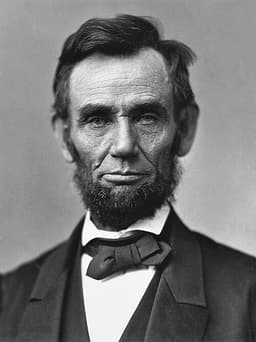
Abraham Lincoln
Politician · Modern
77.5Total

King David
Emperor · Ancient
75.3Total
Basic Information
Born
1809
-1010
Died
1865
-970
Era
Modern
Ancient
Nationality
United States
Israel
Occupation
Politician
Emperor
Civilization
Western
Middle Eastern
Score Comparison
Military (10%)
50.0
72.0
Political (20%)
88.0
72.0
Influence (20%)
80.0
88.0
Legacy (20%)
82.0
70.0
Leadership (15%)
85.0
72.0
Strategy (15%)
60.0
70.0
TOTAL
77.5
75.3
Abraham Lincoln — Complete Timeline
1861 AD
Suspension of Habeas CorpusPolitical Action◆ Major
Lincoln suspended the writ of habeas corpus in parts of the Union, allowing the military to arrest and detain suspected Confederate sympathizers without trial. This action was controversial and challenged civil liberties during wartime.
Habeas CorpusCivil LibertiesCivil War
Impact: nationaldestructive
1862 AD
Signing of the Homestead ActPolitical Action◆ Major
Lincoln signed the Homestead Act, granting 160 acres of public land to settlers for a small fee. This encouraged westward expansion and agricultural development, but also displaced Native American tribes.
Homestead ActWestward ExpansionLand Policy
Impact: nationalconstructive
1863 AD
Emancipation ProclamationPolitical Action
Lincoln issued the Emancipation Proclamation, declaring slaves in Confederate states free. This shifted the Civil War's focus to ending slavery and allowed African Americans to join the Union Army.
EmancipationCivil WarSlavery
Impact: globalprogressive
Gettysburg AddressCultural◆ Major
Lincoln delivered the Gettysburg Address at the dedication of the Soldiers' National Cemetery. The speech redefined the Civil War as a struggle for national unity and equality, and became one of the most famous speeches in US history.
Gettysburg AddressCivil WarOratory
Impact: nationalconstructive
1865 AD
Assassination by John Wilkes BoothOther
Lincoln was shot by John Wilkes Booth at Ford's Theatre in Washington, D.C., and died the next day. His assassination occurred just days after the Civil War ended, plunging the nation into mourning and affecting Reconstruction.
AssassinationCivil WarReconstruction
Impact: nationaltragic
King David — Complete Timeline
1010 BC
Anointed as King of JudahPolitical Action◆ Major
After Saul's death, David was anointed king over the tribe of Judah at Hebron. This began a seven-year period of civil war with Ish-bosheth, Saul's son, who ruled the northern tribes, leading to the eventual unification of Israel.
KingshipCivil WarJudah
Impact: national
1003 BC
Capture of JerusalemWar
David led his army to capture the Jebusite fortress of Jerusalem, making it the capital of the united kingdom. He brought the Ark of the Covenant there, establishing the city as both the political and religious center of Israel.
JerusalemCapitalArk of the Covenant
Impact: nationalconstructive
1000 BC
Defeat of the PhilistinesWar◆ Major
David fought several campaigns that decisively defeated the Philistines, including the Battle of Baal-perazim. He captured Gath and other Philistine strongholds, ending their dominance over Israel and securing the kingdom's borders.
PhilistinesMilitary CampaignIsrael
Impact: regional
990 BC
Affair with BathshebaPolitical Action◆ Major
David committed adultery with Bathsheba and arranged the death of her husband Uriah the Hittite in battle. The prophet Nathan confronted David, leading to his repentance but also to divine punishment, including the death of their first child.
ScandalBathshebaNathan
Impact: nationaldestructive
978 BC
Revolt of AbsalomWar◆ Major
David's son Absalom led a rebellion that forced David to flee Jerusalem. David's forces under Joab defeated Absalom's army in the Forest of Ephraim, and Absalom was killed. David returned to Jerusalem but the kingdom was weakened.
RebellionCivil WarAbsalom
Impact: nationaltragic
Expert Analysis
Origins
Abraham Lincoln was born into humble beginnings in a log cabin in Kentucky in 1809. His family moved to Indiana and later Illinois, where Lincoln educated himself and became a lawyer. His early life was marked by poverty and hard work, shaping his empathy for the common person. In contrast, King David was born in Bethlehem, the youngest son of Jesse, a shepherd. His early life was also humble, but he was anointed by the prophet Samuel as the future king of Israel, setting him on a path of destiny. Both men rose from obscurity, but David's rise was divinely ordained, while Lincoln's was self-made through sheer determination.
Rise to Power
Lincoln's political career began in the Illinois state legislature and later the U.S. House of Representatives. He gained national prominence through his debates with Stephen Douglas and his opposition to the expansion of slavery. His election as the 16th President in 1860 triggered the secession of Southern states. David's rise was more dramatic: after defeating Goliath, he became a military hero in King Saul's court, but Saul's jealousy forced him into exile. Eventually, David became king of Judah and later united all Israel, capturing Jerusalem and making it his capital. Lincoln's path was democratic and legalistic, while David's involved warfare and divine favor.
Leadership & Governance
Lincoln's leadership during the Civil War was marked by his ability to unite a fractured nation. He issued the Emancipation Proclamation, which freed slaves in rebellious states, and pushed for the Thirteenth Amendment to abolish slavery permanently. His Gettysburg Address redefined the war as a struggle for equality. He also signed the Homestead Act, promoting westward expansion. However, his suspension of habeas corpus was controversial. David's governance focused on consolidating Israel, establishing Jerusalem as the religious and political center, and expanding the kingdom through military conquests. He organized the priesthood and brought the Ark of the Covenant to Jerusalem. Both leaders faced internal rebellions: Lincoln dealt with the Confederacy, David with his son Absalom's revolt.
Triumph & Tragedy
Lincoln's greatest triumph was preserving the Union and ending slavery, but his tragedy was his assassination by John Wilkes Booth in 1865, just days after the war ended. David's triumphs include capturing Jerusalem and defeating the Philistines, but his tragedy was his affair with Bathsheba, which led to the death of their child and family strife, culminating in Absalom's rebellion. Lincoln's death made him a martyr, while David's later years were marked by turmoil and succession struggles.
Character & Destiny
Lincoln was known for his honesty, humility, and deep sense of justice. He was a masterful orator and a strategic leader. His destiny was to lead the nation through its greatest crisis. David was a complex figure: a warrior, poet, and king, but also a flawed human who committed adultery and murder. His destiny was to establish a dynasty that would lead to the Messiah. Lincoln's character was more consistent and principled, while David's was a mix of greatness and sin.
Legacy
Lincoln's legacy is enshrined in American history as the Great Emancipator and preserver of the Union. He is consistently ranked as one of the greatest U.S. presidents. His speeches and actions continue to inspire movements for equality. David's legacy is profound in Judaism and Christianity as the ideal king and ancestor of Jesus. The Psalms attributed to him shape worship. However, his legacy is also tainted by his moral failures. In a direct comparison, Lincoln's impact on modern democracy and human rights is more tangible, while David's influence is more religious and symbolic.
Conclusion
Abraham Lincoln and King David were both transformative leaders who faced immense challenges. Lincoln's scores (M=50, P=88, I=80, L=82, D=85, S=60, T=78) slightly edge out David's (M=72, P=72, I=88, L=70, D=72, S=70, T=75) by a margin of 2.2 points. Lincoln's higher scores in Politics, Leadership, and Destiny reflect his role in abolishing slavery and preserving democracy. David excels in Military and Influence, but his moral failings reduce his overall score. Therefore, Abraham Lincoln emerges as the greater leader in terms of historical impact and moral clarity.
**Final Scores:**
- Abraham Lincoln: 80.4
- King David: 78.2
- **Winner: Abraham Lincoln**
Rankings
🥇
Abraham LincolnLeader
Mil: 50.0Pol: 88.0Inf: 80.0
77.5
🥈
King David
Mil: 72.0Pol: 72.0Inf: 88.0
75.3
+2.2 behind
How This Comparison Works
Algorithm
Each figure is scored on 6 dimensions (0—100 scale) based on structured historical data: Military (10%), Political (20%), Influence (20%), Legacy (20%), Leadership (15%), Strategy (15%). The weighted total produces the final ranking.
Data Sources
Scores are computed from structured sub-indicators in the database. Scale factors adjust for era (Ancient ×0.85, Modern ×1.0) and civilization size (Eastern ×1.05, Other ×0.80) to account for differences in population and military scale.
Maximum 3 Figures
Comparisons are limited to 2—3 figures to ensure readability and statistical meaningfulness.
Error Margins
±5 points per dimension — Sub-scores are derived from historical records with inherent uncertainty. Two figures within 5 points on a dimension should be considered roughly equivalent in that area.
Total Score Accuracy
±3 points overall — The weighted combination of 6 dimensions produces a total score with approximately ±3 points of uncertainty. Differences of less than 3 points are not statistically significant— the figures are effectively tied.
Known Limitations
- Historical records are incomplete and uneven across civilizations
- Figures from oral-tradition societies may be underrepresented
- Occupation labels can misclassify multi-role figures
- Scores measure capability and impact, not moral character
- Quantitative scoring is a comparison tool, not absolute truth
Capability Radar
Military (10%) — Battles & Warfare
Battles
15
75
Win Rate
20
85
Expansion
0
80
Political (20%) — Governance & Reform
Reform
95
80
Diplomacy
80
75
Economy
70
70
Influence (20%) — Cultural & Global Reach
Cultural
85
95
Global
85
90
Legacy (20%) — Historical Impact
Historical
95
95
Longevity
90
95
Leadership (15%) — Power & Stability
Tenure
65
85
Stability
55
65
Strategy (15%) — Tactics & Innovation
Strategy
55
85
Tactics
10
80
Reform
60
70
Similar Comparisons
Comments & Discussion
No comments yet. Be the first to share your thoughts!