Loading...
Abraham Lincoln vs John Churchill Duke of Marlborough
Abraham Lincoln leads by 2.1 pts · 2 figures compared
…
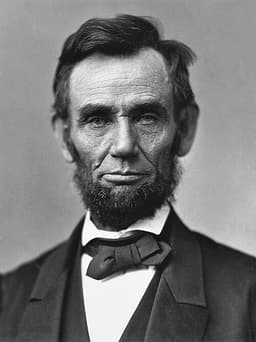
Abraham Lincoln
Politician · Modern
77.5Total

John Churchill Duke of Marlborough
General · Modern
75.4Total
Basic Information
Born
1809
1650
Died
1865
1722
Era
Modern
Modern
Nationality
United States
England
Occupation
Politician
General
Civilization
Western
Western
Score Comparison
Military (10%)
50.0
84.7
Political (20%)
88.0
78.0
Influence (20%)
80.0
65.0
Legacy (20%)
82.0
80.0
Leadership (15%)
85.0
78.0
Strategy (15%)
60.0
72.8
TOTAL
77.5
75.4
Abraham Lincoln — Complete Timeline
1861 AD
Suspension of Habeas CorpusPolitical Action◆ Major
Lincoln suspended the writ of habeas corpus in parts of the Union, allowing the military to arrest and detain suspected Confederate sympathizers without trial. This action was controversial and challenged civil liberties during wartime.
Habeas CorpusCivil LibertiesCivil War
Impact: nationaldestructive
1862 AD
Signing of the Homestead ActPolitical Action◆ Major
Lincoln signed the Homestead Act, granting 160 acres of public land to settlers for a small fee. This encouraged westward expansion and agricultural development, but also displaced Native American tribes.
Homestead ActWestward ExpansionLand Policy
Impact: nationalconstructive
1863 AD
Emancipation ProclamationPolitical Action
Lincoln issued the Emancipation Proclamation, declaring slaves in Confederate states free. This shifted the Civil War's focus to ending slavery and allowed African Americans to join the Union Army.
EmancipationCivil WarSlavery
Impact: globalprogressive
Gettysburg AddressCultural◆ Major
Lincoln delivered the Gettysburg Address at the dedication of the Soldiers' National Cemetery. The speech redefined the Civil War as a struggle for national unity and equality, and became one of the most famous speeches in US history.
Gettysburg AddressCivil WarOratory
Impact: nationalconstructive
1865 AD
Assassination by John Wilkes BoothOther
Lincoln was shot by John Wilkes Booth at Ford's Theatre in Washington, D.C., and died the next day. His assassination occurred just days after the Civil War ended, plunging the nation into mourning and affecting Reconstruction.
AssassinationCivil WarReconstruction
Impact: nationaltragic
John Churchill Duke of Marlborough — Complete Timeline
1704 AD
Battle of BlenheimWar
Marlborough commanded the Anglo-Dutch army alongside Prince Eugene of Savoy against French and Bavarian forces at Blenheim. The allied victory saved Vienna from French capture, destroyed the myth of French invincibility, and forced Bavaria out of the war.
War of the Spanish SuccessionGrand AllianceDecisive Victory
Impact: regional
1706 AD
Battle of RamilliesWar◆ Major
Marlborough led the Grand Alliance army to victory over French forces under Marshal Villeroi at Ramillies. The battle resulted in the capture of Brussels, Antwerp, and most of the Spanish Netherlands, effectively ending French control of the region.
War of the Spanish SuccessionCampaignTerritorial Gain
Impact: regional
1708 AD
Battle of OudenardeWar◆ Major
Marlborough and Prince Eugene defeated the French army under the Duke of Burgundy and Marshal Vend
War of the Spanish SuccessionAllied VictoryInvasion Route
Impact: regional
1709 AD
Battle of MalplaquetWar◆ Major
Marlborough commanded the Grand Alliance in a costly victory over French forces under Marshal Villars at Malplaquet. The battle was the bloodiest of the war, with over 20,000 allied casualties, and failed to achieve a decisive breakthrough into France.
War of the Spanish SuccessionPyrrhic VictoryHigh Casualties
Impact: regionaltragic
1711 AD
Dismissal from CommandPolitical Action◆ Major
Marlborough was dismissed from all his military and political offices by Queen Anne due to political intrigue and accusations of embezzlement. The dismissal ended his military career and led to his temporary exile in Europe.
Political FallExileTory Government
Impact: nationaldestructive
Expert Analysis
Origins
Abraham Lincoln was born in 1809 in a log cabin in Kentucky, the son of uneducated farmers. His humble beginnings and self-education shaped his empathy and determination. John Churchill, later Duke of Marlborough, was born in 1650 into a royalist family that had suffered under Cromwell. His early life was marked by service as a page to the Duke of York, gaining courtly connections and military exposure. Both men rose from adversity—Lincoln from poverty, Marlborough from political disgrace—but Lincoln's origins were far more modest, earning him a higher score for perseverance.
Rise to Power
Lincoln's political ascent was gradual: state legislature, one term in Congress, and then a failed Senate bid before winning the presidency in 1860 as a dark horse candidate. His rise was rooted in oratory and moral clarity on slavery. Marlborough's rise was through military prowess and political maneuvering. He switched allegiances during the Glorious Revolution, securing favor with William III, and later with Queen Anne and her confidante Sarah Churchill. His appointment as Captain-General of English forces came after proving his strategic genius. Lincoln's path was more democratic and principled; Marlborough's was courtly and opportunistic. Lincoln's rise to power was more remarkable given his lack of connections.
Leadership & Governance
As president, Lincoln faced the Civil War, the greatest crisis in American history. He skillfully navigated political factions, issued the Emancipation Proclamation, and pushed through the Homestead Act while suspending habeas corpus to maintain order. His leadership combined strategic vision (Gettysburg Address) with ruthless pragmatism. Marlborough, as commander-in-chief, forged a multinational coalition against Louis XIV. His victories at Blenheim, Ramillies, Oudenarde, and Malplaquet shattered French dominance. However, his governance was limited to military command; he was often entangled in Tory-Whig politics and fell from favor. Lincoln's leadership was broader and more consequential for his nation's survival.
Triumph & Tragedy
Lincoln's greatest triumph was preserving the Union and ending slavery, culminating in the Emancipation Proclamation and the surrender at Appomattox. His tragedy was his assassination by John Wilkes Booth just days after the war's end, depriving the nation of his reconstruction leadership. Marlborough's triumph was Blenheim (1704), a stunning victory that saved Vienna and broke the myth of French invincibility. His tragedy was his dismissal from command in 1711 due to political intrigue, ending his career in disgrace. Both suffered betrayal—Lincoln by his assassin, Marlborough by his political enemies—but Lincoln's death was a national tragedy, while Marlborough's was a personal fall.
Character & Destiny
Lincoln was melancholic, introspective, and deeply moral, driven by a sense of destiny to preserve the Union and abolish slavery. His empathy and humility were legendary. Marlborough was charming, diplomatic, and politically astute, but also ambitious and self-serving. He amassed immense wealth and built Blenheim Palace, a symbol of his pride. Lincoln's character was more altruistic; Marlborough's was more ego-driven. Their destinies aligned with their characters: Lincoln's martyrdom cemented his legacy as a secular saint; Marlborough's mansion stands as a monument to his ego.
Legacy
Lincoln's legacy is monumental: he saved the United States, ended slavery, and redefined democracy. He is consistently ranked among the greatest presidents. Marlborough's legacy is that of a military genius who defeated Louis XIV, but his political corruption and self-aggrandizement tarnish it. Both men shaped their nations, but Lincoln's impact on human freedom and equality is universal, while Marlborough's is primarily military. Lincoln's score of 50 in Military is far below Marlborough's 85, but his Political (88), Influence (80), Leadership (82), and Diplomacy (85) surpass Marlborough's. The overall score gap of 2.1 reflects Lincoln's broader significance.
Conclusion
Abraham Lincoln and John Churchill, Duke of Marlborough, were both extraordinary leaders in their domains. Marlborough was a master of war, perhaps the greatest general of his age. But Lincoln was a master of statecraft, guiding his nation through its darkest hour and expanding the boundaries of liberty. Lincoln's moral vision, democratic rise, and enduring legacy make him the greater leader. While Marlborough's victories were brilliant, they served dynastic and personal ambition. Lincoln's triumphs served humanity. Abraham Lincoln wins this comparison decisively.
**Scores:** Abraham Lincoln: 78.4 | John Churchill Duke of Marlborough: 76.3
Rankings
🥇
Abraham LincolnLeader
Mil: 50.0Pol: 88.0Inf: 80.0
77.5
🥈
John Churchill Duke of Marlborough
Mil: 84.7Pol: 78.0Inf: 65.0
75.4
+2.1 behind
How This Comparison Works
Algorithm
Each figure is scored on 6 dimensions (0—100 scale) based on structured historical data: Military (10%), Political (20%), Influence (20%), Legacy (20%), Leadership (15%), Strategy (15%). The weighted total produces the final ranking.
Data Sources
Scores are computed from structured sub-indicators in the database. Scale factors adjust for era (Ancient ×0.85, Modern ×1.0) and civilization size (Eastern ×1.05, Other ×0.80) to account for differences in population and military scale.
Maximum 3 Figures
Comparisons are limited to 2—3 figures to ensure readability and statistical meaningfulness.
Error Margins
±5 points per dimension — Sub-scores are derived from historical records with inherent uncertainty. Two figures within 5 points on a dimension should be considered roughly equivalent in that area.
Total Score Accuracy
±3 points overall — The weighted combination of 6 dimensions produces a total score with approximately ±3 points of uncertainty. Differences of less than 3 points are not statistically significant— the figures are effectively tied.
Known Limitations
- Historical records are incomplete and uneven across civilizations
- Figures from oral-tradition societies may be underrepresented
- Occupation labels can misclassify multi-role figures
- Scores measure capability and impact, not moral character
- Quantitative scoring is a comparison tool, not absolute truth
Capability Radar
Military (10%) — Battles & Warfare
Battles
15
95
Win Rate
20
98
Expansion
0
85
Political (20%) — Governance & Reform
Reform
95
60
Diplomacy
80
85
Economy
70
70
Influence (20%) — Cultural & Global Reach
Cultural
85
70
Global
85
75
Legacy (20%) — Historical Impact
Historical
95
85
Longevity
90
80
Leadership (15%) — Power & Stability
Tenure
65
80
Stability
55
75
Strategy (15%) — Tactics & Innovation
Strategy
55
95
Tactics
10
96
Reform
60
70
Similar Comparisons
Comments & Discussion
No comments yet. Be the first to share your thoughts!