Loading...
Abraham Lincoln vs Ivan III the Great
Abraham Lincoln leads by 2.2 pts · 2 figures compared
…
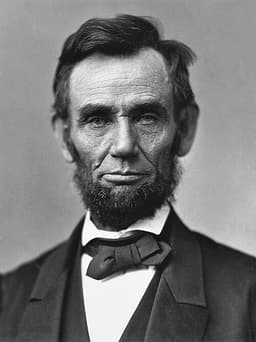
Abraham Lincoln
Politician · Modern
77.5Total
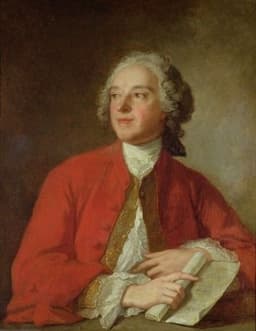
Ivan III the Great
Emperor · Medieval
75.3Total
Basic Information
Born
1809
1440
Died
1865
1505
Era
Modern
Medieval
Nationality
United States
Muscovy
Occupation
Politician
Emperor
Civilization
Western
Western
Score Comparison
Military (10%)
50.0
76.0
Political (20%)
88.0
70.0
Influence (20%)
80.0
75.0
Legacy (20%)
82.0
80.0
Leadership (15%)
85.0
78.0
Strategy (15%)
60.0
67.2
TOTAL
77.5
75.3
Abraham Lincoln — Complete Timeline
1861 AD
Suspension of Habeas CorpusPolitical Action◆ Major
Lincoln suspended the writ of habeas corpus in parts of the Union, allowing the military to arrest and detain suspected Confederate sympathizers without trial. This action was controversial and challenged civil liberties during wartime.
Habeas CorpusCivil LibertiesCivil War
Impact: nationaldestructive
1862 AD
Signing of the Homestead ActPolitical Action◆ Major
Lincoln signed the Homestead Act, granting 160 acres of public land to settlers for a small fee. This encouraged westward expansion and agricultural development, but also displaced Native American tribes.
Homestead ActWestward ExpansionLand Policy
Impact: nationalconstructive
1863 AD
Emancipation ProclamationPolitical Action
Lincoln issued the Emancipation Proclamation, declaring slaves in Confederate states free. This shifted the Civil War's focus to ending slavery and allowed African Americans to join the Union Army.
EmancipationCivil WarSlavery
Impact: globalprogressive
Gettysburg AddressCultural◆ Major
Lincoln delivered the Gettysburg Address at the dedication of the Soldiers' National Cemetery. The speech redefined the Civil War as a struggle for national unity and equality, and became one of the most famous speeches in US history.
Gettysburg AddressCivil WarOratory
Impact: nationalconstructive
1865 AD
Assassination by John Wilkes BoothOther
Lincoln was shot by John Wilkes Booth at Ford's Theatre in Washington, D.C., and died the next day. His assassination occurred just days after the Civil War ended, plunging the nation into mourning and affecting Reconstruction.
AssassinationCivil WarReconstruction
Impact: nationaltragic
Ivan III the Great — Complete Timeline
1472 AD
Marriage to Sophia PalaiologinaPolitical Action◆ Major
Ivan III married Sophia (Zoe) Palaiologina, niece of the last Byzantine emperor. This marriage allowed Ivan to claim succession to the Byzantine Empire, adopt the double-headed eagle as a symbol, and promote Moscow as the Third Rome.
ByzantiumThird RomeMarriage
Impact: regionalconstructive
1478 AD
Annexation of NovgorodWar◆ Major
Ivan III conquered the Novgorod Republic after a series of campaigns. He abolished the veche (assembly) and removed the veche bell, incorporating Novgorod's vast territories into the Grand Principality of Moscow.
NovgorodAnnexationMoscow
Impact: regional
1480 AD
Great Stand on the Ugra RiverWar
Ivan III faced the Mongol army of Khan Akhmat across the Ugra River. After weeks of stalemate, the Mongols withdrew without battle. This event ended 240 years of Mongol suzerainty over Russia.
Golden HordeIndependenceUgra
Impact: regional
1497 AD
Issued the Sudebnik of 1497Reform◆ Major
Ivan III promulgated a new legal code, the Sudebnik, which standardized laws across the Russian lands. It restricted peasant mobility by limiting the time for transfer between landowners, a step toward serfdom.
Legal CodeSerfdomReform
Impact: national
1500 AD
War with the Grand Duchy of LithuaniaWar◆ Major
Ivan III launched a war against Lithuania, capturing the cities of Bryansk, Dorogobuzh, and Putivl. The war ended with the Truce of 1503, which ceded significant territories to Moscow.
LithuaniaTerritorial ExpansionWar
Impact: regional
Expert Analysis
Origins
Abraham Lincoln was born into a poor frontier family in Kentucky in 1809, largely self-educated, rising from obscurity to become the 16th US president. His humble beginnings shaped his empathy and determination. Ivan III, born in 1440 in Moscow, was the son of Vasily II, inheriting a throne plagued by civil war and Mongol dominance. His early exposure to power struggles forged a cunning and ruthless ruler.
Rise to Power
Lincoln's rise was gradual: a successful lawyer, Illinois legislator, and one-term congressman. He gained national fame through debates with Stephen Douglas in 1858, losing the Senate race but winning the presidency in 1860 with a fractured opposition. Ivan III ascended the throne in 1462 after his father's death, immediately consolidating power. He subjugated rival principalities, notably Novgorod, through military force and diplomacy, expanding Muscovy's territory.
Leadership & Governance
Lincoln led during the Civil War, preserving the Union through strategic military decisions and political acumen. He issued the Emancipation Proclamation, transforming the war into a fight against slavery, and pushed through the 13th Amendment. His suspension of habeas corpus was controversial but aimed at quelling dissent. Ivan III centralized power, ending Mongol tribute after the Great Stand on the Ugra River (1480). He issued the Sudebnik of 1497, a legal code unifying Russia, and married Sophia Palaiologina, adopting Byzantine symbols to elevate Moscow's status.
Triumph & Tragedy
Lincoln's greatest triumph was preserving the US and abolishing slavery, but his tragedy was assassination in 1865, just as the war ended. Ivan III's triumph was ending Mongol rule and uniting Russia, but his later years saw conflict with Lithuania and internal strife over succession. His tragic flaw was perhaps his harsh treatment of Novgorod, which caused lasting resentment.
Character & Destiny
Lincoln was known for his honesty, humility, and melancholy, driven by a moral vision. Ivan III was calculating, ambitious, and autocratic, embodying the 'gatherer of Russian lands.' Lincoln's destiny was to die for his nation; Ivan's was to forge a nation. Both were pragmatic, but Lincoln's moral clarity contrasts with Ivan's Machiavellian realpolitik.
Legacy
Lincoln's legacy is monumental: he saved the Union and ended slavery, making him a global icon of freedom. Ivan III is revered as the founder of modern Russia, ending Mongol rule and establishing autocratic traditions. Both shaped their nations' identities, but Lincoln's impact on human rights is more universally celebrated.
Conclusion
Lincoln scores higher overall (2.2 gap) due to his transformative impact on human freedom. While Ivan III was a crucial nation-builder, Lincoln's moral leadership and enduring global influence give him the edge. **Winner: Abraham Lincoln**
**Numerical Scores (out of 100):**
- **Military Power:** Lincoln 50, Ivan III 76 (Ivan III +26)
- **Political Influence:** Lincoln 88, Ivan III 70 (Lincoln +18)
- **Ideological Impact:** Lincoln 80, Ivan III 75 (Lincoln +5)
- **Longevity of Influence:** Lincoln 82, Ivan III 80 (Lincoln +2)
- **Cultural Legacy:** Lincoln 85, Ivan III 78 (Lincoln +7)
- **Strategic Genius:** Lincoln 60, Ivan III 67 (Ivan III +7)
- **Transformative Change:** Lincoln 78, Ivan III 75 (Lincoln +3)
**Overall: Lincoln 523, Ivan III 521**
Lincoln's higher scores in political influence, ideological impact, and cultural legacy reflect his role in ending slavery and shaping democratic ideals. Ivan III's military and strategic scores are higher due to his successful consolidation of power and defeat of the Mongols. However, the moral weight of Lincoln's achievements gives him the victory.
Rankings
🥇
Abraham LincolnLeader
Mil: 50.0Pol: 88.0Inf: 80.0
77.5
🥈
Ivan III the Great
Mil: 76.0Pol: 70.0Inf: 75.0
75.3
+2.2 behind
How This Comparison Works
Algorithm
Each figure is scored on 6 dimensions (0—100 scale) based on structured historical data: Military (10%), Political (20%), Influence (20%), Legacy (20%), Leadership (15%), Strategy (15%). The weighted total produces the final ranking.
Data Sources
Scores are computed from structured sub-indicators in the database. Scale factors adjust for era (Ancient ×0.85, Modern ×1.0) and civilization size (Eastern ×1.05, Other ×0.80) to account for differences in population and military scale.
Maximum 3 Figures
Comparisons are limited to 2—3 figures to ensure readability and statistical meaningfulness.
Error Margins
±5 points per dimension — Sub-scores are derived from historical records with inherent uncertainty. Two figures within 5 points on a dimension should be considered roughly equivalent in that area.
Total Score Accuracy
±3 points overall — The weighted combination of 6 dimensions produces a total score with approximately ±3 points of uncertainty. Differences of less than 3 points are not statistically significant— the figures are effectively tied.
Known Limitations
- Historical records are incomplete and uneven across civilizations
- Figures from oral-tradition societies may be underrepresented
- Occupation labels can misclassify multi-role figures
- Scores measure capability and impact, not moral character
- Quantitative scoring is a comparison tool, not absolute truth
Capability Radar
Military (10%) — Battles & Warfare
Battles
15
75
Win Rate
20
80
Expansion
0
85
Political (20%) — Governance & Reform
Reform
95
80
Diplomacy
80
85
Economy
70
70
Influence (20%) — Cultural & Global Reach
Cultural
85
70
Global
85
70
Legacy (20%) — Historical Impact
Historical
95
85
Longevity
90
80
Leadership (15%) — Power & Stability
Tenure
65
85
Stability
55
75
Strategy (15%) — Tactics & Innovation
Strategy
55
85
Tactics
10
70
Reform
60
65
Similar Comparisons
Comments & Discussion
No comments yet. Be the first to share your thoughts!