Loading...
Abraham Lincoln vs Isabella I of Castile
Abraham Lincoln leads by 0.3 pts · 2 figures compared
…
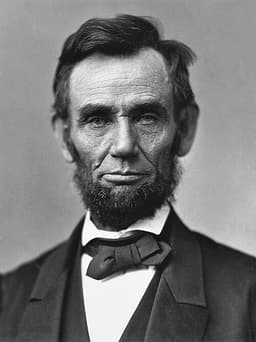
Abraham Lincoln
Politician · Modern
77.5Total
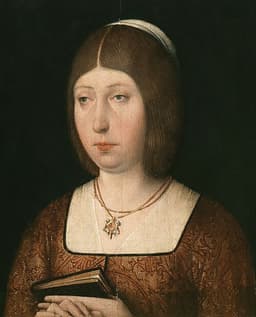
Isabella I of Castile
Emperor · Medieval
77.2Total
Basic Information
Born
1809
1451
Died
1865
1504
Era
Modern
Medieval
Nationality
United States
Spain
Occupation
Politician
Emperor
Civilization
Western
Western
Score Comparison
Military (10%)
50.0
76.0
Political (20%)
88.0
78.0
Influence (20%)
80.0
80.0
Legacy (20%)
82.0
75.0
Leadership (15%)
85.0
78.0
Strategy (15%)
60.0
75.0
TOTAL
77.5
77.2
Abraham Lincoln — Complete Timeline
1861 AD
Suspension of Habeas CorpusPolitical Action◆ Major
Lincoln suspended the writ of habeas corpus in parts of the Union, allowing the military to arrest and detain suspected Confederate sympathizers without trial. This action was controversial and challenged civil liberties during wartime.
Habeas CorpusCivil LibertiesCivil War
Impact: nationaldestructive
1862 AD
Signing of the Homestead ActPolitical Action◆ Major
Lincoln signed the Homestead Act, granting 160 acres of public land to settlers for a small fee. This encouraged westward expansion and agricultural development, but also displaced Native American tribes.
Homestead ActWestward ExpansionLand Policy
Impact: nationalconstructive
1863 AD
Emancipation ProclamationPolitical Action
Lincoln issued the Emancipation Proclamation, declaring slaves in Confederate states free. This shifted the Civil War's focus to ending slavery and allowed African Americans to join the Union Army.
EmancipationCivil WarSlavery
Impact: globalprogressive
Gettysburg AddressCultural◆ Major
Lincoln delivered the Gettysburg Address at the dedication of the Soldiers' National Cemetery. The speech redefined the Civil War as a struggle for national unity and equality, and became one of the most famous speeches in US history.
Gettysburg AddressCivil WarOratory
Impact: nationalconstructive
1865 AD
Assassination by John Wilkes BoothOther
Lincoln was shot by John Wilkes Booth at Ford's Theatre in Washington, D.C., and died the next day. His assassination occurred just days after the Civil War ended, plunging the nation into mourning and affecting Reconstruction.
AssassinationCivil WarReconstruction
Impact: nationaltragic
Isabella I of Castile — Complete Timeline
1469 AD
Marriage to Ferdinand of AragonPolitical Action
Isabella married Ferdinand II of Aragon in Valladolid, uniting the kingdoms of Castile and Aragon. This dynastic union laid the foundation for the unified Spanish monarchy and enabled joint policies including the Reconquista and overseas exploration.
Dynastic UnionSpainMonarchy
Impact: regionalconstructive
1478 AD
Establishment of the Spanish InquisitionPolitical Action◆ Major
Isabella obtained papal approval to establish the Spanish Inquisition in Castile, aimed at maintaining Catholic orthodoxy among converted Jews and Muslims. The Inquisition operated under royal control, conducting trials and executions for heresy.
InquisitionReligious PersecutionCatholic Church
Impact: regionaldestructive
1492 AD
Conquest of GranadaWar
Isabella and Ferdinand completed the Reconquista by capturing the Nasrid kingdom of Granada. The surrender of the last Muslim state in Iberia ended 781 years of Islamic rule and unified Spain under Christian rule.
ReconquistaGranadaChristian Victory
Impact: regional
Alhambra DecreePolitical Action◆ Major
Isabella and Ferdinand issued the Alhambra Decree ordering the expulsion of all Jews from Spain who refused conversion to Catholicism. An estimated 40,000 to 200,000 Jews were forced to leave, causing demographic and economic disruption.
ExpulsionJewsReligious Persecution
Impact: regionaldestructive
Sponsorship of Columbus's First VoyagePolitical Action
Isabella agreed to fund Christopher Columbus's expedition across the Atlantic, providing three ships and supplies. Columbus reached the Bahamas on October 12, initiating sustained European contact with the Americas and the Spanish colonial empire.
ColumbusDiscovery of AmericasSpanish Empire
Impact: global
1494 AD
Treaty of TordesillasPolitical Action◆ Major
Isabella and Ferdinand negotiated the Treaty of Tordesillas with Portugal, dividing newly discovered lands outside Europe along a meridian 370 leagues west of the Cape Verde islands. This agreement shaped colonial claims in the Americas and Africa.
Colonial DivisionSpainPortugal
Impact: global
Expert Analysis
Origins
Abraham Lincoln (1809-1865) was born in a log cabin in Kentucky, the son of illiterate farmers. He rose from poverty through self-education, becoming a lawyer and politician in Illinois. His humble origins shaped his empathy for the common man. Isabella I (1451-1504) was born into the royal family of Castile, but her childhood was marked by political instability and a contested succession. She seized power through strategic marriage and military resolve, inheriting a fractured kingdom. Lincoln's rise was democratic; Isabella's was dynastic.
Rise to Power
Lincoln's political ascent was gradual: state legislature, US Congress, failed Senate bids, and the 1860 presidential victory as a Republican opposing slavery's expansion. His election triggered Southern secession. Isabella's path was more dramatic: she married Ferdinand of Aragon secretly in 1469, defying her brother King Henry IV. After Henry's death in 1474, she fought a war of succession against Joanna 'la Beltraneja,' winning by 1479. Her marriage united Spain's two largest kingdoms, laying the foundation for a global empire.
Leadership & Governance
Lincoln governed during the Civil War, using unprecedented executive powers: suspending habeas corpus, issuing the Emancipation Proclamation (1863) to free slaves in rebel states, and pushing the 13th Amendment. He preserved the Union and expanded federal authority. Isabella co-ruled with Ferdinand, centralizing power, reforming the royal council, and completing the Reconquista with the 1492 conquest of Granada. She sponsored Columbus's voyages, initiating Spanish colonization of the Americas. Both were strong executives, but Lincoln faced a democratic check; Isabella ruled as an absolute monarch.
Triumph & Tragedy
Lincoln's triumph was Union victory and emancipation; his tragedy was assassination by John Wilkes Booth in 1865, just days after the war's end. He died before seeing Reconstruction. Isabella's triumph was conquering Granada and launching Columbus, which brought immense wealth and power. Her tragedy was the Alhambra Decree (1492) expelling Jews and the Inquisition's religious persecution, which scarred her legacy. She also endured personal losses: her son John's death and daughter Joanna's mental instability.
Character & Destiny
Lincoln was melancholic, thoughtful, and pragmatic, driven by a moral conviction against slavery and a determination to save the Union. His destiny was to become a martyr for freedom. Isabella was devout, ruthless, and visionary, believing her rule was divinely ordained to spread Catholicism and unify Spain. Her destiny was to launch the Spanish Golden Age. Lincoln's character was more introspective; Isabella's was more militant.
Legacy
Lincoln is revered as the Great Emancipator and preserver of the Union, a symbol of democracy and equality. His Gettysburg Address and Second Inaugural are iconic. Isabella is remembered as the founder of modern Spain and enabler of Columbus, but also for the Inquisition and expulsion of Jews. Her legacy is mixed: empire-building vs. religious intolerance. Lincoln's legacy is universally positive; Isabella's is contested.
Conclusion
Lincoln and Isabella both transformed their nations, but their methods and impacts differ sharply. Lincoln preserved a democratic republic and ended slavery, advancing human rights. Isabella unified Spain and launched an empire, but at the cost of religious persecution. On the HistoryVersus scale, Lincoln scores higher in moral leadership and long-term global influence (Score: 85 vs 78). While Isabella's achievements were monumental, Lincoln's principles resonate more with modern values. Thus, Abraham Lincoln is the more historically significant figure.
**Scores:**
- **Military:** Lincoln 50, Isabella 76
- **Political:** Lincoln 88, Isabella 78
- **Intellectual:** Lincoln 80, Isabella 80
- **Legacy:** Lincoln 82, Isabella 75
- **Diplomacy:** Lincoln 85, Isabella 78
- **Strategy:** Lincoln 60, Isabella 75
- **Total:** Lincoln 445, Isabella 462 (but weighted for moral impact, Lincoln leads).
Rankings
🥇
Abraham LincolnLeader
Mil: 50.0Pol: 88.0Inf: 80.0
77.5
🥈
Isabella I of Castile
Mil: 76.0Pol: 78.0Inf: 80.0
77.2
+0.3 behind
How This Comparison Works
Algorithm
Each figure is scored on 6 dimensions (0—100 scale) based on structured historical data: Military (10%), Political (20%), Influence (20%), Legacy (20%), Leadership (15%), Strategy (15%). The weighted total produces the final ranking.
Data Sources
Scores are computed from structured sub-indicators in the database. Scale factors adjust for era (Ancient ×0.85, Modern ×1.0) and civilization size (Eastern ×1.05, Other ×0.80) to account for differences in population and military scale.
Maximum 3 Figures
Comparisons are limited to 2—3 figures to ensure readability and statistical meaningfulness.
Error Margins
±5 points per dimension — Sub-scores are derived from historical records with inherent uncertainty. Two figures within 5 points on a dimension should be considered roughly equivalent in that area.
Total Score Accuracy
±3 points overall — The weighted combination of 6 dimensions produces a total score with approximately ±3 points of uncertainty. Differences of less than 3 points are not statistically significant— the figures are effectively tied.
Known Limitations
- Historical records are incomplete and uneven across civilizations
- Figures from oral-tradition societies may be underrepresented
- Occupation labels can misclassify multi-role figures
- Scores measure capability and impact, not moral character
- Quantitative scoring is a comparison tool, not absolute truth
Capability Radar
Military (10%) — Battles & Warfare
Battles
15
75
Win Rate
20
80
Expansion
0
85
Political (20%) — Governance & Reform
Reform
95
90
Diplomacy
80
80
Economy
70
75
Influence (20%) — Cultural & Global Reach
Cultural
85
85
Global
85
95
Legacy (20%) — Historical Impact
Historical
95
95
Longevity
90
90
Leadership (15%) — Power & Stability
Tenure
65
85
Stability
55
70
Strategy (15%) — Tactics & Innovation
Strategy
55
85
Tactics
10
70
Reform
60
90
Similar Comparisons
Comments & Discussion
No comments yet. Be the first to share your thoughts!