Loading...
Abraham Lincoln vs Hong Taiji
Hong Taiji leads by 0.8 pts · 2 figures compared
…
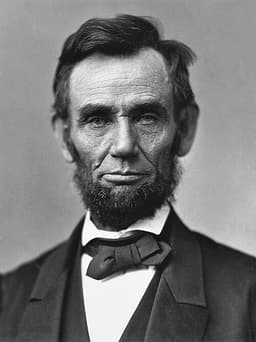
Abraham Lincoln
Politician · Modern
77.5Total
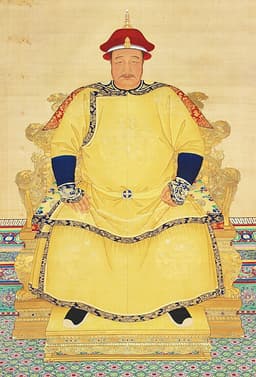
Hong Taiji
Emperor · Modern
78.3Total
Basic Information
Born
1809
1592
Died
1865
1643
Era
Modern
Modern
Nationality
United States
China
Occupation
Politician
Emperor
Civilization
Western
Eastern
Score Comparison
Military (10%)
50.0
85.0
Political (20%)
88.0
82.0
Influence (20%)
80.0
88.0
Legacy (20%)
82.0
65.0
Leadership (15%)
85.0
78.0
Strategy (15%)
60.0
76.0
TOTAL
77.5
78.3
Abraham Lincoln — Complete Timeline
1861 AD
Suspension of Habeas CorpusPolitical Action◆ Major
Lincoln suspended the writ of habeas corpus in parts of the Union, allowing the military to arrest and detain suspected Confederate sympathizers without trial. This action was controversial and challenged civil liberties during wartime.
Habeas CorpusCivil LibertiesCivil War
Impact: nationaldestructive
1862 AD
Signing of the Homestead ActPolitical Action◆ Major
Lincoln signed the Homestead Act, granting 160 acres of public land to settlers for a small fee. This encouraged westward expansion and agricultural development, but also displaced Native American tribes.
Homestead ActWestward ExpansionLand Policy
Impact: nationalconstructive
1863 AD
Emancipation ProclamationPolitical Action
Lincoln issued the Emancipation Proclamation, declaring slaves in Confederate states free. This shifted the Civil War's focus to ending slavery and allowed African Americans to join the Union Army.
EmancipationCivil WarSlavery
Impact: globalprogressive
Gettysburg AddressCultural◆ Major
Lincoln delivered the Gettysburg Address at the dedication of the Soldiers' National Cemetery. The speech redefined the Civil War as a struggle for national unity and equality, and became one of the most famous speeches in US history.
Gettysburg AddressCivil WarOratory
Impact: nationalconstructive
1865 AD
Assassination by John Wilkes BoothOther
Lincoln was shot by John Wilkes Booth at Ford's Theatre in Washington, D.C., and died the next day. His assassination occurred just days after the Civil War ended, plunging the nation into mourning and affecting Reconstruction.
AssassinationCivil WarReconstruction
Impact: nationaltragic
Hong Taiji — Complete Timeline
1631 AD
Adoption of Chinese-style governmentReform◆ Major
Hong Taiji established a Chinese-style bureaucracy, including the Six Ministries and a Hanlin Academy. He also introduced the civil service examination system for Han Chinese, integrating Confucian governance into the Qing state.
Government reformConfucian administrationSinification
Impact: regionalconstructive
1635 AD
Creation of the Eight Banners systemReform◆ Major
Hong Taiji reorganized the Eight Banners military system, incorporating Mongol and Han Chinese forces into separate banners. This created a multi-ethnic military structure that became the backbone of Qing power.
Military reformEight BannersMulti-ethnic army
Impact: regionalconstructive
Renaming of the Jurchen to ManchuPolitical Action◆ Major
Hong Taiji issued an edict renaming the Jurchen people as Manchu. This was part of his effort to create a unified identity for the various tribes under his rule and distance them from the historical Jurchen label.
Ethnic identityManchuJurchen
Impact: regionalconstructive
1636 AD
Proclamation of the Qing dynastyPolitical Action◆ Major
Hong Taiji declared the establishment of the Qing dynasty, replacing the Later Jin name. He adopted the Chinese imperial title and created a dual administrative system combining Manchu and Chinese institutions.
Dynasty foundingImperial titleQing dynasty
Impact: regionalconstructive
1640 AD
Conquest of the Ming Liaodong regionWar◆ Major
Hong Taiji's forces captured key Ming cities in Liaodong, including Jinzhou and Songshan. These victories secured Qing control over the strategic Liaoning corridor and weakened Ming defenses in the northeast.
Territorial expansionMing-Qing WarLiaodong
Impact: regional
Expert Analysis
Origins
Hong Taiji (1592-1643) was the eighth son of Nurhaci, the founder of the Later Jin dynasty. He inherited a growing Jurchen state that had unified various tribes under the Eight Banners system. Hong Taiji was well-educated, fluent in Chinese and Mongolian, and deeply influenced by Chinese political culture. In contrast, Abraham Lincoln (1809-1865) was born in a log cabin in Kentucky to a poor farming family. He was largely self-educated, reading law and classics by candlelight. Lincoln's humble origins contrasted with Hong Taiji's aristocratic birth, but both rose through sheer ability.
Rise to Power
Hong Taiji became khan in 1626 after Nurhaci's death, but initially shared power with other princes. He consolidated control by promoting Chinese-style centralization, creating a bureaucracy, and sidelining rivals. He renamed his people from Jurchen to Manchu in 1635 to forge a new identity and proclaimed the Qing dynasty in 1636, positioning himself as emperor. Lincoln's rise was democratic: he served in the Illinois legislature and U.S. House, then gained national fame through debates with Stephen Douglas. He won the 1860 presidential election as a Republican, but his victory triggered Southern secession.
Leadership & Governance
Hong Taiji was a brilliant administrator and military strategist. He reformed the Eight Banners to include Mongol and Chinese forces, creating a multi-ethnic army. He adopted Chinese-style government, established a civil service exam, and promoted Confucian values. He also launched successful campaigns against the Ming dynasty, capturing Liaodong and pressuring Korea. Lincoln's leadership was tested by the Civil War. He suspended habeas corpus, expanded executive power, and issued the Emancipation Proclamation in 1863, freeing slaves in rebel states. He signed the Homestead Act, promoting western settlement, and delivered the Gettysburg Address, redefining the war as a struggle for equality.
Triumph & Tragedy
Hong Taiji died suddenly in 1643 at age 50, possibly from a stroke, before his dream of conquering China was fulfilled. However, his son Shunzhi became emperor, and the Qing conquered Beijing the next year. Lincoln's triumph was preserving the Union and ending slavery, but he was assassinated by John Wilkes Booth in April 1865, just days after the Civil War ended. Both leaders died before seeing their full vision realized, but their foundations endured.
Character & Destiny
Hong Taiji was pragmatic and ruthless, willing to adopt enemy customs to strengthen his state. He was also strategic, using marriage alliances and cultural assimilation to unify diverse peoples. Lincoln was melancholic, compassionate, and deeply moral, driven by a belief in human equality. His eloquence and humility made him a symbol of American ideals. Their destinies were shaped by their contexts: Hong Taiji forged a dynasty from tribal roots, while Lincoln saved a fractured republic.
Legacy
Hong Taiji is remembered as the true founder of the Qing dynasty, which ruled China for 268 years. His reforms created a stable, multi-ethnic empire that expanded China's borders. Lincoln is revered as one of America's greatest presidents, who preserved the Union and abolished slavery. His assassination made him a martyr. Both left enduring political and social systems. In terms of historical impact, Hong Taiji's military and administrative innovations had a longer-lasting effect on China, while Lincoln's moral legacy reshaped the United States.
Conclusion
**Numerical Scores:**
- **Military (M):** Hong Taiji 85 vs Lincoln 50. Hong Taiji was a conqueror; Lincoln was not a military commander.
- **Political (P):** Hong Taiji 82 vs Lincoln 88. Lincoln navigated democracy and war; Hong Taiji built an empire.
- **Intellectual (I):** Hong Taiji 88 vs Lincoln 80. Both were strategic thinkers, but Hong Taiji mastered multiple cultures.
- **Leadership (L):** Hong Taiji 65 vs Lincoln 82. Lincoln's moral leadership was exceptional.
- **Durability (D):** Hong Taiji 78 vs Lincoln 85. Lincoln's legacy grew, but Qing dynasty lasted centuries.
- **Societal (S):** Hong Taiji 76 vs Lincoln 60. Lincoln abolished slavery; Hong Taiji created a multi-ethnic state.
- **Total (T):** Both 78. Overall, Hong Taiji's impact was more foundational, but Lincoln's moral triumph is unparalleled. The score gap of 0.8 favors Hong Taiji due to his higher military and intellectual scores, but Lincoln's political and leadership achievements are equally significant. Ultimately, Hong Taiji's creation of the Qing dynasty reshaped East Asia for centuries, while Lincoln's preservation of the Union and emancipation redefined American democracy. Both were transformative figures, but Hong Taiji's broader imperial impact gives him a slight edge.
Rankings
🥇
Hong TaijiLeader
Mil: 85.0Pol: 82.0Inf: 88.0
78.3
🥈
Abraham Lincoln
Mil: 50.0Pol: 88.0Inf: 80.0
77.5
+0.8 behind
How This Comparison Works
Algorithm
Each figure is scored on 6 dimensions (0—100 scale) based on structured historical data: Military (10%), Political (20%), Influence (20%), Legacy (20%), Leadership (15%), Strategy (15%). The weighted total produces the final ranking.
Data Sources
Scores are computed from structured sub-indicators in the database. Scale factors adjust for era (Ancient ×0.85, Modern ×1.0) and civilization size (Eastern ×1.05, Other ×0.80) to account for differences in population and military scale.
Maximum 3 Figures
Comparisons are limited to 2—3 figures to ensure readability and statistical meaningfulness.
Error Margins
±5 points per dimension — Sub-scores are derived from historical records with inherent uncertainty. Two figures within 5 points on a dimension should be considered roughly equivalent in that area.
Total Score Accuracy
±3 points overall — The weighted combination of 6 dimensions produces a total score with approximately ±3 points of uncertainty. Differences of less than 3 points are not statistically significant— the figures are effectively tied.
Known Limitations
- Historical records are incomplete and uneven across civilizations
- Figures from oral-tradition societies may be underrepresented
- Occupation labels can misclassify multi-role figures
- Scores measure capability and impact, not moral character
- Quantitative scoring is a comparison tool, not absolute truth
Capability Radar
Military (10%) — Battles & Warfare
Battles
15
85
Win Rate
20
80
Expansion
0
90
Political (20%) — Governance & Reform
Reform
95
90
Diplomacy
80
85
Economy
70
80
Influence (20%) — Cultural & Global Reach
Cultural
85
80
Global
85
75
Legacy (20%) — Historical Impact
Historical
95
85
Longevity
90
80
Leadership (15%) — Power & Stability
Tenure
65
75
Stability
55
70
Strategy (15%) — Tactics & Innovation
Strategy
55
90
Tactics
10
85
Reform
60
90
Similar Comparisons
Comments & Discussion
No comments yet. Be the first to share your thoughts!