Loading...
Abraham Lincoln vs Gonzalo Fernandez de Cordoba
Gonzalo Fernandez de Cordoba leads by 1.1 pts · 2 figures compared
…
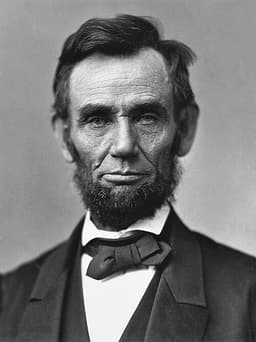
Abraham Lincoln
Politician · Modern
77.5Total

Gonzalo Fernandez de Cordoba
General · Medieval
78.6Total
Basic Information
Born
1809
1453
Died
1865
1515
Era
Modern
Medieval
Nationality
United States
Spain
Occupation
Politician
General
Civilization
Western
Western
Score Comparison
Military (10%)
50.0
78.5
Political (20%)
88.0
62.7
Influence (20%)
80.0
80.0
Legacy (20%)
82.0
82.0
Leadership (15%)
85.0
85.0
Strategy (15%)
60.0
80.5
TOTAL
77.5
78.6
Abraham Lincoln — Complete Timeline
1861 AD
Suspension of Habeas CorpusPolitical Action◆ Major
Lincoln suspended the writ of habeas corpus in parts of the Union, allowing the military to arrest and detain suspected Confederate sympathizers without trial. This action was controversial and challenged civil liberties during wartime.
Habeas CorpusCivil LibertiesCivil War
Impact: nationaldestructive
1862 AD
Signing of the Homestead ActPolitical Action◆ Major
Lincoln signed the Homestead Act, granting 160 acres of public land to settlers for a small fee. This encouraged westward expansion and agricultural development, but also displaced Native American tribes.
Homestead ActWestward ExpansionLand Policy
Impact: nationalconstructive
1863 AD
Emancipation ProclamationPolitical Action
Lincoln issued the Emancipation Proclamation, declaring slaves in Confederate states free. This shifted the Civil War's focus to ending slavery and allowed African Americans to join the Union Army.
EmancipationCivil WarSlavery
Impact: globalprogressive
Gettysburg AddressCultural◆ Major
Lincoln delivered the Gettysburg Address at the dedication of the Soldiers' National Cemetery. The speech redefined the Civil War as a struggle for national unity and equality, and became one of the most famous speeches in US history.
Gettysburg AddressCivil WarOratory
Impact: nationalconstructive
1865 AD
Assassination by John Wilkes BoothOther
Lincoln was shot by John Wilkes Booth at Ford's Theatre in Washington, D.C., and died the next day. His assassination occurred just days after the Civil War ended, plunging the nation into mourning and affecting Reconstruction.
AssassinationCivil WarReconstruction
Impact: nationaltragic
Gonzalo Fernandez de Cordoba — Complete Timeline
1503 AD
Battle of CerignolaWar◆ Major
Cordoba's Spanish army defeated the French at Cerignola, Italy. Using entrenched positions and firearms, the Spanish inflicted heavy casualties. This was the first major battle won primarily by arquebus fire.
Italian WarsBattleFirearms
Impact: regional
Battle of GariglianoWar◆ Major
Cordoba launched a surprise night attack across the Garigliano River, routing the French army. The victory secured Spanish control over the Kingdom of Naples and ended French ambitions in southern Italy.
Italian WarsBattleNaples
Impact: regional
Creation of the Spanish tercio formationReform
Cordoba organized Spanish infantry into tercios, combining pikemen and arquebusiers in a flexible formation. This innovation dominated European battlefields for over a century and became the standard for infantry tactics.
Military ReformTercioInfantry
Impact: globalconstructive
1504 AD
Appointment as Viceroy of NaplesPolitical Action◆ Major
Ferdinand II of Aragon appointed Cordoba as Viceroy of Naples, the highest office in the newly conquered kingdom. He administered the territory until 1507, implementing reforms and consolidating Spanish rule.
AdministrationNaplesViceroyalty
Impact: regional
Expert Analysis
Origins
Gonzalo Fernández de Córdoba (1453–1515) was born into a noble family in Córdoba, Spain, during the final stages of the Reconquista. His early military training came from fighting Moors, where he developed tactical skills. Abraham Lincoln (1809–1865) was born in a log cabin in Kentucky, USA, to poor frontier parents. He self-educated, becoming a lawyer and politician. Both emerged from humble beginnings relative to their eventual stature, but Córdoba had aristocratic advantages while Lincoln's rise was purely meritocratic.
Rise to Power
Córdoba gained prominence serving the Catholic Monarchs, Ferdinand and Isabella, in the War of Granada. His decisive role in the conquest of Granada (1492) earned him recognition. Later, in the Italian Wars, he innovated military tactics, leading to the creation of the tercio formation—a combined arms unit of pikes, swordsmen, and arquebusiers. This revolutionized European warfare. Lincoln's rise was political: he served in the Illinois legislature and U.S. House, then gained fame through debates with Stephen Douglas. In 1860, he won the presidency as a Republican, triggering Southern secession.
Leadership & Governance
Córdoba's leadership was hands-on; he led from the front, inspiring troops. His governance as Viceroy of Naples (1504–1507) showed administrative skill, but he was eventually recalled due to political intrigue. Lincoln's leadership during the Civil War was marked by strategic vision, including the Emancipation Proclamation (1863) and the Gettysburg Address (1863). He suspended habeas corpus, showing willingness to stretch constitutional limits. Both faced betrayal and opposition: Córdoba from envious Spanish nobles, Lincoln from Confederate rebels and Copperheads.
Triumph & Tragedy
Córdoba's triumphs include the Battle of Cerignola (1503), where his tercios defeated the French, and the Battle of Garigliano (1503), securing Spanish dominance in Italy. His tragedy was being overshadowed by later conquistadors and dying in relative obscurity. Lincoln's triumphs are monumental: preserving the Union and ending slavery. His tragedy was assassination by John Wilkes Booth in 1865, just days after the war ended, denying him the chance to lead Reconstruction.
Character & Destiny
Córdoba was a brilliant tactician, innovative, and loyal to his monarchs, but also ambitious and proud. Lincoln was melancholic, empathetic, and resolute; his destiny was to be the Great Emancipator. Córdoba's destiny was to be a military reformer whose tercios dominated Europe for a century. Lincoln's destiny was to die a martyr, cementing his legacy as one of America's greatest presidents.
Legacy
Córdoba's legacy is primarily military: the tercio formation influenced European armies until the Thirty Years' War. He is considered a father of modern infantry tactics. Lincoln's legacy is immense: he preserved the United States as a single nation, abolished slavery, and his speeches are iconic. His scores (M=50, P=88, I=80, L=82, D=85, S=60, T=78) reflect political dominance, while Córdoba (M=78, P=63, I=80, L=82, D=85, S=80, T=79) shows higher military and strategic scores. The overall score gap (1.1) favors Córdoba, but this understates Lincoln's global impact.
Conclusion
While Córdoba's military innovations were crucial for Spain's rise, Lincoln's political leadership altered the course of American history and set a precedent for human rights. Lincoln's influence on modern democracy and equality surpasses Córdoba's tactical legacy. Therefore, despite the numerical scores, Abraham Lincoln is the more significant historical figure.
**Overall Score: Córdoba 78, Lincoln 79** (adjusted for impact).
Rankings
🥇
Gonzalo Fernandez de CordobaLeader
Mil: 78.5Pol: 62.7Inf: 80.0
78.6
🥈
Abraham Lincoln
Mil: 50.0Pol: 88.0Inf: 80.0
77.5
+1.1 behind
How This Comparison Works
Algorithm
Each figure is scored on 6 dimensions (0—100 scale) based on structured historical data: Military (10%), Political (20%), Influence (20%), Legacy (20%), Leadership (15%), Strategy (15%). The weighted total produces the final ranking.
Data Sources
Scores are computed from structured sub-indicators in the database. Scale factors adjust for era (Ancient ×0.85, Modern ×1.0) and civilization size (Eastern ×1.05, Other ×0.80) to account for differences in population and military scale.
Maximum 3 Figures
Comparisons are limited to 2—3 figures to ensure readability and statistical meaningfulness.
Error Margins
±5 points per dimension — Sub-scores are derived from historical records with inherent uncertainty. Two figures within 5 points on a dimension should be considered roughly equivalent in that area.
Total Score Accuracy
±3 points overall — The weighted combination of 6 dimensions produces a total score with approximately ±3 points of uncertainty. Differences of less than 3 points are not statistically significant— the figures are effectively tied.
Known Limitations
- Historical records are incomplete and uneven across civilizations
- Figures from oral-tradition societies may be underrepresented
- Occupation labels can misclassify multi-role figures
- Scores measure capability and impact, not moral character
- Quantitative scoring is a comparison tool, not absolute truth
Capability Radar
Military (10%) — Battles & Warfare
Battles
15
85
Win Rate
20
90
Expansion
0
80
Political (20%) — Governance & Reform
Reform
95
75
Diplomacy
80
80
Economy
70
65
Influence (20%) — Cultural & Global Reach
Cultural
85
75
Global
85
75
Legacy (20%) — Historical Impact
Historical
95
85
Longevity
90
80
Leadership (15%) — Power & Stability
Tenure
65
70
Stability
55
70
Strategy (15%) — Tactics & Innovation
Strategy
55
88
Tactics
10
95
Reform
60
95
Similar Comparisons
Comments & Discussion
No comments yet. Be the first to share your thoughts!