Loading...
Abraham Lincoln vs Ferdinand I of Leon
Abraham Lincoln leads by 18.3 pts · 2 figures compared
…
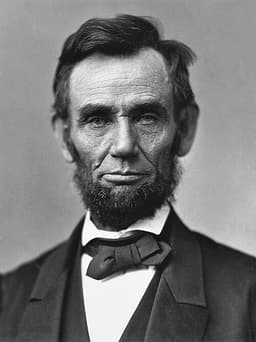
Abraham Lincoln
Politician · Modern
77.5Total
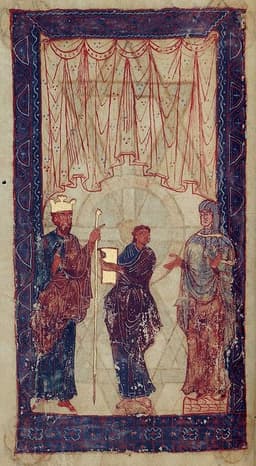
Ferdinand I of Leon
Emperor · Medieval
59.2Total
Basic Information
Born
1809
1015
Died
1865
1065
Era
Modern
Medieval
Nationality
United States
Leon
Occupation
Politician
Emperor
Civilization
Western
Western
Score Comparison
Military (10%)
50.0
70.0
Political (20%)
88.0
68.0
Influence (20%)
80.0
56.4
Legacy (20%)
82.0
49.2
Leadership (15%)
85.0
66.0
Strategy (15%)
60.0
57.5
TOTAL
77.5
59.2
Abraham Lincoln — Complete Timeline
1861 AD
Suspension of Habeas CorpusPolitical Action◆ Major
Lincoln suspended the writ of habeas corpus in parts of the Union, allowing the military to arrest and detain suspected Confederate sympathizers without trial. This action was controversial and challenged civil liberties during wartime.
Habeas CorpusCivil LibertiesCivil War
Impact: nationaldestructive
1862 AD
Signing of the Homestead ActPolitical Action◆ Major
Lincoln signed the Homestead Act, granting 160 acres of public land to settlers for a small fee. This encouraged westward expansion and agricultural development, but also displaced Native American tribes.
Homestead ActWestward ExpansionLand Policy
Impact: nationalconstructive
1863 AD
Emancipation ProclamationPolitical Action
Lincoln issued the Emancipation Proclamation, declaring slaves in Confederate states free. This shifted the Civil War's focus to ending slavery and allowed African Americans to join the Union Army.
EmancipationCivil WarSlavery
Impact: globalprogressive
Gettysburg AddressCultural◆ Major
Lincoln delivered the Gettysburg Address at the dedication of the Soldiers' National Cemetery. The speech redefined the Civil War as a struggle for national unity and equality, and became one of the most famous speeches in US history.
Gettysburg AddressCivil WarOratory
Impact: nationalconstructive
1865 AD
Assassination by John Wilkes BoothOther
Lincoln was shot by John Wilkes Booth at Ford's Theatre in Washington, D.C., and died the next day. His assassination occurred just days after the Civil War ended, plunging the nation into mourning and affecting Reconstruction.
AssassinationCivil WarReconstruction
Impact: nationaltragic
Ferdinand I of Leon — Complete Timeline
1029 AD
Inheritance of the County of CastilePolitical Action◆ Major
Ferdinand I inherited the County of Castile from his father Sancho III of Navarre. He later expanded his territory through conquest and marriage, laying the foundation for the Kingdom of Castile.
Impact: regionalconstructive
1037 AD
Conquest of LeónWar◆ Major
Ferdinand I defeated and killed King Bermudo III of Le
Impact: regional
1056 AD
First Emperor of SpainPolitical Action◆ Major
Ferdinand I was crowned 'Imperator totius Hispaniae' (Emperor of all Spain) in 1056, claiming suzerainty over all Christian and Muslim rulers in Iberia. This title reflected his military dominance and political ambition.
Impact: regional
1065 AD
Division of the kingdomPolitical Action◆ Major
Upon his death, Ferdinand I divided his kingdom among his sons: Sancho II received Castile, Alfonso VI received Le
Impact: regionaldestructive
Expert Analysis
Ferdinand I of Leon vs Abraham Lincoln
### The Cross and the Constitution
On a cold November afternoon in 1863, Abraham Lincoln stood on a battlefield in Pennsylvania and spoke for barely two minutes. He called the gathered crowd to a “new birth of freedom.” Eight centuries earlier, in the Spanish city of León, another ruler had a different vision. Ferdinand I, crowned “Imperator totius Hispaniae” in 1056, saw his mission as the unification of Christendom through the sword. Both men sought to preserve and expand a vision of civilization. But one led a nation through its bloodiest war to redefine liberty; the other carved a kingdom from the bones of his enemies and his own sons. What drove such different outcomes? The answer lies not just in their eras, but in the very nature of power they understood.
### Origins
Lincoln was born in 1809 into a Kentucky log cabin, the son of illiterate farmers. His world was one of scarcity, hard labor, and a mother who died when he was nine. He educated himself by firelight, reading the Bible, Shakespeare, and Blackstone’s *Commentaries*. The frontier shaped him—it was a place where a man could rise through talent and grit, but also where the institution of slavery cast a long shadow over human dignity. Lincoln’s America was a young democracy, still wrestling with its founding contradiction.
Ferdinand I, born in 1015, emerged from a world of iron and faith. He was the second son of Sancho III of Navarre, a king who had carved a patchwork realm from the wreckage of the Caliphate of Córdoba. In medieval Iberia, power was personal and brutal: kingdoms were won in battle, lost in betrayal, and divided among heirs like property. Ferdinand grew up in a court where the cross was a weapon and the sword a scepter. His inheritance was not a promise of liberty, but a claim to dominion.
### Rise to Power
Lincoln’s path to the presidency was a slow, deliberate climb through the ranks of Illinois law and politics. He served in the state legislature, spent a single term in Congress, and lost two Senate races before winning the Republican nomination in 1860. His rise was not a conquest but an argument—a man who believed that the nation could not endure “half slave and half free” made his case to a fractured electorate. When he won, seven Southern states seceded before he even took the oath.
Ferdinand’s rise was a matter of blood. In 1029, he inherited the County of Castile from his father. But to become king, he needed more than a title. In 1037, at the Battle of Tamarón, he met King Bermudo III of León on the field. Ferdinand killed him, claimed his kingdom, and married his sister to seal the victory. It was a transaction of violence, not persuasion. Power in medieval Spain was taken, not given.
### Leadership & Governance
Lincoln governed through crisis. He suspended habeas corpus in 1861, allowing the military to arrest suspected Confederate sympathizers without trial—a decision that haunted his legacy. But he also signed the Homestead Act in 1862, granting 160 acres of public land to settlers, transforming the American West. His greatest act was the Emancipation Proclamation in 1863, which declared slaves in Confederate states free. It was a political masterstroke: it reframed the Civil War as a fight for human freedom, prevented European intervention on behalf of the South, and allowed Black men to enlist in the Union Army. Lincoln’s leadership was a balancing act between principle and pragmatism, always tethered to the Constitution he swore to preserve.
Ferdinand ruled as a warrior-king. He spent decades campaigning against the Moors, expanding his territory through sieges and raids. He was crowned Emperor of all Spain in 1056, a title that asserted supremacy over all Christian rulers on the peninsula. But his governance was feudal: he rewarded loyal nobles with land and plunder, and his authority rested on his ability to keep fighting. There were no constitutions, no declarations—only oaths of fealty and the threat of the sword.
### Triumph & Tragedy
Lincoln’s triumph was the preservation of the Union and the end of slavery. The Gettysburg Address in 1863, though only 272 words, redefined the nation’s purpose: “that government of the people, by the people, for the people, shall not perish from the earth.” His tragedy came at the moment of victory. On April 14, 1865, just days after the Confederate surrender, John Wilkes Booth shot him at Ford’s Theatre. Lincoln died the next morning, never seeing the full fruits of his labor.
Ferdinand’s triumph was the unification of León, Castile, and Galicia under a single crown, and the humiliation of the Moors. He extracted tribute from Muslim taifas, enriching his kingdom. But his tragedy was of his own making. Upon his death in 1065, he divided his kingdom among his three sons—Sancho, Alfonso, and García. The result was decades of fratricidal war, as the brothers tore apart what their father had built. Ferdinand’s legacy was a shattered realm, not a united Spain.
### Character & Destiny
Lincoln was a man of deep melancholy and immense patience. He read poetry, told jokes to ease tension, and kept a cabinet of rivals. He was capable of ruthlessness—suspending habeas corpus, ordering the execution of deserters—but he never lost sight of the human cost. His character was shaped by a belief in moral progress, that the arc of history bends toward justice if men are brave enough to push.
Ferdinand was a creature of his age: pious, ambitious, and violent. He saw himself as a defender of Christendom, but his ambition was personal. He divided his kingdom not out of malice, but out of a medieval logic that saw land as inheritance, not nation. His character was shaped by the ethos of the *Reconquista*: that faith and power were one, and that destiny was written in blood.
### Legacy
Lincoln’s legacy is the modern United States. The 13th, 14th, and 15th Amendments, born from his war, remade the Constitution. He is remembered as the Great Emancipator, his face carved into Mount Rushmore, his words recited in every school. His death made him a martyr, and his vision of a unified, free nation became the central story of American identity.
Ferdinand’s legacy is more ambiguous. He is remembered as a founder of the Spanish monarchy, a precursor to the Catholic Monarchs who would complete the *Reconquista* three centuries later. But his division of the kingdom is a cautionary tale about the limits of personal rule. He is a figure for historians, not schoolchildren—a king who conquered but could not build.
### Conclusion
Lincoln and Ferdinand stand at opposite ends of a long arc. One lived in a world where legitimacy came from the people; the other, from the sword. Lincoln’s power was bounded by laws and elections; Ferdinand’s was absolute, but fragile. Both men faced the same fundamental question: how do you hold a divided people together? Lincoln answered with a constitution and a cause. Ferdinand answered with a crown and a cross. The first gave birth to a nation. The second gave birth to a war among his own sons. In the end, the difference was not in their courage or their ambition, but in the ideas they served. One believed in a new birth of freedom. The other believed in an old order of blood. History, it seems, remembers the believer in freedom far more kindly.
Rankings
🥇
Abraham LincolnLeader
Mil: 50.0Pol: 88.0Inf: 80.0
77.5
🥈
Ferdinand I of Leon
Mil: 70.0Pol: 68.0Inf: 56.4
59.2
+18.3 behind
How This Comparison Works
Algorithm
Each figure is scored on 6 dimensions (0—100 scale) based on structured historical data: Military (10%), Political (20%), Influence (20%), Legacy (20%), Leadership (15%), Strategy (15%). The weighted total produces the final ranking.
Data Sources
Scores are computed from structured sub-indicators in the database. Scale factors adjust for era (Ancient ×0.85, Modern ×1.0) and civilization size (Eastern ×1.05, Other ×0.80) to account for differences in population and military scale.
Maximum 3 Figures
Comparisons are limited to 2—3 figures to ensure readability and statistical meaningfulness.
Error Margins
±5 points per dimension — Sub-scores are derived from historical records with inherent uncertainty. Two figures within 5 points on a dimension should be considered roughly equivalent in that area.
Total Score Accuracy
±3 points overall — The weighted combination of 6 dimensions produces a total score with approximately ±3 points of uncertainty. Differences of less than 3 points are not statistically significant— the figures are effectively tied.
Known Limitations
- Historical records are incomplete and uneven across civilizations
- Figures from oral-tradition societies may be underrepresented
- Occupation labels can misclassify multi-role figures
- Scores measure capability and impact, not moral character
- Quantitative scoring is a comparison tool, not absolute truth
Capability Radar
Military (10%) — Battles & Warfare
Battles
15
55
Win Rate
20
60
Expansion
0
60
Political (20%) — Governance & Reform
Reform
95
50
Diplomacy
80
55
Economy
70
45
Influence (20%) — Cultural & Global Reach
Cultural
85
40
Global
85
30
Legacy (20%) — Historical Impact
Historical
95
45
Longevity
90
40
Leadership (15%) — Power & Stability
Tenure
65
65
Stability
55
50
Strategy (15%) — Tactics & Innovation
Strategy
55
55
Tactics
10
50
Reform
60
40
Similar Comparisons
Comments & Discussion
Gettysburg Ghost6/16/2026
Comparing Ferdinand’s feudal bloodletting to Lincoln’s Emancipation is historically deranged. One man shed thousands of lives to crush a traitorous slave power; the other literally partitioned his own kingdom among his sons, then watched them butcher each other for decades. Ferdinand was a ambitious warlord with a fancy Roman title, not a visionary. Lincoln redefined democracy. Perspective matters.
斜杠公爵6/16/2026
说林肯是“废奴英雄”?拜托,他打仗前根本不打算解放黑奴。联邦存续才是他第一要务,废奴是军事需要的后手。而费迪南一世至少敢直接拔剑轰穆斯林。一个会玩官僚牌,一个会玩刀剑牌,根本不在一个赛场。讲人性?林肯可是绞死过印第安人和逃兵。
Legionary Lens6/16/2026
Lincoln had to rhetorically construct a nation out of a fractured republic; Ferdinand simply reasserted Christendom’s ancient claim over Iberia. Lincoln’s power was fragile—rooted in ballots, shifting coalitions, and war exhaustion. Ferdinand’s was visceral: crown, cross, and the right of conquest. The former’s “new birth of freedom” is lofty rhetoric. The latter’s “Imperator” was a statement of fact backed by steel. One built a dream, the other commanded a reality.
史海钓叟6/16/2026
你们都不想谈格局吗?林肯面对的是意识形态战争,他用言语重构了美国精神的根基;费迪南一世面对的是空间战争,他用长矛划定了基督教文明的边界。两人都是失败的父亲——前者儿子早夭,后者儿子互砍。但时代给他们的任务不同:林肯给奴隶制钉上棺材板;费迪南给西班牙国立下铁与十字架的基因。都配得上“伟人”,只是伟大不一样。
Data Driller6/16/2026
Let’s talk bodies: Lincoln’s war cost roughly 620,000 American lives—2% of the 1860 U.S. population. Ferdinand’s Reconquista campaigns, over decades, killed maybe tens of thousands. Lincoln’s body count was industrial; Ferdinand’s was medieval. Yet Lincoln is hailed as a unifier, Ferdinand a butcher. The math doesn’t support the moral distinction. Both used violence to impose a vision. Lincoln just had better press and a bigger graveyard.