Loading...
Charles de Gaulle vs Ferdinand I of Leon
Charles de Gaulle leads by 9.0 pts · 2 figures compared
…
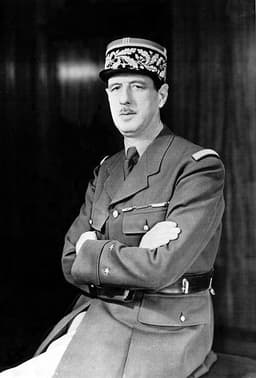
Charles de Gaulle
Politician · Modern
68.2Total
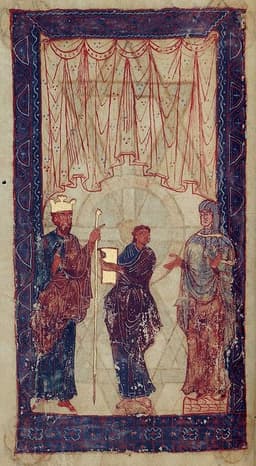
Ferdinand I of Leon
Emperor · Medieval
59.2Total
Basic Information
Born
1890
1015
Died
1970
1065
Era
Modern
Medieval
Nationality
France
Leon
Occupation
Politician
Emperor
Civilization
Western
Western
Score Comparison
Military (10%)
55.0
70.0
Political (20%)
75.0
68.0
Influence (20%)
65.0
56.4
Legacy (20%)
68.0
49.2
Leadership (15%)
78.0
66.0
Strategy (15%)
65.0
57.5
TOTAL
68.2
59.2
Charles de Gaulle — Complete Timeline
1940 AD
Appeal of 18 June 1940Political Action
From London, de Gaulle broadcast a radio appeal urging French resistance against Nazi occupation. He called on French soldiers and citizens to continue the fight, founding the Free French Forces and becoming the symbol of French defiance.
World War IIResistanceLeadership
Impact: nationalconstructive
1958 AD
Founding of the Fifth RepublicPolitical Action
De Gaulle returned to power during the Algerian crisis and oversaw the drafting of a new constitution. The Fifth Republic established a strong executive presidency, replacing the unstable parliamentary system of the Fourth Republic.
ConstitutionGovernment ReformPolitical System
Impact: nationalconstructive
1962 AD
End of the Algerian WarPolitical Action◆ Major
De Gaulle negotiated the
DecolonizationPeace TreatyAlgeria
Impact: regionalconstructive
1968 AD
May 1968 CrisisPolitical Action◆ Major
Mass student protests and general strikes paralyzed France, challenging de Gaulle's government. De Gaulle briefly fled to Germany, then returned to dissolve the National Assembly and call elections, which his party won, but his authority was weakened.
ProtestPolitical CrisisSocial Unrest
Impact: nationaldestructive
1969 AD
Resignation as PresidentPolitical Action
De Gaulle resigned after losing a referendum on regional reform and Senate restructuring. The defeat marked the end of his political career, as he withdrew from public life and died the following year.
ResignationPolitical DefeatReferendum
Impact: nationaltragic
Ferdinand I of Leon — Complete Timeline
1029 AD
Inheritance of the County of CastilePolitical Action◆ Major
Ferdinand I inherited the County of Castile from his father Sancho III of Navarre. He later expanded his territory through conquest and marriage, laying the foundation for the Kingdom of Castile.
Impact: regionalconstructive
1037 AD
Conquest of LeónWar◆ Major
Ferdinand I defeated and killed King Bermudo III of Le
Impact: regional
1056 AD
First Emperor of SpainPolitical Action◆ Major
Ferdinand I was crowned 'Imperator totius Hispaniae' (Emperor of all Spain) in 1056, claiming suzerainty over all Christian and Muslim rulers in Iberia. This title reflected his military dominance and political ambition.
Impact: regional
1065 AD
Division of the kingdomPolitical Action◆ Major
Upon his death, Ferdinand I divided his kingdom among his sons: Sancho II received Castile, Alfonso VI received Le
Impact: regionaldestructive
Expert Analysis
Charles de Gaulle vs Ferdinand I of Leon
# The Cross and the Crown: De Gaulle and Ferdinand I, Architects of Nations
In the summer of 1940, a towering French general stood before a microphone in a London studio, his voice crackling across the English Channel to a stunned nation that had just fallen to Nazi tanks. Two words—“*À tous les Français*”—would ignite a resistance movement that refused to die. Nine centuries earlier, another ruler, Ferdinand I of León, knelt before an altar in the cathedral of León, accepting a crown that proclaimed him “Emperor of all Spain” while Muslim armies still held half the peninsula. Both men inherited fragments of broken realms. Both chose to rebuild not by restoring the old, but by forging something new. Yet their paths, their tools, and the shadows they cast could not be more different.
Origins
Charles de Gaulle was born in 1890 into a devoutly Catholic, patriotic family in Lille, northern France. His father taught philosophy and history; young Charles devoured the epic tales of Joan of Arc and Napoleon. The Franco-Prussian War of 1870, which shattered French pride, was a wound still fresh in his household. De Gaulle grew up believing France was destined for greatness—and that only a leader with vision could restore it. He entered Saint-Cyr military academy in 1909, shaped by the rigid discipline of the army and the bitter lessons of World War I, where he was wounded, captured, and spent nearly three years as a prisoner of war.
Ferdinand I, born around 1015, belonged to a world where borders were drawn by swords and marriages. He was the second son of Sancho III of Navarre, a king who had united much of Christian Spain under his rule. The medieval Iberian Peninsula was a patchwork of warring Christian kingdoms and powerful Muslim taifas—fragmented successor states to the Caliphate of Córdoba. Ferdinand inherited the County of Castile in 1029 from his father, a modest territory of rugged hills and restless nobles. His era demanded not vision but conquest, not oratory but blood.
Rise to Power
De Gaulle’s ascent was improbable. In 1940, he was a little-known brigadier general, a tank commander whose unorthodox theories had been ignored by his superiors. When France fell, Prime Minister Paul Reynaud sent him to London as a liaison. On June 18, with Reynaud’s government collapsing and Marshal Pétain preparing to surrender, de Gaulle made his famous broadcast. He had no army, no territory, no legitimacy—only a conviction that France was not defeated. His appeal was a gamble that defied all military logic. Yet within weeks, thousands of French soldiers and civilians rallied to his banner. The Free French were born.
Ferdinand’s rise was a matter of inheritance and war. In 1029, his father Sancho III died, and Ferdinand received Castile, while his older brother García took Navarre. Ferdinand was not content with a county. In 1037, he marched against King Bermudo III of León, a rival who had once been his ally. At the Battle of Tamarón, Ferdinand killed Bermudo in single combat, a scene straight out of the *Cantar de Mio Cid*. He claimed León by right of his wife, Sancha, Bermudo’s sister, and united the two crowns. By 1056, after years of relentless campaigns against the Moors, he had seized Coimbra, Zamora, and vast territories. That year, he was crowned *Imperator totius Hispaniae*—Emperor of all Spain—a title that asserted dominance over every Christian ruler on the peninsula.
Leadership & Governance
De Gaulle governed through words and institutions. His political genius lay in the constitution he crafted for the Fifth Republic in 1958. Returning to power during the Algerian crisis, he designed a system that gave the president sweeping executive powers—a direct response to the chaos of the Fourth Republic, where governments fell like autumn leaves. He believed France needed a “*certain idea of France*”—a vision of independence, grandeur, and unity. He ended the Algerian War in 1962 through the Évian Accords, a decision that horrified the French army and the pieds-noirs but spared France a prolonged colonial catastrophe. He withdrew France from NATO’s integrated command in 1966, pursued an independent nuclear deterrent, and blocked British entry into the European Economic Community. His rule was paternalistic, aloof, and often authoritarian.
Ferdinand I governed through war and partition. His military strategy was straightforward: attack the fragmented Muslim taifas, extract tribute, and expand Christian territory. He was a master of siege warfare, taking cities like Lamego and Viseu. But his political wisdom was medieval—rooted in family loyalty and territorial consolidation. He made pilgrimages to Santiago de Compostela and patronized the Cluniac reform, linking his kingdom to the broader Latin Christian world. Yet his greatest weakness was his adherence to the old Visigothic custom of dividing the kingdom among his sons. In 1065, on his deathbed, Ferdinand split his realm: Sancho II got Castile, Alfonso VI got León, and García got Galicia. This division would spark decades of fratricidal war.
Triumph & Tragedy
De Gaulle’s greatest triumph was the survival of France as a sovereign, independent power. In 1944, he marched down the Champs-Élysées as the liberator of Paris, a moment of almost mythic redemption. His greatest tragedy came in May 1968, when student protests and a general strike paralyzed France. De Gaulle, stunned by the revolt of a generation he had failed to understand, briefly fled to Baden-Baden to consult with French generals. He returned, called elections, and won—but the magic was broken. In 1969, he lost a referendum on regional reform and resigned, retreating to his country home to die quietly the next year.
Ferdinand’s triumph was the expansion of Christian Spain and his imperial coronation. He died in 1065 at León, having conquered more territory than any ruler since the Visigoths. His tragedy was the division of his kingdom. He had spent a lifetime uniting León and Castile, only to tear them apart with his own hand. His sons Sancho and Alfonso would fight for twenty years, culminating in Sancho’s assassination and Alfonso’s eventual reunification. Ferdinand’s empire crumbled within a generation.
Character & Destiny
De Gaulle was a man of towering pride and icy self-control. He once wrote, “*Greatness is a path toward the summit*.” He saw himself as the embodiment of France, a vessel for its historical destiny. This conviction gave him the courage to resist in 1940, the ruthlessness to end the Algerian War, and the detachment that made him indifferent to popularity. But it also blinded him to the social changes of the 1960s. He could not kneel to the crowd.
Ferdinand was a warrior-king of the old mold—pious, ambitious, and bound by feudal custom. He believed his kingdom was a family estate, not a nation. His decisions were shaped by the logic of lineage, not statecraft. He divided his realm not out of weakness but because he saw no alternative. In his world, kings did not rule abstract territories; they ruled families, and families were divided.
Legacy
De Gaulle’s legacy is the Fifth Republic itself, which endures today. His vision of an independent France—skeptical of American hegemony, assertive in global affairs—continues to shape French foreign policy. He is remembered as the man who said no to Hitler, no to NATO’s integration, and no to the easy path. His statue stands in Paris, his name adorns the world’s busiest airport, and his constitutional framework has outlasted him by half a century.
Ferdinand I is less known outside Spain, but his legacy is foundational. He was the first ruler to claim the title “Emperor of Spain,” a precursor to the unified monarchy that would emerge under his great-grandson Alfonso VI. His campaigns paved the way for the Reconquista’s later triumphs. Yet his division of the kingdom is a cautionary tale, a reminder that even the greatest conquerors cannot escape the limitations of their age.
Conclusion
Both de Gaulle and Ferdinand I were architects of nations—one of a modern republic, the other of a medieval empire. De Gaulle built with words and constitutions; Ferdinand built with swords and marriages. De Gaulle’s France is a living state; Ferdinand’s Spain was a dream that took centuries to realize. Their differences are the differences between 1940 and 1040, between radio waves and iron swords, between a general who wrote books and a king who wrote his name in blood. Yet both understood that to lead is to impose order on chaos—and that the chaos never truly ends.
Rankings
🥇
Charles de GaulleLeader
Mil: 55.0Pol: 75.0Inf: 65.0
68.2
🥈
Ferdinand I of Leon
Mil: 70.0Pol: 68.0Inf: 56.4
59.2
+9.0 behind
How This Comparison Works
Algorithm
Each figure is scored on 6 dimensions (0—100 scale) based on structured historical data: Military (10%), Political (20%), Influence (20%), Legacy (20%), Leadership (15%), Strategy (15%). The weighted total produces the final ranking.
Data Sources
Scores are computed from structured sub-indicators in the database. Scale factors adjust for era (Ancient ×0.85, Modern ×1.0) and civilization size (Eastern ×1.05, Other ×0.80) to account for differences in population and military scale.
Maximum 3 Figures
Comparisons are limited to 2—3 figures to ensure readability and statistical meaningfulness.
Error Margins
±5 points per dimension — Sub-scores are derived from historical records with inherent uncertainty. Two figures within 5 points on a dimension should be considered roughly equivalent in that area.
Total Score Accuracy
±3 points overall — The weighted combination of 6 dimensions produces a total score with approximately ±3 points of uncertainty. Differences of less than 3 points are not statistically significant— the figures are effectively tied.
Known Limitations
- Historical records are incomplete and uneven across civilizations
- Figures from oral-tradition societies may be underrepresented
- Occupation labels can misclassify multi-role figures
- Scores measure capability and impact, not moral character
- Quantitative scoring is a comparison tool, not absolute truth
Capability Radar
Military (10%) — Battles & Warfare
Battles
60
55
Win Rate
55
60
Expansion
20
60
Political (20%) — Governance & Reform
Reform
95
50
Diplomacy
90
55
Economy
70
45
Influence (20%) — Cultural & Global Reach
Cultural
70
40
Global
80
30
Legacy (20%) — Historical Impact
Historical
85
45
Longevity
75
40
Leadership (15%) — Power & Stability
Tenure
85
65
Stability
75
50
Strategy (15%) — Tactics & Innovation
Strategy
85
55
Tactics
70
50
Reform
80
40
Similar Comparisons
Comments & Discussion
LeChancelierCombatif6/16/2026
De Gaulle was a reactionary trapped in a modern uniform. Sure, he refused defeat in 1940, but his real goal was restoring monarchical grandeur under a republican mask. Compare his cult of personality—the "Je vous ai compris" mystique—to Ferdinand I kneeling before God for legitimacy. Both used sacred symbols to mask authoritarian ambitions, but Ferdinand at least built something that lasted: León-Castile's legal codification. De Gaulle gave us the Fifth Republic's imperial presidency, a system t
战术分析员6/16/2026
别被“矮个子将军”这种叙事骗了。从纯军事角度看,两人完全是不同维度的存在。费迪南一世是典型的“围城大师”:1060年围科英布拉一年,断水断粮后攻陷。而戴高乐1940年带着一辆装甲车和无线电就敢叫板第三帝国?数据不会撒谎:费迪南在位期间收复半数西班牙领土,戴高乐的“自由法国”从未控制哪怕5%的法国本土。一个是靠攻城锤和围城塔一步步推进的现实主义者,一个是靠BBC麦克风表演的象征主义者,高下立判。
ImperialCodifier6/16/2026
The comparison misreads Ferdinand entirely. He wasn't just "accepting a crown"—he actively forged the ideology of *Imperium totius Hispaniae* by minting coins with "Imperator" and subduing the Taifa kings' tribute. That's concrete state-building, not De Gaulle's vague "certain idea of France." Moreover, Ferdinand standardized the Leónese legal code (the *Fuero de León*), predating any French administrative reform by centuries. De Gaulle's legacy is speeches and referendums; Ferdinand's is writ i
戴月长镐6/16/2026
作为跨文化观察者,我留意到这两种“民族之父”叙事的镜像差异。戴高乐被神化成孤胆英雄、法国精神的化身,这是现代民主国家的造神运动,依赖广播和纪念章。费迪南一世的“皇帝”头衔却是在收复失地运动中由教会和贵族共同加冕。前者是自上而下的符号灌输,后者是自下而上的权力认领。有趣的是:戴高乐晚年因1968年五月风暴黯然下台—现代神像也有泥足;费迪南一世死时,他的帝国已经通过分封稳固传承。谁才是真正的“民族建筑师”?让时间裁定。
QuislingQuibbler6/16/2026
Spare me the "two architects of nations" drivel. De Gaulle abandoned his country in its darkest hour