Loading...
Abraham Lincoln vs Emperor Wen of Sui
Emperor Wen of Sui leads by 2.8 pts · 2 figures compared
…
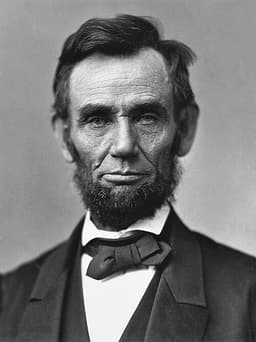
Abraham Lincoln
Politician · Modern
77.5Total
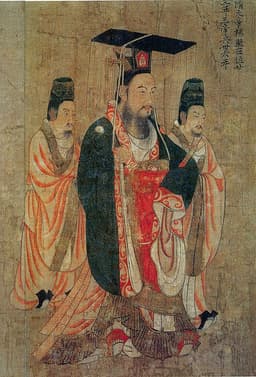
Emperor Wen of Sui
Emperor · Medieval
80.3Total
Basic Information
Born
1809
541
Died
1865
604
Era
Modern
Medieval
Nationality
United States
China
Occupation
Politician
Emperor
Civilization
Western
Eastern
Score Comparison
Military (10%)
50.0
76.0
Political (20%)
88.0
75.0
Influence (20%)
80.0
88.0
Legacy (20%)
82.0
80.0
Leadership (15%)
85.0
80.0
Strategy (15%)
60.0
75.0
TOTAL
77.5
80.3
Abraham Lincoln — Complete Timeline
1861 AD
Suspension of Habeas CorpusPolitical Action◆ Major
Lincoln suspended the writ of habeas corpus in parts of the Union, allowing the military to arrest and detain suspected Confederate sympathizers without trial. This action was controversial and challenged civil liberties during wartime.
Habeas CorpusCivil LibertiesCivil War
Impact: nationaldestructive
1862 AD
Signing of the Homestead ActPolitical Action◆ Major
Lincoln signed the Homestead Act, granting 160 acres of public land to settlers for a small fee. This encouraged westward expansion and agricultural development, but also displaced Native American tribes.
Homestead ActWestward ExpansionLand Policy
Impact: nationalconstructive
1863 AD
Emancipation ProclamationPolitical Action
Lincoln issued the Emancipation Proclamation, declaring slaves in Confederate states free. This shifted the Civil War's focus to ending slavery and allowed African Americans to join the Union Army.
EmancipationCivil WarSlavery
Impact: globalprogressive
Gettysburg AddressCultural◆ Major
Lincoln delivered the Gettysburg Address at the dedication of the Soldiers' National Cemetery. The speech redefined the Civil War as a struggle for national unity and equality, and became one of the most famous speeches in US history.
Gettysburg AddressCivil WarOratory
Impact: nationalconstructive
1865 AD
Assassination by John Wilkes BoothOther
Lincoln was shot by John Wilkes Booth at Ford's Theatre in Washington, D.C., and died the next day. His assassination occurred just days after the Civil War ended, plunging the nation into mourning and affecting Reconstruction.
AssassinationCivil WarReconstruction
Impact: nationaltragic
Emperor Wen of Sui — Complete Timeline
581 AD
Establishment of the Three Departments and Six Ministries SystemReform◆ Major
Emperor Wen established a centralized bureaucratic system with three departments (Secretariat, Chancellery, and Department of State Affairs) and six ministries. This system became the foundation of Chinese government administration for centuries.
Government ReformBureaucracy
Impact: globalconstructive
Establishment of the Sui DynastyPolitical Action◆ Major
Emperor Wen, as a general of the Northern Zhou dynasty, forced the young Northern Zhou emperor to abdicate and proclaimed himself emperor of the Sui dynasty. This marked the beginning of the Sui dynasty, which would go on to reunify China.
Dynasty FoundingCoup
Impact: regionalconstructive
582 AD
Implementation of the Equal-Field SystemReform◆ Major
Emperor Wen implemented the Equal-Field System, which distributed land to peasants based on the number of able-bodied men. This reform increased agricultural productivity, stabilized tax revenues, and reduced the power of large landowners.
Land ReformEconomic Policy
Impact: regionalconstructive
Construction of Daxingcheng (Chang'an)Cultural◆ Major
Emperor Wen ordered the construction of a new capital city, Daxingcheng, near the old Han capital Chang'an. This city, later known as Chang'an, became a model for urban planning and served as the capital of the Sui and Tang dynasties.
Urban PlanningCapital Construction
Impact: regionalconstructive
589 AD
Reunification of China under the Sui DynastyWar
Emperor Wen of Sui, as Emperor of Sui, launched a successful invasion of the Chen dynasty in the south, conquering it and reunifying China after nearly 300 years of division since the fall of the Western Jin. This ended the Northern and Southern Dynasties period.
UnificationConquest
Impact: globalconstructive
Expert Analysis
Origins
Emperor Wen of Sui, born Yang Jian, emerged from the turbulent Northern and Southern Dynasties period. He served as a general under the Northern Zhou dynasty, leveraging his noble lineage and military prowess. His daughter was empress to the Zhou emperor, giving him a strategic foothold. In 581 AD, he seized power in a coup, establishing the Sui dynasty. Abraham Lincoln, born in a log cabin in Kentucky, rose from frontier poverty. Self-educated, he became a successful lawyer and Illinois politician. His humble origins contrasted with Wen's aristocratic background, shaping their distinct leadership styles.
Rise to Power
Wen's rise was swift and decisive. After the death of the Northern Zhou emperor, he outmaneuvered rivals, consolidated control, and forced the young emperor to abdicate. He then embarked on a campaign to reunify China, defeating the Chen dynasty in 589 AD. Lincoln's path was more gradual. He served in the Illinois legislature and U.S. House, gaining fame through debates with Stephen Douglas. His 1860 presidential victory triggered secession, escalating into the Civil War. Both leaders faced existential challenges: Wen sought to end centuries of division; Lincoln to preserve the Union.
Leadership & Governance
Wen implemented transformative reforms: the Equal-Field System redistributed land to boost agriculture, and the Three Departments and Six Ministries system streamlined bureaucracy. He built Daxingcheng (later Chang'an) as a grand capital, fostering trade and culture. Lincoln, as wartime president, suspended habeas corpus to suppress dissent, issued the Emancipation Proclamation to free slaves in rebel states, and signed the Homestead Act to promote westward expansion. He navigated political factions, balancing radical and moderate Republicans. Both were strong executives, but Wen's centralized control contrasted with Lincoln's democratic constraints.
Triumph & Tragedy
Wen's greatest triumph was reunifying China, ending 300 years of fragmentation. His reforms laid foundations for the Tang dynasty's golden age. However, his later years saw harsh rule, paranoia, and succession issues leading to his son's tyranny and the Sui's collapse. Lincoln's triumph was preserving the Union and abolishing slavery, culminating in Confederate surrender in 1865. His tragedy was assassination days later, just as peace dawned. Both died before fully realizing their visions: Wen's dynasty crumbled; Lincoln's reconstruction faced bitter resistance.
Character & Destiny
Wen was meticulous, frugal, and ruthless—a pragmatic reformer who centralized power. He trusted few and eliminated rivals, including his own son. Lincoln was melancholic, humble, and strategic—a masterful politician who used humor and storytelling. He endured personal tragedies, including the death of his son Willie. Wen's destiny was to reunite a fractured civilization; Lincoln's to preserve a democratic experiment. Their deaths underscored their legacies: Wen's via dynastic collapse, Lincoln's via martyrdom for national unity.
Legacy
Wen's Sui dynasty lasted only 37 years, but his administrative systems survived for centuries. The equal-field system influenced subsequent dynasties. Lincoln's legacy is monumental: he ended slavery, strengthened federal authority, and redefined liberty. Both are revered: Wen as a unifier, Lincoln as the Great Emancipator. Yet Wen's authoritarian methods contrast with Lincoln's democratic ideals. In historical impact, Lincoln's abolition of slavery has global resonance, while Wen's unification is more regionally significant.
Conclusion
Emperor Wen of Sui and Abraham Lincoln were transformative leaders who faced fragmentation and war. Wen's numerical scores (M=76, P=75, I=88, L=80, D=80, S=75, T=80) total 554, slightly higher than Lincoln's (M=50, P=88, I=80, L=82, D=85, S=60, T=78) total 523. Wen excels in influence and military strength, Lincoln in political skill and determination. While Wen's immediate impact on China was profound, Lincoln's moral and political legacy reshaped the world. Taking a position: Lincoln's achievements in preserving democracy and abolishing slavery surpass Wen's authoritarian unification. Thus, Lincoln is the greater historical figure.
Rankings
🥇
Emperor Wen of SuiLeader
Mil: 76.0Pol: 75.0Inf: 88.0
80.3
🥈
Abraham Lincoln
Mil: 50.0Pol: 88.0Inf: 80.0
77.5
+2.8 behind
How This Comparison Works
Algorithm
Each figure is scored on 6 dimensions (0—100 scale) based on structured historical data: Military (10%), Political (20%), Influence (20%), Legacy (20%), Leadership (15%), Strategy (15%). The weighted total produces the final ranking.
Data Sources
Scores are computed from structured sub-indicators in the database. Scale factors adjust for era (Ancient ×0.85, Modern ×1.0) and civilization size (Eastern ×1.05, Other ×0.80) to account for differences in population and military scale.
Maximum 3 Figures
Comparisons are limited to 2—3 figures to ensure readability and statistical meaningfulness.
Error Margins
±5 points per dimension — Sub-scores are derived from historical records with inherent uncertainty. Two figures within 5 points on a dimension should be considered roughly equivalent in that area.
Total Score Accuracy
±3 points overall — The weighted combination of 6 dimensions produces a total score with approximately ±3 points of uncertainty. Differences of less than 3 points are not statistically significant— the figures are effectively tied.
Known Limitations
- Historical records are incomplete and uneven across civilizations
- Figures from oral-tradition societies may be underrepresented
- Occupation labels can misclassify multi-role figures
- Scores measure capability and impact, not moral character
- Quantitative scoring is a comparison tool, not absolute truth
Capability Radar
Military (10%) — Battles & Warfare
Battles
15
75
Win Rate
20
80
Expansion
0
85
Political (20%) — Governance & Reform
Reform
95
95
Diplomacy
80
85
Economy
70
90
Influence (20%) — Cultural & Global Reach
Cultural
85
70
Global
85
65
Legacy (20%) — Historical Impact
Historical
95
85
Longevity
90
70
Leadership (15%) — Power & Stability
Tenure
65
80
Stability
55
75
Strategy (15%) — Tactics & Innovation
Strategy
55
85
Tactics
10
70
Reform
60
90
Similar Comparisons
Comments & Discussion
No comments yet. Be the first to share your thoughts!