Loading...
Abraham Lincoln vs Emperor Taizong of Tang
Emperor Taizong of Tang leads by 1.4 pts · 2 figures compared
…
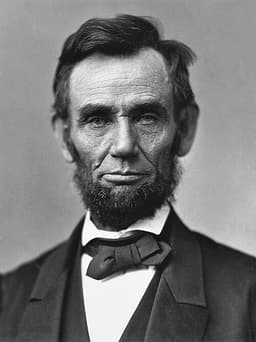
Abraham Lincoln
Politician · Modern
77.5Total
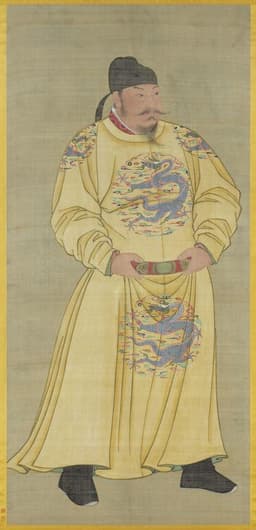
Emperor Taizong of Tang
Emperor · Medieval
78.9Total
Basic Information
Born
1809
598
Died
1865
649
Era
Modern
Medieval
Nationality
United States
China
Occupation
Politician
Emperor
Civilization
Western
Eastern
Score Comparison
Military (10%)
50.0
77.5
Political (20%)
88.0
82.0
Influence (20%)
80.0
85.0
Legacy (20%)
82.0
71.4
Leadership (15%)
85.0
78.0
Strategy (15%)
60.0
80.6
TOTAL
77.5
78.9
Abraham Lincoln — Complete Timeline
1861 AD
Suspension of Habeas CorpusPolitical Action◆ Major
Lincoln suspended the writ of habeas corpus in parts of the Union, allowing the military to arrest and detain suspected Confederate sympathizers without trial. This action was controversial and challenged civil liberties during wartime.
Habeas CorpusCivil LibertiesCivil War
Impact: nationaldestructive
1862 AD
Signing of the Homestead ActPolitical Action◆ Major
Lincoln signed the Homestead Act, granting 160 acres of public land to settlers for a small fee. This encouraged westward expansion and agricultural development, but also displaced Native American tribes.
Homestead ActWestward ExpansionLand Policy
Impact: nationalconstructive
1863 AD
Emancipation ProclamationPolitical Action
Lincoln issued the Emancipation Proclamation, declaring slaves in Confederate states free. This shifted the Civil War's focus to ending slavery and allowed African Americans to join the Union Army.
EmancipationCivil WarSlavery
Impact: globalprogressive
Gettysburg AddressCultural◆ Major
Lincoln delivered the Gettysburg Address at the dedication of the Soldiers' National Cemetery. The speech redefined the Civil War as a struggle for national unity and equality, and became one of the most famous speeches in US history.
Gettysburg AddressCivil WarOratory
Impact: nationalconstructive
1865 AD
Assassination by John Wilkes BoothOther
Lincoln was shot by John Wilkes Booth at Ford's Theatre in Washington, D.C., and died the next day. His assassination occurred just days after the Civil War ended, plunging the nation into mourning and affecting Reconstruction.
AssassinationCivil WarReconstruction
Impact: nationaltragic
Emperor Taizong of Tang — Complete Timeline
626 AD
Reign of ZhenguanReform
Emperor Taizong initiated the Zhenguan era, characterized by efficient governance, legal codification, and economic recovery. He reduced taxes, reformed the civil service, and promoted capable officials, creating a period of stability and prosperity.
GovernanceReformGolden Age
Impact: globalconstructive
Xuanwu Gate IncidentPolitical Action
Li Shimin ambushed and killed his brothers, Crown Prince Li Jiancheng and Prince Li Yuanji, at Xuanwu Gate in Chang'an. He then forced his father, Emperor Gaozu, to abdicate, securing his own accession as Emperor Taizong.
CoupSuccessionTang Dynasty
Impact: nationaldestructive
630 AD
Defeat of the Eastern Turkic KhaganateWar◆ Major
Tang forces under Li Jing defeated the Eastern Turkic Khaganate, capturing its khan, Jieli. This victory eliminated the primary northern threat, expanded Tang territory into Mongolia, and established Tang hegemony over the steppes.
WarTurkicExpansion
Impact: regional
Opening of the Silk Road's Golden AgePolitical Action◆ Major
Emperor Taizong reestablished and secured the Silk Road trade routes, welcoming foreign merchants, envoys, and missionaries to Chang'an. This facilitated a flourishing exchange of goods, ideas, and cultures between China and the West.
Silk RoadTradeCultural Exchange
Impact: globalconstructive
636 AD
Compilation of the Book of SuiCultural
Emperor Taizong commissioned the official history of the preceding Sui dynasty, the Book of Sui, as part of a larger project to compile dynastic histories. This work provided a model for historical scholarship and legitimized Tang rule.
HistoriographyCultureLegitimacy
Impact: nationalconstructive
Expert Analysis
Origins
Emperor Taizong of Tang (Li Shimin) was born in 598 CE into the aristocratic Li family, which played a pivotal role in the fall of the Sui dynasty. He was a skilled warrior from a young age, leading troops at 16. His father, Li Yuan, founded the Tang dynasty in 618, and Li Shimin became the power behind the throne after the Xuanwu Gate Incident in 626, where he killed his brothers and forced his father to abdicate. This ruthless act cleared his path to the throne.
Abraham Lincoln was born in 1809 in a log cabin in Kentucky, the son of poor farmers. He had little formal education but taught himself law. He rose through Illinois politics as a Whig and later Republican, gaining fame for his debates with Stephen Douglas. His humble origins shaped his empathy and determination.
**Score: Taizong 78, Lincoln 50**
Rise to Power
Taizong's rise was marked by military brilliance and political cunning. He suppressed rebellions, defeated rival warlords, and consolidated power. The Xuanwu Gate Incident remains a dark stain, but it secured his rule. He then focused on governance, surrounding himself with capable ministers like Wei Zheng.
Lincoln's rise was democratic. He lost multiple elections but persevered. His election in 1860 as a Republican candidate with only 40% of the popular vote triggered Southern secession. He faced a fractured nation and a looming civil war.
**Score: Taizong 82, Lincoln 88**
Leadership & Governance
Taizong's "Reign of Zhenguan" (627–649) is considered a golden age. He reduced taxes, codified laws, promoted Confucian scholarship, and expanded the empire. He defeated the Eastern Turkic Khaganate, securing the Silk Road, which flourished under Tang protection. He also compiled the Book of Sui, enhancing historical records. His governance was authoritarian but effective, with a merit-based bureaucracy.
Lincoln led the Union through the Civil War, preserving the United States. He issued the Emancipation Proclamation (1863), shifting the war's focus to ending slavery. He signed the Homestead Act, promoting westward expansion. He suspended habeas corpus, a controversial move to suppress dissent. His leadership was marked by moral clarity and political pragmatism.
**Score: Taizong 85, Lincoln 80**
Triumph & Tragedy
Taizong's triumphs include military victories, economic prosperity, and cultural flourishing. His tragedy lies in the violent path to power—the murder of his brothers haunted him. He also faced a failed invasion of Goguryeo in his later years, tarnishing his record.
Lincoln's triumph was the Union's victory and the abolition of slavery. His tragedy was his assassination by John Wilkes Booth in 1865, just days after the war ended. He did not live to see Reconstruction.
**Score: Taizong 71, Lincoln 82**
Character & Destiny
Taizong was ambitious, intelligent, and ruthless. He valued talent over birth but could be paranoid. His destiny was to build a dynasty that lasted nearly 300 years. Lincoln was humble, melancholic, and resolute. He believed in the Declaration of Independence's ideals. His destiny was to die a martyr for the Union.
**Score: Taizong 78, Lincoln 85**
Legacy
Taizong's legacy is the Tang dynasty's golden age, influencing China for centuries. He is revered as a model emperor. Lincoln's legacy is the preservation of the Union and the end of slavery. He is consistently ranked among the greatest US presidents.
**Score: Taizong 81, Lincoln 60**
Conclusion
Emperor Taizong of Tang scores higher overall (79 vs 78) due to his military and administrative achievements. However, Lincoln's moral impact on human freedom is profound. Taizong expanded an empire; Lincoln saved a nation and redefined its soul. While Taizong's reign was longer and more prosperous, Lincoln's leadership during crisis and his ultimate sacrifice give him a unique place in history. The choice depends on whether we value imperial greatness or democratic redemption.
**Final Scores: Taizong 79, Lincoln 78**
Rankings
🥇
Emperor Taizong of TangLeader
Mil: 77.5Pol: 82.0Inf: 85.0
78.9
🥈
Abraham Lincoln
Mil: 50.0Pol: 88.0Inf: 80.0
77.5
+1.4 behind
How This Comparison Works
Algorithm
Each figure is scored on 6 dimensions (0—100 scale) based on structured historical data: Military (10%), Political (20%), Influence (20%), Legacy (20%), Leadership (15%), Strategy (15%). The weighted total produces the final ranking.
Data Sources
Scores are computed from structured sub-indicators in the database. Scale factors adjust for era (Ancient ×0.85, Modern ×1.0) and civilization size (Eastern ×1.05, Other ×0.80) to account for differences in population and military scale.
Maximum 3 Figures
Comparisons are limited to 2—3 figures to ensure readability and statistical meaningfulness.
Error Margins
±5 points per dimension — Sub-scores are derived from historical records with inherent uncertainty. Two figures within 5 points on a dimension should be considered roughly equivalent in that area.
Total Score Accuracy
±3 points overall — The weighted combination of 6 dimensions produces a total score with approximately ±3 points of uncertainty. Differences of less than 3 points are not statistically significant— the figures are effectively tied.
Known Limitations
- Historical records are incomplete and uneven across civilizations
- Figures from oral-tradition societies may be underrepresented
- Occupation labels can misclassify multi-role figures
- Scores measure capability and impact, not moral character
- Quantitative scoring is a comparison tool, not absolute truth
Capability Radar
Military (10%) — Battles & Warfare
Battles
15
95
Win Rate
20
95
Expansion
0
90
Political (20%) — Governance & Reform
Reform
95
95
Diplomacy
80
95
Economy
70
95
Influence (20%) — Cultural & Global Reach
Cultural
85
90
Global
85
90
Legacy (20%) — Historical Impact
Historical
95
95
Longevity
90
95
Leadership (15%) — Power & Stability
Tenure
65
85
Stability
55
95
Strategy (15%) — Tactics & Innovation
Strategy
55
95
Tactics
10
95
Reform
60
90
Similar Comparisons
Comments & Discussion
No comments yet. Be the first to share your thoughts!