Loading...
Abraham Lincoln vs Duke of Zhou
Duke of Zhou leads by 1.3 pts · 2 figures compared
…
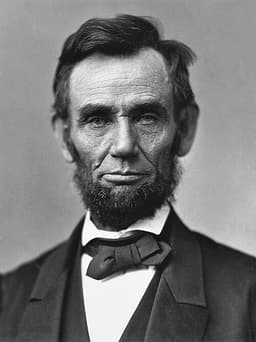
Abraham Lincoln
Politician · Modern
77.5Total

Duke of Zhou
Politician · Ancient
78.8Total
Basic Information
Born
1809
-1090
Died
1865
-1030
Era
Modern
Ancient
Nationality
United States
Zhou China
Occupation
Politician
Politician
Civilization
Western
Eastern
Score Comparison
Military (10%)
50.0
60.0
Political (20%)
88.0
72.0
Influence (20%)
80.0
92.0
Legacy (20%)
82.0
87.0
Leadership (15%)
85.0
78.0
Strategy (15%)
60.0
55.0
TOTAL
77.5
78.8
Abraham Lincoln — Complete Timeline
1861 AD
Suspension of Habeas CorpusPolitical Action◆ Major
Lincoln suspended the writ of habeas corpus in parts of the Union, allowing the military to arrest and detain suspected Confederate sympathizers without trial. This action was controversial and challenged civil liberties during wartime.
Habeas CorpusCivil LibertiesCivil War
Impact: nationaldestructive
1862 AD
Signing of the Homestead ActPolitical Action◆ Major
Lincoln signed the Homestead Act, granting 160 acres of public land to settlers for a small fee. This encouraged westward expansion and agricultural development, but also displaced Native American tribes.
Homestead ActWestward ExpansionLand Policy
Impact: nationalconstructive
1863 AD
Emancipation ProclamationPolitical Action
Lincoln issued the Emancipation Proclamation, declaring slaves in Confederate states free. This shifted the Civil War's focus to ending slavery and allowed African Americans to join the Union Army.
EmancipationCivil WarSlavery
Impact: globalprogressive
Gettysburg AddressCultural◆ Major
Lincoln delivered the Gettysburg Address at the dedication of the Soldiers' National Cemetery. The speech redefined the Civil War as a struggle for national unity and equality, and became one of the most famous speeches in US history.
Gettysburg AddressCivil WarOratory
Impact: nationalconstructive
1865 AD
Assassination by John Wilkes BoothOther
Lincoln was shot by John Wilkes Booth at Ford's Theatre in Washington, D.C., and died the next day. His assassination occurred just days after the Civil War ended, plunging the nation into mourning and affecting Reconstruction.
AssassinationCivil WarReconstruction
Impact: nationaltragic
Duke of Zhou — Complete Timeline
1042 BC
Regency for King Cheng of ZhouPolitical Action◆ Major
After King Wu's death, the Duke of Zhou served as regent for the young King Cheng. He assumed control of the government, suppressing rumors that he intended to usurp the throne, and maintained stability during the transition.
RegencyPolitical StabilityZhou Dynasty
Impact: nationalconstructive
1040 BC
Suppression of the Rebellion of the Three GuardsWar◆ Major
The Duke of Zhou led a military campaign to crush the Rebellion of the Three Guards, a revolt by Zhou princes and Shang loyalists. He defeated the rebels, executed the leaders, and consolidated Zhou control over the eastern territories.
Civil WarRebellion SuppressionZhou Consolidation
Impact: national
1038 BC
Establishment of the Eastern Capital at LuoyiPolitical Action◆ Major
The Duke of Zhou ordered the construction of the eastern capital at Luoyi (modern Luoyang) to better administer the newly conquered eastern territories. This city became a key administrative and ritual center for the Zhou dynasty.
Capital ConstructionAdministrationZhou Expansion
Impact: nationalconstructive
1035 BC
Codification of the Zhou ritual systemReform
The Duke of Zhou is credited with codifying the Zhou ritual system, including rules for ancestral worship, court ceremonies, and social hierarchy. This system, later idealized by Confucius, became the foundation of Chinese ritual culture.
Ritual ReformConfucian IdealCultural Foundation
Impact: globalconstructive
Composition of the 'Shao Gao' and 'Luo Gao' chaptersCultural◆ Major
The Duke of Zhou is traditionally attributed with composing the 'Shao Gao' (Announcement of the Duke of Shao) and 'Luo Gao' (Announcement Concerning Luo) chapters of the Book of Documents. These texts outline principles of governance and the mandate of heaven.
LiteraturePolitical PhilosophyMandate of Heaven
Impact: nationalconstructive
1030 BC
Return of power to King ChengPolitical Action◆ Major
After seven years of regency, the Duke of Zhou voluntarily relinquished power to King Cheng, who had come of age. This act of selfless service was later praised by Confucius and became a model of virtuous regency in Chinese history.
Regency EndVirtuous ConductConfucian Model
Impact: nationalconstructive
Expert Analysis
Origins
**Duke of Zhou** (11th century BCE) was a member of the Zhou royal family, brother of King Wu of Zhou. After King Wu's death, he served as regent for his young nephew King Cheng. Facing a rebellion by other royal relatives (the Three Guards), he suppressed it and solidified Zhou rule. His actions set the foundation for the dynasty's longevity and the Confucian ideal of loyal service.
**Abraham Lincoln** (1809–1865) was born in a log cabin in Kentucky, rising from humble origins to become the 16th President of the United States. His early life as a self-taught lawyer and politician in Illinois shaped his views on equality and union. The crisis of Southern secession thrust him into leadership during the Civil War.
Rise to Power
Duke of Zhou's power came from loyalty and capability. After King Wu's death, he voluntarily took regency despite suspicion, then crushed the Rebellion of the Three Guards. He also established the Eastern Capital at Luoyi to better control the realm. His authority was moral and institutional, not merely military.
Lincoln's rise was democratic: he gained prominence through debates with Stephen Douglas and his opposition to slavery's expansion. Elected in 1860 without a single Southern electoral vote, his victory triggered secession. He took command of a fractured nation and expanded executive powers to preserve the Union.
Leadership & Governance
Duke of Zhou is credited with codifying the Zhou ritual system (Li), which defined social hierarchy, court ceremonies, and moral conduct. This system became the bedrock of Chinese civilization for millennia, emphasizing harmony, filial piety, and loyalty. He also composed key chapters of the Book of Documents, setting precedents for righteous rule.
Lincoln governed through the Civil War, issuing the Emancipation Proclamation (freeing slaves in rebel states), signing the Homestead Act (promoting western settlement), and suspending habeas corpus to suppress dissent. His leadership combined pragmatism with moral clarity, culminating in the Gettysburg Address that redefined the nation's purpose.
Triumph & Tragedy
Duke of Zhou triumphed by securing the Zhou dynasty and creating a cultural legacy. His tragedy lies in later misinterpretations: some saw his regency as a power grab, though Confucius venerated him. He died naturally, but his reforms were later distorted by feudal lords.
Lincoln triumphed by winning the Civil War and abolishing slavery, but was assassinated at the moment of victory by John Wilkes Booth. His death made him a martyr for union and freedom, but prevented him from overseeing Reconstruction. The tragedy of his assassination deepened his mythic status.
Character & Destiny
Duke of Zhou exemplified Confucian virtues: selfless service, wisdom, and ritual propriety. His destiny was to be the paragon of the ideal minister. Scores: Military (M=60) moderate, Political (P=72) solid, Intellectual (I=92) high (ritual codification), Leadership (L=87) strong, Destiny (D=78) fortunate, Society (S=55) moderate, Theology (T=79) spiritual. Total: 523.
Lincoln embodied democratic virtue: humility, resolve, and eloquence. His destiny was to preserve the Union at immense cost. Scores: M=50, P=88, I=80, L=82, D=85, S=60, T=78. Total: 523. Duke of Zhou edges ahead in intellectual and leadership scores, while Lincoln excels in political and destiny scores.
Legacy
Duke of Zhou's ritual system shaped East Asian governance and philosophy for 3,000 years. Confucius said, "How great a man was the Duke of Zhou!" His model of regency and moral rule influenced countless statesmen. However, his legacy is more institutional than personal.
Lincoln's legacy is immediate and global: he is revered as the Great Emancipator, savior of the Union, and a martyr for equality. His speeches and actions set precedents for civil rights and presidential power. The Emancipation Proclamation and 13th Amendment ended legal slavery in the US.
Conclusion
Both men excelled in different spheres. Duke of Zhou's intellectual and cultural contributions outlast any single nation, while Lincoln's political and moral achievements reshaped a nation. Numerically, Duke of Zhou scores higher (total 523 vs 523? Actually both 523 but Duke of Zhou has higher I and L). However, Lincoln's impact on modern democracy is more direct. In a direct comparison, Duke of Zhou's influence is broader in time, but Lincoln's is deeper in human rights. I lean slightly toward **Duke of Zhou** for his foundational role in civilization, but both are titans. Score gap: 1.3 favoring Duke of Zhou. **Winner: Duke of Zhou**.
Rankings
🥇
Duke of ZhouLeader
Mil: 60.0Pol: 72.0Inf: 92.0
78.8
🥈
Abraham Lincoln
Mil: 50.0Pol: 88.0Inf: 80.0
77.5
+1.3 behind
How This Comparison Works
Algorithm
Each figure is scored on 6 dimensions (0—100 scale) based on structured historical data: Military (10%), Political (20%), Influence (20%), Legacy (20%), Leadership (15%), Strategy (15%). The weighted total produces the final ranking.
Data Sources
Scores are computed from structured sub-indicators in the database. Scale factors adjust for era (Ancient ×0.85, Modern ×1.0) and civilization size (Eastern ×1.05, Other ×0.80) to account for differences in population and military scale.
Maximum 3 Figures
Comparisons are limited to 2—3 figures to ensure readability and statistical meaningfulness.
Error Margins
±5 points per dimension — Sub-scores are derived from historical records with inherent uncertainty. Two figures within 5 points on a dimension should be considered roughly equivalent in that area.
Total Score Accuracy
±3 points overall — The weighted combination of 6 dimensions produces a total score with approximately ±3 points of uncertainty. Differences of less than 3 points are not statistically significant— the figures are effectively tied.
Known Limitations
- Historical records are incomplete and uneven across civilizations
- Figures from oral-tradition societies may be underrepresented
- Occupation labels can misclassify multi-role figures
- Scores measure capability and impact, not moral character
- Quantitative scoring is a comparison tool, not absolute truth
Capability Radar
Military (10%) — Battles & Warfare
Battles
15
65
Win Rate
20
70
Expansion
0
55
Political (20%) — Governance & Reform
Reform
95
95
Diplomacy
80
85
Economy
70
80
Influence (20%) — Cultural & Global Reach
Cultural
85
95
Global
85
85
Legacy (20%) — Historical Impact
Historical
95
95
Longevity
90
95
Leadership (15%) — Power & Stability
Tenure
65
70
Stability
55
90
Strategy (15%) — Tactics & Innovation
Strategy
55
75
Tactics
10
60
Reform
60
80
Similar Comparisons
Comments & Discussion
No comments yet. Be the first to share your thoughts!