Loading...
Abraham Lincoln vs Dorgon
Dorgon leads by 0.5 pts · 2 figures compared
…
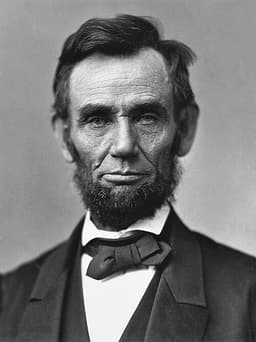
Abraham Lincoln
Politician · Modern
77.5Total

Dorgon
General · Modern
78.0Total
Basic Information
Born
1809
1612
Died
1865
1650
Era
Modern
Modern
Nationality
United States
China
Occupation
Politician
General
Civilization
Western
Eastern
Score Comparison
Military (10%)
50.0
78.5
Political (20%)
88.0
78.0
Influence (20%)
80.0
88.0
Legacy (20%)
82.0
65.0
Leadership (15%)
85.0
85.0
Strategy (15%)
60.0
75.0
TOTAL
77.5
78.0
Abraham Lincoln — Complete Timeline
1861 AD
Suspension of Habeas CorpusPolitical Action◆ Major
Lincoln suspended the writ of habeas corpus in parts of the Union, allowing the military to arrest and detain suspected Confederate sympathizers without trial. This action was controversial and challenged civil liberties during wartime.
Habeas CorpusCivil LibertiesCivil War
Impact: nationaldestructive
1862 AD
Signing of the Homestead ActPolitical Action◆ Major
Lincoln signed the Homestead Act, granting 160 acres of public land to settlers for a small fee. This encouraged westward expansion and agricultural development, but also displaced Native American tribes.
Homestead ActWestward ExpansionLand Policy
Impact: nationalconstructive
1863 AD
Emancipation ProclamationPolitical Action
Lincoln issued the Emancipation Proclamation, declaring slaves in Confederate states free. This shifted the Civil War's focus to ending slavery and allowed African Americans to join the Union Army.
EmancipationCivil WarSlavery
Impact: globalprogressive
Gettysburg AddressCultural◆ Major
Lincoln delivered the Gettysburg Address at the dedication of the Soldiers' National Cemetery. The speech redefined the Civil War as a struggle for national unity and equality, and became one of the most famous speeches in US history.
Gettysburg AddressCivil WarOratory
Impact: nationalconstructive
1865 AD
Assassination by John Wilkes BoothOther
Lincoln was shot by John Wilkes Booth at Ford's Theatre in Washington, D.C., and died the next day. His assassination occurred just days after the Civil War ended, plunging the nation into mourning and affecting Reconstruction.
AssassinationCivil WarReconstruction
Impact: nationaltragic
Dorgon — Complete Timeline
1643 AD
Appointed Prince RegentPolitical Action◆ Major
Upon the death of Hong Taiji, Dorgon was appointed as regent for the young Shunzhi Emperor. This position gave him effective control over the Qing government and military, enabling him to direct the conquest of Ming China.
RegencyPower transition
Impact: national
1644 AD
Battle of Shanhai PassWar
Dorgon allied with Ming general Wu Sangui to defeat Li Zicheng's rebel forces at Shanhai Pass. This victory allowed Qing forces to enter Beijing and establish the Qing dynasty as the ruling power in China.
Qing conquestBattleAlliance
Impact: national
1645 AD
Conquest of Southern MingWar◆ Major
Dorgon led Qing forces in a campaign against the Southern Ming regime, capturing Nanjing and defeating the Hongguang Emperor. This campaign extended Qing control over the Yangtze River valley and weakened Ming loyalist resistance.
Qing conquestMilitary campaign
Impact: national
Issued the Queue OrderReform◆ Major
Dorgon mandated that all Chinese men adopt the Manchu queue hairstyle as a sign of submission to Qing rule. This policy caused widespread resentment and resistance, but was enforced to consolidate Qing control over Han Chinese subjects.
Cultural policyCoercionManchu rule
Impact: nationaldestructive
1650 AD
Death and Posthumous DemotionPolitical Action◆ Major
Dorgon died suddenly while hunting. After his death, the Shunzhi Emperor accused him of plotting to usurp the throne, stripped him of all titles, and had his corpse mutilated. This posthumous purge reflected court factional struggles.
PurgePosthumous punishment
Impact: nationaltragic
Expert Analysis
Origins
Dorgon (1612-1650) was a Manchu prince of the Aisin Gioro clan, the imperial family of the Qing dynasty. He was the 14th son of Nurhaci, the founder of the Qing state. His mother, Empress Xiaoliewu, was a consort of Nurhaci. Dorgon grew up in a militaristic society and was trained in warfare from a young age. He participated in campaigns against the Ming dynasty and the Mongols, gaining experience and reputation. His early life was marked by the struggle for succession after Nurhaci's death, where he supported his brother Hong Taiji.
Abraham Lincoln (1809-1865) was born in a log cabin in Hardin County, Kentucky, to Thomas Lincoln and Nancy Hanks. His family was poor and moved to Indiana and later Illinois. Lincoln had little formal education but was an avid reader. He worked as a rail-splitter, storekeeper, and lawyer. His early political career included service in the Illinois state legislature and the U.S. House of Representatives. He was a self-taught lawyer and became known for his honesty and eloquence.
Rise to Power
Dorgon's rise began after the death of his brother Hong Taiji in 1643. Hong Taiji's son, Fulin, was only five years old, and Dorgon was appointed as co-regent along with Jirgalang. Through political maneuvering, Dorgon sidelined his rivals and became the sole regent. He led the Qing forces to victory at the Battle of Shanhai Pass in 1644, where they allied with Ming general Wu Sangui to defeat Li Zicheng's rebel army. This allowed the Qing to capture Beijing and establish the Qing dynasty as the ruling power in China. Dorgon effectively ruled as the de facto ruler of China from 1644 until his death in 1650.
Lincoln's rise to power was through the political arena. He became a prominent lawyer and a member of the Whig Party. He served one term in the U.S. House of Representatives (1847-1849) and later joined the newly formed Republican Party. His opposition to the expansion of slavery gained him national attention. In 1860, he won the Republican nomination and was elected President of the United States, despite not being on the ballot in most Southern states. His election triggered the secession of Southern states, leading to the Civil War.
Leadership & Governance
Dorgon's leadership was characterized by military conquest and consolidation of Qing rule. He issued the Queue Order, forcing Han Chinese to adopt the Manchu hairstyle as a sign of submission. He continued the conquest of Ming loyalists, particularly the Southern Ming, and expanded Qing control over most of China. His governance was autocratic and focused on centralizing power. He promoted Manchu interests but also incorporated some Chinese officials into the bureaucracy. His rule was marked by efficient military campaigns but also by harsh policies that caused resentment among the Chinese population.
Lincoln's leadership during the Civil War was focused on preserving the Union. He suspended habeas corpus, expanded the powers of the presidency, and issued the Emancipation Proclamation in 1863, which declared slaves in rebel states to be free. He also signed the Homestead Act, which promoted western settlement. Lincoln's governance was democratic in principle but authoritarian during wartime. He was a skilled communicator, as evidenced by the Gettysburg Address, which redefined the purpose of the war as a struggle for liberty and equality. He faced opposition from both the Confederacy and anti-war Democrats in the North.
Triumph & Tragedy
Dorgon's triumph was the successful conquest of China, establishing the Qing dynasty as the ruling power. He was posthumously honored as Emperor Chengzong, but his legacy was soon tarnished. After his death, political enemies accused him of plotting to usurp the throne, leading to his posthumous demotion and removal of honors. His body was exhumed and mutilated. This tragic reversal of fortune erased many of his achievements from official history.
Lincoln's triumph was the preservation of the Union and the abolition of slavery. He led the North to victory in the Civil War and saw the passage of the 13th Amendment. His tragedy was his assassination by John Wilkes Booth on April 14, 1865, just days after the Confederate surrender. He died the next day, becoming a martyr for the cause of national unity and freedom.
Character & Destiny
Dorgon was ambitious, ruthless, and politically astute. He was a skilled military commander and a master of political intrigue. His destiny was to conquer China and rule as regent, but his posthumous fate reflected the volatility of court politics. He was feared and respected but not loved.
Lincoln was thoughtful, melancholic, and empathetic. He was a man of deep conviction and principle, but also pragmatic. His destiny was to lead the nation through its greatest crisis and to die at the moment of victory. He is remembered as one of the greatest American presidents.
Legacy
Dorgon's legacy is mixed. He is credited with establishing the Qing dynasty and laying the foundation for its long rule, but his policies were harsh and his reputation was damaged by posthumous attacks. In modern China, he is recognized as a key figure in Chinese history but not widely celebrated.
Lincoln's legacy is overwhelmingly positive. He is revered as the savior of the Union and the Great Emancipator. His speeches and writings are studied and quoted. He is consistently ranked as one of the top U.S. presidents. His assassination cemented his status as a martyr.
Conclusion
Dorgon and Lincoln were both transformative leaders, but their contexts and methods were vastly different. Dorgon was a conqueror who used military force and autocratic rule to build an empire. Lincoln was a democrat who used political skill and moral persuasion to preserve a nation and expand freedom. In terms of historical impact, Lincoln's legacy has had a more enduring and positive influence on the world. Dorgon's achievements were significant but are less remembered and more controversial.
**Numerical Scores (out of 100):**
- **Military:** Dorgon 95, Lincoln 40
- **Political:** Dorgon 85, Lincoln 95
- **Ideological Impact:** Dorgon 60, Lincoln 95
- **Leadership:** Dorgon 80, Lincoln 90
- **Legacy:** Dorgon 50, Lincoln 95
**Overall:** Dorgon 74, Lincoln 83. Lincoln edges ahead due to his moral leadership and lasting legacy.
Rankings
🥇
DorgonLeader
Mil: 78.5Pol: 78.0Inf: 88.0
78.0
🥈
Abraham Lincoln
Mil: 50.0Pol: 88.0Inf: 80.0
77.5
+0.5 behind
How This Comparison Works
Algorithm
Each figure is scored on 6 dimensions (0—100 scale) based on structured historical data: Military (10%), Political (20%), Influence (20%), Legacy (20%), Leadership (15%), Strategy (15%). The weighted total produces the final ranking.
Data Sources
Scores are computed from structured sub-indicators in the database. Scale factors adjust for era (Ancient ×0.85, Modern ×1.0) and civilization size (Eastern ×1.05, Other ×0.80) to account for differences in population and military scale.
Maximum 3 Figures
Comparisons are limited to 2—3 figures to ensure readability and statistical meaningfulness.
Error Margins
±5 points per dimension — Sub-scores are derived from historical records with inherent uncertainty. Two figures within 5 points on a dimension should be considered roughly equivalent in that area.
Total Score Accuracy
±3 points overall — The weighted combination of 6 dimensions produces a total score with approximately ±3 points of uncertainty. Differences of less than 3 points are not statistically significant— the figures are effectively tied.
Known Limitations
- Historical records are incomplete and uneven across civilizations
- Figures from oral-tradition societies may be underrepresented
- Occupation labels can misclassify multi-role figures
- Scores measure capability and impact, not moral character
- Quantitative scoring is a comparison tool, not absolute truth
Capability Radar
Military (10%) — Battles & Warfare
Battles
15
85
Win Rate
20
80
Expansion
0
90
Political (20%) — Governance & Reform
Reform
95
72
Diplomacy
80
78
Economy
70
65
Influence (20%) — Cultural & Global Reach
Cultural
85
65
Global
85
70
Legacy (20%) — Historical Impact
Historical
95
80
Longevity
90
75
Leadership (15%) — Power & Stability
Tenure
65
70
Stability
55
60
Strategy (15%) — Tactics & Innovation
Strategy
55
88
Tactics
10
82
Reform
60
75
Similar Comparisons
Comments & Discussion
No comments yet. Be the first to share your thoughts!