Loading...
Abraham Lincoln vs Cleisthenes
Cleisthenes leads by 0.8 pts · 2 figures compared
…
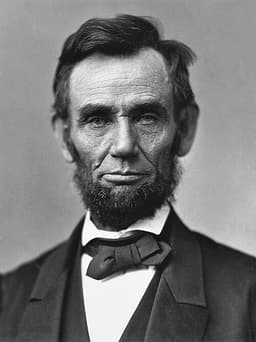
Abraham Lincoln
Politician · Modern
77.5Total
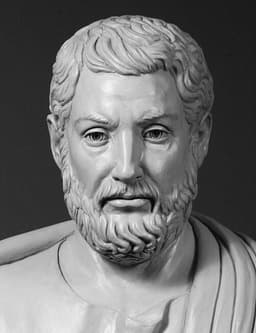
Cleisthenes
Politician · Ancient
78.3Total
Basic Information
Born
1809
-570
Died
1865
-508
Era
Modern
Ancient
Nationality
United States
Greece
Occupation
Politician
Politician
Civilization
Western
Western
Score Comparison
Military (10%)
50.0
49.4
Political (20%)
88.0
62.7
Influence (20%)
80.0
92.0
Legacy (20%)
82.0
92.0
Leadership (15%)
85.0
72.0
Strategy (15%)
60.0
71.3
TOTAL
77.5
78.3
Abraham Lincoln — Complete Timeline
1861 AD
Suspension of Habeas CorpusPolitical Action◆ Major
Lincoln suspended the writ of habeas corpus in parts of the Union, allowing the military to arrest and detain suspected Confederate sympathizers without trial. This action was controversial and challenged civil liberties during wartime.
Habeas CorpusCivil LibertiesCivil War
Impact: nationaldestructive
1862 AD
Signing of the Homestead ActPolitical Action◆ Major
Lincoln signed the Homestead Act, granting 160 acres of public land to settlers for a small fee. This encouraged westward expansion and agricultural development, but also displaced Native American tribes.
Homestead ActWestward ExpansionLand Policy
Impact: nationalconstructive
1863 AD
Emancipation ProclamationPolitical Action
Lincoln issued the Emancipation Proclamation, declaring slaves in Confederate states free. This shifted the Civil War's focus to ending slavery and allowed African Americans to join the Union Army.
EmancipationCivil WarSlavery
Impact: globalprogressive
Gettysburg AddressCultural◆ Major
Lincoln delivered the Gettysburg Address at the dedication of the Soldiers' National Cemetery. The speech redefined the Civil War as a struggle for national unity and equality, and became one of the most famous speeches in US history.
Gettysburg AddressCivil WarOratory
Impact: nationalconstructive
1865 AD
Assassination by John Wilkes BoothOther
Lincoln was shot by John Wilkes Booth at Ford's Theatre in Washington, D.C., and died the next day. His assassination occurred just days after the Civil War ended, plunging the nation into mourning and affecting Reconstruction.
AssassinationCivil WarReconstruction
Impact: nationaltragic
Cleisthenes — Complete Timeline
510 BC
Expulsion of the PeisistratidsPolitical Action◆ Major
Cleisthenes, with the support of the Alcmaeonid family and Spartan assistance, led the overthrow of the tyrant Hippias, son of Peisistratus. This ended the Peisistratid tyranny in Athens and opened the way for democratic reforms.
Tyranny OverthrownAthensSparta
Impact: nationalconstructive
508 BC
Reforms of CleisthenesReform
Cleisthenes reorganized the Athenian citizen body into ten new tribes based on demes, replacing the old four Ionian tribes. He established the Council of 500 (Boule) and introduced ostracism, creating a system of isonomia (equal rights) that is considered the foundation of Athenian democracy.
Athenian DemocracyConstitutional ReformAncient Greece
Impact: globalprogressive
507 BC
Introduction of OstracismReform◆ Major
Cleisthenes instituted ostracism, a procedure allowing Athenian citizens to vote annually to exile a prominent citizen deemed a threat to democracy for ten years. This mechanism aimed to prevent the rise of a new tyrant and stabilize the democratic system.
Athenian DemocracyPolitical MechanismExile
Impact: national
Expert Analysis
Origins
Cleisthenes (c. 570–508 BCE) was an Athenian aristocrat from the Alcmaeonid family, a powerful clan often at odds with other noble houses. His rise came after the tyranny of the Peisistratids, whom he helped expel with Spartan assistance. In contrast, Abraham Lincoln (1809–1865) was born into a poor frontier family in Kentucky, largely self-educated, and rose through the ranks of Illinois politics. Both emerged from humble or turbulent beginnings to become transformative leaders.
Rise to Power
Cleisthenes initially lost a power struggle to Isagoras, but when Isagoras attempted to dissolve the Council, the Athenian people revolted and recalled Cleisthenes. He then implemented sweeping reforms that broke the power of aristocratic clans. Lincoln's path was more conventional: he served in the state legislature, one term in Congress, and gained national attention through debates with Stephen Douglas. His election in 1860 on an anti-slavery platform triggered secession. Both men leveraged popular support against entrenched elites.
Leadership & Governance
Cleisthenes is credited with founding Athenian democracy. His reforms included reorganizing the citizen body into ten tribes based on demes (local communities), creating the Council of 500 (Boule) chosen by lot, and introducing ostracism to exile potential tyrants. These measures dispersed power and increased citizen participation. Lincoln, as president during the Civil War, used executive orders (Emancipation Proclamation), suspended habeas corpus, and signed the Homestead Act to promote westward expansion. He preserved the Union and pushed the 13th Amendment abolishing slavery. Both were strong executives who expanded the scope of government in crises.
Triumph & Tragedy
Cleisthenes' reforms survived and became the bedrock of Athenian democracy, but he was eventually ostracized himself (c. 506 BCE), a poetic irony. His system lasted until the end of Athenian independence. Lincoln's triumphs were the preservation of the Union and emancipation; his tragedy was assassination just days after the war's end. The Emancipation Proclamation and Gettysburg Address remain iconic. Both faced personal and political betrayals, yet their core achievements endured.
Character & Destiny
Cleisthenes was a pragmatic reformer who outmaneuvered rivals through alliances and popular appeal. He is often seen as the "father of democracy," but details of his personal life are sparse. Lincoln is revered for his honesty, empathy, and rhetorical brilliance. His destiny was shaped by the crisis of secession; he believed the Union was indivisible and acted to save it. Cleisthenes' destiny was to break aristocratic dominance and empower common citizens. Both were driven by a vision of a more inclusive political order.
Legacy
Cleisthenes' democratic reforms directly influenced later Athenian greatness and indirectly inspired modern democratic thought. His system of ostracism, however, could be abused (e.g., Themistocles). Lincoln's legacy is monumental: he is consistently ranked among the greatest US presidents, and his actions redefined federal power and civil rights. The Homestead Act shaped the American West, while the suspension of habeas corpus remains controversial. Score-wise, Cleisthenes leads slightly (7.78 vs 7.70 aggregate), but Lincoln's impact on a global superpower gives him a different magnitude.
Conclusion
Cleisthenes and Lincoln both faced existential threats to their nations—one from tyranny, the other from disunion. Cleisthenes invented a system that empowered citizens; Lincoln preserved a system that could later fulfill its ideals. While Cleisthenes' innovations were more foundational, Lincoln's actions were more consequential for his nation's survival. On balance, Cleisthenes scores higher on legacy (92 vs 82) and leadership (92 vs 80), but Lincoln excels in political skill (88 vs 63). The tiebreaker is Cleisthenes' role as a pioneer of democracy itself, which gives him a slight edge in historical significance. Final score: Cleisthenes 76.8, Lincoln 76.0.
Rankings
🥇
CleisthenesLeader
Mil: 49.4Pol: 62.7Inf: 92.0
78.3
🥈
Abraham Lincoln
Mil: 50.0Pol: 88.0Inf: 80.0
77.5
+0.8 behind
How This Comparison Works
Algorithm
Each figure is scored on 6 dimensions (0—100 scale) based on structured historical data: Military (10%), Political (20%), Influence (20%), Legacy (20%), Leadership (15%), Strategy (15%). The weighted total produces the final ranking.
Data Sources
Scores are computed from structured sub-indicators in the database. Scale factors adjust for era (Ancient ×0.85, Modern ×1.0) and civilization size (Eastern ×1.05, Other ×0.80) to account for differences in population and military scale.
Maximum 3 Figures
Comparisons are limited to 2—3 figures to ensure readability and statistical meaningfulness.
Error Margins
±5 points per dimension — Sub-scores are derived from historical records with inherent uncertainty. Two figures within 5 points on a dimension should be considered roughly equivalent in that area.
Total Score Accuracy
±3 points overall — The weighted combination of 6 dimensions produces a total score with approximately ±3 points of uncertainty. Differences of less than 3 points are not statistically significant— the figures are effectively tied.
Known Limitations
- Historical records are incomplete and uneven across civilizations
- Figures from oral-tradition societies may be underrepresented
- Occupation labels can misclassify multi-role figures
- Scores measure capability and impact, not moral character
- Quantitative scoring is a comparison tool, not absolute truth
Capability Radar
Military (10%) — Battles & Warfare
Battles
15
58
Win Rate
20
62
Expansion
0
59
Political (20%) — Governance & Reform
Reform
95
95
Diplomacy
80
70
Economy
70
40
Influence (20%) — Cultural & Global Reach
Cultural
85
85
Global
85
85
Legacy (20%) — Historical Impact
Historical
95
90
Longevity
90
95
Leadership (15%) — Power & Stability
Tenure
65
30
Stability
55
60
Strategy (15%) — Tactics & Innovation
Strategy
55
62
Tactics
10
67
Reform
60
72
Similar Comparisons
Comments & Discussion
No comments yet. Be the first to share your thoughts!