Loading...
Abraham Lincoln vs Charlemagne
Abraham Lincoln leads by 6.5 pts · 2 figures compared
…
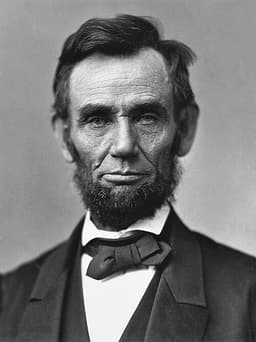
Abraham Lincoln
Politician · Modern
77.5Total
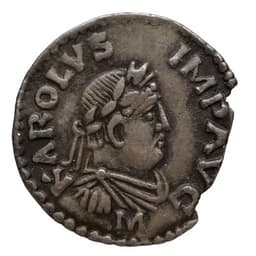
Charlemagne
Emperor · Medieval
71.0Total
Basic Information
Born
1809
748
Died
1865
814
Era
Modern
Medieval
Nationality
United States
Frankish Empire
Occupation
Politician
Emperor
Civilization
Western
Western
Score Comparison
Military (10%)
50.0
80.0
Political (20%)
88.0
78.0
Influence (20%)
80.0
65.0
Legacy (20%)
82.0
65.0
Leadership (15%)
85.0
80.0
Strategy (15%)
60.0
68.0
TOTAL
77.5
71.0
Abraham Lincoln — Complete Timeline
1861 AD
Suspension of Habeas CorpusPolitical Action◆ Major
Lincoln suspended the writ of habeas corpus in parts of the Union, allowing the military to arrest and detain suspected Confederate sympathizers without trial. This action was controversial and challenged civil liberties during wartime.
Habeas CorpusCivil LibertiesCivil War
Impact: nationaldestructive
1862 AD
Signing of the Homestead ActPolitical Action◆ Major
Lincoln signed the Homestead Act, granting 160 acres of public land to settlers for a small fee. This encouraged westward expansion and agricultural development, but also displaced Native American tribes.
Homestead ActWestward ExpansionLand Policy
Impact: nationalconstructive
1863 AD
Emancipation ProclamationPolitical Action
Lincoln issued the Emancipation Proclamation, declaring slaves in Confederate states free. This shifted the Civil War's focus to ending slavery and allowed African Americans to join the Union Army.
EmancipationCivil WarSlavery
Impact: globalprogressive
Gettysburg AddressCultural◆ Major
Lincoln delivered the Gettysburg Address at the dedication of the Soldiers' National Cemetery. The speech redefined the Civil War as a struggle for national unity and equality, and became one of the most famous speeches in US history.
Gettysburg AddressCivil WarOratory
Impact: nationalconstructive
1865 AD
Assassination by John Wilkes BoothOther
Lincoln was shot by John Wilkes Booth at Ford's Theatre in Washington, D.C., and died the next day. His assassination occurred just days after the Civil War ended, plunging the nation into mourning and affecting Reconstruction.
AssassinationCivil WarReconstruction
Impact: nationaltragic
Charlemagne — Complete Timeline
772 AD
Saxon WarsWar◆ Major
Charlemagne launched a series of campaigns against the Saxons lasting over three decades. He forcibly converted them to Christianity, incorporated their territory into the Frankish Empire, and ordered the execution of thousands at the Massacre of Verden in 782.
ConquestChristianizationWar
Impact: regionaldestructive
774 AD
Conquest of the Lombard KingdomWar◆ Major
Charlemagne answered Pope Adrian I's call for aid against the Lombards. He besieged and captured Pavia, deposed King Desiderius, and annexed the Lombard Kingdom into his domain, assuming the title 'King of the Lombards' and solidifying Frankish control over Italy.
ConquestItalyPapal Alliance
Impact: regional
779 AD
Capitulary of HerstalReform
Charlemagne issued a series of legal and administrative reforms at the assembly in Herstal. He standardized weights and measures, reformed the coinage system, and strengthened the authority of royal officials (missi dominici) to oversee local governance and justice.
Legal ReformAdministrationStandardization
Impact: nationalconstructive
780 AD
Carolingian Renaissance ReformsCultural◆ Major
Charlemagne initiated a program of educational and cultural revival, inviting scholars like Alcuin of York to his court. He standardized Latin script (Carolingian minuscule), established palace schools, and promoted the copying of classical texts, preserving ancient knowledge.
EducationCultural RevivalScript
Impact: globalprogressive
800 AD
Coronation as Holy Roman EmperorPolitical Action
Pope Leo III crowned Charlemagne as Emperor of the Romans in St. Peter's Basilica on Christmas Day. This act revived the Western Roman Empire, established a precedent for papal authority over imperial titles, and created a political entity that shaped medieval European politics.
CoronationHoly Roman EmpirePapacy
Impact: globalconstructive
Expert Analysis
Abraham Lincoln vs Charlemagne
# The Emperor and the Emancipator
On Christmas Day in the year 800, an aging Frankish king knelt before the altar of St. Peter’s Basilica in Rome, and Pope Leo III placed a golden crown upon his head. The congregation erupted in acclamation: “To Charles Augustus, crowned by God, great and peace-giving Emperor of the Romans, life and victory!” More than a millennium later, on a November afternoon in 1863, a gaunt American president stood on a windswept battlefield in Pennsylvania and delivered 272 words that would redefine the meaning of democracy. One man sought to revive the glory of ancient Rome; the other sought to perfect the promise of a new republic. Both wielded power in times of fracture, yet their paths, methods, and destinies could scarcely have been more different.
Origins
Charlemagne was born into a world of iron and faith. The year was 748, and Europe lay fragmented after the fall of the Western Roman Empire—a patchwork of warring tribes, petty kingdoms, and predatory nobles. His father, Pepin the Short, had seized the throne of the Franks, and his grandfather, Charles Martel, had saved Christendom from Muslim invasion at Tours. From infancy, Charlemagne breathed the air of conquest. He was raised in the saddle, trained in the hunt, and schooled in the brutal logic of dynastic survival. Latin letters came late to him—legend says he kept a writing tablet under his pillow but never truly mastered the art—yet he possessed a voracious appetite for learning and a cunning that belied his warrior’s frame.
Abraham Lincoln entered the world in a log cabin in Hardin County, Kentucky, in 1809. His America was young, raw, and quarrelsome—a nation still testing its own foundations. Where Charlemagne inherited a kingdom, Lincoln inherited poverty. His mother died when he was nine; his father was a hard, illiterate farmer who considered book-learning a waste. Lincoln educated himself by firelight, reading the Bible, Shakespeare, and Blackstone’s *Commentaries*. He grew into a man of melancholy depth, a wrestler and a storyteller, haunted by the injustice of slavery and driven by an almost mystical faith in the Union.
The difference in their origins is not merely one of time but of worldviews. Charlemagne saw the world as a battlefield for souls and swords; Lincoln saw it as an experiment in self-government, fragile and precious.
Rise to Power
Charlemagne’s ascent was swift and bloody. Upon his father’s death in 768, he shared the Frankish throne with his brother Carloman, a tense arrangement that ended only when Carloman died suddenly in 771—conveniently, just as Charlemagne was consolidating power. From that moment, the king became a force of nature. In 774, he answered Pope Adrian I’s plea for aid against the Lombards, besieging Pavia and deposing King Desiderius. He annexed the Lombard kingdom and added its iron crown to his own.
Lincoln’s rise was a study in patience and calculation. He served eight years in the Illinois legislature, one term in Congress, and then retreated from politics, his career seemingly over. He returned to the national stage as a dark horse candidate for the presidency in 1860, winning on a platform of halting slavery’s expansion. His election triggered the secession of seven Southern states before he even took the oath of office. Where Charlemagne seized power through the sword, Lincoln inherited a crisis that would demand every ounce of his political genius.
Leadership & Governance
Charlemagne ruled as a warrior-king who never stopped fighting. The Saxon Wars, launched in 772, consumed three decades of his reign. He burned the sacred groves of the Saxons, massacred thousands at Verden in 782, and forced conversion at the point of a sword. Yet he was no mere brute. In 779, he issued the Capitulary of Herstal, standardizing weights, measures, and legal procedures across his sprawling realm. He summoned scholars like Alcuin of York to his court, sparking the Carolingian Renaissance—a revival of learning that preserved classical texts and reformed education. His governance was personal, itinerant, and absolute. He moved constantly, holding assemblies, dispensing justice, and reminding his nobles that the emperor’s eye was everywhere.
Lincoln governed from a desk in Washington, besieged by a war that threatened to destroy the nation he led. His military score of 50 reflects his lack of battlefield experience, but his leadership rating of 85 captures something deeper: the ability to hold a fractious cabinet together, to manage egotistical generals, and to endure public ridicule. He suspended habeas corpus in 1861, a controversial act that silenced dissent but kept the border states in the Union. He signed the Homestead Act in 1862, opening the West to settlers and binding the continent together. And on January 1, 1863, he issued the Emancipation Proclamation, declaring free the slaves in rebel states—a military necessity that became a moral revolution.
Where Charlemagne ruled by presence and force, Lincoln ruled by persuasion and principle. The Frankish emperor commanded loyalty through fear and reward; the American president cultivated it through patience, humor, and an unshakeable sense of purpose.
Triumph & Tragedy
Charlemagne’s greatest moment came on Christmas Day in the year 800, when the Pope crowned him Emperor of the Romans. It was a masterstroke of political theater: the revival of the Western Empire, the fusion of Roman authority with Frankish might, the sanctification of conquest by the Church. Yet the triumph contained the seed of tragedy. The empire he built was too vast, too personal, too dependent on his own iron will. Within a generation of his death in 814, it fragmented into warring kingdoms. The dream of a united Christendom remained a dream.
Lincoln’s triumph was the preservation of the Union and the death of slavery. The Gettysburg Address, delivered on November 19, 1863, transformed a battlefield cemetery into a shrine of national rebirth: “that government of the people, by the people, for the people, shall not perish from the earth.” But his tragedy came in the hour of victory. On April 14, 1865, just days after the Confederate surrender, John Wilkes Booth shot him in Ford’s Theatre. Lincoln died the next morning, never to see the peace he had won or the Reconstruction he had planned.
Character & Destiny
Charlemagne was a man of immense appetites—for food, for women, for war, for knowledge. He was reportedly seven feet tall, with a booming voice and a temper that could terrify his courtiers. Yet he wept at the death of his sons and loved his daughters with an almost unseemly devotion. His character drove him to unite, to civilize, to dominate. He believed, with the conviction of his age, that the sword was the instrument of God’s will.
Lincoln was a man of profound restraint. He suffered from what contemporaries called “melancholy”—what we would recognize as depression—and carried the weight of a war that killed 600,000 Americans. He told jokes to ease the pain and wrote letters he never sent, pouring out his grief in private. His character drove him to preserve, to heal, to endure. He believed, with the quiet faith of a skeptic, that democracy was worth saving.
Legacy
Charlemagne’s legacy is stamped on the map of Europe. He is the father of France and Germany, the patron saint of the Holy Roman Empire, the prototype of the Christian emperor. His Carolingian Renaissance saved the classics, standardized the script that became our own, and laid the foundation for medieval civilization. Yet his empire crumbled, and his methods—forced conversion, mass slaughter—trouble the modern conscience.
Lincoln’s legacy is written in the Constitution and the conscience of America. The 13th Amendment abolished slavery; the 14th guaranteed equal protection; the 15th extended the vote. His words at Gettysburg and in his Second Inaugural—“with malice toward none, with charity for all”—have become the nation’s secular scripture. His assassination made him a martyr, but his wisdom made him a guide.
Conclusion
One crowned in Rome, one shot in a theater. One built an empire on the bones of his enemies; one preserved a republic by binding up its wounds. Charlemagne and Lincoln governed worlds apart, yet both faced the same fundamental question: How do you hold a fractured people together? The Frankish emperor answered with the sword and the cross; the American president answered with the law and the promise. Their scores—75.0 for Charlemagne, 76.7 for Lincoln—are nearly identical, but the numbers cannot capture the gulf between them. Charlemagne shaped Europe; Lincoln shaped modernity. One looked back to Rome; the other looked forward to a more perfect union. In the end, the difference is this: Charlemagne conquered a world, and Lincoln saved one.
Rankings
🥇
Abraham LincolnLeader
Mil: 50.0Pol: 88.0Inf: 80.0
77.5
🥈
Charlemagne
Mil: 80.0Pol: 78.0Inf: 65.0
71.0
+6.5 behind
How This Comparison Works
Algorithm
Each figure is scored on 6 dimensions (0—100 scale) based on structured historical data: Military (10%), Political (20%), Influence (20%), Legacy (20%), Leadership (15%), Strategy (15%). The weighted total produces the final ranking.
Data Sources
Scores are computed from structured sub-indicators in the database. Scale factors adjust for era (Ancient ×0.85, Modern ×1.0) and civilization size (Eastern ×1.05, Other ×0.80) to account for differences in population and military scale.
Maximum 3 Figures
Comparisons are limited to 2—3 figures to ensure readability and statistical meaningfulness.
Error Margins
±5 points per dimension — Sub-scores are derived from historical records with inherent uncertainty. Two figures within 5 points on a dimension should be considered roughly equivalent in that area.
Total Score Accuracy
±3 points overall — The weighted combination of 6 dimensions produces a total score with approximately ±3 points of uncertainty. Differences of less than 3 points are not statistically significant— the figures are effectively tied.
Known Limitations
- Historical records are incomplete and uneven across civilizations
- Figures from oral-tradition societies may be underrepresented
- Occupation labels can misclassify multi-role figures
- Scores measure capability and impact, not moral character
- Quantitative scoring is a comparison tool, not absolute truth
Capability Radar
Military (10%) — Battles & Warfare
Battles
15
85
Win Rate
20
90
Expansion
0
88
Political (20%) — Governance & Reform
Reform
95
90
Diplomacy
80
80
Economy
70
75
Influence (20%) — Cultural & Global Reach
Cultural
85
85
Global
85
80
Legacy (20%) — Historical Impact
Historical
95
90
Longevity
90
85
Leadership (15%) — Power & Stability
Tenure
65
85
Stability
55
70
Strategy (15%) — Tactics & Innovation
Strategy
55
85
Tactics
10
75
Reform
60
80
Similar Comparisons
Comments & Discussion
数据侦探6/16/2026
所谓历史伟人的比较,本质是选择性叙事。林肯的272字葛底斯堡演说被奉为经典,但当时《芝加哥时报》骂它"愚蠢、平淡、乏味"。查理曼的"文治"被夸大,他那拉丁文识字率不到1%的宫廷学校,哪能跟19世纪美国90%的识字率比?拿两个不同文明层级的标志人物强行比较,本身就是历史粉圈的刻板印象游戏。
冷眼复盘家6/16/2026
两个都是战时暴君,别浪漫化了。查理曼在萨克森推行强制洗礼,违者斩首,屠杀数万人。林肯中止人身保护令,关闭上百家反对派报纸,逮捕数万反对派——包括国会议员。区别?查理曼用剑传教,林肯用法律整肃异见,手段同样残忍。所谓"伟大",不过是胜利者书写的历史。要我说,跟查理曼比,林肯稍强一点——至少他最终解放了奴隶。
Historian4746/16/2026
As a military historian, I'd argue Charlemagne's campaigns dwarf Lincoln's. Charles fought 54 campaigns in 46 years, conquering Saxony through sheer brutality—the 782 Massacre of Verden killed 4,500 prisoners in one day. Lincoln directed wars from a telegraph office, never leading a charge. Charlemagne forged Europe through blood and iron; Lincoln merely preserved a union that was already industrializing. One built an empire, the other managed a crisis. No contest.
Historian4266/16/2026
History buff here: both men understood propaganda brilliantly. Charlemagne commissioned Einhard's biography to craft his image as a new Constantine; Lincoln gave battlefield tours to journalists and staged his own martyrdom—dying on Good Friday 1865 sealed his saint status. The Emperor used mosaics and chronicles; Lincoln used newspapers and photographs. Same game, different centuries. Both won the narrative war, which is what makes them "great." History is theater, friends.
Chronicler63676/16/2026
Classics scholar here—Charlemagne's revival of Rome was superficial theatre. He couldn't write Latin, yet his court poets compared him to Augustus. Meanwhile, Lincoln mastered Shakespeare and Euclid, using their rhetorical structures in the Gettysburg Address. The Emperor's "Renovatio Imperii Romani" collapsed within two generations; Lincoln's "new birth of freedom" lives in every constitutional amendment since. Charlemagne rebuilt a tomb; Lincoln forged a covenant. I know which legacy matters.