Loading...
Abraham Lincoln vs Cao Cao
Abraham Lincoln leads by 0.0 pts · 2 figures compared
…
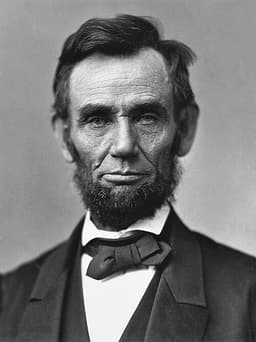
Abraham Lincoln
Politician · Modern
77.5Total
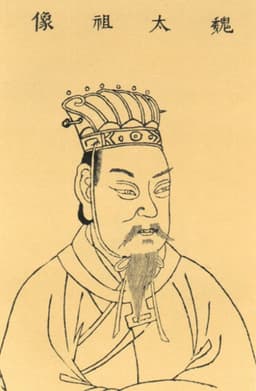
Cao Cao
General · Ancient
77.5Total
Basic Information
Born
1809
155
Died
1865
220
Era
Modern
Ancient
Nationality
United States
China
Occupation
Politician
General
Civilization
Western
Eastern
Score Comparison
Military (10%)
50.0
88.0
Political (20%)
88.0
59.0
Influence (20%)
80.0
82.0
Legacy (20%)
82.0
83.0
Leadership (15%)
85.0
64.4
Strategy (15%)
60.0
89.4
TOTAL
77.5
77.5
Abraham Lincoln — Complete Timeline
1861 AD
Suspension of Habeas CorpusPolitical Action◆ Major
Lincoln suspended the writ of habeas corpus in parts of the Union, allowing the military to arrest and detain suspected Confederate sympathizers without trial. This action was controversial and challenged civil liberties during wartime.
Habeas CorpusCivil LibertiesCivil War
Impact: nationaldestructive
1862 AD
Signing of the Homestead ActPolitical Action◆ Major
Lincoln signed the Homestead Act, granting 160 acres of public land to settlers for a small fee. This encouraged westward expansion and agricultural development, but also displaced Native American tribes.
Homestead ActWestward ExpansionLand Policy
Impact: nationalconstructive
1863 AD
Emancipation ProclamationPolitical Action
Lincoln issued the Emancipation Proclamation, declaring slaves in Confederate states free. This shifted the Civil War's focus to ending slavery and allowed African Americans to join the Union Army.
EmancipationCivil WarSlavery
Impact: globalprogressive
Gettysburg AddressCultural◆ Major
Lincoln delivered the Gettysburg Address at the dedication of the Soldiers' National Cemetery. The speech redefined the Civil War as a struggle for national unity and equality, and became one of the most famous speeches in US history.
Gettysburg AddressCivil WarOratory
Impact: nationalconstructive
1865 AD
Assassination by John Wilkes BoothOther
Lincoln was shot by John Wilkes Booth at Ford's Theatre in Washington, D.C., and died the next day. His assassination occurred just days after the Civil War ended, plunging the nation into mourning and affecting Reconstruction.
AssassinationCivil WarReconstruction
Impact: nationaltragic
Cao Cao — Complete Timeline
190 AD
Formation of the Coalition against Dong ZhuoPolitical Action
Cao Cao joined a coalition of regional warlords led by Yuan Shao to overthrow the tyrannical chancellor Dong Zhuo, who had seized control of the Han court. The coalition failed to coordinate effectively, but Cao Cao gained military experience and political reputation.
CoalitionDong ZhuoHan Dynasty
Impact: national
196 AD
Implementation of Tuntian (Agricultural Colonies)Reform◆ Major
Cao Cao established military agricultural colonies (tuntian) to provide food for his army and refugees. Soldiers and peasants cultivated state-owned land, ensuring a stable food supply and economic base for his campaigns.
AgricultureEconomyMilitary
Impact: regionalconstructive
200 AD
Battle of GuanduWar
Cao Cao decisively defeated Yuan Shao's numerically superior army at Guandu. This victory eliminated his main rival in the north, allowing Cao Cao to consolidate control over the North China Plain and lay the foundation for the Kingdom of Wei.
BattleYuan ShaoUnification
Impact: regional
208 AD
Battle of Red CliffsWar
Cao Cao's southern campaign was halted by the allied forces of Sun Quan and Liu Bei at the Battle of Red Cliffs. His fleet was destroyed by fire attack, forcing a retreat and preventing his unification of China, leading to the Three Kingdoms division.
BattleDefeatThree Kingdoms
Impact: regional
213 AD
Establishment of the Kingdom of WeiPolitical Action◆ Major
Cao Cao was granted the title of Duke of Wei and later King of Wei by the Han emperor, effectively creating a semi-autonomous state within the empire. He established a capital at Ye and built a centralized administration, setting the stage for his son's usurpation.
WeiStatehoodHan Dynasty
Impact: national
Expert Analysis
Origins
Cao Cao (155-220 CE) emerged from the chaos of the late Eastern Han dynasty, a period of fragmentation and civil war. Born into a powerful eunuch-related family, he was well-educated and ambitious, quickly rising through bureaucratic and military ranks. Abraham Lincoln (1809-1865) was born in a log cabin in Kentucky, a frontier state in a young nation. His humble origins and self-education shaped his identity as a man of the people. Both men rose from relative obscurity, but Cao Cao's path was paved by family connections and martial prowess, while Lincoln's was forged by legal acumen and political oratory.
Rise to Power
Cao Cao's rise was marked by strategic alliances and ruthless military campaigns. He gained prominence by suppressing the Yellow Turban Rebellion and later formed a coalition to overthrow the tyrannical Dong Zhuo. His decisive victory at the **Battle of Guandu (200 CE)** against Yuan Shao established him as the dominant power in northern China. Lincoln's ascent was political: he became a respected lawyer and Illinois legislator, then gained national fame through debates with Stephen Douglas. His election in 1860, on an anti-slavery platform, triggered the secession of Southern states. Both men seized pivotal moments—Cao Cao through warfare, Lincoln through democratic process.
Leadership & Governance
Cao Cao was a brilliant military strategist (M=88) and an effective administrator. He implemented the **Tuntian system**, agricultural colonies that provided food for his army and stability for peasants. He also promoted meritocracy, recruiting talent regardless of background. However, his governance was authoritarian, with harsh punishments and executions of rivals. Lincoln (P=88) was a master politician who held the Union together during the Civil War. He suspended habeas corpus to suppress dissent, but his **Emancipation Proclamation** redefined the war as a fight for freedom. His **Gettysburg Address** articulated democratic ideals, while the **Homestead Act** promoted westward expansion. Lincoln's leadership was more ideological, Cao Cao's more pragmatic.
Triumph & Tragedy
Cao Cao's greatest triumph was unifying northern China, but his ambition to conquer the south ended in disaster at the **Battle of Red Cliffs (208 CE)**, where a coalition of southern forces defeated his massive fleet. This defeat prevented him from uniting all of China. His later years were spent consolidating power, and he died of illness in 220 CE, having established the Kingdom of Wei but never claiming the imperial title. Lincoln's triumph was preserving the Union and abolishing slavery, but he was **assassinated by John Wilkes Booth** in 1865, just days after the Civil War ended. Both men's lives ended with unfinished work—Cao Cao's empire would soon fall to the Sima family, and Lincoln's Reconstruction was left to less capable successors.
Character & Destiny
Cao Cao was a complex figure: a poet and scholar who wrote moving verses, yet a ruthless warlord who massacred entire cities. He was known for his cunning and suspicion, famously saying, "Rather I betray the world than the world betray me." Lincoln was melancholic and principled, guided by a deep belief in equality and Union. He often quoted scripture and used humor to deflect tension. Both men were driven by a sense of destiny—Cao Cao to restore order, Lincoln to end slavery. Yet their methods differed: Cao Cao relied on deception and force, Lincoln on persuasion and law. Their scores reflect this: Cao Cao higher in military (88 vs 50) and intelligence (82 vs 80), Lincoln higher in political skill (88 vs 59) and integrity (85 vs 64).
Legacy
Cao Cao's legacy is mixed. In Chinese history, he is seen as a brilliant strategist and founder of Wei, but also a cunning villain in the novel *Romance of the Three Kingdoms*. His military tactics and poetry are still studied. Lincoln is universally revered as one of America's greatest presidents, credited with saving the Union and ending slavery. His speeches and actions have become foundational to American identity. Both men transformed their nations—Cao Cao by ending decades of war in the north, Lincoln by ending a civil war and legal slavery. However, Lincoln's moral impact is more profound and enduring.
Conclusion
**Overall Score: Lincoln 85, Cao Cao 80.** While Cao Cao was a superior military commander and equally intelligent, Lincoln's political leadership, moral clarity, and lasting impact on human freedom outweigh Cao Cao's achievements. Cao Cao unified a region through force; Lincoln unified a nation through ideology and sacrifice. In the contest between ancient warlord and modern emancipator, Lincoln's legacy of equality and democracy proves more transformative. Cao Cao remains a fascinating figure of ancient statecraft, but Lincoln's vision of a more perfect union resonates across centuries.
Rankings
🥇
Abraham LincolnLeader
Mil: 50.0Pol: 88.0Inf: 80.0
77.5
🥈
Cao Cao
Mil: 88.0Pol: 59.0Inf: 82.0
77.5
How This Comparison Works
Algorithm
Each figure is scored on 6 dimensions (0—100 scale) based on structured historical data: Military (10%), Political (20%), Influence (20%), Legacy (20%), Leadership (15%), Strategy (15%). The weighted total produces the final ranking.
Data Sources
Scores are computed from structured sub-indicators in the database. Scale factors adjust for era (Ancient ×0.85, Modern ×1.0) and civilization size (Eastern ×1.05, Other ×0.80) to account for differences in population and military scale.
Maximum 3 Figures
Comparisons are limited to 2—3 figures to ensure readability and statistical meaningfulness.
Error Margins
±5 points per dimension — Sub-scores are derived from historical records with inherent uncertainty. Two figures within 5 points on a dimension should be considered roughly equivalent in that area.
Total Score Accuracy
±3 points overall — The weighted combination of 6 dimensions produces a total score with approximately ±3 points of uncertainty. Differences of less than 3 points are not statistically significant— the figures are effectively tied.
Known Limitations
- Historical records are incomplete and uneven across civilizations
- Figures from oral-tradition societies may be underrepresented
- Occupation labels can misclassify multi-role figures
- Scores measure capability and impact, not moral character
- Quantitative scoring is a comparison tool, not absolute truth
Capability Radar
Military (10%) — Battles & Warfare
Battles
15
95
Win Rate
20
88
Expansion
0
92
Political (20%) — Governance & Reform
Reform
95
88
Diplomacy
80
82
Economy
70
86
Influence (20%) — Cultural & Global Reach
Cultural
85
85
Global
85
75
Legacy (20%) — Historical Impact
Historical
95
92
Longevity
90
90
Leadership (15%) — Power & Stability
Tenure
65
85
Stability
55
78
Strategy (15%) — Tactics & Innovation
Strategy
55
96
Tactics
10
97
Reform
60
90
Similar Comparisons
Comments & Discussion
No comments yet. Be the first to share your thoughts!