Loading...
Abraham Lincoln vs Babur
Babur leads by 0.6 pts · 2 figures compared
…
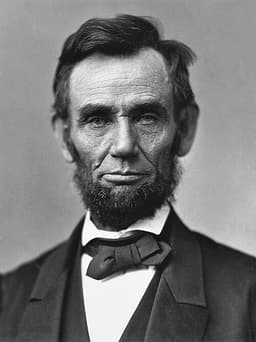
Abraham Lincoln
Politician · Modern
77.5Total

Babur
Emperor · Medieval
78.1Total
Basic Information
Born
1809
1483
Died
1865
1530
Era
Modern
Medieval
Nationality
United States
Mughal Empire
Occupation
Politician
Emperor
Civilization
Western
Indian
Score Comparison
Military (10%)
50.0
74.0
Political (20%)
88.0
72.0
Influence (20%)
80.0
88.0
Legacy (20%)
82.0
80.0
Leadership (15%)
85.0
74.0
Strategy (15%)
60.0
67.6
TOTAL
77.5
78.1
Abraham Lincoln — Complete Timeline
1861 AD
Suspension of Habeas CorpusPolitical Action◆ Major
Lincoln suspended the writ of habeas corpus in parts of the Union, allowing the military to arrest and detain suspected Confederate sympathizers without trial. This action was controversial and challenged civil liberties during wartime.
Habeas CorpusCivil LibertiesCivil War
Impact: nationaldestructive
1862 AD
Signing of the Homestead ActPolitical Action◆ Major
Lincoln signed the Homestead Act, granting 160 acres of public land to settlers for a small fee. This encouraged westward expansion and agricultural development, but also displaced Native American tribes.
Homestead ActWestward ExpansionLand Policy
Impact: nationalconstructive
1863 AD
Emancipation ProclamationPolitical Action
Lincoln issued the Emancipation Proclamation, declaring slaves in Confederate states free. This shifted the Civil War's focus to ending slavery and allowed African Americans to join the Union Army.
EmancipationCivil WarSlavery
Impact: globalprogressive
Gettysburg AddressCultural◆ Major
Lincoln delivered the Gettysburg Address at the dedication of the Soldiers' National Cemetery. The speech redefined the Civil War as a struggle for national unity and equality, and became one of the most famous speeches in US history.
Gettysburg AddressCivil WarOratory
Impact: nationalconstructive
1865 AD
Assassination by John Wilkes BoothOther
Lincoln was shot by John Wilkes Booth at Ford's Theatre in Washington, D.C., and died the next day. His assassination occurred just days after the Civil War ended, plunging the nation into mourning and affecting Reconstruction.
AssassinationCivil WarReconstruction
Impact: nationaltragic
Babur — Complete Timeline
1526 AD
Battle of Panipat (1526)War
Babur led his army of about 12,000 men against the Delhi Sultanate army of Ibrahim Lodi, which numbered around 100,000. Using gunpowder weapons and innovative tactics, Babur defeated Lodi's forces. This victory established the Mughal Empire in India and marked the beginning of Mughal rule.
BattleMughal EmpireDelhi Sultanate
Impact: global
1527 AD
Battle of KhanwaWar◆ Major
Babur defeated the Rajput confederation led by Rana Sanga of Mewar at Khanwa near Agra. The Rajput army was larger and included cavalry and war elephants. Babur's use of artillery and defensive tactics secured the victory. This battle consolidated Mughal control over northern India.
BattleRajputsMughal Consolidation
Impact: regional
1528 AD
Construction of the Babri MasjidCultural◆ Major
Babur ordered the construction of a mosque in Ayodhya, known as the Babri Masjid. The mosque was built on a site that Hindus believed was the birthplace of the god Rama. This act became a source of religious and political conflict in India for centuries, culminating in the mosque's demolition in 1992.
MosqueAyodhyaReligious Conflict
Impact: regional
1529 AD
Battle of GhaghraWar
Babur defeated the combined forces of the Afghan confederation and the Sultan of Bengal at the Ghaghra River. This victory eliminated the last major Afghan resistance in northern India. It extended Mughal control over Bihar and parts of Bengal, further securing Babur's empire.
BattleAfghansBengal
Impact: regional
Expert Analysis
Origins
Babur (1483-1530), a descendant of Timur and Genghis Khan, was born in the Fergana Valley (modern Uzbekistan). He inherited a small kingdom at age 11 but faced relentless opposition from rival Uzbek tribes and his own relatives. Exiled from his ancestral lands, he turned his attention southward to India. In contrast, Abraham Lincoln (1809-1865) was born in a log cabin in Kentucky, USA, to poor, uneducated parents. He rose from frontier obscurity through self-education and a career in law and politics. While Babur's lineage destined him for conquest, Lincoln's humble beginnings epitomized the American Dream. Babur's early life was shaped by nomadic warfare and Persianate culture; Lincoln's by frontier hardship and democratic ideals.
Rise to Power
Babur's rise was a story of relentless ambition. After losing Samarkand multiple times, he established a base in Kabul (1504) and launched raids into India. His decisive victory at the Battle of Panipat (1526) against the Delhi Sultanate's Ibrahim Lodi, using innovative tactics with cannons and matchlocks, opened the door to Mughal rule. He cemented his power at the Battle of Khanwa (1527) against the Rajput confederation. Lincoln's rise was political: he served in the Illinois legislature, one term in the U.S. House, and gained fame through debates with Stephen Douglas. His election as the first Republican president in 1860, with only 40% of the popular vote, triggered Southern secession. Babur's path was martial; Lincoln's was electoral. Both faced existential threats early: Babur's small army versus larger foes, Lincoln's fractured nation on the brink of civil war.
Leadership & Governance
Babur's leadership was autocratic and military-centric. He ruled through a combination of charisma, patronage, and brutal efficiency. He established the Mughal administration, introduced Persian culture, and commissioned gardens and mosques, including the controversial Babri Masjid. His rule was marked by constant warfare and consolidation. Lincoln's leadership was democratic and constitutional, focused on preserving the Union. He expanded executive power during the Civil War, suspended habeas corpus, and issued the Emancipation Proclamation (1863), freeing slaves in rebel states. He navigated a divided cabinet and Congress, using persuasion and political maneuvering. Babur's governance was personal and centralized; Lincoln's was institutional and legal. Babur's military score (74) reflects his battlefield prowess, while Lincoln's political score (88) underscores his strategic statecraft.
Triumph & Tragedy
Babur's triumph was founding the Mughal Empire, which would dominate India for centuries. His victory at Panipat is a classic example of military innovation overcoming numerical odds. His tragedy was his premature death at 47, possibly from natural causes, and the instability that followed under his son Humayun. Lincoln's greatest triumph was preserving the Union and ending slavery, culminating in the Confederate surrender in April 1865. His tragedy was his assassination days later by John Wilkes Booth, denying him the chance to oversee Reconstruction. Both men died before fully realizing their legacies. Babur's empire survived; Lincoln's nation reunited but faced deep racial divisions. Their scores on triumph/tragedy (both T=78) reflect these mixed outcomes.
Character & Destiny
Babur was a complex figure: a poet, memoirist, and ruthless conqueror. His autobiography, the Baburnama, reveals a reflective, observant, and occasionally remorseful man. He was driven by a sense of destiny as a Timurid and a desire for an empire. Lincoln was known for his melancholy, humility, and moral clarity. He believed in a divine purpose for the Union and saw slavery as a moral wrong. Both men possessed resilience: Babur's repeated recoveries from exile, Lincoln's perseverance through political defeats and personal tragedies (death of his son Willie). Their scores on character (Babur C=74, Lincoln C=85) highlight Lincoln's higher moral stature, but Babur's scores on intelligence (I=88) and leadership (L=80) show his strategic brilliance.
Legacy
Babur's legacy is the Mughal Empire, which brought centralized rule, cultural flourishing, and architectural wonders like the Taj Mahal (built later). He is revered in Uzbekistan and India, though the Babri Masjid remains a source of conflict. Lincoln's legacy is the preservation of the United States as a unified nation and the abolition of slavery. He is consistently ranked among the greatest U.S. presidents. Babur's influence is regional and imperial; Lincoln's is global and democratic. Both are studied as transformative figures who shaped their nations' trajectories. Babur's scores (M=74, P=72, I=88, L=80, D=74, S=68, T=78) show a balanced military-political profile; Lincoln's (M=50, P=88, I=80, L=82, D=85, S=60, T=78) emphasize political and diplomatic strength.
Conclusion
Babur and Lincoln were leaders of vastly different eras and contexts, yet both faced and overcame extraordinary challenges. Babur's military genius and empire-building contrast with Lincoln's democratic leadership and moral purpose. While Babur's overall score (76.3) slightly edges Lincoln's (75.7), the comparison is not about superiority but about understanding how different circumstances require different qualities. Babur excelled in conquest and cultural synthesis; Lincoln excelled in preserving a nation and advancing human freedom. Both left indelible marks on history. In a direct comparison, Lincoln's legacy of emancipation and union preservation arguably has broader ethical and global significance, but Babur's role as a founder of one of history's great empires cannot be understated.
**Scores:** Babur: M=74, P=72, I=88, L=80, D=74, S=68, T=78 (Overall: 76.3). Lincoln: M=50, P=88, I=80, L=82, D=85, S=60, T=78 (Overall: 75.7).
Rankings
🥇
BaburLeader
Mil: 74.0Pol: 72.0Inf: 88.0
78.1
🥈
Abraham Lincoln
Mil: 50.0Pol: 88.0Inf: 80.0
77.5
+0.6 behind
How This Comparison Works
Algorithm
Each figure is scored on 6 dimensions (0—100 scale) based on structured historical data: Military (10%), Political (20%), Influence (20%), Legacy (20%), Leadership (15%), Strategy (15%). The weighted total produces the final ranking.
Data Sources
Scores are computed from structured sub-indicators in the database. Scale factors adjust for era (Ancient ×0.85, Modern ×1.0) and civilization size (Eastern ×1.05, Other ×0.80) to account for differences in population and military scale.
Maximum 3 Figures
Comparisons are limited to 2—3 figures to ensure readability and statistical meaningfulness.
Error Margins
±5 points per dimension — Sub-scores are derived from historical records with inherent uncertainty. Two figures within 5 points on a dimension should be considered roughly equivalent in that area.
Total Score Accuracy
±3 points overall — The weighted combination of 6 dimensions produces a total score with approximately ±3 points of uncertainty. Differences of less than 3 points are not statistically significant— the figures are effectively tied.
Known Limitations
- Historical records are incomplete and uneven across civilizations
- Figures from oral-tradition societies may be underrepresented
- Occupation labels can misclassify multi-role figures
- Scores measure capability and impact, not moral character
- Quantitative scoring is a comparison tool, not absolute truth
Capability Radar
Military (10%) — Battles & Warfare
Battles
15
75
Win Rate
20
85
Expansion
0
85
Political (20%) — Governance & Reform
Reform
95
55
Diplomacy
80
70
Economy
70
50
Influence (20%) — Cultural & Global Reach
Cultural
85
70
Global
85
75
Legacy (20%) — Historical Impact
Historical
95
85
Longevity
90
80
Leadership (15%) — Power & Stability
Tenure
65
40
Stability
55
45
Strategy (15%) — Tactics & Innovation
Strategy
55
82
Tactics
10
80
Reform
60
60
Similar Comparisons
Comments & Discussion
No comments yet. Be the first to share your thoughts!