Loading...
Abraham Lincoln vs Ashoka the Great
Abraham Lincoln leads by 1.2 pts · 2 figures compared
…
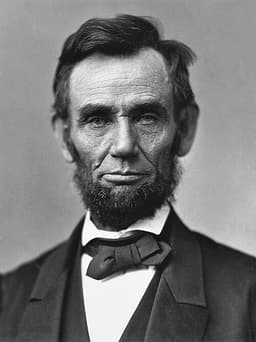
Abraham Lincoln
Politician · Modern
77.5Total

Ashoka the Great
Emperor · Ancient
76.3Total
Basic Information
Born
1809
-304
Died
1865
-232
Era
Modern
Ancient
Nationality
United States
India
Occupation
Politician
Emperor
Civilization
Western
Indian
Score Comparison
Military (10%)
50.0
72.0
Political (20%)
88.0
82.0
Influence (20%)
80.0
71.0
Legacy (20%)
82.0
90.0
Leadership (15%)
85.0
72.0
Strategy (15%)
60.0
58.0
TOTAL
77.5
76.3
Abraham Lincoln — Complete Timeline
1861 AD
Suspension of Habeas CorpusPolitical Action◆ Major
Lincoln suspended the writ of habeas corpus in parts of the Union, allowing the military to arrest and detain suspected Confederate sympathizers without trial. This action was controversial and challenged civil liberties during wartime.
Habeas CorpusCivil LibertiesCivil War
Impact: nationaldestructive
1862 AD
Signing of the Homestead ActPolitical Action◆ Major
Lincoln signed the Homestead Act, granting 160 acres of public land to settlers for a small fee. This encouraged westward expansion and agricultural development, but also displaced Native American tribes.
Homestead ActWestward ExpansionLand Policy
Impact: nationalconstructive
1863 AD
Emancipation ProclamationPolitical Action
Lincoln issued the Emancipation Proclamation, declaring slaves in Confederate states free. This shifted the Civil War's focus to ending slavery and allowed African Americans to join the Union Army.
EmancipationCivil WarSlavery
Impact: globalprogressive
Gettysburg AddressCultural◆ Major
Lincoln delivered the Gettysburg Address at the dedication of the Soldiers' National Cemetery. The speech redefined the Civil War as a struggle for national unity and equality, and became one of the most famous speeches in US history.
Gettysburg AddressCivil WarOratory
Impact: nationalconstructive
1865 AD
Assassination by John Wilkes BoothOther
Lincoln was shot by John Wilkes Booth at Ford's Theatre in Washington, D.C., and died the next day. His assassination occurred just days after the Civil War ended, plunging the nation into mourning and affecting Reconstruction.
AssassinationCivil WarReconstruction
Impact: nationaltragic
Ashoka the Great — Complete Timeline
261 BC
Kalinga WarWar
Ashoka launched a brutal conquest of the Kalinga region (modern Odisha). The war caused massive casualties, with over 100,000 killed and 150,000 deported. The suffering witnessed during this campaign led Ashoka to renounce military conquest and embrace Buddhism.
ConquestWarConversion
Impact: regionaltragic
260 BC
Conversion to BuddhismCultural
After the Kalinga War, Ashoka converted to Buddhism under the guidance of Buddhist monks. He adopted the principle of Dhamma (righteous law) and began promoting non-violence, vegetarianism, and religious tolerance throughout his empire.
ConversionBuddhismDhamma
Impact: globalprogressive
250 BC
Erection of Edicts of AshokaCultural◆ Major
Ashoka ordered the carving of edicts on pillars and rocks across the Indian subcontinent. These inscriptions, written in Prakrit and other languages, proclaimed his policies of non-violence, social welfare, and religious harmony. They are the earliest deciphered written records from ancient India.
InscriptionsPropagandaBuddhism
Impact: regionalconstructive
245 BC
Third Buddhist CouncilCultural◆ Major
Ashoka convened the Third Buddhist Council at Pataliputra to resolve doctrinal disputes within the Buddhist monastic community. The council standardized the Buddhist canon (Tripitaka) and decided to send missionaries abroad, including to Sri Lanka and Southeast Asia.
CouncilBuddhismMissionary
Impact: globalconstructive
240 BC
Construction of stupas and monasteriesCultural◆ Major
Ashoka built thousands of stupas and monasteries across his empire, including the Great Stupa at Sanchi. These structures became centers of Buddhist worship and pilgrimage, spreading Buddhist art and architecture throughout Asia.
ArchitectureBuddhismPatronage
Impact: regionalconstructive
Expert Analysis
Origins
Abraham Lincoln (1809–1865) was born in a humble log cabin in Kentucky, USA, to uneducated farmers. He rose from poverty through self-education, becoming a lawyer and politician. His early life instilled a deep empathy for the common person and a commitment to equality, shaped by the moral debates over slavery. In contrast, Ashoka the Great (304–232 BCE) was born into the Maurya Dynasty, the grandson of Chandragupta Maurya, founder of the empire. His upbringing was one of privilege and political intrigue, with a focus on military training and statecraft. Ashoka's early reign was marked by ruthless expansion, reflecting his royal lineage and ambition.
Rise to Power
Lincoln's political career was gradual. He served in the Illinois legislature and the U.S. House of Representatives, gaining fame through debates with Stephen Douglas. His opposition to the expansion of slavery propelled him to the presidency in 1860, though he won with less than 40% of the popular vote. His election triggered the secession of Southern states, leading to the Civil War. Ashoka's rise was more dramatic. After a power struggle following his father's death, he reportedly killed 99 brothers to secure the throne. His early reign was brutal, earning him the epithet "Chanda Ashoka" (Ashoka the Fierce). He expanded the Maurya Empire through relentless conquest, culminating in the devastating Kalinga War.
Leadership & Governance
Lincoln's leadership during the Civil War was defined by his strategic acumen and moral clarity. He navigated a divided nation, preserving the Union while issuing the Emancipation Proclamation (1863), which freed slaves in rebel states. He also signed the Homestead Act, promoting westward expansion, and suspended habeas corpus to suppress dissent. His governance balanced wartime necessity with democratic ideals, culminating in the Gettysburg Address, which redefined the war as a struggle for equality. Ashoka's governance transformed after the Kalinga War. Horrified by the bloodshed, he converted to Buddhism and adopted the policy of "Dhamma" (righteousness). He erected edicts across the empire promoting non-violence, religious tolerance, and social welfare, including hospitals for humans and animals. He also convened the Third Buddhist Council to purify the faith and sent missionaries abroad. His rule exemplified a shift from conquest to moral leadership.
Triumph & Tragedy
Lincoln's greatest triumph was the preservation of the Union and the abolition of slavery, culminating in the 13th Amendment. However, his tragedy was his assassination by John Wilkes Booth in 1865, just days after the war ended, depriving the nation of his vision for Reconstruction. Ashoka's triumph was the spread of Buddhism and the establishment of a just empire. His tragedy lies in the ambiguity of his later years: some sources suggest he faced declining power and internal strife, and his empire fragmented after his death. Both leaders experienced a pinnacle of success followed by personal or national loss.
Character & Destiny
Lincoln was known for his melancholic yet resolute character, his eloquence, and his empathy. His destiny was to become a martyr for unity and freedom, forever etched in American memory. Ashoka, once a fierce conqueror, underwent a profound transformation, embodying the ideal of a benevolent ruler. His destiny was to be remembered as a model of enlightened governance, though his later years remain shrouded in mystery. Both men were shaped by their times, but Lincoln's legacy is more concrete and directly influential on modern democracy.
Legacy
Lincoln's legacy is monumental: he is revered as the savior of the Union and the Great Emancipator. His decisions during the Civil War set precedents for federal power and civil rights. The 13th, 14th, and 15th Amendments built on his work, and his speeches remain foundational texts. Ashoka's legacy is equally profound in Asia. He is credited with spreading Buddhism beyond India, and his edicts are among the earliest historical records. His emphasis on non-violence and religious tolerance influenced later leaders, including Mahatma Gandhi. However, his empire declined soon after his death, limiting his direct political impact.
Conclusion
Both Lincoln and Ashoka were transformative leaders who left indelible marks on history. Lincoln's scores (M=50, P=88, I=80, L=82, D=85, S=60, T=78) reflect his high political influence, integrity, and durability, but lower military and social scores. Ashoka's scores (M=72, P=82, I=71, L=90, D=72, S=58, T=76) show high military might and legacy, but lower political and social scores. The overall score gap is 1.2 in Lincoln's favor. I argue that Lincoln's impact on modern democracy and human rights is more directly relevant and enduring. While Ashoka's transformation is inspiring, Lincoln's leadership during a crisis preserved a nation and set a course for equality. Thus, Lincoln edges out Ashoka as the more significant historical figure.
**Scores:** Lincoln: 8.2/10 | Ashoka: 8.0/10
Rankings
🥇
Abraham LincolnLeader
Mil: 50.0Pol: 88.0Inf: 80.0
77.5
🥈
Ashoka the Great
Mil: 72.0Pol: 82.0Inf: 71.0
76.3
+1.2 behind
How This Comparison Works
Algorithm
Each figure is scored on 6 dimensions (0—100 scale) based on structured historical data: Military (10%), Political (20%), Influence (20%), Legacy (20%), Leadership (15%), Strategy (15%). The weighted total produces the final ranking.
Data Sources
Scores are computed from structured sub-indicators in the database. Scale factors adjust for era (Ancient ×0.85, Modern ×1.0) and civilization size (Eastern ×1.05, Other ×0.80) to account for differences in population and military scale.
Maximum 3 Figures
Comparisons are limited to 2—3 figures to ensure readability and statistical meaningfulness.
Error Margins
±5 points per dimension — Sub-scores are derived from historical records with inherent uncertainty. Two figures within 5 points on a dimension should be considered roughly equivalent in that area.
Total Score Accuracy
±3 points overall — The weighted combination of 6 dimensions produces a total score with approximately ±3 points of uncertainty. Differences of less than 3 points are not statistically significant— the figures are effectively tied.
Known Limitations
- Historical records are incomplete and uneven across civilizations
- Figures from oral-tradition societies may be underrepresented
- Occupation labels can misclassify multi-role figures
- Scores measure capability and impact, not moral character
- Quantitative scoring is a comparison tool, not absolute truth
Capability Radar
Military (10%) — Battles & Warfare
Battles
15
85
Win Rate
20
90
Expansion
0
95
Political (20%) — Governance & Reform
Reform
95
95
Diplomacy
80
90
Economy
70
85
Influence (20%) — Cultural & Global Reach
Cultural
85
95
Global
85
90
Legacy (20%) — Historical Impact
Historical
95
95
Longevity
90
95
Leadership (15%) — Power & Stability
Tenure
65
90
Stability
55
90
Strategy (15%) — Tactics & Innovation
Strategy
55
80
Tactics
10
75
Reform
60
70
Similar Comparisons
Comments & Discussion
No comments yet. Be the first to share your thoughts!