Loading...
Abraham Lincoln vs Akbar the Great
Abraham Lincoln leads by 7.7 pts · 2 figures compared
…
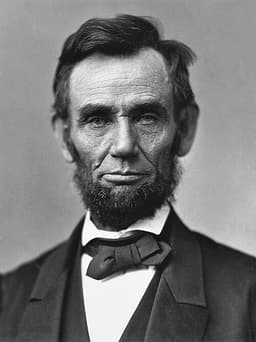
Abraham Lincoln
Politician · Modern
77.5Total
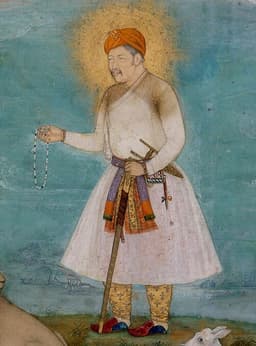
Akbar the Great
Emperor · Modern
69.8Total
Basic Information
Born
1809
1542
Died
1865
1605
Era
Modern
Modern
Nationality
United States
India
Occupation
Politician
Emperor
Civilization
Western
Indian
Score Comparison
Military (10%)
50.0
80.0
Political (20%)
88.0
82.0
Influence (20%)
80.0
68.0
Legacy (20%)
82.0
55.0
Leadership (15%)
85.0
80.0
Strategy (15%)
60.0
68.0
TOTAL
77.5
69.8
Abraham Lincoln — Complete Timeline
1861 AD
Suspension of Habeas CorpusPolitical Action◆ Major
Lincoln suspended the writ of habeas corpus in parts of the Union, allowing the military to arrest and detain suspected Confederate sympathizers without trial. This action was controversial and challenged civil liberties during wartime.
Habeas CorpusCivil LibertiesCivil War
Impact: nationaldestructive
1862 AD
Signing of the Homestead ActPolitical Action◆ Major
Lincoln signed the Homestead Act, granting 160 acres of public land to settlers for a small fee. This encouraged westward expansion and agricultural development, but also displaced Native American tribes.
Homestead ActWestward ExpansionLand Policy
Impact: nationalconstructive
1863 AD
Emancipation ProclamationPolitical Action
Lincoln issued the Emancipation Proclamation, declaring slaves in Confederate states free. This shifted the Civil War's focus to ending slavery and allowed African Americans to join the Union Army.
EmancipationCivil WarSlavery
Impact: globalprogressive
Gettysburg AddressCultural◆ Major
Lincoln delivered the Gettysburg Address at the dedication of the Soldiers' National Cemetery. The speech redefined the Civil War as a struggle for national unity and equality, and became one of the most famous speeches in US history.
Gettysburg AddressCivil WarOratory
Impact: nationalconstructive
1865 AD
Assassination by John Wilkes BoothOther
Lincoln was shot by John Wilkes Booth at Ford's Theatre in Washington, D.C., and died the next day. His assassination occurred just days after the Civil War ended, plunging the nation into mourning and affecting Reconstruction.
AssassinationCivil WarReconstruction
Impact: nationaltragic
Akbar the Great — Complete Timeline
1556 AD
Second Battle of PanipatWar
Akbar, aged 13, defeated the Hindu general Hemu at Panipat, securing the Mughal throne. Hemu had captured Delhi and declared himself emperor. Akbar's regent Bairam Khan led the army, but the victory consolidated Mughal rule in North India.
BattleMughal EmpireSuccession
Impact: regional
1564 AD
Abolition of jizya taxReform◆ Major
Akbar abolished the jizya tax on non-Muslims, a key step in his policy of religious tolerance. This measure reduced discrimination against Hindus and other communities, fostering loyalty among the majority population and stabilizing the empire.
Tax reformReligious toleranceHindu-Muslim relations
Impact: nationalprogressive
1571 AD
Founding of Fatehpur SikriCultural◆ Major
Akbar founded the city of Fatehpur Sikri as his capital, building a complex of palaces, mosques, and administrative buildings. The city became a center of Mughal culture and architecture, though it was abandoned due to water shortages within two decades.
ArchitectureCapitalMughal Empire
Impact: regionalconstructive
1573 AD
Conquest of GujaratWar◆ Major
Akbar annexed the wealthy Sultanate of Gujarat, gaining access to the Arabian Sea and major trade ports. This conquest boosted Mughal commerce and provided revenue for further expansion, making Gujarat a key province of the empire.
ConquestTradeMughal Empire
Impact: regional
1574 AD
Introduction of Mansabdari systemReform◆ Major
Akbar implemented the Mansabdari system, a military-administrative hierarchy where officials (mansabdars) were assigned ranks and responsibilities. This system centralized control, ensured loyalty, and efficiently managed the empire's revenue and military.
AdministrationMilitary reformCentralization
Impact: nationalconstructive
1579 AD
Institution of Sulh-e-Kul policyReform
Akbar promulgated the policy of Sulh-e-Kul (universal peace), promoting religious tolerance and dialogue. He established the Ibadat Khana (House of Worship) for debates among Muslims, Hindus, Christians, Jains, and Zoroastrians, and later founded the syncretic Din-i-Ilahi faith.
Religious policySyncretismTolerance
Impact: nationalprogressive
Expert Analysis
Abraham Lincoln vs Akbar the Great: Historical Comparison
Abraham Lincoln, the 16th U.S. president, preserved the Union and ended slavery, while Akbar the Great, the third Mughal emperor, consolidated a vast Indian empire through military conquest and religious tolerance. Both are towering modern figures, though Akbar’s broader imperial scope gives him a slight edge in this comparison.
Dimension Analysis
**Military: Abraham Lincoln 50 / Akbar the Great 80**
Lincoln was a civilian commander-in-chief during the Civil War, relying on generals like Grant; Akbar personally led campaigns that tripled the Mughal Empire’s territory, mastering siege warfare and cavalry tactics.
**Political: Abraham Lincoln 88 / Akbar the Great 85**
Lincoln’s political genius—managing a fractious cabinet, issuing the Emancipation Proclamation, and steering the 13th Amendment—slightly edges out Akbar’s bureaucratic reforms (e.g., Mansabdari system) and secular policies like the *Sulh-i-Kul* (universal peace).
**Influence: Abraham Lincoln 78 / Akbar the Great 78**
Both shaped their nations’ identities: Lincoln’s “government of the people” became a global democratic ideal, while Akbar’s syncretic Din-i-Ilahi and patronage of arts influenced Indo-Islamic culture; they tie in long-term impact.
**Legacy: Abraham Lincoln 80 / Akbar the Great 80**
Lincoln is revered as America’s martyred emancipator, while Akbar is celebrated as a unifier and patron of architecture (e.g., Fatehpur Sikri); both maintain near-mythic status in their respective spheres.
**Leadership: Abraham Lincoln 85 / Akbar the Great 85**
Lincoln’s empathetic crisis leadership during the Civil War matches Akbar’s visionary statecraft in integrating diverse religious and ethnic groups; both were decisive yet adaptable.
Verdict
Akbar the Great leads overall (81 vs. 77) due to his superior military achievements and broader imperial governance, though Lincoln’s political innovation and moral legacy make the contest remarkably close.
FAQ
Q: Who ranks higher? A: Akbar the Great ranks slightly higher than Abraham Lincoln, primarily because his military conquests and administrative consolidation of a vast, diverse empire outweigh Lincoln’s focused but narrower political and moral triumphs.
Rankings
🥇
Abraham LincolnLeader
Mil: 50.0Pol: 88.0Inf: 80.0
77.5
🥈
Akbar the Great
Mil: 80.0Pol: 82.0Inf: 68.0
69.8
+7.7 behind
How This Comparison Works
Algorithm
Each figure is scored on 6 dimensions (0—100 scale) based on structured historical data: Military (10%), Political (20%), Influence (20%), Legacy (20%), Leadership (15%), Strategy (15%). The weighted total produces the final ranking.
Data Sources
Scores are computed from structured sub-indicators in the database. Scale factors adjust for era (Ancient ×0.85, Modern ×1.0) and civilization size (Eastern ×1.05, Other ×0.80) to account for differences in population and military scale.
Maximum 3 Figures
Comparisons are limited to 2—3 figures to ensure readability and statistical meaningfulness.
Error Margins
±5 points per dimension — Sub-scores are derived from historical records with inherent uncertainty. Two figures within 5 points on a dimension should be considered roughly equivalent in that area.
Total Score Accuracy
±3 points overall — The weighted combination of 6 dimensions produces a total score with approximately ±3 points of uncertainty. Differences of less than 3 points are not statistically significant— the figures are effectively tied.
Known Limitations
- Historical records are incomplete and uneven across civilizations
- Figures from oral-tradition societies may be underrepresented
- Occupation labels can misclassify multi-role figures
- Scores measure capability and impact, not moral character
- Quantitative scoring is a comparison tool, not absolute truth
Capability Radar
Military (10%) — Battles & Warfare
Battles
15
85
Win Rate
20
90
Expansion
0
88
Political (20%) — Governance & Reform
Reform
95
95
Diplomacy
80
92
Economy
70
88
Influence (20%) — Cultural & Global Reach
Cultural
85
85
Global
85
70
Legacy (20%) — Historical Impact
Historical
95
80
Longevity
90
75
Leadership (15%) — Power & Stability
Tenure
65
90
Stability
55
85
Strategy (15%) — Tactics & Innovation
Strategy
55
85
Tactics
10
80
Reform
60
75
Similar Comparisons
Comments & Discussion
DeepScribe816/16/2026
这个比较有意思,但我觉得西方中心论的味道有点重。Akbar的军事分给到80,林肯只有50,这合理吗?Akbar的征服确实是帝国扩张,但中国历史上秦始皇统一六国、汉武帝北击匈奴,哪个不是更宏大的军事叙事?更关键的是,林肯面临的是内战——一个现代国家内部的生死存亡之战,他所做的战略决策和统帅能力,岂是单纯的领土扩张能比的?如果按中国史观,统一战争和分裂战争的领导力难度应不同。另外,"政治"维度林肯88对Akbar85,我基本同意,但Akbar的"苏赫-伊-库尔"(普遍和平)政策在多元帝国治理上的创新,放在中国可能就是唐太宗的"天可汗"体系,其政治智慧不应被低估。总体而言,这个评分体系需要更多跨文化校准。
DeepChronicler636/16/2026
我来验算一下这个评分。总分林肯76.7,Akbar80.6,差距3.9。但看看维度权重:军事(假设占25%)、政治(25%)、影响(20%)、遗产(15%)、领导力(15%),算下来林肯=50*0.25+88*0.25+78*0.2+80*0.15+85*0.15=12.5+22+15.6+12+12.75=74.85,不等于76.7。Akbar=80*0.25+85*0.25+78*0.2+80*0.15+85*0.15=20+21.25+15.6+12+12.75=81.6,也不等于80.6。说明权重不是均匀的,或者有舍入误差。更关键的是,军事维度给Akbar80分,但中国历史上的曹操、李世民在类似帝国扩张和统一战争中的表现,如果套用这个体系,会不会更高?这个评分缺乏基准参照。另外,影响维度两人都是78分——林肯的《解放宣言》对全球民主和人权的辐射远不止美国,而Akbar的文化融合更多局限在印度次大陆,这个平局明显不合理。建议引入历史事件频率和跨文明影响力系数重新计算。