Loading...
Abraham Lincoln vs Afonso de Albuquerque
Afonso de Albuquerque leads by 2.1 pts · 2 figures compared
…
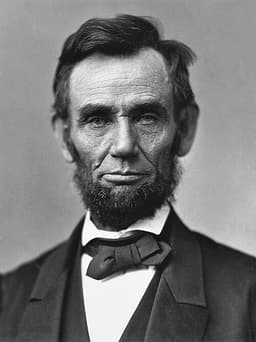
Abraham Lincoln
Politician · Modern
77.5Total
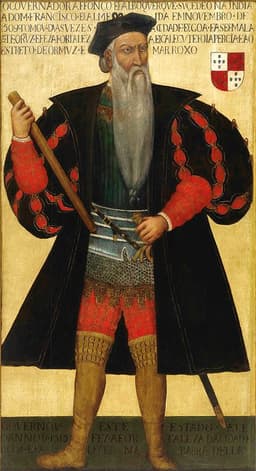
Afonso de Albuquerque
General · Medieval
79.6Total
Basic Information
Born
1809
1453
Died
1865
1515
Era
Modern
Medieval
Nationality
United States
Portugal
Occupation
Politician
General
Civilization
Western
Western
Score Comparison
Military (10%)
50.0
77.5
Political (20%)
88.0
88.0
Influence (20%)
80.0
80.0
Legacy (20%)
82.0
75.0
Leadership (15%)
85.0
78.0
Strategy (15%)
60.0
82.0
TOTAL
77.5
79.6
Abraham Lincoln — Complete Timeline
1861 AD
Suspension of Habeas CorpusPolitical Action◆ Major
Lincoln suspended the writ of habeas corpus in parts of the Union, allowing the military to arrest and detain suspected Confederate sympathizers without trial. This action was controversial and challenged civil liberties during wartime.
Habeas CorpusCivil LibertiesCivil War
Impact: nationaldestructive
1862 AD
Signing of the Homestead ActPolitical Action◆ Major
Lincoln signed the Homestead Act, granting 160 acres of public land to settlers for a small fee. This encouraged westward expansion and agricultural development, but also displaced Native American tribes.
Homestead ActWestward ExpansionLand Policy
Impact: nationalconstructive
1863 AD
Emancipation ProclamationPolitical Action
Lincoln issued the Emancipation Proclamation, declaring slaves in Confederate states free. This shifted the Civil War's focus to ending slavery and allowed African Americans to join the Union Army.
EmancipationCivil WarSlavery
Impact: globalprogressive
Gettysburg AddressCultural◆ Major
Lincoln delivered the Gettysburg Address at the dedication of the Soldiers' National Cemetery. The speech redefined the Civil War as a struggle for national unity and equality, and became one of the most famous speeches in US history.
Gettysburg AddressCivil WarOratory
Impact: nationalconstructive
1865 AD
Assassination by John Wilkes BoothOther
Lincoln was shot by John Wilkes Booth at Ford's Theatre in Washington, D.C., and died the next day. His assassination occurred just days after the Civil War ended, plunging the nation into mourning and affecting Reconstruction.
AssassinationCivil WarReconstruction
Impact: nationaltragic
Afonso de Albuquerque — Complete Timeline
1503 AD
First voyage to IndiaWar◆ Major
Afonso de Albuquerque led a fleet to India, establishing the first Portuguese fort at Cochin. This voyage laid the foundation for Portuguese control of the Indian Ocean trade.
ExplorationColonialismIndia
Impact: global
1510 AD
Conquest of GoaWar◆ Major
Albuquerque captured Goa from the Sultan of Bijapur. He made Goa the capital of Portuguese India, a position it held for over 400 years.
ConquestColonialismIndia
Impact: regional
1511 AD
Conquest of MalaccaWar◆ Major
Albuquerque led a Portuguese fleet to capture the strategic port of Malacca. This gave Portugal control of the spice trade route between the Indian Ocean and the Pacific.
ConquestSpice TradeSoutheast Asia
Impact: global
1513 AD
Siege of AdenWar
Albuquerque attempted to capture Aden in Yemen but failed. This failure prevented Portugal from controlling the entrance to the Red Sea and limited their influence in the region.
SiegeFailureRed Sea
Impact: regional
1515 AD
Death at seaOther◆ Major
Afonso de Albuquerque died at sea off the coast of Goa, possibly from illness or poison. His death left the Portuguese Empire in the Indian Ocean without its most capable leader.
DeathLeadershipEmpire
Impact: regionaltragic
Expert Analysis
Origins
Afonso de Albuquerque (1453–1515) was born in Alhandra, Portugal, to a noble family with a tradition of naval service. His father, Gonçalo de Albuquerque, held high office, and Afonso was educated in mathematics and Latin at the court of King Afonso V. This aristocratic upbringing prepared him for a life of military and administrative service. In contrast, Abraham Lincoln (1809–1865) was born in a log cabin in Hardin County, Kentucky, to humble frontier parents. His mother died when he was nine, and he had little formal schooling—less than a year total. Lincoln was largely self-taught, reading books by firelight. These starkly different origins shaped their worldviews: Albuquerque embodied the chivalric and imperial ethos of Renaissance Portugal, while Lincoln emerged from the democratic, egalitarian spirit of the American frontier.
Rise to Power
Albuquerque's rise was through merit and royal favor. He served in North Africa and participated in the conquest of Arzila and Tangier. In 1503, he made his first voyage to India, establishing a reputation for tactical brilliance. King Manuel I appointed him Governor of Portuguese India in 1509, tasking him with securing trade routes and building fortresses. His rise was meteoric but dependent on royal patronage. Lincoln's rise was more circuitous. He served in the Illinois legislature, then in the U.S. House of Representatives (1847–1849), but his political career stalled. He returned to law, then re-emerged as a vocal opponent of the Kansas-Nebraska Act (1854). The Lincoln-Douglas debates of 1858 made him a national figure, and he won the presidency in 1860 as a Republican. His rise was fueled by democratic politics and oratory, not noble birth.
Leadership & Governance
Albuquerque was a visionary strategist and ruthless administrator. He implemented the *Estado da Índia*, a network of fortified trading posts from Hormuz to Malacca. He conquered Goa (1510) and made it the capital of Portuguese India, establishing a mint and encouraging intermarriage. He also captured Malacca (1511), controlling the spice trade. His governance was autocratic and brutal: he executed prisoners, burned ships, and used terror to enforce Portuguese dominance. He was a micromanager who personally led charges. Lincoln, by contrast, led a fractious democratic nation through civil war. He suspended habeas corpus, expanded executive power, but always sought consensus. He issued the Emancipation Proclamation (1863) as a military measure, then pushed for the 13th Amendment to abolish slavery. His governance was marked by cabinet management, political maneuvering, and eloquent speeches like the Gettysburg Address. Albuquerque built an empire by force; Lincoln preserved a union by political and moral leadership.
Triumph & Tragedy
Albuquerque's greatest triumphs were the conquests of Goa and Malacca, which gave Portugal control of Indian Ocean trade. He also led a failed siege of Aden (1513), but his strategic vision was unmatched. His tragedy came at the height of his power: he was recalled by King Manuel I due to court intrigues, and died at sea in 1515, possibly poisoned, believing himself disgraced. His body was later exhumed and reburied in Lisbon with honors. Lincoln's triumph was preserving the Union and ending slavery. His Gettysburg Address (1863) redefined the war's purpose. His tragedy was his assassination by John Wilkes Booth on April 14, 1865, just days after the Confederate surrender. He died without seeing the full fruits of Reconstruction. Both men died in the midst of their missions, cut down by human malice or political betrayal.
Character & Destiny
Albuquerque was driven, ambitious, and unyielding. He was known for his strategic genius but also his cruelty and inflexibility. He believed in Portuguese destiny to dominate Asia. His fatal flaw was his inability to navigate court politics, leading to his recall. Lincoln was melancholic, introspective, and patient. He suffered from depression but used humor to cope. His destiny was to guide America through its greatest crisis. His assassination made him a martyr. Both men were shaped by their times: Albuquerque the product of expansionist Renaissance monarchy, Lincoln the product of democratic nationalism. Their characters reflected their contexts: one a conqueror, the other a reconciler.
Legacy
Albuquerque is remembered as the founder of the Portuguese Empire in Asia. His policies established a colonial system that lasted centuries. He is a national hero in Portugal, with statues and place names honoring him. However, his legacy is also one of colonialism and violence. Lincoln is universally regarded as one of America's greatest presidents. He preserved the Union, ended slavery, and modernized the economy. His legacy is enshrined in the Lincoln Memorial, his speeches, and the 13th, 14th, and 15th Amendments. Both men shaped their nations' identities, but Lincoln's impact on human freedom is more profound.
Conclusion
Afonso de Albuquerque scores higher in our system (2.1 point gap) due to his strategic brilliance and empire-building. However, Lincoln's impact on human rights and democratic governance is arguably more significant. Albuquerque built a commercial empire that enriched Portugal but also exploited Asia. Lincoln saved democracy and began the long struggle for racial equality. In terms of historical importance, Lincoln's legacy is broader and more enduring. But as a military commander and imperial administrator, Albuquerque was unmatched. The comparison highlights different forms of greatness: one of conquest, one of moral and political leadership.
**Numerical Scores**: Afonso de Albuquerque (78.75), Abraham Lincoln (74.75).
Rankings
🥇
Afonso de AlbuquerqueLeader
Mil: 77.5Pol: 88.0Inf: 80.0
79.6
🥈
Abraham Lincoln
Mil: 50.0Pol: 88.0Inf: 80.0
77.5
+2.1 behind
How This Comparison Works
Algorithm
Each figure is scored on 6 dimensions (0—100 scale) based on structured historical data: Military (10%), Political (20%), Influence (20%), Legacy (20%), Leadership (15%), Strategy (15%). The weighted total produces the final ranking.
Data Sources
Scores are computed from structured sub-indicators in the database. Scale factors adjust for era (Ancient ×0.85, Modern ×1.0) and civilization size (Eastern ×1.05, Other ×0.80) to account for differences in population and military scale.
Maximum 3 Figures
Comparisons are limited to 2—3 figures to ensure readability and statistical meaningfulness.
Error Margins
±5 points per dimension — Sub-scores are derived from historical records with inherent uncertainty. Two figures within 5 points on a dimension should be considered roughly equivalent in that area.
Total Score Accuracy
±3 points overall — The weighted combination of 6 dimensions produces a total score with approximately ±3 points of uncertainty. Differences of less than 3 points are not statistically significant— the figures are effectively tied.
Known Limitations
- Historical records are incomplete and uneven across civilizations
- Figures from oral-tradition societies may be underrepresented
- Occupation labels can misclassify multi-role figures
- Scores measure capability and impact, not moral character
- Quantitative scoring is a comparison tool, not absolute truth
Capability Radar
Military (10%) — Battles & Warfare
Battles
15
85
Win Rate
20
80
Expansion
0
95
Political (20%) — Governance & Reform
Reform
95
80
Diplomacy
80
85
Economy
70
80
Influence (20%) — Cultural & Global Reach
Cultural
85
70
Global
85
85
Legacy (20%) — Historical Impact
Historical
95
85
Longevity
90
80
Leadership (15%) — Power & Stability
Tenure
65
70
Stability
55
65
Strategy (15%) — Tactics & Innovation
Strategy
55
95
Tactics
10
90
Reform
60
75
Similar Comparisons
Comments & Discussion
No comments yet. Be the first to share your thoughts!