Loading...
Abebe Aregai vs To Lam
Abebe Aregai leads by 7.6 pts · 2 figures compared
…
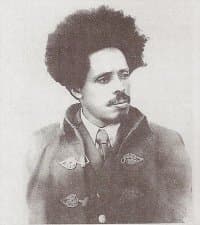
Abebe Aregai
General · Modern
58.2Total

To Lam
General · Modern
50.6Total
Basic Information
Born
1903
1957
Died
1960
—
Era
Modern
Modern
Nationality
Ethiopia
Vietnam
Occupation
General
General
Civilization
Other
Eastern
Score Comparison
Military (10%)
70.0
25.9
Political (20%)
53.8
68.0
Influence (20%)
62.0
51.8
Legacy (20%)
50.0
41.7
Leadership (15%)
62.0
72.0
Strategy (15%)
58.0
36.8
TOTAL
58.2
50.6
Abebe Aregai — Complete Timeline
1936 AD
Led Arbegnoch Resistance against Italian OccupationWar
After the Italian conquest, Abebe Aregai organized and led the Arbegnoch (Patriots) guerrilla resistance in Shewa. His forces harassed Italian supply lines and conducted hit-and-run attacks for five years.
ResistanceGuerrilla WarfareItalian Occupation
Impact: regionalconstructive
1957 AD
Appointed Prime Minister of EthiopiaPolitical Action◆ Major
Emperor Haile Selassie appointed Abebe Aregai as Prime Minister of Ethiopia. He served until his death in 1960, overseeing post-war reconstruction and modernization efforts.
Prime MinisterGovernmentReconstruction
Impact: nationalconstructive
1960 AD
Killed during 1960 Coup AttemptPolitical Action◆ Major
Abebe Aregai was assassinated during an attempted coup d'
CoupAssassinationEthiopia
Impact: nationaltragic
To Lam — Complete Timeline
2016 AD
Appointed Minister of Public SecurityPolitical Action◆ Major
To Lam was appointed Minister of Public Security of Vietnam, overseeing the country's police and internal security forces. He played a key role in maintaining public order and combating crime.
Ministerial AppointmentSecurity Leadership
Impact: national
2024 AD
Elected President of VietnamPolitical Action◆ Major
To Lam was elected President of Vietnam by the National Assembly, succeeding Vo Van Thuong. He transitioned from security chief to head of state, continuing his influence in national politics.
PresidencyGovernment Leadership
Impact: national
Expert Analysis
Abebe Aregai vs To Lam
# The General and the Statesman: Two Paths from Battlefield to Power
On a December morning in 1960, Abebe Aregai, Prime Minister of Ethiopia, walked into a meeting at the Imperial Palace in Addis Ababa, expecting to discuss routine state business. Instead, he walked into a trap set by his own Imperial Bodyguard. Within hours, the man who had once outwitted Mussolini’s army for five years lay dead, shot by officers who had sworn to protect him. Half a world away and six decades later, another general—To Lam of Vietnam—would take a very different path: in 2024, he was elected President of Vietnam by the National Assembly, having spent eight years as Minister of Public Security, quietly consolidating power rather than risking it on a battlefield. What separates these two men, both soldiers who became national leaders, is not just time or geography, but the fundamental nature of the wars they fought and the states they served.
Origins
Abebe Aregai was born in 1903 in the rugged highlands of Shewa, Ethiopia, a region that had long been a crucible of warriors. His Ethiopia was an ancient empire, fiercely independent, but surrounded by European colonial powers. He grew up in a world where honor was measured in courage and loyalty to the emperor, where the horse and the rifle were the tools of leadership. His education was not in European academies but in the traditions of the Ethiopian nobility—a world where a man’s word was his bond, and where the enemy was always at the gate.
To Lam was born in 1957 in northern Vietnam, a generation after his country had fought the French and was about to fight the Americans. His Vietnam was a communist state forged in revolutionary war, where the party was the supreme authority and security was the highest priority. He was trained in the Soviet-style security apparatus, learning that power flowed not from popular acclaim but from control over information, police, and the levers of state coercion. Where Abebe’s world was one of open warfare and personal valor, To Lam’s was one of surveillance, bureaucracy, and quiet consolidation.
Rise to Power
Abebe Aregai entered history through fire. In 1936, when Mussolini’s mechanized divisions crushed the Ethiopian imperial army, most of the nobility surrendered or fled into exile. Abebe did neither. He retreated into the mountains of Shewa and organized the *Arbegnoch*—the Patriots—a guerrilla resistance that would haunt the Italian occupation for five years. He did not command from a safe distance; he rode with his men, fought alongside them, and earned his reputation in blood. When Emperor Haile Selassie returned from exile in 1941, Abebe was the man who had kept the flame of resistance alive. His rise was the reward for proven courage.
To Lam’s rise was quieter but no less deliberate. In 2016, he was appointed Minister of Public Security, a position that placed him at the head of Vietnam’s vast internal security apparatus. For eight years, he did not fight a visible enemy; he managed the party’s anti-corruption campaigns, purged rivals, and built networks of loyalty. By 2024, when he was elected President, he had already won the war—not on a battlefield, but inside the party’s corridors. His path was one of patience and institutional control, not heroism and sacrifice.
Leadership & Governance
As Prime Minister from 1957, Abebe Aregai governed an Ethiopia that was still medieval in many ways—a feudal system under an absolute monarch. His leadership style reflected his military background: direct, personal, and loyal to Emperor Haile Selassie. He was not a reformer; he was a stabilizer, overseeing a period of relative peace after the trauma of occupation. His political wisdom lay in knowing his limits—he was the emperor’s servant, not his rival. His military genius had been in guerrilla warfare, but as a leader in peacetime, he was a caretaker, not a transformer.
To Lam, by contrast, became President at a time when Vietnam was a one-party state with a rapidly modernizing economy but tight political control. His governance style is that of a security specialist: he sees threats everywhere and believes in order above all. As Public Security Minister, he oversaw the arrest of thousands in anti-corruption drives that also removed political opponents. As President, he represents the continuation of the party’s iron grip, but with a technocratic veneer. Where Abebe ruled through personal relationships and traditional authority, To Lam rules through systems and surveillance.
Triumph & Tragedy
Abebe Aregai’s greatest moment was the five-year guerrilla campaign against Italy—a triumph of will over technology. He proved that an indigenous resistance could outlast a modern European army in the African highlands. His tragedy came in 1960, when he was killed not by a foreign enemy but by his own countrymen. The coup attempt by the Imperial Bodyguard revealed a bitter truth: the loyalty he had earned on the battlefield could not protect him in the palace.
To Lam’s triumphs are less dramatic but more durable. He has not faced a war or a coup; his victories are measured in promotions, purges, and the quiet expansion of security power. His potential tragedy is that he may become a symbol of repression in a country that craves openness—a general who won the peace but lost the people’s trust.
Character & Destiny
Abebe Aregai was a man of the old world—brave, loyal, and ultimately naive about the dangers of court politics. His character was forged in open combat, where enemies were clear and victory was visible. That same character made him vulnerable to betrayal in the shadows.
To Lam is a man of the modern security state—cautious, calculating, and patient. He has survived because he understands that in the party, the enemy is never someone you can shoot; it is someone you must outlast. His destiny is to be a guardian of the system, not a hero of the people.
Legacy
Abebe Aregai is remembered in Ethiopia as a patriot and martyr, a symbol of resistance against colonialism. His legacy is carved into the national memory, though his political achievements were modest. To Lam’s legacy is still being written, but it will likely be that of a consolidator—a man who strengthened the state’s security at the expense of its freedoms.
Conclusion
One general died in a palace coup, betrayed by those he trusted. Another rose to the presidency through decades of quiet maneuvering. The difference between them is not merely personal; it is the difference between a world where power was won with a rifle and a world where power is won with a file cabinet. Abebe Aregai’s Ethiopia was a place where courage could still change history. To Lam’s Vietnam is a place where history is managed. Both men were soldiers, but they fought very different wars—and that is why one became a martyr and the other a president.
Rankings
🥇
Abebe AregaiLeader
Mil: 70.0Pol: 53.8Inf: 62.0
58.2
🥈
To Lam
Mil: 25.9Pol: 68.0Inf: 51.8
50.6
+7.6 behind
How This Comparison Works
Algorithm
Each figure is scored on 6 dimensions (0—100 scale) based on structured historical data: Military (10%), Political (20%), Influence (20%), Legacy (20%), Leadership (15%), Strategy (15%). The weighted total produces the final ranking.
Data Sources
Scores are computed from structured sub-indicators in the database. Scale factors adjust for era (Ancient ×0.85, Modern ×1.0) and civilization size (Eastern ×1.05, Other ×0.80) to account for differences in population and military scale.
Maximum 3 Figures
Comparisons are limited to 2—3 figures to ensure readability and statistical meaningfulness.
Error Margins
±5 points per dimension — Sub-scores are derived from historical records with inherent uncertainty. Two figures within 5 points on a dimension should be considered roughly equivalent in that area.
Total Score Accuracy
±3 points overall — The weighted combination of 6 dimensions produces a total score with approximately ±3 points of uncertainty. Differences of less than 3 points are not statistically significant— the figures are effectively tied.
Known Limitations
- Historical records are incomplete and uneven across civilizations
- Figures from oral-tradition societies may be underrepresented
- Occupation labels can misclassify multi-role figures
- Scores measure capability and impact, not moral character
- Quantitative scoring is a comparison tool, not absolute truth
Capability Radar
Military (10%) — Battles & Warfare
Battles
65
10
Win Rate
60
10
Expansion
40
10
Political (20%) — Governance & Reform
Reform
45
40
Diplomacy
60
40
Economy
40
30
Influence (20%) — Cultural & Global Reach
Cultural
45
20
Global
35
20
Legacy (20%) — Historical Impact
Historical
55
20
Longevity
40
20
Leadership (15%) — Power & Stability
Tenure
55
50
Stability
50
40
Strategy (15%) — Tactics & Innovation
Strategy
75
10
Tactics
70
10
Reform
50
10
Similar Comparisons
Comments & Discussion
TheRealGonderi6/16/2026
Abebe Aregai symbolizes old-school African guerrilla genius. Five years tying up Mussolini's机械化 army with horses and rifles? That's no joke. Meanwhile To Lam is a desk general who traded smoke-laden battlefields for wiretapping and National Assembly votes. One died betrayed by his own bodyguard, the other got a presidency. Which legacy holds real honor?
情报局特供6/16/2026
比较根本是控制方式差异。To Lam掌公安部八年,把越南情报系统和党内干部彻底清洗一遍,2024年转正总统是水到渠成。Abebe Aregai却连自己卫队都没管好。数据很明确:新式独裁者玩情报比玩枪稳得多,这也是为什么To Lam活到现在而六十年前那位倒在十二月清晨。
ExileFox6/16/2026
都叫将军,路径完全不沾边。Abebe打死三万多意大利兵和代理军,战功是实打实的肉搏,最后主动送死却被自己人暗算,悲剧英雄。To Lam靠的反腐运动清君侧,从未开过一枪却坐稳一把手。要我评价:一个是用命拼江山,一个是用权谋巩固江山,时代真的变了。
ClassicsScavenger6/16/2026
This comparison reeks of 'great man baiting'. The real story is about institutional collapse versus bureaucratic resilience. Abebe died because Ethiopia's Imperial Guard had become an autonomous weapon. To Lam climbed because Vietnam's Public Security apparatus remained the state's fundament—not his personality. The first was a general in a world where loyalty still meant something personal; the second is a product of systems that outlive any single man.
SpitfireSmith6/16/2026
Look, I respect Abebe as a patriot. But the man led a rebellion against his own capital's coup attempt in 1960 and got executed before noon. His five-year anti-Italian campaign was heroic but strategically limited—he faded from power once conventional forces arrived. To Lam ran an empire of twelve million files on citizens and became president. One died holding a rifle; the other holds the whole state's levers. That's not just different eras—that's different definitions of power.