Loading...
Abebe Aregai vs Sitiveni Rabuka
Abebe Aregai leads by 6.5 pts · 2 figures compared
…
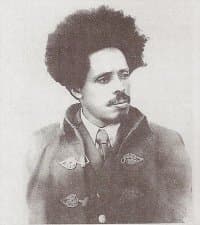
Abebe Aregai
General · Modern
58.2Total
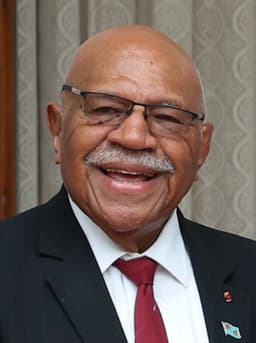
Sitiveni Rabuka
General · Modern
51.7Total
Basic Information
Born
1903
1948
Died
1960
—
Era
Modern
Modern
Nationality
Ethiopia
Fiji
Occupation
General
General
Civilization
Other
Other
Score Comparison
Military (10%)
70.0
10.2
Political (20%)
53.8
60.0
Influence (20%)
62.0
53.3
Legacy (20%)
50.0
46.7
Leadership (15%)
62.0
85.0
Strategy (15%)
58.0
39.6
TOTAL
58.2
51.7
Abebe Aregai — Complete Timeline
1936 AD
Led Arbegnoch Resistance against Italian OccupationWar
After the Italian conquest, Abebe Aregai organized and led the Arbegnoch (Patriots) guerrilla resistance in Shewa. His forces harassed Italian supply lines and conducted hit-and-run attacks for five years.
ResistanceGuerrilla WarfareItalian Occupation
Impact: regionalconstructive
1957 AD
Appointed Prime Minister of EthiopiaPolitical Action◆ Major
Emperor Haile Selassie appointed Abebe Aregai as Prime Minister of Ethiopia. He served until his death in 1960, overseeing post-war reconstruction and modernization efforts.
Prime MinisterGovernmentReconstruction
Impact: nationalconstructive
1960 AD
Killed during 1960 Coup AttemptPolitical Action◆ Major
Abebe Aregai was assassinated during an attempted coup d'
CoupAssassinationEthiopia
Impact: nationaltragic
Sitiveni Rabuka — Complete Timeline
1987 AD
1987 Fijian Coup d'étatPolitical Action
Rabuka, as a colonel in the Fijian military, led a coup overthrowing the elected government of Timoci Bavadra. The coup was motivated by ethnic Fijian opposition to Indo-Fijian political influence. Rabuka declared Fiji a republic.
CoupMilitary InterventionEthnic Tension
Impact: nationaldestructive
1992 AD
1992 Election as Prime MinisterPolitical Action◆ Major
Rabuka transitioned from military leader to civilian politician, winning the 1992 general election as leader of the Fijian Political Party. He became Prime Minister, serving until 1999.
ElectionCivilian GovernmentPolitical Transition
Impact: national
1997 AD
1997 Constitution ReformReform◆ Major
Rabuka's government oversaw the adoption of a new constitution that removed ethnic-based voting and provided for a multi-ethnic government. The constitution aimed to reduce ethnic tensions and promote national unity.
ConstitutionReformEthnic Reconciliation
Impact: nationalconstructive
1999 AD
1999 General Election DefeatPolitical Action◆ Major
Rabuka's government was defeated in the general election by the Labour Party led by Mahendra Chaudhry. Rabuka stepped down as Prime Minister, marking the end of his first period in power.
Election DefeatGovernment ChangeChaudhry
Impact: national
2022 AD
2022 Return as Prime MinisterPolitical Action◆ Major
Rabuka led the People's Alliance to victory in the 2022 general election, forming a coalition government. He became Prime Minister again, 23 years after his previous tenure, promising democratic reforms.
ElectionReturn to PowerCoalition Government
Impact: national
Expert Analysis
Sitiveni Rabuka vs Abebe Aregai
# The General's Second Act
In the summer of 1987, a Fijian colonel named Sitiveni Rabuka strode into Parliament House in Suva, armed and decisive, to overthrow a government that had only been in power for a month. Half a century earlier and half a world away, another soldier—Abebe Aregai of Ethiopia—had melted into the hills of Shewa, refusing to accept that his country had fallen to Mussolini's legions. One man seized power in a coup; the other fought a guerrilla war to restore an emperor. Yet both would end their careers as prime ministers, navigating the treacherous currents between military discipline and democratic responsibility. Why did the battlefield lead one to the ballot box, and the other to a palace assassination?
Origins
Abebe Aregai was born in 1903, in the waning years of Ethiopia's feudal empire, a time when loyalty to the throne was the highest virtue. He rose through the ranks of the Imperial Bodyguard, a force that was as much a political institution as a military one. His Ethiopia was a bastion of independence in a colonized Africa, and his identity was forged in the crucible of resistance. When the Italians invaded in 1935, he was thirty-two years old, already a man of discipline and honor, shaped by a world where the emperor was both sovereign and symbol.
Sitiveni Rabuka, born in 1948, came of age in a different kind of empire—the British colonial one. Fiji was a mosaic of indigenous Fijians and Indo-Fijian descendants of indentured laborers, a society divided by ethnicity and united only under the Crown. Rabuka was a product of this divide: a Methodist, a rugby player, a soldier who served in UN peacekeeping missions in Lebanon and Sinai. His world was not one of ancient thrones but of modern constitutions, ethnic quotas, and the uneasy arithmetic of democracy.
Rise to Power
Abebe Aregai's rise was forged in fire. After the Italian conquest of Addis Ababa in 1936, he refused to surrender. He gathered the *Arbegnoch*—the Patriots—and turned the highlands of Shewa into a nightmare for the occupiers. For five years, he led a guerrilla campaign that blended ambush, intelligence, and the unwavering support of the peasantry. His strategy was not about winning battles but about denying the enemy peace. When Emperor Haile Selassie returned in 1941, Abebe Aregai was the hero who had kept the flame alive.
Rabuka's path was shorter and more controversial. In 1987, Fiji's first general election had produced a government led by Timoci Bavadra, a coalition that drew heavily on Indo-Fijian support. To Rabuka and many indigenous Fijians, this threatened the political dominance of the native population. On May 14, he led a coup—bloodless, swift, and stunning. "I have taken over the government," he announced on radio. He was thirty-nine years old, and his world had changed forever.
Leadership & Governance
As prime minister from 1957, Abebe Aregai governed in the shadow of the emperor. He was a loyal administrator, overseeing a period of cautious modernization—roads, schools, and the slow integration of Ethiopia into the post-colonial world. His leadership was paternalistic and hierarchical, reflecting the imperial system he served. He was not a reformer but a stabilizer, a man who kept the machinery running while Selassie held the reins.
Rabuka's governance was a study in contradiction. After his coup, he initially installed a civilian government, then took power himself, then returned to barracks, then ran for office. In 1992, he won the prime ministership as a civilian, and in 1997, he oversaw a new constitution that abolished ethnic voting—a remarkable reversal for a man who had once seized power to preserve ethnic supremacy. "I am not the same person I was in 1987," he later said. His leadership was pragmatic, even humble, a slow evolution from coup-maker to coalition-builder.
Triumph & Tragedy
Abebe Aregai's greatest triumph was the resistance itself—the knowledge that he had fought when others fled, that he had kept Ethiopia free in its darkest hour. His tragedy came on December 13, 1960, when a coup attempt by the Imperial Bodyguard—the very institution he had once commanded—erupted in gunfire. He was shot dead while trying to negotiate, a victim of the same forces that had once elevated him.
Rabuka's triumph was his return. After losing the 1999 election, he spent two decades in political exile, a figure of controversy and regret. Then, in 2022, at the age of seventy-four, he led a coalition to victory and became prime minister again. His tragedy was the coup itself—the stain of having broken the democratic chain, a memory that would never fully fade.
Character & Destiny
Abebe Aregai was a man of the old world—loyal, stoic, and unyielding. He believed in hierarchy and sacrifice, and his destiny was to serve a throne that ultimately could not protect him. Rabuka was a man of the new world—torn between tradition and modernity, capable of both violence and repentance. His destiny was to learn from his mistakes, a rare gift among coup leaders.
Legacy
Abebe Aregai is remembered in Ethiopia as a patriot and martyr. His name is carved into the national story, a symbol of resistance against colonialism. Rabuka's legacy is more complicated. He is both the man who broke Fiji's democracy and the man who helped restore it, a cautionary tale and a redemption story wrapped into one.
Conclusion
Two generals, two prime ministers, two paths from the gun to the gavel. Abebe Aregai died defending a system he believed in; Sitiveni Rabuka lived long enough to dismantle the system he had created. In the end, the difference between them is not one of courage or conviction, but of time—the time to reflect, to change, and to seek forgiveness. History judges both, but it also remembers that the hardest journey is not the one up the mountain, but the one back down.
Rankings
🥇
Abebe AregaiLeader
Mil: 70.0Pol: 53.8Inf: 62.0
58.2
🥈
Sitiveni Rabuka
Mil: 10.2Pol: 60.0Inf: 53.3
51.7
+6.5 behind
How This Comparison Works
Algorithm
Each figure is scored on 6 dimensions (0—100 scale) based on structured historical data: Military (10%), Political (20%), Influence (20%), Legacy (20%), Leadership (15%), Strategy (15%). The weighted total produces the final ranking.
Data Sources
Scores are computed from structured sub-indicators in the database. Scale factors adjust for era (Ancient ×0.85, Modern ×1.0) and civilization size (Eastern ×1.05, Other ×0.80) to account for differences in population and military scale.
Maximum 3 Figures
Comparisons are limited to 2—3 figures to ensure readability and statistical meaningfulness.
Error Margins
±5 points per dimension — Sub-scores are derived from historical records with inherent uncertainty. Two figures within 5 points on a dimension should be considered roughly equivalent in that area.
Total Score Accuracy
±3 points overall — The weighted combination of 6 dimensions produces a total score with approximately ±3 points of uncertainty. Differences of less than 3 points are not statistically significant— the figures are effectively tied.
Known Limitations
- Historical records are incomplete and uneven across civilizations
- Figures from oral-tradition societies may be underrepresented
- Occupation labels can misclassify multi-role figures
- Scores measure capability and impact, not moral character
- Quantitative scoring is a comparison tool, not absolute truth
Capability Radar
Military (10%) — Battles & Warfare
Battles
65
5
Win Rate
60
5
Expansion
40
5
Political (20%) — Governance & Reform
Reform
45
50
Diplomacy
60
45
Economy
40
40
Influence (20%) — Cultural & Global Reach
Cultural
45
30
Global
35
20
Legacy (20%) — Historical Impact
Historical
55
40
Longevity
40
30
Leadership (15%) — Power & Stability
Tenure
55
55
Stability
50
35
Strategy (15%) — Tactics & Innovation
Strategy
75
10
Tactics
70
10
Reform
50
5
Similar Comparisons
Comments & Discussion
Rusty Bayonet6/16/2026
Rabuka's 1987 coup was a textbook example of overreaction. Aregai spent years in the bush fighting a genuine fascist invasion; Rabuka overthrew a democratically elected government because he didn't like the prime minister's ethnic background. The Fijian colonel fired a few warning shots and called it a day, while Aregai's guerrillas were starving in the mountains. One earned his premiership through decades of sacrifice; the other just took it.
叛军老政委6/16/2026
别把阿贝贝·阿雷盖的游击战浪漫化。他确实抵抗过意大利人,但战后那套"舍瓦省铁腕统治"跟民主半点关系都没有。等他当上首相时,靠的是皇帝海尔·塞拉西的背书,而不是什么人民选举。说白了,这两人都是从枪杆子里出政权,只不过一个穿着殖民军装,一个披着民族英雄斗篷。非洲那一套政治逻辑,换个地名换张脸罢了。
The Quantifier6/16/2026
Let's talk numbers: Rabuka's 1987 coup involved maybe 200 soldiers and zero casualties. Aregai's resistance tied up over 30,000 Italian troops and caused Mussolini to escalate to chemical weapons. There's no comparison in scale. Rabuka's "military career" consisted of peacekeeping in Lebanon and a bloodless putsch; Aregai fought a five-year guerrilla campaign that actually changed the course of World War II in East Africa. History remembers the weight of sacrifice, not the elegance of a coup.
滇缅史痴6/16/2026
比较这两人像是拿椰子跟咖啡比。斐济那场政变背后是斐济族对印度裔人口的恐惧,拉布卡不过是种族矛盾的代言人。而阿贝贝·阿雷盖生于一个被殖民者包围的古老帝国,他打游击时背后是整个埃塞俄比亚的独立意志。拉布卡的任务是维持族群特权,阿雷盖的任务是保存民族尊严。把这两件事放在一起比,既不懂斐济也不懂埃塞俄比亚。