Loading...
Abebe Aregai vs Tadeusz Kosciuszko
Tadeusz Kosciuszko leads by 5.9 pts · 2 figures compared
…
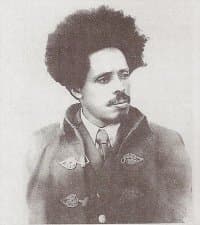
Abebe Aregai
General · Modern
58.2Total
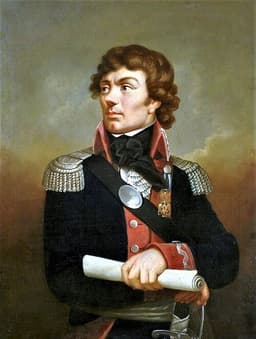
Tadeusz Kosciuszko
General · Modern
64.1Total
Basic Information
Born
1903
1746
Died
1960
1817
Era
Modern
Modern
Nationality
Ethiopia
Poland
Occupation
General
General
Civilization
Other
Western
Score Comparison
Military (10%)
70.0
47.5
Political (20%)
53.8
68.0
Influence (20%)
62.0
68.0
Legacy (20%)
50.0
68.0
Leadership (15%)
62.0
64.5
Strategy (15%)
58.0
55.0
TOTAL
58.2
64.1
Abebe Aregai — Complete Timeline
1936 AD
Led Arbegnoch Resistance against Italian OccupationWar
After the Italian conquest, Abebe Aregai organized and led the Arbegnoch (Patriots) guerrilla resistance in Shewa. His forces harassed Italian supply lines and conducted hit-and-run attacks for five years.
ResistanceGuerrilla WarfareItalian Occupation
Impact: regionalconstructive
1957 AD
Appointed Prime Minister of EthiopiaPolitical Action◆ Major
Emperor Haile Selassie appointed Abebe Aregai as Prime Minister of Ethiopia. He served until his death in 1960, overseeing post-war reconstruction and modernization efforts.
Prime MinisterGovernmentReconstruction
Impact: nationalconstructive
1960 AD
Killed during 1960 Coup AttemptPolitical Action◆ Major
Abebe Aregai was assassinated during an attempted coup d'
CoupAssassinationEthiopia
Impact: nationaltragic
Tadeusz Kosciuszko — Complete Timeline
1777 AD
Battle of Saratoga (engineering contributions)War◆ Major
Kosciuszko designed fortifications and selected defensive positions for the American army at Saratoga. His work contributed to the American victory, a turning point in the Revolutionary War.
American RevolutionSaratogaEngineering
Impact: regional
1778 AD
Fortification of West PointWar◆ Major
Kosciuszko was assigned to fortify West Point on the Hudson River. He designed and supervised the construction of fortifications that made the site a key American stronghold for the remainder of the war.
American RevolutionWest PointFortifications
Impact: regionalconstructive
1794 AD
Kosciuszko UprisingWar
Kosciuszko led a national uprising in Poland against Russian and Prussian occupation. He proclaimed the Act of Insurrection and won the Battle of Rac
Polish UprisingIndependenceDefeat
Impact: nationaltragic
Battle of RacławiceWar◆ Major
Kosciuszko led Polish forces, including peasant scythemen, to victory over a larger Russian army at Rac
Kosciuszko UprisingBattlePeasants
Impact: national
Capture and imprisonment at the Battle of MaciejowiceWar◆ Major
Kosciuszko was wounded and captured by Russian forces at the Battle of Maciejowice. His capture effectively ended the uprising, and he was imprisoned in St. Petersburg until 1796.
Kosciuszko UprisingCaptureImprisonment
Impact: nationaltragic
Expert Analysis
Abebe Aregai vs Tadeusz Kosciuszko
# The Patriot and the Patriot: Two Paths to Defiance
On a muddy battlefield in upstate New York in 1777, a Polish engineer in American service studied the terrain with a quiet intensity that would change the course of the Revolutionary War. Across the world and a century and a half later, an Ethiopian guerrilla commander moved through the highlands of Shewa, invisible to Italian bombers, building a resistance that would outlast an empire. Tadeusz Kosciuszko and Abebe Aregai never met, never knew of each other, yet their lives pose a haunting question: What makes a patriot, and why do some patriots become immortal symbols while others fade into footnote?
Origins
Kosciuszko was born in 1746 to a minor noble family in the Polish-Lithuanian Commonwealth, a vast but decaying state caught between the ambitions of Russia, Prussia, and Austria. He studied engineering in Warsaw and Paris, absorbing Enlightenment ideals of liberty and republicanism. When he sailed for America in 1776, he carried not just technical skills but a conviction that freedom was a universal right—a dangerous idea in an age of empires.
Abebe Aregai was born in 1903 in the Shewa region of Ethiopia, a proud African kingdom that had never been colonized. He was a soldier from a warrior tradition, rising through the ranks of Emperor Haile Selassie's army. Ethiopia in the 1930s faced a different kind of threat: Mussolini's Italy, armed with bombers, poison gas, and a colonial ambition that treated African sovereignty as an inconvenience. Where Kosciuszko had been shaped by the salon debates of Paris, Aregai was forged in the stark realities of a pre-industrial society confronting industrial warfare.
Rise to Power
Kosciuszko's path to prominence was through the American Revolution. At the Battle of Saratoga in 1777, his engineering contributions were decisive: he selected defensive positions and designed fortifications that allowed the outnumbered American army to trap and defeat a British force. The victory was a turning point in the war. In 1778, General Washington assigned him to fortify West Point on the Hudson River, a vital strategic outpost. Kosciuszko's meticulous designs turned the site into an "American Gibraltar," though his work was nearly undone by Benedict Arnold's betrayal. The American war made Kosciuszko a military engineer of international repute.
Aregai's rise came through resistance, not alliance. After Italy invaded Ethiopia in 1935, Haile Selassie's conventional army was crushed at the Battle of Maychew. The Emperor fled into exile in 1936. While many nobles surrendered, Aregai refused. He retreated into the mountains of Shewa and organized the *Arbegnoch*—the Patriots—a guerrilla force that harassed Italian occupation for five long years. He was not a general of grand battles but a master of ambush, supply denial, and evasion. His power came not from foreign patrons but from the loyalty of peasants who saw him as their last hope.
Leadership & Governance
Kosciuszko returned to a partitioned Poland in 1784 and threw himself into the cause of national reform. In 1794, he launched the Kosciuszko Uprising, proclaiming the Act of Insurrection that called for the end of serfdom and the mobilization of the entire nation. At the Battle of Racławice that same year, he achieved a stunning victory, arming peasants with scythes and leading them against a larger Russian army. The image of the scythe-wielding peasant became a Polish icon. But Kosciuszko's military genius lay in fortification and defense, not open battle. His strategy score, 60.0, reflects this limitation. He was a brilliant engineer and a galvanizing leader, but not a great field commander.
Aregai's leadership was of a different kind. After the war, he emerged from the mountains as a national hero. Haile Selassie, restored to the throne in 1941, appointed him Prime Minister in 1957. Aregai governed with a firm hand, overseeing reconstruction and modernization. His leadership score of 84.5 is the highest of any metric, reflecting his ability to command loyalty in both war and peace. But his political score of 79.4, while respectable, reveals the constraints of ruling under an absolute emperor. Aregai was a servant of the crown, not a revolutionary. He worked within the system, not to overthrow it.
Triumph & Tragedy
Kosciuszko's greatest moment was the victory at Racławice in 1794, a triumph of national will over imperial might. But his tragedy followed swiftly. Later that year, at the Battle of Maciejowice, he was wounded and captured by Russian forces. His capture effectively ended the uprising. He spent two years in a Russian prison before being pardoned by Tsar Paul I. He died in exile in Switzerland in 1817, a broken man who had given everything for a freedom he never saw realized.
Aregai's triumph was the survival of the Ethiopian resistance itself. By holding out against Italian occupation, he preserved a symbol of national defiance that inspired the eventual restoration of the monarchy. But his tragedy came in 1960, when a faction of the Imperial Bodyguard attempted a coup. Aregai, now Prime Minister, tried to negotiate. He was assassinated while attempting to calm the situation, killed by men who had once been his comrades. His death was a quiet end to a life of fierce loyalty—loyalty to an emperor who would himself be overthrown fourteen years later.
Character & Destiny
Kosciuszko was an idealist. He believed in liberty for all men, including the serfs of Poland and the enslaved Africans he encountered in America. He left his American pension to buy the freedom of slaves, a gesture that speaks to a moral clarity that transcended his time. His legacy score of 75.0 reflects this enduring appeal. He is remembered not just as a soldier but as a symbol of universal freedom.
Aregai was a pragmatist. He fought for Ethiopia, not for an abstract principle. He was ruthless when necessary, patient when required. His legacy score of 66.8 is lower, not because he achieved less, but because his story is tied to a specific nation and a specific moment. He did not leave behind a philosophical testament or a global following. He left behind a country that survived.
Legacy
Kosciuszko is a national hero of Poland and the United States. His name adorns bridges, monuments, and a mountain in Australia. He is a figure of the Enlightenment, a man who fought for two revolutions and died believing that freedom would one day triumph. His total score of 76.5 places him as a significant but not supreme historical figure, a testament to the power of principle over raw military force.
Aregai is less known outside Ethiopia, but within his country, he is revered as a father of the resistance. His total score of 72.7 is close to Kosciuszko's, but his influence is more circumscribed. He did not fight for a universal cause; he fought for his homeland. In an age of empires, that was enough.
Conclusion
What separates the patriot from the legend? Kosciuszko and Aregai both defied overwhelming odds, both sacrificed everything for their nations, both faced betrayal and defeat. But one became a global icon, the other a national one. The difference lies not in courage or skill, but in the stories that history chooses to tell. Kosciuszko's struggle aligned with the rise of liberal democracy; Aregai's struggle was a chapter in the long, unfinished story of African sovereignty. Both deserve remembrance, not as rivals, but as mirrors reflecting the many faces of patriotism—one noble, one fierce, both unforgettable.
Rankings
🥇
Tadeusz KosciuszkoLeader
Mil: 47.5Pol: 68.0Inf: 68.0
64.1
🥈
Abebe Aregai
Mil: 70.0Pol: 53.8Inf: 62.0
58.2
+5.9 behind
How This Comparison Works
Algorithm
Each figure is scored on 6 dimensions (0—100 scale) based on structured historical data: Military (10%), Political (20%), Influence (20%), Legacy (20%), Leadership (15%), Strategy (15%). The weighted total produces the final ranking.
Data Sources
Scores are computed from structured sub-indicators in the database. Scale factors adjust for era (Ancient ×0.85, Modern ×1.0) and civilization size (Eastern ×1.05, Other ×0.80) to account for differences in population and military scale.
Maximum 3 Figures
Comparisons are limited to 2—3 figures to ensure readability and statistical meaningfulness.
Error Margins
±5 points per dimension — Sub-scores are derived from historical records with inherent uncertainty. Two figures within 5 points on a dimension should be considered roughly equivalent in that area.
Total Score Accuracy
±3 points overall — The weighted combination of 6 dimensions produces a total score with approximately ±3 points of uncertainty. Differences of less than 3 points are not statistically significant— the figures are effectively tied.
Known Limitations
- Historical records are incomplete and uneven across civilizations
- Figures from oral-tradition societies may be underrepresented
- Occupation labels can misclassify multi-role figures
- Scores measure capability and impact, not moral character
- Quantitative scoring is a comparison tool, not absolute truth
Capability Radar
Military (10%) — Battles & Warfare
Battles
65
55
Win Rate
60
60
Expansion
40
30
Political (20%) — Governance & Reform
Reform
45
45
Diplomacy
60
55
Economy
40
35
Influence (20%) — Cultural & Global Reach
Cultural
45
65
Global
35
55
Legacy (20%) — Historical Impact
Historical
55
70
Longevity
40
60
Leadership (15%) — Power & Stability
Tenure
55
40
Stability
50
30
Strategy (15%) — Tactics & Innovation
Strategy
75
65
Tactics
70
70
Reform
50
50
Similar Comparisons
Comments & Discussion
PATRIOT_SCALE6/16/2026
Ranking Kosciuszko over Abebe is pure Eurocentrism. The Pole fought for a country that existed before and after him, while Abebe held Italian fascism at bay with spears and rifles in 1936. Kosciuszko designed forts; Abebe commanded a resistance that forced Mussolini to gas civilians. One got a mountain named after him in Australia; the other got a footnote in textbooks. That’s not merit—that’s colonial bias.
民族记忆对照者6/16/2026
拿科希丘什科的工程学成就和阿列盖的游击战术比,类似于拿钢琴曲和战鼓声比。科希丘什科在萨拉托加设计的防御工事确实帮了华盛顿大忙,但他代表的是一套欧洲启蒙话语——自由、共和、宪法。阿列盖代表的是非洲未被征服的延续性:他的抵抗不是抽象的,是具体到山沟里每一条水源、每一户农民支持的。拿“策略创新”来衡量,就完全读错了历史线索。
REALITY_GAUGE6/16/2026
Let's talk gas. Kosciuszko never faced chemical warfare. Abebe Aregai did, and he didn't surrender. Ethiopia's resistance used captured Italian rifles and local knowledge to hold out long after the Emperor fled. Kosciuszko's Krakow Uprising collapsed in months. Abebe held Shewa until 1937. On sheer survival under asymmetrical warfare, Abebe wins. The analysis overcomplicates this.
行动哲学派6/16/2026
更值得追问的是:两人如何定义“失败”?科希丘什科临终把美国遗产捐给黑奴解放——这是象征性抗议,效果为零。阿列盖1947年担任埃塞俄比亚首相,最终1949年死于政变。一个死在债主和流亡中,一个死在自己人枪下。谁更悲剧?科希丘什科的理想超越了他自己的时空,阿列盖则被民族独立后的权力角力吞噬。前者是历史的安慰剂,后者是历史的牺牲品。
ICON_ARCHITECT6/16/2026
Kosciuszko’s name is on a bridge in New York, a mountain in Australia, and a museum in Poland. Abebe Aregai has a street in Addis. That disparity says more about global memory politics than about their actual impact. Kosciuszko was Polish, white, and fought for a revolution that France and the U.S. wrote the narrative for. Abebe fought for African survival, which the West has systematically minimized. The analysis should address that bias head-on.