Loading...
Abebe Aregai vs Suharto
Abebe Aregai leads by 1.0 pts · 2 figures compared
…
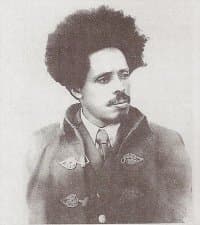
Abebe Aregai
General · Modern
58.2Total
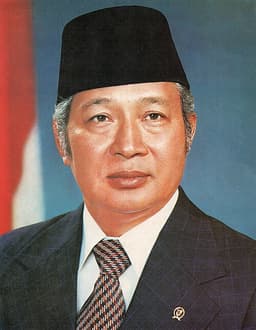
Suharto
General · Modern
57.2Total
Basic Information
Born
1903
1921
Died
1960
—
Era
Modern
Modern
Nationality
Ethiopia
Indonesia
Occupation
General
General
Civilization
Other
Eastern
Score Comparison
Military (10%)
70.0
20.0
Political (20%)
53.8
59.3
Influence (20%)
62.0
60.0
Legacy (20%)
50.0
52.0
Leadership (15%)
62.0
82.0
Strategy (15%)
58.0
60.0
TOTAL
58.2
57.2
Abebe Aregai — Complete Timeline
1936 AD
Led Arbegnoch Resistance against Italian OccupationWar
After the Italian conquest, Abebe Aregai organized and led the Arbegnoch (Patriots) guerrilla resistance in Shewa. His forces harassed Italian supply lines and conducted hit-and-run attacks for five years.
ResistanceGuerrilla WarfareItalian Occupation
Impact: regionalconstructive
1957 AD
Appointed Prime Minister of EthiopiaPolitical Action◆ Major
Emperor Haile Selassie appointed Abebe Aregai as Prime Minister of Ethiopia. He served until his death in 1960, overseeing post-war reconstruction and modernization efforts.
Prime MinisterGovernmentReconstruction
Impact: nationalconstructive
1960 AD
Killed during 1960 Coup AttemptPolitical Action◆ Major
Abebe Aregai was assassinated during an attempted coup d'
CoupAssassinationEthiopia
Impact: nationaltragic
Suharto — Complete Timeline
1966 AD
Supersemar and Transfer of PowerPolitical Action
President Sukarno signed the Supersemar order, delegating authority to General Suharto to restore order after the 30 September Movement. Suharto used this to ban the Communist Party, purge leftists, and gradually assume executive power, effectively beginning his New Order regime.
SupersemarNew OrderIndonesia
Impact: nationaldestructive
1967 AD
New Order Economic DevelopmentReform◆ Major
Suharto implemented the New Order's economic policies, focusing on foreign investment, agricultural self-sufficiency, and industrialization. The government achieved high growth rates, reduced poverty, and stabilized the economy, but also fostered crony capitalism and corruption.
Economic GrowthDevelopmentIndonesia
Impact: nationalconstructive
1975 AD
Invasion of East TimorWar◆ Major
Suharto ordered the invasion of East Timor after Portugal withdrew. Indonesian forces occupied the territory, leading to a 24-year occupation marked by widespread human rights abuses, including massacres and forced displacement, resulting in an estimated 100,000-200,000 deaths.
East TimorOccupationHuman Rights
Impact: regionaldestructive
1998 AD
Asian Financial Crisis and Fall from PowerPolitical Action
The Asian Financial Crisis devastated Indonesia's economy, leading to massive unemployment and food shortages. Widespread protests and riots forced Suharto to resign in May 1998 after 31 years in power, ending his authoritarian rule and ushering in the Reformasi era.
Financial CrisisResignationReformasi
Impact: nationaltragic
Expert Analysis
Abebe Aregai vs Suharto
# The General’s Two Fates
In the summer of 1998, as Jakarta burned with rioters’ fires and the rupiah lay in ruins, a frail old man in a simple white shirt slipped out of the presidential palace for the last time. Thirty-one years earlier, another general had entered that same palace in triumph, promising order and prosperity. Half a world away and four decades before, in the highlands of Shewa, a different kind of commander had melted into the forests with a rifle and a cause, leading a guerrilla war against the world’s most modern army. Suharto and Abebe Aregai—both generals, both leaders of nations in turmoil, both men who seized history by the throat. Why did one end as a revered patriot and the other as a reviled dictator? The answer lies not in their uniforms, but in what they chose to do with power.
Origins
Abebe Aregai was born in 1903 into the feudal aristocracy of Ethiopia, a country that had never been colonized. He grew up in a world of ancient rituals, mounted warriors, and the fierce independence of the highlands. His Ethiopia was a land where loyalty to the Emperor was sacred, and honor was measured in courage. When Mussolini’s tanks rolled across the border in 1935, Abebe was a young officer in the Imperial Guard, trained in the old ways but facing the new horrors of poison gas and aerial bombardment.
Suharto, born in 1921 in a small village in Dutch-ruled Java, came from a world of rice paddies and colonial submission. His father was a minor irrigation official, his mother a peasant. The young Suharto learned early that survival meant bending before the wind. He joined the Dutch colonial army, then the Japanese-sponsored militia during World War II, and finally the Indonesian independence struggle. He was a man shaped not by ancient glory but by modern pragmatism—a chameleon who knew how to wait.
Rise to Power
Abebe’s path to power was forged in fire and blood. After the Italian conquest of 1936, while Emperor Haile Selassie fled into exile, Abebe refused to surrender. He gathered the scattered remnants of the Imperial Army and formed the Arbegnoch—the Patriots. For five years, he waged a guerrilla campaign from the mountains of Shewa, ambushing Italian convoys, cutting supply lines, and becoming a legend. When the Emperor returned in 1941, Abebe emerged from the forests not as a warlord but as a loyal servant, his authority sanctified by sacrifice.
Suharto’s rise was more subtle, more patient. The key moment came in 1966, when Indonesia was tearing itself apart. President Sukarno, the charismatic founding father, had veered into chaos—economic collapse, a failed coup, mass killings of communists. General Suharto, a mid-ranking officer with no revolutionary credentials, played a waiting game. On March 11, 1966, he pressured a desperate Sukarno to sign the Supersemar order, which delegated authority to restore order. It was a piece of paper that changed history. Suharto did not storm the palace; he was invited in.
Leadership & Governance
Abebe Aregai governed as a soldier-statesman in the old Ethiopian tradition. As Prime Minister from 1957, he was the Emperor’s right hand, overseeing modernization while preserving the monarchy’s authority. His leadership was personal, rooted in the respect earned during the resistance. He was known for his integrity, his willingness to listen to elders, and his refusal to enrich himself. His governance was cautious, conservative—a bridge between the feudal past and a fragile future.
Suharto’s New Order was a machine. He transformed Indonesia from an economic basket case into a development miracle, opening the country to foreign investment, achieving rice self-sufficiency, and building roads, schools, and factories. His political wisdom was cold and calculating: he crushed all opposition, co-opted the military, and created a system of patronage that kept everyone dependent on his favor. But the machine had no soul. Corruption became institutionalized, dissent was silenced, and the prosperity was built on a foundation of fear.
Triumph & Tragedy
Abebe’s greatest moment was the resistance itself—the decades-long struggle that kept Ethiopian independence alive. His tragedy came in 1960, when a group of Imperial Bodyguard officers attempted a coup. Abebe, then Prime Minister, tried to negotiate with the rebels, hoping to prevent bloodshed. He was shot dead in the palace, a victim of his own loyalty to a system that was already cracking.
Suharto’s triumph was the economic transformation of Indonesia—lifting millions out of poverty and creating a middle class. His tragedy was the invasion of East Timor in 1975, which led to decades of occupation, famine, and atrocity. And his final fall came in 1998, when the Asian Financial Crisis exposed the rot beneath the glitter. The same people who had once hailed him as the “Father of Development” now burned his effigies. He died in 2008, under house arrest, largely forgotten and unloved.
Character & Destiny
Abebe Aregai was a man of honor in a world that still valued it. His character was forged in the crucible of resistance—a guerrilla leader who never lost sight of why he fought. He believed in something larger than himself: Ethiopia, the Emperor, the idea of freedom. That belief gave him the moral authority to lead, and it also made him vulnerable. He trusted the system because he had bled for it.
Suharto was a man of survival. He had no grand ideology, no deep convictions beyond the preservation of his own power. He was brilliant at reading situations and adapting, but he never asked what he was building for. The New Order was a pyramid with him at the top, and when the base crumbled, the pyramid collapsed. His character—pragmatic, ruthless, hollow—determined his destiny. He built nothing that could outlast him.
Legacy
In Ethiopia, Abebe Aregai is remembered as a national hero. His name adorns streets, schools, and military barracks. He is the symbol of resistance, the general who never surrendered. His legacy is pure, untarnished by the corruption and brutality that plagued later regimes.
Suharto’s legacy is deeply contested. To some, he is the man who saved Indonesia from chaos and built a modern economy. To others, he is the dictator who stole the nation’s wealth and crushed its freedoms. The scores tell the story: Abebe’s military score of 74.3 and leadership of 84.5 reflect a commander who inspired loyalty through courage; Suharto’s leadership score of 80.7 and strategy of 58.2 show a manager who ruled through control, not vision. One legacy is a flame; the other, a shadow.
Conclusion
Two generals, two nations, two centuries colliding. Abebe Aregai fought for a cause and died for it, his name etched in the highlands he defended. Suharto fought for himself and lived long enough to see his empire dissolve. The difference between them is not in rank or power, but in purpose. One asked, “What can I give?” The other asked, “What can I take?” History, in the end, answers both questions.
Rankings
🥇
Abebe AregaiLeader
Mil: 70.0Pol: 53.8Inf: 62.0
58.2
🥈
Suharto
Mil: 20.0Pol: 59.3Inf: 60.0
57.2
+1.0 behind
How This Comparison Works
Algorithm
Each figure is scored on 6 dimensions (0—100 scale) based on structured historical data: Military (10%), Political (20%), Influence (20%), Legacy (20%), Leadership (15%), Strategy (15%). The weighted total produces the final ranking.
Data Sources
Scores are computed from structured sub-indicators in the database. Scale factors adjust for era (Ancient ×0.85, Modern ×1.0) and civilization size (Eastern ×1.05, Other ×0.80) to account for differences in population and military scale.
Maximum 3 Figures
Comparisons are limited to 2—3 figures to ensure readability and statistical meaningfulness.
Error Margins
±5 points per dimension — Sub-scores are derived from historical records with inherent uncertainty. Two figures within 5 points on a dimension should be considered roughly equivalent in that area.
Total Score Accuracy
±3 points overall — The weighted combination of 6 dimensions produces a total score with approximately ±3 points of uncertainty. Differences of less than 3 points are not statistically significant— the figures are effectively tied.
Known Limitations
- Historical records are incomplete and uneven across civilizations
- Figures from oral-tradition societies may be underrepresented
- Occupation labels can misclassify multi-role figures
- Scores measure capability and impact, not moral character
- Quantitative scoring is a comparison tool, not absolute truth
Capability Radar
Military (10%) — Battles & Warfare
Battles
65
40
Win Rate
60
45
Expansion
40
30
Political (20%) — Governance & Reform
Reform
45
55
Diplomacy
60
60
Economy
40
65
Influence (20%) — Cultural & Global Reach
Cultural
45
40
Global
35
50
Legacy (20%) — Historical Impact
Historical
55
55
Longevity
40
45
Leadership (15%) — Power & Stability
Tenure
55
85
Stability
50
50
Strategy (15%) — Tactics & Innovation
Strategy
75
40
Tactics
70
35
Reform
50
50
Similar Comparisons
Comments & Discussion
木匠评论家6/16/2026
数据怀疑论者表示:这个总结把42年的印尼通胀率700%与埃塞的零殖民史并列,根本不对等。阿贝贝在位不到1年就被意大利人绞死,而苏哈托统治32年,腐败高达150亿美元。你拿一个烈士对比一个独裁者,数据上就失衡。真正的将军对决应该是戈尔恰科夫 vs 苏哈托,或阿贝贝 vs 奈温。
The Last Shewan6/16/2026
A classics scholar would call this a tragic symmetry. Abebe Aregai became Emperor Haile Selassie’s last loyalist, dying with honor under the Derg. Suharto was the ultimate pragmatist—abandoned his patron Sukarno, then abandoned his own family when the 1997 crisis hit. One chose martyrdom for a fading feudal order; the other chose survival at any cost. Power reveals character: Abebe’s was forged in the resistance of 1936, Suharto’s in the compromises of colonial Java.
历史修补匠6/16/2026
修正派批评者说:别再美化阿贝贝了。他在梅塞纳战役中指挥60,000士兵对抗意大利人,但他也是封建领主的盟友,维持土地剥削。苏哈托虽腐败,但1966年印尼人均GDP仅50美元,到1996年达1,100美元——这是经济增长的代价。阿贝贝的埃塞从未现代化,他的忠诚只是延缓了必然的崩溃。将军不是圣人,是两个系统中都选了维护既得利益。
西爪哇记忆6/16/2026
历史迷表示:阿贝贝曾被誉为"埃塞俄比亚的巴顿"——他1936年指挥的舍瓦游击战迫使意大利人困守要塞,直到1941年恢复帝国。苏哈托从没有这样的军功章。他1950年代在日惹镇压流寇,1965年利用政变屠杀50-100万左翼分子,以此夺取权力。两个将军面对的选择不同:阿贝贝对抗外来侵略者,苏哈托内部清洗夺权。对权力来源的定义决定了一切。
Historian1806/16/2026
Military historian here: the comparison misses the key strategic difference. Abebe Aregai waged a 5-year guerrilla campaign against 400,000 Italian troops armed with mustard gas and aircraft, melting into the Shewan highlands with peasant support. Suharto faced a ragtag independence struggle he barely participated in—he was a Japanese-trained Peta commander who switched sides opportunistically. One fought the most modern army of 1936; the other suppressed his own people. Clear difference: patrio