Loading...
Abebe Aregai vs Sengge Rinchen
Abebe Aregai leads by 1.3 pts · 2 figures compared
…
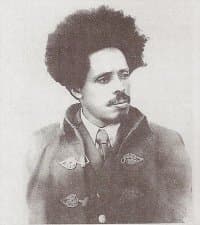
Abebe Aregai
General · Modern
58.2Total
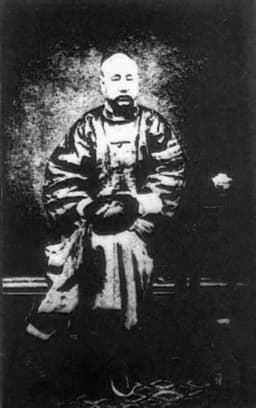
Sengge Rinchen
General · Modern
56.9Total
Basic Information
Born
1903
1811
Died
1960
1865
Era
Modern
Modern
Nationality
Ethiopia
China
Occupation
General
General
Civilization
Other
Eastern
Score Comparison
Military (10%)
70.0
70.0
Political (20%)
53.8
43.7
Influence (20%)
62.0
55.0
Legacy (20%)
50.0
54.0
Leadership (15%)
62.0
67.0
Strategy (15%)
58.0
60.7
TOTAL
58.2
56.9
Abebe Aregai — Complete Timeline
1936 AD
Led Arbegnoch Resistance against Italian OccupationWar
After the Italian conquest, Abebe Aregai organized and led the Arbegnoch (Patriots) guerrilla resistance in Shewa. His forces harassed Italian supply lines and conducted hit-and-run attacks for five years.
ResistanceGuerrilla WarfareItalian Occupation
Impact: regionalconstructive
1957 AD
Appointed Prime Minister of EthiopiaPolitical Action◆ Major
Emperor Haile Selassie appointed Abebe Aregai as Prime Minister of Ethiopia. He served until his death in 1960, overseeing post-war reconstruction and modernization efforts.
Prime MinisterGovernmentReconstruction
Impact: nationalconstructive
1960 AD
Killed during 1960 Coup AttemptPolitical Action◆ Major
Abebe Aregai was assassinated during an attempted coup d'
CoupAssassinationEthiopia
Impact: nationaltragic
Sengge Rinchen — Complete Timeline
1859 AD
Battle of Dagu FortsWar◆ Major
Sengge Rinchen commanded Qing forces defending the Dagu Forts against a British and French naval attack. His forces repelled the assault, sinking several enemy ships and inflicting heavy casualties, a rare Qing victory in the Second Opium War.
Second Opium WarBattleVictory
Impact: regional
1860 AD
Battle of PalikaoWar◆ Major
Sengge Rinchen commanded Qing cavalry at the Battle of Palikao against Anglo-French forces. His forces were decisively defeated by superior firepower, leading to the fall of Beijing and the burning of the Old Summer Palace.
Second Opium WarBattleDefeat
Impact: regionaltragic
1863 AD
Suppression of the Nian RebellionWar◆ Major
Sengge Rinchen led Qing forces against the Nian rebels in northern China. He achieved several victories but was ultimately killed in battle against the Nian in 1865, marking a turning point in the rebellion.
Nian RebellionCampaignDeath
Impact: regionaltragic
Expert Analysis
Abebe Aregai vs Sengge Rinchen
# The General Who Defended Two Empires
In the summer of 1860, a Mongol prince mounted his horse before the walls of Beijing, his cavalry the last line between the Forbidden City and an advancing Anglo-French army. Ninety-six years later, in the mountains of Shewa, an Ethiopian guerrilla leader slipped through Italian patrols, his rifle wrapped in rags, his men surviving on wild roots. Both men fought to preserve ancient empires against modern invaders. Both faced impossible odds. But their paths diverged in ways that reveal the deepest forces shaping history: the nature of the enemy, the character of the ruler they served, and the terrible arithmetic of timing.
Origins
Sengge Rinchen was born in 1811 into the Mongol aristocracy of Inner Mongolia, a world where horsemanship was as natural as breathing. The Qing Dynasty had ruled China for nearly two centuries by then, and the Mongols were its indispensable military caste—loyal, fierce, and increasingly outdated. Sengge Rinchen learned to ride before he could walk, and his early career followed the traditional path of Mongol nobility: command of banners, suppression of local rebellions, steady promotion through a system that rewarded loyalty over innovation.
Abebe Aregai came of age in a different kind of empire. Born in 1903, he grew up in the court of Menelik II, the Ethiopian emperor who had humiliated Italy at Adwa in 1896. Ethiopia was the only African nation to have defeated a European colonial power in pitched battle, and that victory had forged a national identity of fierce independence. Abebe Aregai absorbed this legacy as a young soldier in the Imperial Bodyguard, learning the arts of command in a highland kingdom that had never been conquered.
Rise to Power
Sengge Rinchen’s ascent came through war. The Taiping Rebellion, which erupted in 1850, was the bloodiest conflict of the nineteenth century, and the Qing needed every general they could find. Sengge Rinchen distinguished himself in the northern campaigns, driving rebel armies back with disciplined cavalry charges that seemed to belong to an earlier age. By 1859, he commanded the defense of the Dagu Forts at the mouth of the Hai River, the gateway to Beijing.
Abebe Aregai’s rise was slower and more personal. When Mussolini’s Italy invaded Ethiopia in 1935, Abebe Aregai was a mid-ranking officer. After the emperor fled into exile in 1936, he made a choice that defined his life: he stayed. While others surrendered or collaborated, he retreated into the mountains of Shewa and began recruiting. Within months, he commanded thousands of Arbegnoch—Patriots—who harassed Italian supply lines, ambushed patrols, and kept the flame of resistance alive.
Leadership & Governance
Here the two generals diverged most sharply. Sengge Rinchen was a conventional commander in an unconventional crisis. His military strategy relied on massed cavalry charges and fixed defensive positions—the tactics that had made Mongol armies legendary but were now obsolete against rifled muskets and naval artillery. At the Dagu Forts in 1859, he achieved a rare victory, repelling the British and French fleet with accurate cannon fire and shore batteries. It was a triumph of courage and preparation, but it bought only a year. In 1860, at the Battle of Palikao, his cavalry charged into volley fire from modern rifles and were cut down in minutes. Sengge Rinchen watched his world collapse on that field.
Abebe Aregai understood that he could not fight the Italians on their terms. He mastered guerrilla warfare—hit-and-run attacks, night raids, the use of terrain to neutralize superior firepower. His political acumen was equally sharp. He maintained discipline among his fighters, negotiated with local chiefs, and built a shadow administration that kept the resistance alive for five years. When Emperor Haile Selassie returned in 1941, Abebe Aregai emerged from the mountains with an intact fighting force, his reputation secured.
Triumph & Tragedy
Sengge Rinchen’s greatest moment was the defense of the Dagu Forts in 1859—a victory that briefly restored Qing prestige and proved that Chinese forces could defeat Western arms. But his tragedy was that this victory was meaningless. The British and French returned with overwhelming force in 1860, burned the Summer Palace, and forced the emperor to flee. Sengge Rinchen spent his final years fighting the Nian Rebellion, another peasant uprising that drained Qing resources. In 1865, he was killed in battle against the Nian, his body lost, his dynasty crumbling.
Abebe Aregai’s triumph was survival itself. He kept the Ethiopian resistance alive when all seemed lost, and he lived to see the Italians defeated. His tragedy came later, in peacetime. Appointed Prime Minister in 1957, he governed a nation struggling to modernize while preserving its ancient monarchy. In 1960, during a coup attempt by the Imperial Bodyguard—the very institution he had once served—he was assassinated while trying to negotiate. The empire he had defended against foreign invaders was now threatened from within.
Character & Destiny
Sengge Rinchen was a man of the old world. His courage was absolute, his loyalty unquestioning, but he could not adapt. He fought the British the way Genghis Khan would have fought them, and he died the way a Mongol prince should die—in the saddle, against overwhelming odds. His character was his destiny: a noble warrior in an age that no longer needed noble warriors.
Abebe Aregai was more modern in spirit. He combined military courage with political flexibility, understanding that survival required innovation. His guerrilla war was a prototype for the anti-colonial struggles that would sweep Africa in the decades after his death. But his assassination revealed the limits of his vision: he had defended the old Ethiopia, not the new one that was struggling to be born.
Legacy
Sengge Rinchen is remembered in China as a tragic hero, a symbol of resistance against foreign aggression. His defeat at Palikao is taught as a lesson in the dangers of military conservatism. In Mongolia, he is honored as a national figure, one of the last great Mongol commanders to serve the Qing.
Abebe Aregai’s legacy is more complex. In Ethiopia, he is revered as a patriot who kept the flag flying during the dark years of occupation. His name adorns streets and squares, and schoolchildren learn his exploits. But his death at the hands of fellow Ethiopians reminds us that the struggle for freedom does not end with the departure of the foreigner.
Conclusion
Two generals, two empires, two ways of fighting the same losing battle. Sengge Rinchen charged into the future with the weapons of the past and was destroyed. Abebe Aregai hid in the mountains, learned to fight a new kind of war, and survived—only to be killed by his own people. Their stories suggest that history rewards adaptability but punishes those who outlive their usefulness. The Mongol prince and the Ethiopian patriot both gave everything for their empires, but empires, as they learned, rarely return the favor.
Rankings
🥇
Abebe AregaiLeader
Mil: 70.0Pol: 53.8Inf: 62.0
58.2
🥈
Sengge Rinchen
Mil: 70.0Pol: 43.7Inf: 55.0
56.9
+1.3 behind
How This Comparison Works
Algorithm
Each figure is scored on 6 dimensions (0—100 scale) based on structured historical data: Military (10%), Political (20%), Influence (20%), Legacy (20%), Leadership (15%), Strategy (15%). The weighted total produces the final ranking.
Data Sources
Scores are computed from structured sub-indicators in the database. Scale factors adjust for era (Ancient ×0.85, Modern ×1.0) and civilization size (Eastern ×1.05, Other ×0.80) to account for differences in population and military scale.
Maximum 3 Figures
Comparisons are limited to 2—3 figures to ensure readability and statistical meaningfulness.
Error Margins
±5 points per dimension — Sub-scores are derived from historical records with inherent uncertainty. Two figures within 5 points on a dimension should be considered roughly equivalent in that area.
Total Score Accuracy
±3 points overall — The weighted combination of 6 dimensions produces a total score with approximately ±3 points of uncertainty. Differences of less than 3 points are not statistically significant— the figures are effectively tied.
Known Limitations
- Historical records are incomplete and uneven across civilizations
- Figures from oral-tradition societies may be underrepresented
- Occupation labels can misclassify multi-role figures
- Scores measure capability and impact, not moral character
- Quantitative scoring is a comparison tool, not absolute truth
Capability Radar
Military (10%) — Battles & Warfare
Battles
65
75
Win Rate
60
60
Expansion
40
20
Political (20%) — Governance & Reform
Reform
45
20
Diplomacy
60
50
Economy
40
20
Influence (20%) — Cultural & Global Reach
Cultural
45
40
Global
35
35
Legacy (20%) — Historical Impact
Historical
55
55
Longevity
40
30
Leadership (15%) — Power & Stability
Tenure
55
40
Stability
50
30
Strategy (15%) — Tactics & Innovation
Strategy
75
70
Tactics
70
80
Reform
50
30
Similar Comparisons
Comments & Discussion
HorsemanOfDoom6/16/2026
Sengge Rinchen’s cavalry was a tactical relic by 1860—charging breech-loading Enfields at Baliqiao was suicide, not heroism. The Mongols lost 2,000 men in two hours. Abebe Aregai at least adapted: his *shifta* raids shredded Italian supply lines with modern rifles and local intel. One prince rode into the 19th century; the other guerrilla fought in the 20th. The better general ditched the horse and won.
历史拆台王6/16/2026
吹什么“古老帝国守护者”?Sengge Rinchen被英法联军一顿揍,死了几千蒙古骑兵,连咸丰皇帝都跑路了。Abebe Aregai好歹跟意大利人耗了五年,最终还回亚的斯亚贝巴。你查查伤亡比:意军+仆从军死了九千多,埃塞游击队损失不到一万。Sengge那叫送人头,Abebe这叫游击典范。别给失败者贴金了。
EmpireSkeptic6/16/2026
Let’s talk about those “imperial masters” they served. Sengge Rinchen’s Qing was a rotting corpse, opium-addicted and peasant-rebel-ridden; even if he’d won at Baliqiao, the Taiping were at the gates. Abebe Aregai fought for Haile Selassie, a modernizer who actually unified Ethiopia post-occupation. One prince defended a dynasty that collapsed 51 years later anyway; the other helped rebuild his nation. Outcome matters—and Abebe’s legacy actually outlasted his emperor’s exile.
逍遥史官6/16/2026
你们忽略了一个核心差异:敌人模式。Sengge面对的是工业化的英法联军——电报、后装枪、铁路后勤。Abebe的意大利人还在用1890年代的战术,连无线电都经常断。Sengge的蒙古骑兵碰上21世纪武器的雏形,Abebe的游击队在19世纪殖民军的盲区里穿行。这不是能力问题,是时间窗口。Sengge生错了十年,Abebe生对了三年。
AuthenticityCritic6/16/2026
Both are romanticized as “last defenders,” but let’s be real: Sengge Rinchen’s stand was a staged spectacle for Western historians—he lost decisively, then got mythologized. Abebe Aregai’s resistance was real, grinding, and unglamorous. Sengge has a statue in Tongzhou; Abebe has a guerrilla legacy that shaped modern Ethiopian doctrine. I’ll take the lean, hungry rebel over the polished cavalry prince.