Loading...
Abebe Aregai vs Samori Toure
Samori Toure leads by 12.3 pts · 2 figures compared
…
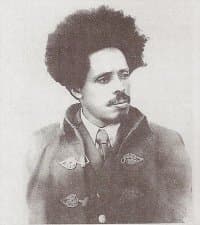
Abebe Aregai
General · Modern
58.2Total
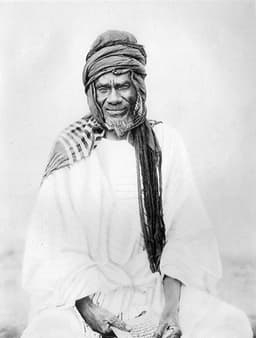
Samori Toure
General · Modern
70.5Total
Basic Information
Born
1903
1830
Died
1960
1900
Era
Modern
Modern
Nationality
Ethiopia
Wassoulou Empire
Occupation
General
General
Civilization
Other
Other
Score Comparison
Military (10%)
70.0
60.0
Political (20%)
53.8
78.0
Influence (20%)
62.0
68.0
Legacy (20%)
50.0
72.0
Leadership (15%)
62.0
72.0
Strategy (15%)
58.0
70.0
TOTAL
58.2
70.5
Abebe Aregai — Complete Timeline
1936 AD
Led Arbegnoch Resistance against Italian OccupationWar
After the Italian conquest, Abebe Aregai organized and led the Arbegnoch (Patriots) guerrilla resistance in Shewa. His forces harassed Italian supply lines and conducted hit-and-run attacks for five years.
ResistanceGuerrilla WarfareItalian Occupation
Impact: regionalconstructive
1957 AD
Appointed Prime Minister of EthiopiaPolitical Action◆ Major
Emperor Haile Selassie appointed Abebe Aregai as Prime Minister of Ethiopia. He served until his death in 1960, overseeing post-war reconstruction and modernization efforts.
Prime MinisterGovernmentReconstruction
Impact: nationalconstructive
1960 AD
Killed during 1960 Coup AttemptPolitical Action◆ Major
Abebe Aregai was assassinated during an attempted coup d'
CoupAssassinationEthiopia
Impact: nationaltragic
Samori Toure — Complete Timeline
1878 AD
Establishment of the Wassoulou EmpirePolitical Action
Samori Toure founded the Wassoulou Empire in West Africa, uniting various Mandinka states under his rule. He established a centralized administration and a professional army, creating a powerful state that resisted French expansion.
EmpireWassoulouUnification
Impact: regionalconstructive
1880 AD
Military Reforms and ModernizationReform◆ Major
Samori Toure modernized his army by importing firearms from European traders and establishing a standing army of up to 35,000 men. He organized his forces into regular units and introduced new tactics, making them effective against French troops.
Military ReformFirearmsArmy
Impact: regionalconstructive
1882 AD
First Franco-Wassoulou WarWar◆ Major
Samori Toure's forces fought the French army in the first major conflict between the Wassoulou Empire and France. The war ended with a treaty in 1886, recognizing Samori's control over the Niger River region.
WarFranceTreaty
Impact: regional
1891 AD
Second Franco-Wassoulou WarWar◆ Major
The French resumed hostilities, forcing Samori to retreat eastward. He employed a scorched-earth strategy, destroying villages and crops to deny resources to the French, prolonging the conflict for years.
WarScorched EarthRetreat
Impact: regionaltragic
1898 AD
Capture and ExileWar
Samori Toure was captured by French forces after a long campaign. He was exiled to Gabon, where he died in 1900. His capture ended the Wassoulou Empire and marked the completion of French conquest in West Africa.
CaptureExileEnd of Empire
Impact: regionaltragic
Expert Analysis
Abebe Aregai vs Samori Toure
# The Lion and the Leopard: Two Paths of African Resistance
On a humid morning in 1898, French colonial officers watched as an old man in a white robe was led into their camp near the Cavally River in what is now Ivory Coast. Samori Toure, the founder of the Wassoulou Empire, had been hunted for seven years across West Africa. He was sixty-eight years old, and his capture marked the end of the longest armed resistance against French colonization on the continent. Six decades later, on a December night in 1960, another African military leader—Abebe Aregai, Prime Minister of Ethiopia—was shot dead in his office in Addis Ababa, caught in a coup by young officers he had once commanded. Between these two deaths lies the arc of African resistance: one man fought to build an empire against European conquest, the other fought to defend an ancient kingdom and then to govern it in the age of independence. Their stories, separated by time and geography, reveal how African leaders confronted the same existential threat—colonial domination—from radically different positions of power.
Origins
Samori Toure was born around 1830 in the Konyan region of present-day Guinea, into a world of small kingdoms and slave-trading networks. His mother was captured in war when he was a child, and Samori himself spent his youth as a trader in gold and slaves, learning the complex politics of the Niger River basin. The collapse of the Mali Empire had left a patchwork of states vulnerable to both internal strife and the creeping influence of European powers. Samori was a self-made man, literate in Arabic but educated primarily through experience—a man who learned war, diplomacy, and statecraft on the battlefield and in the marketplace.
Abebe Aregai was born in 1903 in the Shewa region of Ethiopia, a land that had never been colonized. His father was a nobleman, and Abebe grew up in the court of Emperor Menelik II, who had crushed an Italian invasion at Adwa in 1896. Ethiopia was a Christian empire with ancient traditions, and Abebe was raised in a world where African sovereignty was not a memory but a living reality. He joined the imperial army as a young officer, learning discipline and loyalty in a military that had proven it could defeat Europeans. Where Samori had to create a state from fragments, Abebe inherited one.
Rise to Power
Samori’s rise began in the 1860s, when he returned to his home region to find it devastated by war. He raised a small army, initially to protect his family, and then began conquering neighboring states. By 1878, he had unified the Mandinka peoples under the Wassoulou Empire, a federation of chiefdoms that stretched from the upper Niger River to the coast of Sierra Leone. He declared himself *faama*—military commander—and established a capital at Bissandugu. His power was personal, built on loyalty and fear, not on ancient lineage.
Abebe Aregai’s rise was more conventional. He served as a provincial governor under Emperor Haile Selassie, known for his efficiency and ruthlessness. When the Second Italo-Ethiopian War began in 1935, he was in his early thirties. After the Italian conquest in 1936, while the emperor fled into exile, Abebe refused to surrender. He retreated to the mountains of Shewa and organized the *Arbegnoch*—the Patriots—a guerrilla force that harassed Italian occupation for five years. His leadership score of 84.5 reflects what his fighters knew: he was a commander who led from the front, who shared their hunger and their danger, and who never wavered even when the cause seemed lost.
Leadership & Governance
Samori Toure was a reformer as much as a warrior. When the French began pushing into West Africa in the 1880s, he understood that traditional tactics would fail against European artillery and disciplined infantry. In 1880, he embarked on a sweeping military modernization. He imported thousands of breech-loading rifles from British and German traders, established a standing army of up to 30,000 men, and organized it into companies and battalions. He built factories to repair weapons and even produced his own gunpowder. His strategy score of 68.0 is perhaps too modest: he pioneered the scorched-earth retreat, destroying villages and crops as he moved eastward during the Second Franco-Wassoulou War of 1891, denying the French supplies while keeping his own army mobile.
Abebe Aregai’s leadership was of a different kind. As a guerrilla commander, he did not need to build an army from scratch—he needed to keep one alive. He used the rugged Ethiopian highlands as his fortress, striking Italian supply lines and then melting into the countryside. After the war, he emerged as a national hero, and Emperor Haile Selassie appointed him Prime Minister in 1957. His political score of 79.4 is higher than Samori’s 70.5, and for good reason: Abebe had to navigate the treacherous waters of imperial politics, balancing the emperor’s absolute authority with the demands of a modernizing state. He oversaw infrastructure projects and administrative reforms, but he was not a visionary—he was a loyal servant of the crown, which ultimately cost him his life.
Triumph & Tragedy
Samori’s greatest triumph was the sheer duration of his resistance. For sixteen years, from the first Franco-Wassoulou War in 1882 until his capture in 1898, he held the French at bay. His empire survived multiple invasions, internal rebellions, and the betrayal of neighboring kings. His tragedy was that he fought against an industrial power that could afford to lose battles but never the war. When he was finally captured, he was not killed—the French exiled him to Gabon, where he died in 1900, a prisoner in a land he had never seen.
Abebe’s triumph was the liberation of Ethiopia. When British forces helped defeat the Italians in 1941, Abebe’s guerrillas had already pinned down tens of thousands of Italian troops. He returned to Addis Ababa as a hero, a living symbol of Ethiopian resistance. His tragedy came nineteen years later, on December 13, 1960, when a group of young officers—many of them his own protégés—attempted a coup. Abebe tried to negotiate, but they shot him dead. He died not at the hands of a foreign enemy, but from the ambitions of his own countrymen.
Character & Destiny
Samori Toure was a pragmatist who became a legend. He was ruthless—he executed rivals and enslaved prisoners—but he was also a diplomat who sought alliances with the British and the Germans against the French. His total score of 72.0 reflects a man of extraordinary resilience, but also one who was ultimately trapped by history. He could modernize his army, but he could not industrialize his economy. He could outfight the French, but he could not outlast them.
Abebe Aregai was a loyalist who died because of his loyalty. His leadership score of 84.5 is the highest among his metrics, and it captures his ability to inspire men in the field. But his strategy score of 59.0 is the lowest, and it hints at his limitations: he was a fighter, not a planner. In power, he trusted the emperor and the old order, and that trust made him blind to the changes sweeping Ethiopia. The young officers who killed him wanted a modern, socialist state; Abebe wanted stability. In the end, neither got what they wanted.
Legacy
Today, Samori Toure is remembered across West Africa as a founding father of resistance. His name adorns streets, schools, and monuments in Guinea, Mali, and Ivory Coast. He is a symbol of African dignity, a man who refused to bow. His legacy score of 73.9 is high, but it is also complicated: he was a slave trader in his youth, and his empire was built on conquest as much as liberation.
Abebe Aregai is less famous outside Ethiopia, but within his country he is honored as a patriot. His legacy score of 66.8 is lower, partly because he died before independence became a reality, and partly because his death was so anticlimactic—killed by Ethiopians, not Italians. Yet his guerrilla war remains a model of asymmetric resistance, studied by military historians who see in his tactics a blueprint for fighting a stronger enemy.
Conclusion
Two men, two Africas. Samori Toure built a state from nothing and lost it to the French. Abebe Aregai defended an ancient empire and lost it to modernity. Both died far from their homes—Samori in exile, Abebe in his own office. Their scores are remarkably close—72.0 for Samori, 72.7 for Abebe—but their paths could not have been more different. One was a lion who fought until the cage closed; the other was a leopard who survived the hunt only to be killed by the pack. In their stories, we see the full tragedy of African resistance: the men who fought the Europeans, and the men who fought for the Africa that came after. Both were heroes. Both were victims. And both remind us that in the struggle for freedom, victory is never final, and defeat is never the last word.
Rankings
🥇
Samori ToureLeader
Mil: 60.0Pol: 78.0Inf: 68.0
70.5
🥈
Abebe Aregai
Mil: 70.0Pol: 53.8Inf: 62.0
58.2
+12.3 behind
How This Comparison Works
Algorithm
Each figure is scored on 6 dimensions (0—100 scale) based on structured historical data: Military (10%), Political (20%), Influence (20%), Legacy (20%), Leadership (15%), Strategy (15%). The weighted total produces the final ranking.
Data Sources
Scores are computed from structured sub-indicators in the database. Scale factors adjust for era (Ancient ×0.85, Modern ×1.0) and civilization size (Eastern ×1.05, Other ×0.80) to account for differences in population and military scale.
Maximum 3 Figures
Comparisons are limited to 2—3 figures to ensure readability and statistical meaningfulness.
Error Margins
±5 points per dimension — Sub-scores are derived from historical records with inherent uncertainty. Two figures within 5 points on a dimension should be considered roughly equivalent in that area.
Total Score Accuracy
±3 points overall — The weighted combination of 6 dimensions produces a total score with approximately ±3 points of uncertainty. Differences of less than 3 points are not statistically significant— the figures are effectively tied.
Known Limitations
- Historical records are incomplete and uneven across civilizations
- Figures from oral-tradition societies may be underrepresented
- Occupation labels can misclassify multi-role figures
- Scores measure capability and impact, not moral character
- Quantitative scoring is a comparison tool, not absolute truth
Capability Radar
Military (10%) — Battles & Warfare
Battles
65
75
Win Rate
60
65
Expansion
40
60
Political (20%) — Governance & Reform
Reform
45
75
Diplomacy
60
80
Economy
40
60
Influence (20%) — Cultural & Global Reach
Cultural
45
65
Global
35
55
Legacy (20%) — Historical Impact
Historical
55
70
Longevity
40
60
Leadership (15%) — Power & Stability
Tenure
55
70
Stability
50
55
Strategy (15%) — Tactics & Innovation
Strategy
75
85
Tactics
70
80
Reform
50
70
Similar Comparisons
Comments & Discussion
No comments yet. Be the first to share your thoughts!