Loading...
Abebe Aregai vs Ramon Castilla
Ramon Castilla leads by 1.5 pts · 2 figures compared
…
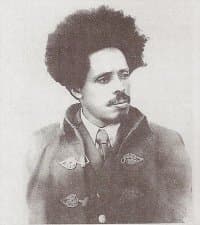
Abebe Aregai
General · Modern
58.2Total
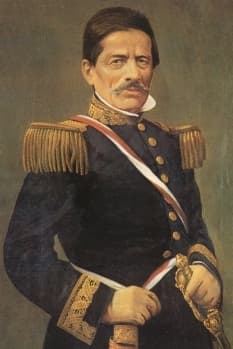
Ramon Castilla
General · Modern
59.7Total
Basic Information
Born
1903
1797
Died
1960
1867
Era
Modern
Modern
Nationality
Ethiopia
Peru
Occupation
General
General
Civilization
Other
Western
Score Comparison
Military (10%)
70.0
40.0
Political (20%)
53.8
72.0
Influence (20%)
62.0
56.7
Legacy (20%)
50.0
52.0
Leadership (15%)
62.0
78.0
Strategy (15%)
58.0
60.0
TOTAL
58.2
59.7
Abebe Aregai — Complete Timeline
1936 AD
Led Arbegnoch Resistance against Italian OccupationWar
After the Italian conquest, Abebe Aregai organized and led the Arbegnoch (Patriots) guerrilla resistance in Shewa. His forces harassed Italian supply lines and conducted hit-and-run attacks for five years.
ResistanceGuerrilla WarfareItalian Occupation
Impact: regionalconstructive
1957 AD
Appointed Prime Minister of EthiopiaPolitical Action◆ Major
Emperor Haile Selassie appointed Abebe Aregai as Prime Minister of Ethiopia. He served until his death in 1960, overseeing post-war reconstruction and modernization efforts.
Prime MinisterGovernmentReconstruction
Impact: nationalconstructive
1960 AD
Killed during 1960 Coup AttemptPolitical Action◆ Major
Abebe Aregai was assassinated during an attempted coup d'
CoupAssassinationEthiopia
Impact: nationaltragic
Ramon Castilla — Complete Timeline
1824 AD
Battle of AyacuchoWar
Castilla fought as a junior officer in the decisive Battle of Ayacucho, which ended Spanish rule in Peru. This victory secured Peruvian independence and marked the end of the Spanish Empire in South America, shaping Castilla's nationalist views.
Peruvian War of IndependenceBattleLiberation
Impact: regional
1845 AD
First Presidency of PeruPolitical Action◆ Major
Castilla was elected President of Peru in 1845, serving until 1851. His first term focused on economic development, including the guano boom, and infrastructure projects such as railroads and ports, modernizing the Peruvian state.
PresidencyEconomic DevelopmentGuano
Impact: nationalconstructive
1854 AD
Abolition of Slavery in PeruReform◆ Major
During his second presidency, Castilla issued a decree abolishing slavery in Peru on December 3, 1854. This reform freed approximately 25,000 slaves and was part of a broader liberal agenda, though it faced opposition from slave-owning elites.
AbolitionSlaveryHuman Rights
Impact: nationalprogressive
Abolition of Indigenous TributeReform◆ Major
Castilla also abolished the indigenous tribute tax in 1854, which had been a burden on native communities since colonial times. This measure aimed to integrate indigenous peoples into the Peruvian state as equal citizens, though its implementation was uneven.
Indigenous RightsTax ReformCitizenship
Impact: nationalprogressive
1855 AD
Second Presidency and Guano BoomPolitical Action◆ Major
Castilla served a second term from 1855 to 1862, during the peak of the guano export boom. He used guano revenues to fund public works, pay off foreign debt, and modernize the military, but also faced criticism for corruption and over-reliance on a single resource.
PresidencyGuanoModernization
Impact: nationalconstructive
1860 AD
Constitutional Reform of 1860Reform◆ Major
Castilla oversaw the adoption of a new constitution in 1860, which established a centralized republic with a strong executive. The constitution remained in effect until 1920 and shaped Peru's political structure, though it limited regional autonomy.
ConstitutionPolitical ReformCentralization
Impact: nationalconstructive
Expert Analysis
Abebe Aregai vs Ramon Castilla
# The General Who Governed: Two Paths from Battlefield to Power
On a December morning in 1854, a Peruvian general signed a decree that would forever change his nation. In Lima, Ramon Castilla put his name to the abolition of slavery, freeing thousands of people who had been in bondage since the Spanish conquest. Six thousand miles away, in the highlands of Ethiopia, another general was fighting a very different war. Abebe Aregai, then a young guerrilla commander, was hiding in the mountains of Shewa, organizing peasants to resist the Italian tanks rolling across his homeland. Both men were soldiers who became statesmen. Both rose from the chaos of war to lead their nations. Yet their stories ended in radically different ways—one in peaceful retirement, the other in a hail of bullets during a coup. What made the difference?
Origins
Ramon Castilla was born in 1797 in Tarapacá, then part of the Viceroyalty of Peru. His father was a Spanish official, his mother a Peruvian creole. He grew up in a world where the Spanish Empire still seemed eternal, but the winds of revolution were already blowing across the Americas. As a young man, he joined the royalist army, fighting for Spain against the independence movements. It was a choice that many Peruvian creoles made—loyalty to the crown, then a slow conversion to the cause of freedom.
Abebe Aregai came into the world in 1903, in a very different empire. Ethiopia had never been colonized, and its ancient monarchy traced its lineage back to the Queen of Sheba. Abebe was born into a noble family from Shewa, the region that provided the empire’s ruling dynasty. His world was one of feudal loyalty, Orthodox Christianity, and a fierce independence that had been tested for centuries against Muslim invaders and European colonizers alike.
The difference in their eras is crucial. Castilla came of age during the collapse of one empire and the birth of a republic. Abebe Aregai came of age during the last great scramble for Africa, when European powers—especially Mussolini’s Italy—sought to finish what they had started in the nineteenth century.
Rise to Power
Castilla’s path to power began on the battlefield. In 1824, he fought as a junior officer at the Battle of Ayacucho, the decisive engagement that ended Spanish rule in South America. The battle was a bloodbath—Spanish loyalists made a last stand in the mountains, and the republicans crushed them. Castilla, who had switched sides to the independence cause, emerged as a capable officer. But he was not a military genius. His score of 58.7 in strategy suggests competence, not brilliance. What he had was political instinct.
Abebe Aregai’s rise was forged in the crucible of occupation. In 1936, after the Italian conquest of Ethiopia, Emperor Haile Selassie fled into exile. Most of the Ethiopian nobility surrendered or collaborated. Abebe did not. He retreated to the mountains of Shewa and organized the Arbegnoch—the Patriots. For five years, he led a guerrilla war that tied down Italian divisions, ambushed convoys, and kept the flame of resistance alive. His strategy score of 59.0 is similar to Castilla’s, but his military score of 74.3 reflects the brutal reality of asymmetric warfare. He was not a great tactician in the conventional sense; he was a master of survival.
The key difference: Castilla rose through the ranks of a victorious army, while Abebe Aregai rose through the ranks of a defeated one. One man’s war ended in triumph; the other’s war ended in occupation and exile.
Leadership & Governance
Castilla’s first presidency, from 1845 to 1851, was a masterclass in using resources wisely. Peru was sitting on a mountain of bird droppings—guano, the finest fertilizer in the world. Europe’s farms were starving for it, and Peru had a monopoly. Castilla nationalized the guano trade, used the revenues to pay off Peru’s foreign debt, build railroads, and modernize the military. He was a reformer, not a revolutionary. When he abolished slavery in 1854, he did it with a decree, not a civil war. He compensated slave owners, freed the enslaved, and moved on.
His second term, from 1855 to 1862, saw the adoption of the 1860 Constitution, which created a centralized republic with a strong executive. Castilla understood that Peru needed order before it could have liberty. He was a political realist, scoring 77.4 in that category—a man who knew when to push and when to compromise.
Abebe Aregai’s governance was different. When he became Prime Minister in 1957, he was not the master of his nation’s destiny. Emperor Haile Selassie was. Abebe was a loyal servant of the crown, tasked with modernizing Ethiopia’s government, managing its bureaucracy, and keeping the peace among the empire’s fractious regions. He was a transitional figure—a guerrilla leader who had become a bureaucrat. His political score of 79.4 suggests he was effective, but he operated within constraints that Castilla never faced.
The difference is stark: Castilla was the supreme authority in Peru, using guano wealth to reshape his nation. Abebe Aregai was a prime minister under an absolute monarch, trying to modernize a feudal empire without challenging the throne.
Triumph & Tragedy
Castilla’s greatest triumph was the abolition of slavery. On December 3, 1854, he signed the decree that freed every slave in Peru. It was not just a moral act—it was a political one. By freeing the slaves, he undercut the power of the old landed aristocracy and created a new class of free citizens loyal to the state. His tragedy was that the guano boom did not last. After he left office, Peru squandered the wealth, fell into debt, and lost a war with Chile. But Castilla himself died peacefully in 1867, a respected elder statesman.
Abebe Aregai’s triumph was surviving the Italian occupation and helping restore the emperor. His tragedy came on December 13, 1960. A faction of the Imperial Bodyguard attempted a coup. They surrounded the palace and demanded the emperor’s abdication. Abebe Aregai, then 57 years old, tried to negotiate. He walked into the palace to reason with the rebels. They shot him dead. He was killed not on a battlefield, but in a corridor, trying to save the very system he had spent his life defending.
Character & Destiny
Castilla was a pragmatist. He served Spain, then fought against it. He was a conservative who enacted liberal reforms. He was a soldier who preferred negotiation. His flexibility allowed him to survive and thrive.
Abebe Aregai was a loyalist. He fought for Ethiopia against the Italians, and he fought for the emperor against the coup plotters. His loyalty was his strength and his weakness. It made him a hero of the resistance, but it also made him a target when the system he served began to crack.
Legacy
Castilla is remembered as Peru’s great modernizer. His face appears on the 5 soles coin. Schools and streets bear his name. He is the man who freed the slaves and built the railroads.
Abebe Aregai is remembered as a patriot, but a complicated one. In Ethiopia, he is honored as a hero of the resistance, but his death during the coup—trying to save a monarchy that would itself be overthrown in 1974—makes him a figure of tragic loyalty. His legacy is overshadowed by the emperor he served.
Conclusion
Two generals, two nations, two centuries. Castilla governed during a boom; Abebe Aregai governed during a long, slow decline. One used wealth to build; the other used loyalty to preserve. Their scores are almost identical—Castilla’s total 72.0, Abebe Aregai’s 72.7—but their outcomes could not be more different. Perhaps the lesson is this: leadership is not just about the man, but about the moment. Castilla had guano and a republic. Abebe Aregai had a monarch and a memory. Both did what they could with what they had.
Rankings
🥇
Ramon CastillaLeader
Mil: 40.0Pol: 72.0Inf: 56.7
59.7
🥈
Abebe Aregai
Mil: 70.0Pol: 53.8Inf: 62.0
58.2
+1.5 behind
How This Comparison Works
Algorithm
Each figure is scored on 6 dimensions (0—100 scale) based on structured historical data: Military (10%), Political (20%), Influence (20%), Legacy (20%), Leadership (15%), Strategy (15%). The weighted total produces the final ranking.
Data Sources
Scores are computed from structured sub-indicators in the database. Scale factors adjust for era (Ancient ×0.85, Modern ×1.0) and civilization size (Eastern ×1.05, Other ×0.80) to account for differences in population and military scale.
Maximum 3 Figures
Comparisons are limited to 2—3 figures to ensure readability and statistical meaningfulness.
Error Margins
±5 points per dimension — Sub-scores are derived from historical records with inherent uncertainty. Two figures within 5 points on a dimension should be considered roughly equivalent in that area.
Total Score Accuracy
±3 points overall — The weighted combination of 6 dimensions produces a total score with approximately ±3 points of uncertainty. Differences of less than 3 points are not statistically significant— the figures are effectively tied.
Known Limitations
- Historical records are incomplete and uneven across civilizations
- Figures from oral-tradition societies may be underrepresented
- Occupation labels can misclassify multi-role figures
- Scores measure capability and impact, not moral character
- Quantitative scoring is a comparison tool, not absolute truth
Capability Radar
Military (10%) — Battles & Warfare
Battles
65
45
Win Rate
60
50
Expansion
40
30
Political (20%) — Governance & Reform
Reform
45
85
Diplomacy
60
70
Economy
40
75
Influence (20%) — Cultural & Global Reach
Cultural
45
55
Global
35
50
Legacy (20%) — Historical Impact
Historical
55
65
Longevity
40
60
Leadership (15%) — Power & Stability
Tenure
55
65
Stability
50
60
Strategy (15%) — Tactics & Innovation
Strategy
75
45
Tactics
70
40
Reform
50
55
Similar Comparisons
Comments & Discussion
No comments yet. Be the first to share your thoughts!