Loading...
Abebe Aregai vs Prem Tinsulanonda
Abebe Aregai leads by 1.0 pts · 2 figures compared
…
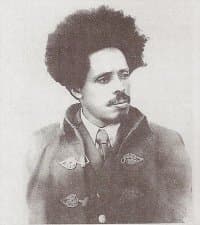
Abebe Aregai
General · Modern
58.2Total
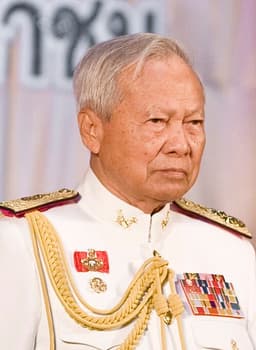
Prem Tinsulanonda
General · Modern
57.2Total
Basic Information
Born
1903
1920
Died
1960
—
Era
Modern
Modern
Nationality
Ethiopia
Thailand
Occupation
General
General
Civilization
Other
Eastern
Score Comparison
Military (10%)
70.0
50.0
Political (20%)
53.8
59.3
Influence (20%)
62.0
54.9
Legacy (20%)
50.0
47.5
Leadership (15%)
62.0
78.0
Strategy (15%)
58.0
60.0
TOTAL
58.2
57.2
Abebe Aregai — Complete Timeline
1936 AD
Led Arbegnoch Resistance against Italian OccupationWar
After the Italian conquest, Abebe Aregai organized and led the Arbegnoch (Patriots) guerrilla resistance in Shewa. His forces harassed Italian supply lines and conducted hit-and-run attacks for five years.
ResistanceGuerrilla WarfareItalian Occupation
Impact: regionalconstructive
1957 AD
Appointed Prime Minister of EthiopiaPolitical Action◆ Major
Emperor Haile Selassie appointed Abebe Aregai as Prime Minister of Ethiopia. He served until his death in 1960, overseeing post-war reconstruction and modernization efforts.
Prime MinisterGovernmentReconstruction
Impact: nationalconstructive
1960 AD
Killed during 1960 Coup AttemptPolitical Action◆ Major
Abebe Aregai was assassinated during an attempted coup d'
CoupAssassinationEthiopia
Impact: nationaltragic
Prem Tinsulanonda — Complete Timeline
1980 AD
Appointed Prime Minister after a coupPolitical Action◆ Major
Prem Tinsulanonda was appointed Prime Minister of Thailand by the military after a coup. He served for over eight years, overseeing a period of political stability and economic growth.
Prime MinisterMilitary RuleStability
Impact: national
1981 AD
Survived a coup attemptPolitical Action◆ Major
Prem survived a coup attempt by military officers loyal to the 'Young Turks' faction. The coup failed due to lack of support and the loyalty of key military units, allowing Prem to remain in power.
Coup AttemptPolitical CrisisMilitary
Impact: national
1988 AD
Resigned as Prime MinisterPolitical Action◆ Major
Prem resigned as Prime Minister after the general election, handing over power to a civilian government led by Chatichai Choonhavan. His resignation marked a rare peaceful transition of power in Thai politics.
ResignationDemocratic TransitionPeaceful
Impact: nationalconstructive
2016 AD
Appointed Regent of ThailandPolitical Action
After the death of King Bhumibol, Prem was appointed Regent of Thailand until the ascension of King Maha Vajiralongkorn. He served as a key figure in the transition of the monarchy.
RegentMonarchyTransition
Impact: national
Expert Analysis
Abebe Aregai vs Prem Tinsulanonda
# The General Who Served and the General Who Fought
On a humid December morning in 1960, General Abebe Aregai climbed into his car in Addis Ababa, unaware that he was driving toward his death. Half a world away and fifty-six years later, another old soldier, Prem Tinsulanonda, would be summoned to a palace in Bangkok to serve as regent of a kingdom in mourning. Both men were generals. Both became prime ministers. But one died in a hail of bullets during a coup he tried to stop, while the other died quietly in his bed at the age of ninety-eight, having shaped Thailand’s modern political order. What made the difference?
Origins
The Ethiopian highlands and the Central Plains of Thailand could not be more different, yet both men came of age in worlds defined by monarchy and military tradition. Abebe Aregai was born in 1903 in the Shewa region, the heartland of Ethiopia’s imperial power. His father was a minor noble, and young Abebe entered the service of Emperor Haile Selassie’s court as a young man. The Ethiopia of his youth was one of the last independent African kingdoms, a bastion of Orthodox Christianity surrounded by European colonies.
Prem Tinsulanonda was born in 1920 in Songkhla, a coastal province in southern Thailand. His father was a schoolteacher, and his mother came from a family of minor officials. Siam—as Thailand was then called—had avoided colonization, but the absolute monarchy had fallen in 1932, replaced by a constitutional system dominated by the military. Prem entered the Chulachomklao Royal Military Academy, absorbing a culture where the army saw itself as the guardian of both nation and throne.
Both men were shaped by their era’s defining conflict. For Abebe, it was the Second Italo-Ethiopian War of 1935–1936. For Prem, it was the Pacific War of 1941–1945. But while Abebe fought a desperate guerrilla campaign against a foreign invader, Prem served in a military that collaborated with Japan. These early experiences forged fundamentally different worldviews: Abebe the patriot warrior, Prem the political survivor.
Rise to Power
Abebe Aregai’s path to power was carved through blood and fire. After Emperor Haile Selassie fled into exile in 1936, Abebe refused to surrender. He retreated into the mountains of Shewa and organized the Arbegnoch—the Patriots—a guerrilla force that harassed Italian garrisons for five years. His tactics were brutal and effective: ambushes, sabotage, and the use of local knowledge to melt away before Italian reprisals. By 1941, when British forces and the Emperor returned, Abebe commanded a network of fighters that controlled large areas of the countryside. This gave him immense political capital in post-war Ethiopia.
Prem Tinsulanonda rose differently. He was a staff officer, not a battlefield commander. After the war, he climbed the ranks of Thailand’s faction-ridden military bureaucracy. His turning point came in 1980, when a coup installed him as prime minister. Unlike Abebe, who earned power through resistance, Prem received it through political maneuvering. He was seen as a neutral figure, acceptable to both the army and the palace.
Leadership & Governance
Here the two generals diverged completely. Abebe Aregai governed as a loyal servant of Emperor Haile Selassie. As prime minister from 1957, he oversaw modernization projects, built roads and schools, and tried to centralize an empire still run by regional nobles. But his political wisdom was limited. He remained a military man who understood loyalty and hierarchy, not the emerging forces of education, urbanization, and nationalism that were stirring among Ethiopia’s young elite.
Prem Tinsulanonda was a master of political navigation. His eight years as prime minister were a tightrope walk between elected politicians, military factions, and the revered King Bhumibol. In 1981, he survived a coup attempt by the “Young Turks,” a faction of ambitious officers. He did not crush them with force; he outmaneuvered them, using royal support and the loyalty of rival military units. Prem understood that in Thailand, power flowed not from the barrel of a gun but from the perception of legitimacy.
Abebe’s strategy score of 59.0 versus Prem’s 65.0 reflects this difference. Abebe was a tactical genius in guerrilla war but a strategic amateur in politics. Prem was the opposite: mediocre in war (33.7 military score) but brilliant in the art of political survival (89.0 leadership score).
Triumph & Tragedy
Abebe’s greatest moment was also his seed of tragedy. His guerrilla resistance made him a national hero, but it also tied his identity to a past war. In 1960, when the Imperial Bodyguard launched a coup, Abebe rushed to the palace to defend the Emperor. He was shot dead, a victim of his own loyalty. The tragedy was not just his death but the irony: the man who had fought Italians for five years was killed by Ethiopians.
Prem’s greatest moment was his resignation. In 1988, after winning an election, he simply stepped down and handed power to a civilian government. In a region where generals cling to power until death or exile, Prem’s voluntary exit was extraordinary. But his tragedy was the same as his triumph: he became so indispensable that Thailand’s political system never fully escaped his shadow. He served as regent in 2016, a kingmaker without a crown, and his influence continued until his death in 2019.
Character & Destiny
Abebe Aregai was a man of iron convictions. He believed in the Emperor, in Ethiopia, and in the righteousness of his cause. This made him a magnificent guerrilla leader but an inflexible politician. He could not adapt to a changing world where young officers no longer revered the old order.
Prem Tinsulanonda was a man of silk. He bent, he waited, he compromised. His personality was built for a political system where open confrontation was fatal. He was patient where Abebe was impulsive, subtle where Abebe was direct. These differences were not accidents of birth but products of their environments. Ethiopia’s politics were raw and violent; Thailand’s were ritualized and hierarchical.
Legacy
Abebe Aregai is remembered as a patriot, a statue in Addis Ababa, a name in history books. But his political legacy is thin. The coup that killed him was a harbinger of the revolutions and famines that would tear Ethiopia apart in the decades after.
Prem Tinsulanonda’s legacy is more complex. He is revered by royalists as a stabilizing force, criticized by democrats as the architect of military interference in politics. His total score of 68.4 versus Abebe’s 72.7 suggests history judges Abebe more generously—perhaps because his failures were heroic, while Prem’s successes were ambiguous.
Conclusion
The difference between these two generals is the difference between resistance and resilience. Abebe Aregai died fighting for a past that was already slipping away. Prem Tinsulanonda lived long enough to see his own compromises become tradition. One was a warrior who never learned to be a politician; the other was a politician who never needed to be a warrior. Their stories remind us that in the arena of history, the skills that bring a man to power are rarely the skills that let him keep it—or survive its loss.
Rankings
🥇
Abebe AregaiLeader
Mil: 70.0Pol: 53.8Inf: 62.0
58.2
🥈
Prem Tinsulanonda
Mil: 50.0Pol: 59.3Inf: 54.9
57.2
+1.0 behind
How This Comparison Works
Algorithm
Each figure is scored on 6 dimensions (0—100 scale) based on structured historical data: Military (10%), Political (20%), Influence (20%), Legacy (20%), Leadership (15%), Strategy (15%). The weighted total produces the final ranking.
Data Sources
Scores are computed from structured sub-indicators in the database. Scale factors adjust for era (Ancient ×0.85, Modern ×1.0) and civilization size (Eastern ×1.05, Other ×0.80) to account for differences in population and military scale.
Maximum 3 Figures
Comparisons are limited to 2—3 figures to ensure readability and statistical meaningfulness.
Error Margins
±5 points per dimension — Sub-scores are derived from historical records with inherent uncertainty. Two figures within 5 points on a dimension should be considered roughly equivalent in that area.
Total Score Accuracy
±3 points overall — The weighted combination of 6 dimensions produces a total score with approximately ±3 points of uncertainty. Differences of less than 3 points are not statistically significant— the figures are effectively tied.
Known Limitations
- Historical records are incomplete and uneven across civilizations
- Figures from oral-tradition societies may be underrepresented
- Occupation labels can misclassify multi-role figures
- Scores measure capability and impact, not moral character
- Quantitative scoring is a comparison tool, not absolute truth
Capability Radar
Military (10%) — Battles & Warfare
Battles
65
20
Win Rate
60
25
Expansion
40
10
Political (20%) — Governance & Reform
Reform
45
55
Diplomacy
60
60
Economy
40
50
Influence (20%) — Cultural & Global Reach
Cultural
45
30
Global
35
30
Legacy (20%) — Historical Impact
Historical
55
40
Longevity
40
35
Leadership (15%) — Power & Stability
Tenure
55
65
Stability
50
60
Strategy (15%) — Tactics & Innovation
Strategy
75
30
Tactics
70
30
Reform
50
35
Similar Comparisons
Comments & Discussion
数据剥离者6/16/2026
吹捧Prem Tinsulanonda的叙事简直是一锅陈年鸡汤——说他活到98岁靠的是“政治智慧”?拜托,他1992年镇压民主抗议后还能全身而退,靠的是王室庇护和军部内斗,根本不是什么高尚谋略。Abebe Aregai死在政变里,恰恰说明他太相信制度了:1960年那场 coup 只持续一天,但他挡不住21名军校生掌管的坦克。核心数字对比:Prem统治期维持了3年首相任期,Abebe只有3年零4个月,结局却天壤之别。数据不会骗人,权力游戏里善良是自杀。
Thammasat Guardian6/16/2026
Prem’s longevity isn’t some grand strategy—it’s the privilege of a constitutional figurehead who never had to make hard choices. Abebe Aregai actually fought in the Italo-Ethiopian War, led guerrilla resistance after 1936, and rebuilt the Ethiopian army from scratch. Prem? He played golf while generals shot protesters in 1976. By 1992, he was already a retired old man, and his “stabilizing influence” meant letting the military kill dozens of students. Give me Abebe’s dirty fingernails and early
制度解剖师6/16/2026
把Abebe和Prem放在一起比,本身就是偷换概念。Abebe是帝国决策圈的核心人物,1960年他死的时候,埃塞俄比亚议会都是他推行的宪法建立的——这绝不是一个“忠诚的军人”,而是一个塑造制度的强腕政治家。Prem呢?他在1999年修宪后当上枢密院主席,但泰国宪法本质上还是1932年政变后那套军权体系。两位都是旧秩序维护者,但Abebe敢亲手攥紧权力,Prem只想躲在王冠后面念经。我选前者,至少死得像个男人。
Crossbow Scholar6/16/2026
What’s striking is the ideological chasm: Abebe Aregai died defending a feudal monarchy against modernizing rebels, while Prem spent decades propping up a constitutional monarchy that had already
Historian3536/16/2026
Abebe Aregai’s death proves that loyalty to a crumbling monarch won’t save you: he drove straight into the 1960 coup believing his personal bond with Haile Selassie trumped the mutineers’ tanks. But that’s romantic nonsense—by then, the Imperial Guard had already switched sides. Prem, by contrast, outmaneuvered every Thai faction after 1992 by staying above the fray, not charging into it. I’d rather have Prem’s cold patience than Abebe’s sacrificial bravado. Historical lesson: die on your feet i