Loading...
Abebe Aregai vs Plutarco Elias Calles
Plutarco Elias Calles leads by 0.3 pts · 2 figures compared
…
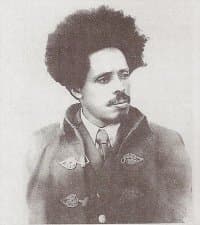
Abebe Aregai
General · Modern
58.2Total
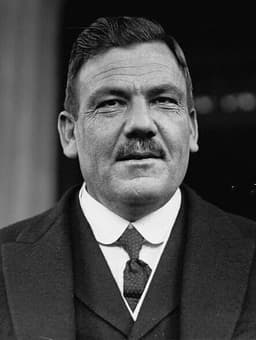
Plutarco Elias Calles
General · Modern
58.5Total
Basic Information
Born
1903
1877
Died
1960
1945
Era
Modern
Modern
Nationality
Ethiopia
Mexico
Occupation
General
General
Civilization
Other
Western
Score Comparison
Military (10%)
70.0
40.0
Political (20%)
53.8
70.3
Influence (20%)
62.0
68.0
Legacy (20%)
50.0
40.0
Leadership (15%)
62.0
78.0
Strategy (15%)
58.0
52.5
TOTAL
58.2
58.5
Abebe Aregai — Complete Timeline
1936 AD
Led Arbegnoch Resistance against Italian OccupationWar
After the Italian conquest, Abebe Aregai organized and led the Arbegnoch (Patriots) guerrilla resistance in Shewa. His forces harassed Italian supply lines and conducted hit-and-run attacks for five years.
ResistanceGuerrilla WarfareItalian Occupation
Impact: regionalconstructive
1957 AD
Appointed Prime Minister of EthiopiaPolitical Action◆ Major
Emperor Haile Selassie appointed Abebe Aregai as Prime Minister of Ethiopia. He served until his death in 1960, overseeing post-war reconstruction and modernization efforts.
Prime MinisterGovernmentReconstruction
Impact: nationalconstructive
1960 AD
Killed during 1960 Coup AttemptPolitical Action◆ Major
Abebe Aregai was assassinated during an attempted coup d'
CoupAssassinationEthiopia
Impact: nationaltragic
Plutarco Elias Calles — Complete Timeline
1915 AD
Governorship of SonoraPolitical Action
Calles served as Governor of Sonora from 1915 to 1919, implementing radical reforms including land redistribution, anti-clerical laws, and labor rights. His governorship established him as a key figure in the Sonoran dynasty and a proponent of revolutionary change.
GovernorshipSonoraReforms
Impact: regionalconstructive
1924 AD
Presidency of MexicoPolitical Action◆ Major
Calles was elected President of Mexico in 1924, serving until 1928. His administration continued revolutionary reforms, including land reform, labor rights, and secularization, but also faced opposition from the Catholic Church and conservative groups.
PresidencyMexican RevolutionReforms
Impact: nationalconstructive
1926 AD
Cristero WarWar◆ Major
Calles enforced anti-clerical laws, including the Calles Law, which restricted the Catholic Church's role in society. This sparked the Cristero War (1926-1929), a violent rebellion by Catholic peasants against the state, resulting in tens of thousands of deaths.
Cristero WarAnti-clericalismReligious Conflict
Impact: nationaldestructive
1928 AD
MaximatoPolitical Action◆ Major
After his presidency, Calles remained the de facto ruler of Mexico during the Maximato (1928-1934), controlling puppet presidents. He continued to influence policy, but his power waned as President L
MaximatoPolitical ControlCárdenas
Impact: national
1929 AD
Founding of the National Revolutionary Party (PNR)Political Action
Calles founded the National Revolutionary Party (PNR) in 1929, which later became the Institutional Revolutionary Party (PRI). This party dominated Mexican politics for over 70 years, institutionalizing the revolution's legacy and centralizing power.
Political PartyPRIInstitutionalization
Impact: nationalconstructive
Expert Analysis
Abebe Aregai vs Plutarco Elias Calles
# The Strongman and the Patriot
In the summer of 1926, two men on opposite sides of the world faced defining moments that would shape their nations for decades. In Mexico City, President Plutarco Elías Calles signed the Law Reforming the Penal Code, soon known as the Calles Law, which stripped the Catholic Church of property rights and banned religious orders. Thousands of miles away in the highlands of Shewa, Ethiopia, a young guerrilla commander named Abebe Aregai was rallying peasants to resist the Italian invaders who had just conquered Addis Ababa. One man wielded state power to crush an institution; the other built a resistance from the ashes of defeat. Both were generals. Both became prime ministers. But their paths—and their legacies—could not have been more different.
Origins
Calles was born in 1877 in Sonora, a northern Mexican state shaped by frontier violence and revolutionary fervor. The son of a schoolteacher, he grew up in poverty and worked as a bartender, mill hand, and teacher before the Mexican Revolution of 1910 offered him a path to power. He was a product of the revolution’s chaotic energy—ambitious, pragmatic, and utterly unsentimental. His Mexico was a land of deep inequality, where the Catholic Church owned vast estates and the army had long been the arbiter of politics.
Abebe Aregai was born in 1903 in the Shewa region of Ethiopia, a heartland of the Solomonic dynasty. His father was a minor noble, and young Abebe entered the imperial army as a teenager, rising through the ranks under Emperor Haile Selassie. Ethiopia in the early twentieth century was one of the few African states never colonized, but it was surrounded by European empires. The Battle of Adwa in 1896, where Ethiopian forces crushed an Italian invasion, was still living memory. Abebe’s generation inherited both pride and vigilance—a sense that independence was earned, not granted.
Rise to Power
Calles rose through revolutionary politics. After serving as a military commander under Álvaro Obregón, he became Governor of Sonora in 1915, where he implemented radical land reforms and cracked down on the Church. His governorship was a laboratory for the policies he would later impose on all of Mexico. In 1924, he won the presidency in a landslide, backed by the revolutionary coalition that had torn down the old order. His path was one of institutional power: he built alliances, crushed rivals, and never looked back.
Abebe Aregai’s rise came through war and resistance. During the Second Italo-Ethiopian War (1935–1937), Emperor Haile Selassie fled into exile, but Abebe refused to surrender. He retreated into the mountains of Shewa and organized the *Arbegnoch*—the Patriots—a guerrilla force that harassed Italian garrisons for five years. His leadership was personal, not political. He knew every village, every pass, every family that could be trusted. By 1941, when British and Ethiopian forces liberated the country, Abebe emerged as a national hero—not a politician, but a symbol of defiance.
Leadership & Governance
Calles governed as a modernizer and secularizer. He built schools, roads, and irrigation systems, but his signature achievement was the creation of the National Revolutionary Party (PNR) in 1929, which would evolve into the Institutional Revolutionary Party (PRI). This party was not a democratic vehicle; it was a machine that co-opted unions, peasants, and the military into a single, authoritarian system. Calles believed that Mexico needed order before freedom, and he was willing to use violence to achieve it. The Cristero War (1926–1929) cost tens of thousands of lives, as peasant rebels fought for the Church against a state that viewed religion as a rival to its own authority.
Abebe Aregai governed as a loyal servant of the emperor. As Prime Minister from 1957, he oversaw Ethiopia’s cautious modernization—building infrastructure, expanding education, and maintaining the feudal structures that sustained Haile Selassie’s rule. He was not a reformer like Calles; he was a stabilizer. His military genius lay in guerrilla warfare, not state-building. In peacetime, he used his prestige to keep the army loyal and the provinces quiet. Where Calles created institutions to perpetuate his power, Abebe created trust to preserve the throne.
Triumph & Tragedy
Calles’s greatest triumph was also his most ambiguous: the founding of the PNR. It gave Mexico six decades of political stability, but at the cost of genuine democracy. His tragedy came after his presidency, during the *Maximato* (1928–1934), when he ruled as the *Jefe Máximo*—the maximum chief—through puppet presidents. His grip on power finally broke in 1935 when President Lázaro Cárdenas, his own protégé, exiled him. The strongman who had crushed the Church and built the party was cast out by the very system he created.
Abebe Aregai’s triumph was the survival of Ethiopian independence. When he rode into Addis Ababa in 1941 alongside the emperor, he had done what few African leaders had managed: he had kept a guerrilla war alive against a modern European army. His tragedy came on December 13, 1960, during a coup attempt by the Imperial Bodyguard. Abebe was summoned to negotiate, but as he tried to calm the situation, he was shot dead. He died trying to defend the emperor who had once fled the country. His loyalty, which had been his greatest strength, became the instrument of his death.
Character & Destiny
Calles was a man of iron will and cold calculation. He once said, “The revolution is not a bed of roses,” and he lived by that creed. He saw enemies everywhere—the Church, the United States, his own allies—and he built a system to neutralize them all. His destiny was to create a machine that outlasted him, but one that also imprisoned Mexico in a one-party state for seventy-one years. He was the architect of a stability that felt like peace but was really control.
Abebe Aregai was a man of quiet courage and deep loyalty. He was called *Abebe the Lion* by his fighters, not for ferocity but for endurance. He did not seek power; power sought him. His destiny was to be the guardian of a tradition, not the founder of a new order. When he died, the old Ethiopia died with him. Within fourteen years, the emperor would be overthrown by a Marxist junta, and the monarchy that Abebe had defended would vanish.
Legacy
Calles’s legacy is the PRI, which ruled Mexico until 2000. He is remembered as the father of modern Mexico—and also as the author of its authoritarian past. Statues of him still stand, but his name is often whispered with ambivalence. He secularized the state, but he also militarized politics. He built schools, but he also banned priests. He is a figure of power, not affection.
Abebe Aregai’s legacy is more personal. He is honored as a hero of the resistance, a symbol of Ethiopian defiance. But his political legacy is fragile. He served a system that collapsed, and his name is less known outside Ethiopia than inside it. He left no party, no doctrine, no lasting institution—only the memory of a man who refused to surrender.
Conclusion
The contrast between Calles and Abebe Aregai is not just a story of two men, but of two worlds. Calles built a state that suppressed religion to forge national unity; Abebe defended a monarchy that relied on religion for its legitimacy. Calles created a party that outlived him; Abebe created a legend that outshone him. One shaped a nation through institutions; the other shaped it through example. In the end, both were generals who became prime ministers, but their deepest difference lies in what they chose to serve: Calles served power, and Abebe served loyalty. History remembers both—but only one with love.
Rankings
🥇
Plutarco Elias CallesLeader
Mil: 40.0Pol: 70.3Inf: 68.0
58.5
🥈
Abebe Aregai
Mil: 70.0Pol: 53.8Inf: 62.0
58.2
+0.3 behind
How This Comparison Works
Algorithm
Each figure is scored on 6 dimensions (0—100 scale) based on structured historical data: Military (10%), Political (20%), Influence (20%), Legacy (20%), Leadership (15%), Strategy (15%). The weighted total produces the final ranking.
Data Sources
Scores are computed from structured sub-indicators in the database. Scale factors adjust for era (Ancient ×0.85, Modern ×1.0) and civilization size (Eastern ×1.05, Other ×0.80) to account for differences in population and military scale.
Maximum 3 Figures
Comparisons are limited to 2—3 figures to ensure readability and statistical meaningfulness.
Error Margins
±5 points per dimension — Sub-scores are derived from historical records with inherent uncertainty. Two figures within 5 points on a dimension should be considered roughly equivalent in that area.
Total Score Accuracy
±3 points overall — The weighted combination of 6 dimensions produces a total score with approximately ±3 points of uncertainty. Differences of less than 3 points are not statistically significant— the figures are effectively tied.
Known Limitations
- Historical records are incomplete and uneven across civilizations
- Figures from oral-tradition societies may be underrepresented
- Occupation labels can misclassify multi-role figures
- Scores measure capability and impact, not moral character
- Quantitative scoring is a comparison tool, not absolute truth
Capability Radar
Military (10%) — Battles & Warfare
Battles
65
45
Win Rate
60
50
Expansion
40
30
Political (20%) — Governance & Reform
Reform
45
85
Diplomacy
60
65
Economy
40
60
Influence (20%) — Cultural & Global Reach
Cultural
45
70
Global
35
60
Legacy (20%) — Historical Impact
Historical
55
75
Longevity
40
70
Leadership (15%) — Power & Stability
Tenure
55
70
Stability
50
55
Strategy (15%) — Tactics & Innovation
Strategy
75
55
Tactics
70
40
Reform
50
60
Similar Comparisons
Comments & Discussion
弹弓老兵6/16/2026
这比较像是在说,卡列斯是铁血西装的模范,而阿贝贝是破布棉袄的英雄。卡列斯用法律打教堂,结果把墨西哥搞成了半个废墟;阿贝贝在埃塞俄比亚高地打游击,居然拖住了意大利好几年。一个是制度化的暴君,一个是野生的斗士。别拿机关枪和投石索比优雅。
DATA_SKEPTIC6/16/2026
Hold up—Abebe’s resistance is romanticized. He was a feudal loyalist fighting for a monarchy that owned slaves. Calles, for all his sins, actually built schools and land reform. Let’s not pretend Abebe was a freedom fighter for the peasants: he was fighting for Emperor Haile Selassie’s divine right. Calles at least tried to break the Church’s economic chokehold. Facts over feels.
炮灰观察家6/16/2026
卡列斯把教产一锅端,确实狠,但也把教和民怨炒成了人肉炸弹。阿贝贝呢?他的“英勇游击”无非是为封建君主打工,割的是农民的头换自己的勋章。他也许能打,但打仗和政治不是一回事。一个靠枪杆子当首相,一个靠阴谋当总统。结果呢?墨西哥乱得更久,埃塞俄比亚死得更多。
OLD_SCHOOL_SCOUT6/16/2026
Let’s be real: Calles is Cincinnatus with a cigar, Abebe is Leonidas without the pass. Calles fought a war of ideas—secularism vs. theocracy—and lost in the long run because the Cristeros made a martyr of the Church. But Abebe fought a war of survival, and he won. The Italians couldn’t hold the highlands because a man with a spear and a plan beat tanks. Legacy speaks louder than laws.
夜市史官6/16/2026
我说句公道话:卡列斯像个粗暴的车间主任,把墨西哥拆了重新焊,焊坏了开关;阿贝贝则像山里的老猎人,知道哪里藏得住命。说到底,卡列斯赢在办公室,输在历史书;阿贝贝输在前线,赢在传说。你要是让我选,我选猎人的弯刀——至少它认得回家的路。
EmpireEdgeView6/16/2026
Calles was a bulldozer with a constitution, but Abebe was a symphony of resilience. Calles crushed the Church to modernize Mexico—sort of a Cromwell without the poetry. Meanwhile, Abebe, outnumbered and outgunned, turned highland guerilla warfare into a masterclass in asymmetric defense. Calles became a strongman; Abebe became a legend. It’s not just strategy—it’s soul.