Loading...
Abebe Aregai vs Olusegun Obasanjo
Olusegun Obasanjo leads by 2.0 pts · 2 figures compared
…
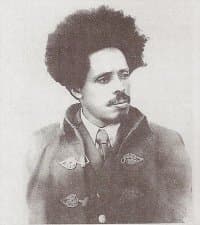
Abebe Aregai
General · Modern
58.2Total
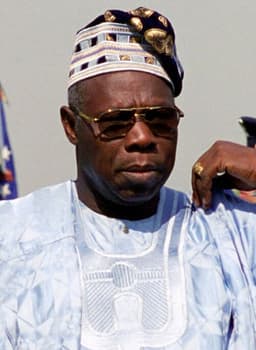
Olusegun Obasanjo
General · Modern
60.2Total
Basic Information
Born
1903
1937
Died
1960
—
Era
Modern
Modern
Nationality
Ethiopia
Nigeria
Occupation
General
General
Civilization
Other
Other
Score Comparison
Military (10%)
70.0
45.0
Political (20%)
53.8
72.0
Influence (20%)
62.0
55.0
Legacy (20%)
50.0
54.0
Leadership (15%)
62.0
78.0
Strategy (15%)
58.0
60.0
TOTAL
58.2
60.2
Abebe Aregai — Complete Timeline
1936 AD
Led Arbegnoch Resistance against Italian OccupationWar
After the Italian conquest, Abebe Aregai organized and led the Arbegnoch (Patriots) guerrilla resistance in Shewa. His forces harassed Italian supply lines and conducted hit-and-run attacks for five years.
ResistanceGuerrilla WarfareItalian Occupation
Impact: regionalconstructive
1957 AD
Appointed Prime Minister of EthiopiaPolitical Action◆ Major
Emperor Haile Selassie appointed Abebe Aregai as Prime Minister of Ethiopia. He served until his death in 1960, overseeing post-war reconstruction and modernization efforts.
Prime MinisterGovernmentReconstruction
Impact: nationalconstructive
1960 AD
Killed during 1960 Coup AttemptPolitical Action◆ Major
Abebe Aregai was assassinated during an attempted coup d'
CoupAssassinationEthiopia
Impact: nationaltragic
Olusegun Obasanjo — Complete Timeline
1976 AD
Military coup that brought Obasanjo to powerPolitical Action
Following the assassination of General Murtala Mohammed in a failed coup, Obasanjo, as Chief of Staff, Supreme Headquarters, succeeded him as head of state. He oversaw the continuation of the transition to civilian rule.
CoupSuccessionMilitary Rule
Impact: national
1979 AD
Handover of power to civilian governmentPolitical Action
Obasanjo voluntarily handed over power to the elected civilian government of Shehu Shagari, marking the first peaceful transfer of power from military to civilian rule in Nigeria. This act established a precedent for democratic transition.
DemocracyTransitionCivilian Rule
Impact: nationalconstructive
1999 AD
Election as President of NigeriaPolitical Action
Obasanjo won the 1999 Nigerian presidential election as the candidate of the People's Democratic Party (PDP). His victory ended 16 years of military rule and began the Fourth Nigerian Republic.
ElectionDemocracyFourth Republic
Impact: nationalprogressive
2005 AD
Debt relief from Paris ClubPolitical Action◆ Major
Obasanjo's government negotiated a debt relief agreement with the Paris Club, resulting in the cancellation of $18 billion of Nigeria's external debt. This freed up resources for domestic spending and was a major economic achievement.
Debt ReliefEconomyNegotiation
Impact: nationalconstructive
2006 AD
Third term bid failurePolitical Action◆ Major
Obasanjo attempted to amend the Nigerian constitution to allow him to run for a third term. The bid was rejected by the National Assembly, marking a significant political defeat and reinforcing term limits.
Third TermConstitutionDefeat
Impact: national
Expert Analysis
Abebe Aregai vs Olusegun Obasanjo
# The General and the Patriot
On a dusty January morning in 1999, Olusegun Obasanjo stood before the Nigerian electorate as a candidate for president, his military uniform long replaced by flowing *agbada* robes. Half a century earlier and thousands of miles away, another general, Abebe Aregai, had emerged from the Ethiopian highlands, his body scarred by guerrilla warfare, to become his nation's prime minister. Both men rose from military command to political power in Africa's post-colonial turbulence. One died a patriot's death, assassinated in a coup; the other lived to become a four-time head of state, reviled and revered in equal measure. Why did their paths diverge so sharply? The answer lies not merely in character, but in the very different eras they navigated.
Origins
Abebe Aregai was born in 1903, in the waning years of Emperor Menelik II's Ethiopia—a kingdom that had famously defeated an Italian invasion at Adwa in 1896. He grew up in a world where military honor was inseparable from imperial loyalty, where the *Arbegnoch* (Patriots) were not rebels but defenders of an ancient civilization. His formative years were shaped by the looming shadow of European colonialism and the fierce independence of Ethiopia's highland warriors.
Olusegun Obasanjo, by contrast, was born in 1937 in southwestern Nigeria, a British colony where traditional Yoruba chieftaincy coexisted with colonial administration. He came of age during the twilight of empire, when young Nigerians were being trained in British military academies to serve in a world army. His generation was not defending an ancient kingdom but building a modern nation from the wreckage of colonial rule.
These origins defined their worldviews. Aregai saw power as something to be wrested from invaders and entrusted to an emperor; Obasanjo saw it as something to be constructed from scratch, with constitutions and elections.
Rise to Power
Aregai's rise was forged in fire. When Mussolini's Italy invaded Ethiopia in 1935, the Emperor Haile Selassie fled into exile, and the nation's conventional army collapsed. But Aregai refused to surrender. From the caves and forests of Shewa, he organized the *Arbegnoch*—a guerrilla force that harassed Italian supply lines, ambushed patrols, and kept the spirit of resistance alive. His military score of 74.3 reflects this raw, tactical brilliance. The turning point came in 1936, when he transformed from a regional commander into a national symbol. By the time British forces helped liberate Ethiopia in 1941, Aregai was a legend.
Obasanjo's rise was quieter, more bureaucratic. He served as a military engineer in the Congo and elsewhere, rising through the ranks of Nigeria's post-independence army. His turning point came in 1976, when a bloody coup assassinated General Murtala Mohammed. As Chief of Staff, Supreme Headquarters, Obasanjo stepped into the vacuum—not as a hero of resistance, but as a manager of crisis. His military score of 33.9 suggests he was no battlefield genius; his strength lay in political navigation.
Leadership & Governance
As Prime Minister from 1957 to 1960, Aregai governed as Haile Selassie's loyal servant. He oversaw modernization projects, but always within the emperor's absolute framework. His leadership score of 84.5 reflects a commander's charisma, but his political score of 79.4 masks a fundamental weakness: he never challenged the feudal system that kept Ethiopia backward. He was a patriot, not a reformer.
Obasanjo's governance was more complex. As military ruler from 1976 to 1979, he did what no African strongman had done before: he voluntarily handed power to a civilian government. The 1979 transition was a masterstroke of political wisdom, earning him a political score of 76.6. But his second turn as civilian president (1999–2007) revealed contradictions. He negotiated $18 billion in debt relief from the Paris Club in 2005—a genuine economic victory. Yet his failed 2006 bid to amend the constitution for a third term exposed a hunger for power that contradicted his earlier legacy.
Triumph & Tragedy
Aregai's greatest triumph was also his tragedy. On December 13, 1960, during a coup attempt by the Imperial Bodyguard, he was called to negotiate. He walked into the palace unarmed, hoping to reason with the rebels. They shot him dead. His death was a patriot's end—brave, futile, and utterly loyal to a system that was already crumbling. He left no political reforms, no lasting institutions, only a legend of resistance.
Obasanjo's triumphs are more ambiguous. The 1979 handover remains his purest achievement. But his tragedy is that he could not repeat it. The third-term bid of 2006 stained his reputation, revealing that even reformers can be seduced by power. He left office in 2007, but his influence endured through protégés and party machinery.
Character & Destiny
Aregai's character was forged in resistance. He was a man of the bush, not the palace—more comfortable with a rifle than a memorandum. His loyalty to Haile Selassie was absolute, and it cost him his life. He could not imagine a world without the emperor, and so he died defending it.
Obasanjo's character was that of a survivor. He adapted from military uniform to civilian suit, from autocrat to democrat, from international pariah to statesman. He was pragmatic to a fault, willing to bend principles for power. His 2006 failure was not a betrayal of his ideals; it was a revelation of his true nature.
Legacy
Aregai is remembered as a national hero in Ethiopia. Streets, schools, and barracks bear his name. But his legacy is static—a monument to courage, not a blueprint for governance. He remains frozen in 1960, a martyr without a movement.
Obasanjo's legacy is contested. He is praised for stabilizing Nigeria after decades of military rule and for securing debt relief. He is condemned for corruption, for the third-term debacle, and for failing to transform Nigeria's oil wealth into development. His total score of 67.8 reflects this ambivalence: a leader of real achievement and real failure.
Conclusion
Standing at the crossroads of their lives, one sees two different Africas. Aregai represents the continent's heroic resistance—the struggle to preserve dignity against foreign domination. Obasanjo represents the continent's painful transition—the struggle to build functioning states from the ruins of colonialism and dictatorship. Aregai died a hero because he never had to govern in peacetime; Obasanjo lived to see his reputation tarnished precisely because he did. In the end, perhaps the most honest tribute is this: Aregai showed how to fight for freedom; Obasanjo showed how hard it is to govern after winning it.
Rankings
🥇
Olusegun ObasanjoLeader
Mil: 45.0Pol: 72.0Inf: 55.0
60.2
🥈
Abebe Aregai
Mil: 70.0Pol: 53.8Inf: 62.0
58.2
+2.0 behind
How This Comparison Works
Algorithm
Each figure is scored on 6 dimensions (0—100 scale) based on structured historical data: Military (10%), Political (20%), Influence (20%), Legacy (20%), Leadership (15%), Strategy (15%). The weighted total produces the final ranking.
Data Sources
Scores are computed from structured sub-indicators in the database. Scale factors adjust for era (Ancient ×0.85, Modern ×1.0) and civilization size (Eastern ×1.05, Other ×0.80) to account for differences in population and military scale.
Maximum 3 Figures
Comparisons are limited to 2—3 figures to ensure readability and statistical meaningfulness.
Error Margins
±5 points per dimension — Sub-scores are derived from historical records with inherent uncertainty. Two figures within 5 points on a dimension should be considered roughly equivalent in that area.
Total Score Accuracy
±3 points overall — The weighted combination of 6 dimensions produces a total score with approximately ±3 points of uncertainty. Differences of less than 3 points are not statistically significant— the figures are effectively tied.
Known Limitations
- Historical records are incomplete and uneven across civilizations
- Figures from oral-tradition societies may be underrepresented
- Occupation labels can misclassify multi-role figures
- Scores measure capability and impact, not moral character
- Quantitative scoring is a comparison tool, not absolute truth
Capability Radar
Military (10%) — Battles & Warfare
Battles
65
25
Win Rate
60
30
Expansion
40
20
Political (20%) — Governance & Reform
Reform
45
65
Diplomacy
60
75
Economy
40
55
Influence (20%) — Cultural & Global Reach
Cultural
45
45
Global
35
60
Legacy (20%) — Historical Impact
Historical
55
55
Longevity
40
50
Leadership (15%) — Power & Stability
Tenure
55
70
Stability
50
60
Strategy (15%) — Tactics & Innovation
Strategy
75
40
Tactics
70
35
Reform
50
50
Similar Comparisons
Comments & Discussion
IronLion666/16/2026
Listen, comparing Aregai to Obasanjo is like comparing a guillotine to a wet noodle. Abebe Aregai was a guerrilla lion who hunted Italians with a sword and a prayer—his body literally carried bullet scars from the five-year occupation. Obasanjo? He inherited a civil war he barely fought in and then pardoned his own coup plotters. One died standing for imperial honor, the other survived by bending with every breeze. Give me Aregai any day. The man didn’t know how to surrender.
太行老兵6/16/2026
作为军事史研究者,我不买账这种时空错位的英雄叙事。阿贝贝·阿雷盖的游击队确实在殖民年代令人敬畏,但别忘了,他在1960年政变中被杀时是帝国首相,而非平民英雄;而奥巴桑乔在1999年把权力和平还给文官政府,这在非洲大陆堪称罕见。阿雷盖死于传统忠诚,奥巴桑乔则活成了制度变革的符号。一个剑客和一个建筑师,目标本不相同。
StatsSherpa6/16/2026
Hold up—let’s talk numbers. Aregai’s Ethiopia had an infant mortality rate around 200 per 1,000 in the 1960s; Obasanjo’s Nigeria dropped it to 89 by 2010. Aregai governed a feudal empire where 90% of people lived off subsistence farming; Obasanjo, despite his flaws, oversaw Nigeria’s debt relief and telecom boom. Context matters. One died with honor intact, sure. But the other died with GDP per capita tripled from what he inherited. We need to count rice bowls, not just battle scars.
金陵逸史6/16/2026
我持古典道德观来看:阿雷盖的一生是悲剧式的清廉英雄——他因拒绝政变者要求流亡皇帝而出逃,最终被杀害,这在儒家褒贬观里是"忠"的极致。而奥巴桑乔,两次坐牢、两次成总统,最后因政治腐败被其继任者指控,晚年功名毁于一旦。一个坚持原则到底,一个灵活转向自保。在人格气象上,阿雷盖如同岳武穆,奥巴桑乔更像冯道——时势所需,但气节有缺。
RevisionistRage6/16/2026
Spare me the "patriot" label for Aregai. He was a feudal enforcer for Haile Selassie’s autocracy, suppressing any hint of land reform, while Obasanjo at least surrendered power voluntarily in 1979—a unique act in African history. Aregai’s guerrilla credentials? Sure, but he then governed a country where 85% of peasants had zero political voice. Obasanjo’s military rule was ugly, but his civilian presidency included economic openings and anti-corruption