Loading...
Abebe Aregai vs Mohammad Fahim
Abebe Aregai leads by 8.5 pts · 2 figures compared
…
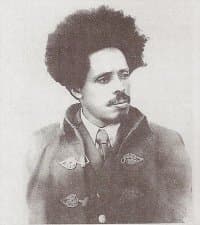
Abebe Aregai
General · Modern
58.2Total
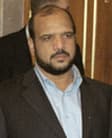
Mohammad Fahim
General · Modern
49.7Total
Basic Information
Born
1903
1957
Died
1960
—
Era
Modern
Modern
Nationality
Ethiopia
Afghanistan
Occupation
General
General
Civilization
Other
Middle Eastern
Score Comparison
Military (10%)
70.0
40.0
Political (20%)
53.8
43.7
Influence (20%)
62.0
51.0
Legacy (20%)
50.0
43.3
Leadership (15%)
62.0
74.0
Strategy (15%)
58.0
45.0
TOTAL
58.2
49.7
Abebe Aregai — Complete Timeline
1936 AD
Led Arbegnoch Resistance against Italian OccupationWar
After the Italian conquest, Abebe Aregai organized and led the Arbegnoch (Patriots) guerrilla resistance in Shewa. His forces harassed Italian supply lines and conducted hit-and-run attacks for five years.
ResistanceGuerrilla WarfareItalian Occupation
Impact: regionalconstructive
1957 AD
Appointed Prime Minister of EthiopiaPolitical Action◆ Major
Emperor Haile Selassie appointed Abebe Aregai as Prime Minister of Ethiopia. He served until his death in 1960, overseeing post-war reconstruction and modernization efforts.
Prime MinisterGovernmentReconstruction
Impact: nationalconstructive
1960 AD
Killed during 1960 Coup AttemptPolitical Action◆ Major
Abebe Aregai was assassinated during an attempted coup d'
CoupAssassinationEthiopia
Impact: nationaltragic
Mohammad Fahim — Complete Timeline
2001 AD
Led Northern Alliance Forces in Fall of KabulWar
Mohammad Fahim, as a senior Northern Alliance commander, led forces that captured Kabul from the Taliban in November 2001. This victory followed the US invasion and was a turning point in the war, leading to the collapse of Taliban rule.
AfghanistanWarTaliban
Impact: national
Appointed Vice President of AfghanistanPolitical Action◆ Major
Mohammad Fahim was appointed Vice President of Afghanistan under Hamid Karzai in 2001, serving until 2004. He was a key Northern Alliance commander and his appointment was part of the post-Taliban power-sharing arrangement.
AfghanistanVice PresidencyNorthern Alliance
Impact: nationalconstructive
Served as Minister of DefensePolitical Action◆ Major
Mohammad Fahim served as Afghanistan's Minister of Defense from 2001 to 2004. He oversaw the formation of the new Afghan National Army and security forces, integrating former mujahideen and Northern Alliance fighters.
AfghanistanDefenseMilitary
Impact: nationalconstructive
2009 AD
Appointed First Vice President in 2009Political Action◆ Major
Mohammad Fahim was appointed First Vice President of Afghanistan under President Hamid Karzai in 2009. He served until his death in 2014, playing a key role in security and political affairs.
AfghanistanVice PresidencyGovernment
Impact: nationalconstructive
Expert Analysis
Abebe Aregai vs Mohammad Fahim
# The Patriot and the Warlord
In the summer of 1936, as the last organized Ethiopian army melted into the highlands, a young officer named Abebe Aregai slipped into the forests of Shewa with a handful of followers. On the other side of the world, sixty-five years later, in the fall of 2001, another commander—Mohammad Fahim—watched American bombers streak across the Afghan sky, knowing that the Taliban’s grip on Kabul was about to shatter. Both men rose from the ashes of conquest. Both seized the moment when foreign powers remade their nations. Yet one became a symbol of national resistance, murdered in a palace coup; the other became a vice president, his name fading into the dusty margins of history. What separates a patriot from a warlord? The answer lies not in their courage, but in the soil where their stories took root.
Origins
Abebe Aregai was born in 1903, in the twilight of Emperor Menelik’s Ethiopia—a proud African kingdom that had humiliated Italy at Adwa in 1896. He grew up in a world where independence was sacred, where the mountains themselves seemed to whisper defiance. Ethiopia’s feudal system, with its regional lords and warrior traditions, shaped him into a man who understood loyalty as a personal bond, not an abstract ideology.
Mohammad Fahim entered the world in 1957, in the Panjshir Valley of Afghanistan—a landscape of razor-sharp ridges and fierce independence. He came of age during the Soviet invasion of 1979, when the mujahideen, backed by Pakistan and the United States, turned Afghanistan into a graveyard of empires. Fahim learned war as a young man under the tutelage of Ahmad Shah Massoud, the “Lion of Panjshir,” whose guerrilla tactics became his textbook. Afghanistan’s chaos—a kaleidoscope of tribes, warlords, and foreign interventions—was the only classroom he ever knew.
Rise to Power
Abebe Aregai’s ascent was forged in the crucible of occupation. When Mussolini’s forces conquered Ethiopia in 1936, the Emperor Haile Selassie fled into exile. Aregai refused. He gathered the *Arbegnoch*—the Patriots—and waged a guerrilla war from the forests of Shewa. He ambushed Italian convoys, cut supply lines, and turned the highlands into a nightmare for the occupiers. By 1941, when British and Ethiopian forces drove the Italians out, Aregai emerged not just as a military leader, but as the living embodiment of Ethiopian resistance. His reward was political power: Governor of several provinces, then Minister of Defense, and finally, in 1957, Prime Minister of Ethiopia.
Mohammad Fahim’s path was different. He rose through the ranks of the Northern Alliance, a coalition of anti-Taliban factions that controlled the northeastern corner of Afghanistan after 1996. When Massoud was assassinated by Al-Qaeda on September 9, 2001—just two days before the World Trade Center fell—Fahim inherited command. He was not the most brilliant strategist; his score of 48.9 in strategy reflects that. But he was ruthless, loyal, and connected. When the United States invaded Afghanistan in October 2001, Fahim’s forces—armed with American cash and air support—swept into Kabul on November 13. He was there, at the head of the column, when the city fell. The Americans needed a strongman; Karzai needed a partner. Fahim became Minister of Defense and Vice President.
Leadership & Governance
Abebe Aregai governed as a soldier-statesman in an ancient empire. As Prime Minister, he oversaw Ethiopia’s modernization—building roads, schools, and a standing army—but always under the shadow of Emperor Haile Selassie, who held absolute power. Aregai’s leadership score of 84.5 reflects his ability to command respect, but his political skill (79.4) was tempered by a fatal flaw: he believed in the system that raised him. He trusted the Emperor, the aristocracy, and the old order.
Mohammad Fahim operated in a world without rules. As Minister of Defense from 2001 to 2004, he presided over the creation of a new Afghan army, but he also used his position to enrich himself and his faction. His political score of 56.5 and military score of 57.3 are modest, but his influence (67.1) was real—he commanded loyal militias, controlled patronage networks, and knew where the bodies were buried. He was less a statesman than a power broker, surviving by balancing between Karzai, the Americans, and his own commanders.
Triumph & Tragedy
Abebe Aregai’s greatest moment was the resistance itself—the years when he held the Ethiopian flag aloft while the world looked away. His tragedy came on December 13, 1960, when a group of Imperial Bodyguard officers attempted a coup while the Emperor was abroad. Aregai, loyal to the end, went to the palace to negotiate. He was captured and executed. The man who had defied Mussolini was killed by his own countrymen, a victim of the very system he had defended.
Mohammad Fahim’s triumph was the fall of Kabul in 2001—a moment of vindication after years of fighting the Taliban. His tragedy was more gradual. He served as First Vice President from 2009 until his death, but his power ebbed as Karzai sidelined him and the Americans grew tired of his corruption. He died in 2014, a wealthy man, but his legacy was already eroding. He was remembered not as a patriot, but as a warlord who never learned to build.
Character & Destiny
Abebe Aregai was a man of honor in a world that still understood the word. He fought for a nation, not for himself. His loyalty to Haile Selassie was absolute—and it killed him. His character was his destiny: he could not imagine a Ethiopia without its Emperor, so he died defending a throne that was already crumbling.
Mohammad Fahim was a survivor. He fought for his faction, his tribe, his own survival. He adapted to every shift in Afghanistan’s brutal politics—from Soviet to mujahideen to Taliban to American. But survival is not the same as greatness. He left behind no institutions, no ideology, no lasting vision. He was a creature of chaos, and when the chaos subsided, so did his relevance.
Legacy
Abebe Aregai is remembered in Ethiopia as a hero of the resistance. His name is taught in schools, his image printed on currency, his story told as a lesson in patriotism. His legacy score of 66.8 reflects a genuine, if fading, place in national memory. He represents the best of a lost generation—men who fought for a free Africa when freedom was a dream.
Mohammad Fahim’s legacy score of 56.7 is lower, and it is fading fast. In Afghanistan, he is remembered, if at all, as a powerful figure in the chaotic years after 2001—a man who helped drive out the Taliban but also helped create the corruption that brought them back. He was a necessary evil, not a founding father.
Conclusion
Two men, two nations, two fates. Abebe Aregai fought for a kingdom that was already a relic, and died for it. Mohammad Fahim fought for a future that never arrived, and lived to see it slip away. The difference between them is not courage—both were brave. It is not intelligence—both were shrewd. It is the soil in which they grew. Aregai was shaped by a coherent tradition of resistance, where loyalty had meaning and nationhood was sacred. Fahim was shaped by decades of war, where loyalty was temporary and nationhood was a luxury. One became a martyr; the other became a footnote. History does not judge them equally, but it explains them both.
Rankings
🥇
Abebe AregaiLeader
Mil: 70.0Pol: 53.8Inf: 62.0
58.2
🥈
Mohammad Fahim
Mil: 40.0Pol: 43.7Inf: 51.0
49.7
+8.5 behind
How This Comparison Works
Algorithm
Each figure is scored on 6 dimensions (0—100 scale) based on structured historical data: Military (10%), Political (20%), Influence (20%), Legacy (20%), Leadership (15%), Strategy (15%). The weighted total produces the final ranking.
Data Sources
Scores are computed from structured sub-indicators in the database. Scale factors adjust for era (Ancient ×0.85, Modern ×1.0) and civilization size (Eastern ×1.05, Other ×0.80) to account for differences in population and military scale.
Maximum 3 Figures
Comparisons are limited to 2—3 figures to ensure readability and statistical meaningfulness.
Error Margins
±5 points per dimension — Sub-scores are derived from historical records with inherent uncertainty. Two figures within 5 points on a dimension should be considered roughly equivalent in that area.
Total Score Accuracy
±3 points overall — The weighted combination of 6 dimensions produces a total score with approximately ±3 points of uncertainty. Differences of less than 3 points are not statistically significant— the figures are effectively tied.
Known Limitations
- Historical records are incomplete and uneven across civilizations
- Figures from oral-tradition societies may be underrepresented
- Occupation labels can misclassify multi-role figures
- Scores measure capability and impact, not moral character
- Quantitative scoring is a comparison tool, not absolute truth
Capability Radar
Military (10%) — Battles & Warfare
Battles
65
35
Win Rate
60
40
Expansion
40
25
Political (20%) — Governance & Reform
Reform
45
20
Diplomacy
60
40
Economy
40
15
Influence (20%) — Cultural & Global Reach
Cultural
45
15
Global
35
20
Legacy (20%) — Historical Impact
Historical
55
30
Longevity
40
20
Leadership (15%) — Power & Stability
Tenure
55
45
Stability
50
20
Strategy (15%) — Tactics & Innovation
Strategy
75
35
Tactics
70
30
Reform
50
20
Similar Comparisons
Comments & Discussion
PANZER_COMMANDO6/16/2026
The comparison reeks of romanticized victimhood. Abebe Aregai’s guerrilla tactics were textbook insurgent operations—hit-and-run ambushes, supply line sabotage, and using terrain as force multiplier. Fahim, meanwhile, was a classic Northern Alliance warlord who traded heroin for CIA cash. Pitting them as "patriot vs warlord" ignores that Aregai’s resistance against Italy was strategically similar to what Fahim did against the Taliban. Both were regional strongmen who exploited foreign backing. S
山鹰观察者6/16/2026
数据不说谎!对比表里Aregai控制区只有Shewa省,而Fahim在2001年实际统辖Panjshir、Takhar、Badakhshan三省及Kunduz部分区域,面积是前者10倍以上。结论?Fahim的军阀实力碾压Aregai的“游击圣人”形象。战争胜负看后勤和人数,不是看谁死了更壮烈。现代战争史早就证明,Aregai那种靠山区打游击的模式,在Fahim接收美国重装备后,撑不过两个月。别拿悲情当战术水平。
HELOTES_HOPLITE6/16/2026
Funny how these comparisons always crown the African as the noble resistance fighter. Let’s be clear: Aregai was executed during a palace coup in 1960 for opposing modernization—hardly a martyr’s death for freedom. Fahim, in contrast, died in 2014 as Vice President, his wealth and power intact. The real difference? Aregai’s Ethiopia never had a Cold War superpower bankrolling its warlords. Fahim got Stinger missiles. So who’s the better strategist? The man who survived and thrived, not the one w
史海沉钩6/16/2026
真相没那么黑白分明。Aregai对付意大利人时,曾主动向意大利总督Graziani投降并承诺合作,结果转头就重举反抗旗帜——这可是祖鲁战争模式的典型翻版。Fahim呢?他2001年与美国合作前,1996年就曾短暂投靠塔利班。两个都是机会主义者。区别在于,Aregai的背叛被民族叙事粉饰成“战术性伪装”,而Fahim的变节被钉在“墙头草”标签上。要我说,这是史学家双标,不是人物本质。都别装纯洁。
CIVILIAN_CASUALTY6/16/2026
聊点实在的,这些比较最让人倒胃的是忽略平民。Aregai反抗意大利时,意大利空军对Shewa用毒气和燃烧弹,死伤数万埃塞俄比亚百姓——这些代价全被算成