Loading...
Abebe Aregai vs Marouf al-Bakhit
Abebe Aregai leads by 16.6 pts · 2 figures compared
…
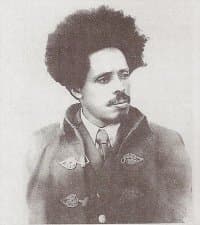
Abebe Aregai
General · Modern
58.2Total
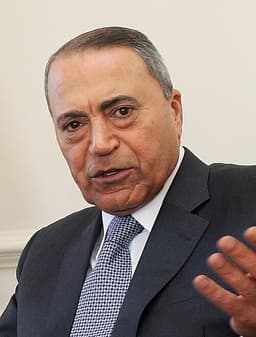
Marouf al-Bakhit
General · Modern
41.6Total
Basic Information
Born
1903
1947
Died
1960
—
Era
Modern
Modern
Nationality
Ethiopia
Jordan
Occupation
General
General
Civilization
Other
Middle Eastern
Score Comparison
Military (10%)
70.0
10.2
Political (20%)
53.8
61.3
Influence (20%)
62.0
48.6
Legacy (20%)
50.0
38.3
Leadership (15%)
62.0
40.0
Strategy (15%)
58.0
36.8
TOTAL
58.2
41.6
Abebe Aregai — Complete Timeline
1936 AD
Led Arbegnoch Resistance against Italian OccupationWar
After the Italian conquest, Abebe Aregai organized and led the Arbegnoch (Patriots) guerrilla resistance in Shewa. His forces harassed Italian supply lines and conducted hit-and-run attacks for five years.
ResistanceGuerrilla WarfareItalian Occupation
Impact: regionalconstructive
1957 AD
Appointed Prime Minister of EthiopiaPolitical Action◆ Major
Emperor Haile Selassie appointed Abebe Aregai as Prime Minister of Ethiopia. He served until his death in 1960, overseeing post-war reconstruction and modernization efforts.
Prime MinisterGovernmentReconstruction
Impact: nationalconstructive
1960 AD
Killed during 1960 Coup AttemptPolitical Action◆ Major
Abebe Aregai was assassinated during an attempted coup d'
CoupAssassinationEthiopia
Impact: nationaltragic
Marouf al-Bakhit — Complete Timeline
2005 AD
Appointed Prime Minister of JordanPolitical Action◆ Major
King Abdullah II appointed Marouf al-Bakhit as Prime Minister of Jordan in November 2005, following the 2005 Amman bombings. Al-Bakhit, a former intelligence chief, was tasked with restoring security and stability.
JordanPrime MinisterAppointment
Impact: national
2007 AD
Resigned as Prime MinisterPolitical Action
Marouf al-Bakhit resigned as Prime Minister of Jordan in November 2007 after parliamentary elections. His resignation followed criticism of economic policies and political reforms.
JordanPrime MinisterResignation
Impact: national
2011 AD
Appointed Prime Minister for Second TermPolitical Action◆ Major
King Abdullah II appointed Marouf al-Bakhit as Prime Minister again in February 2011, during the Arab Spring protests. Al-Bakhit was tasked with implementing political reforms to address public demands.
JordanArab SpringPrime Minister
Impact: national
Resigned as Prime Minister for Second TermPolitical Action
Marouf al-Bakhit resigned as Prime Minister in October 2011, after failing to satisfy protesters' demands for faster political reforms. His resignation marked the end of his second term.
JordanArab SpringResignation
Impact: national
Expert Analysis
Abebe Aregai vs Marouf al-Bakhit
# The General and the Gatekeeper
In the spring of 1936, as Italian armored columns rolled into Addis Ababa and Emperor Haile Selassie fled into exile, a forty-three-year-old cavalry officer named Abebe Aregai slipped into the mountains of Shewa. He carried no title, no official mandate—only a rifle and the conviction that Ethiopia would not die quietly. Half a world away, in a village near Salt, Jordan, a boy named Marouf al-Bakhit was born eleven years later into a different kind of empire, one that had learned to survive not by fighting invaders but by negotiating with them. Their paths would never cross, yet both would rise from military careers to become prime ministers of ancient kingdoms. The question is not who was greater—it is why one became a martyr and the other a footnote.
Origins
Abebe Aregai was born in 1903 into the warrior aristocracy of Shewa, the heartland of Ethiopian imperial power. The Ethiopia of his youth was a rare African kingdom that had never been colonized, a land where the horse and the rifle still defined manhood, and where loyalty to the Emperor was as natural as breathing. The Italian invasion of 1935 shattered that world. For Abebe, resistance was not a choice but an inheritance.
Marouf al-Bakhit entered the world in 1947, just one year after the British mandate over Transjordan ended and the Hashemite Kingdom of Jordan was born. His family were not princes but educators—his father a teacher, his mother a homemaker. Jordan was a young state carved from desert and diplomacy, surrounded by enemies and sustained by subsidies. Survival meant service. Al-Bakhit studied at the University of Jordan, then earned a PhD in political science from the University of Southern California. He joined the army as an officer, but his real training was in intelligence, not combat.
Rise to Power
Abebe Aregai’s rise came through fire. After the Italian conquest, he organized the Arbegnoch—the “Patriots”—into a guerrilla network that harassed Italian supply lines, ambushed patrols, and controlled large swaths of the countryside. His leadership score of 84.5 reflects a man who could inspire starving fighters to endure years of hardship without pay or promise. When the British and Ethiopian forces liberated Addis Ababa in 1941, Abebe emerged from the mountains as a national hero. Emperor Haile Selassie, restored to his throne, could not ignore him. In 1957, the Emperor appointed him Prime Minister.
Al-Bakhit’s ascent was quieter. He rose through the ranks of Jordan’s General Intelligence Directorate, eventually becoming its director. His military score of 19.9 tells the story: he was no warrior. But his political score of 63.0 and leadership score of 77.9 show a man skilled in the arts of bureaucracy and discretion. In November 2005, after al-Qaeda bombed three hotels in Amman, killing sixty people, King Abdullah II appointed al-Bakhit Prime Minister. The message was clear: the intelligence chief would restore order.
Leadership & Governance
Here the contrast sharpens. Abebe Aregai governed as a soldier-statesman in a feudal empire. His premiership from 1957 to 1960 focused on rebuilding institutions after the war, but he remained utterly loyal to the Emperor. He was not a reformer; he was a consolidator. His military habits—decisiveness, hierarchy, personal courage—defined his rule. When the Imperial Bodyguard launched a coup in December 1960, Abebe did not flee or negotiate. He went to the palace to confront the rebels. He was shot dead.
Al-Bakhit governed in a very different Jordan—a constitutional monarchy where the King held real power and the Prime Minister was a manager, not a master. His first term (2005–2007) saw economic reforms and a crackdown on Islamists. His second term, appointed in February 2011 during the Arab Spring, was a desperate attempt to contain protests. Al-Bakhit promised faster political reforms, but the demonstrators wanted more than promises. He resigned in October 2011, having satisfied no one. His legacy score of 50.0 captures that emptiness.
Triumph & Tragedy
Abebe Aregai’s greatest moment was the five-year guerrilla war that kept Ethiopian resistance alive when all seemed lost. His tragedy was that he died defending a regime that would itself be overthrown fourteen years later by a Marxist coup. He gave his life for an Emperor who would die in captivity.
Al-Bakhit’s triumph was stability: Jordan survived the Arab Spring without civil war. His tragedy was that he became a symbol of the status quo—a man appointed to prevent change, not to lead it. He left office not as a martyr but as a caretaker.
Character & Destiny
Abebe Aregai was shaped by the warrior ethos of Shewa: honor, loyalty, and physical courage. He could not imagine survival without resistance. Al-Bakhit was shaped by the intelligence officer’s ethos: discretion, patience, and the belief that problems are managed, not solved. He could not imagine martyrdom for a cause that might not win.
Legacy
Abebe Aregai is remembered as a patriot saint, his name carved into Ethiopian history. Al-Bakhit is remembered, if at all, as a transitional figure in a time of crisis. One died for a king; the other served a king. Both were loyal. But loyalty to a living monarch is not the same as loyalty to a dying nation.
Conclusion
We remember Abebe Aregai because he fought when fighting was hopeless. We forget Marouf al-Bakhit because he managed when management was all that was asked. The difference is not in their talents—both were capable men—but in the nature of the storms they faced. One fought an empire; the other managed a crisis. History honors those who resist, even in defeat, more than those who administer, even in success.
Rankings
🥇
Abebe AregaiLeader
Mil: 70.0Pol: 53.8Inf: 62.0
58.2
🥈
Marouf al-Bakhit
Mil: 10.2Pol: 61.3Inf: 48.6
41.6
+16.6 behind
How This Comparison Works
Algorithm
Each figure is scored on 6 dimensions (0—100 scale) based on structured historical data: Military (10%), Political (20%), Influence (20%), Legacy (20%), Leadership (15%), Strategy (15%). The weighted total produces the final ranking.
Data Sources
Scores are computed from structured sub-indicators in the database. Scale factors adjust for era (Ancient ×0.85, Modern ×1.0) and civilization size (Eastern ×1.05, Other ×0.80) to account for differences in population and military scale.
Maximum 3 Figures
Comparisons are limited to 2—3 figures to ensure readability and statistical meaningfulness.
Error Margins
±5 points per dimension — Sub-scores are derived from historical records with inherent uncertainty. Two figures within 5 points on a dimension should be considered roughly equivalent in that area.
Total Score Accuracy
±3 points overall — The weighted combination of 6 dimensions produces a total score with approximately ±3 points of uncertainty. Differences of less than 3 points are not statistically significant— the figures are effectively tied.
Known Limitations
- Historical records are incomplete and uneven across civilizations
- Figures from oral-tradition societies may be underrepresented
- Occupation labels can misclassify multi-role figures
- Scores measure capability and impact, not moral character
- Quantitative scoring is a comparison tool, not absolute truth
Capability Radar
Military (10%) — Battles & Warfare
Battles
65
5
Win Rate
60
5
Expansion
40
5
Political (20%) — Governance & Reform
Reform
45
30
Diplomacy
60
40
Economy
40
30
Influence (20%) — Cultural & Global Reach
Cultural
45
10
Global
35
10
Legacy (20%) — Historical Impact
Historical
55
10
Longevity
40
10
Leadership (15%) — Power & Stability
Tenure
55
40
Stability
50
35
Strategy (15%) — Tactics & Innovation
Strategy
75
10
Tactics
70
10
Reform
50
10
Similar Comparisons
Comments & Discussion
Black Lion Rides6/16/2026
This comparison romanticizes Abebe while sanitizing Marouf. Abebe was a brilliant guerrilla who kept resistance alive during Italian occupation—that’s real. But Marouf was a security apparatchik who crushed the 2002 protests against the Iraq War and later oversaw the 2011 crackdowns. One fought an invader; the other fought his own people. Context matters, but methods matter more. Abebe died on the battlefield in 1960 coup; Marouf retired comfortably. History remembers who earned their place.