Loading...
Abebe Aregai vs Li Zongren
Li Zongren leads by 0.3 pts · 2 figures compared
…
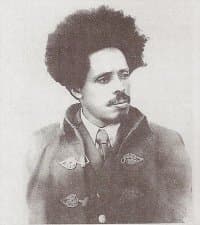
Abebe Aregai
General · Modern
58.2Total
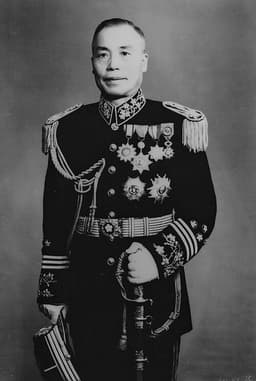
Li Zongren
General · Modern
58.5Total
Basic Information
Born
1903
1890
Died
1960
1969
Era
Modern
Modern
Nationality
Ethiopia
China
Occupation
General
General
Civilization
Other
Eastern
Score Comparison
Military (10%)
70.0
65.0
Political (20%)
53.8
53.8
Influence (20%)
62.0
58.0
Legacy (20%)
50.0
52.0
Leadership (15%)
62.0
72.0
Strategy (15%)
58.0
56.8
TOTAL
58.2
58.5
Abebe Aregai — Complete Timeline
1936 AD
Led Arbegnoch Resistance against Italian OccupationWar
After the Italian conquest, Abebe Aregai organized and led the Arbegnoch (Patriots) guerrilla resistance in Shewa. His forces harassed Italian supply lines and conducted hit-and-run attacks for five years.
ResistanceGuerrilla WarfareItalian Occupation
Impact: regionalconstructive
1957 AD
Appointed Prime Minister of EthiopiaPolitical Action◆ Major
Emperor Haile Selassie appointed Abebe Aregai as Prime Minister of Ethiopia. He served until his death in 1960, overseeing post-war reconstruction and modernization efforts.
Prime MinisterGovernmentReconstruction
Impact: nationalconstructive
1960 AD
Killed during 1960 Coup AttemptPolitical Action◆ Major
Abebe Aregai was assassinated during an attempted coup d'
CoupAssassinationEthiopia
Impact: nationaltragic
Li Zongren — Complete Timeline
1921 AD
Command of the Guangxi ArmyPolitical Action◆ Major
Li Zongren became a commander in the Guangxi Army and helped unify Guangxi province under the New Guangxi Clique. He established a powerful regional base that rivaled other warlords.
Guangxi CliqueMilitary CommandWarlord Era
Impact: regional
1926 AD
Alliance with the Nationalist GovernmentPolitical Action◆ Major
Li Zongren allied the Guangxi Clique with Chiang Kai-shek's Nationalist government during the Northern Expedition. His forces played a key role in defeating warlords and unifying China under KMT rule.
Northern ExpeditionAllianceKMT
Impact: nationalconstructive
1938 AD
Battle of TaierzhuangWar
Li Zongren commanded Chinese forces to a major victory over the Japanese at the Battle of Taierzhuang during the Second Sino-Japanese War. This was the first significant Chinese victory of the war and boosted national morale.
Second Sino-Japanese WarBattleVictory
Impact: nationalconstructive
1949 AD
Acting Presidency of the Republic of ChinaPolitical Action◆ Major
Li Zongren served as Acting President of the Republic of China after Chiang Kai-shek's resignation during the Chinese Civil War. He attempted to negotiate peace with the Communists but failed, leading to the KMT's retreat to Taiwan.
Chinese Civil WarPresidencyKMT
Impact: nationaltragic
Exile to the United StatesPolitical Action
After the Communist victory, Li Zongren fled to the United States, where he lived in exile. He criticized Chiang Kai-shek's leadership and advocated for a reformed KMT, but remained politically marginalized.
ExileChinese Civil WarPolitics
Impact: nationaltragic
Expert Analysis
Abebe Aregai vs Li Zongren
# The General Who Would Be President, and the Patriot Who Would Not
In the spring of 1938, two men stood at the crossroads of their nations’ survival, though they would never meet. On a muddy battlefield in northern China, Li Zongren watched Japanese artillery shells tear through his lines at Taierzhuang, calculating the precise moment to spring his trap. Half a world away, in the rugged highlands of Shewa, Abebe Aregai melted into the mist with his guerrillas, a ghost haunting the Italian occupation. Both were generals. Both would become prime ministers. But their paths—and their endings—could not have been more different. One died in exile, a footnote to a lost cause. The other died in office, a bullet fired by his own countrymen. What drove these two men, born into chaos, to such divergent fates?
Origins
Li Zongren was born in 1890 in Guangxi, a mountainous province in southern China that had been a breeding ground for rebellion since the Taiping uprising. His family were modest landowners, but the world around him was collapsing—the Qing dynasty was rotting, foreign powers carved up ports, and bandits ruled the countryside. Li grew up speaking a dialect few in Beijing understood, and he learned early that power belonged to those who could take it. The military academy gave him discipline; the chaos of warlord politics gave him ambition. He was a pragmatist in a land of idealists, a man who believed that survival came before ideology.
Abebe Aregai was born in 1903 in the Shewa region of Ethiopia, the heartland of the Solomonic dynasty. His world was older, more ordered, yet no less violent. Ethiopia had never been colonized, and its feudal system was intact: nobles, church, and emperor formed a triangle of power that had held for centuries. Abebe was a soldier from a young age, rising through the ranks of Emperor Haile Selassie’s army. He was not a warlord but a servant of the crown, a man whose loyalty was to a throne, not to himself. Where Li saw opportunity in chaos, Abebe saw duty in order.
Rise to Power
Li Zongren’s rise was a masterpiece of local politics. In 1921, at age thirty-one, he took command of the Guangxi Army and began unifying the province under what became known as the New Guangxi Clique. He was not the strongest warlord, but he was the shrewdest. He forged alliances, crushed rivals, and built a machine of tax collection and conscription that made Guangxi a model of warlord efficiency. In 1926, he made the bet of his life: he allied with Chiang Kai-shek’s Nationalist government during the Northern Expedition. It was a marriage of convenience—Chiang needed troops, Li needed legitimacy—and it worked. Li became a general in the National Revolutionary Army, a warlord with a nationalist stamp.
Abebe Aregai’s rise was slower, more orthodox. He was a career officer in the Ethiopian Imperial Army, a force that had not fought a major war in decades. When Italy invaded in 1935, Abebe was a relatively unknown commander. But after the emperor fled into exile in 1936, Abebe did not flee. He stayed in Shewa and organized the Arbegnoch—the Patriots—a guerrilla resistance that fought the Italians with ambushes, poisoned wells, and a network of informants. He was not a brilliant strategist—his score of 59.0 in strategy is the lowest among his peers—but he had something rarer: the trust of the people. The Italians offered bounties for his head; the peasants offered him their huts.
Leadership & Governance
Li Zongren’s greatest moment came in 1938 at the Battle of Taierzhuang. It was the first major Chinese victory of the Second Sino-Japanese War, a brutal street-by-street fight in which Li’s forces encircled and shattered a Japanese division. His strategy score of 83.4 reflects this—he was a master of terrain and timing, a general who could read a battlefield like a map of human weakness. But his political score of 65.0 tells a different story. After Taierzhuang, he could never translate military glory into lasting power. Chiang Kai-shek distrusted him, seeing him as a rival warlord, not a loyal subordinate. Li spent the rest of the war fighting Japanese soldiers with one hand and fending off Chiang’s intrigues with the other.
Abebe Aregai, by contrast, had a political score of 79.4. After the Italians were driven out in 1941, he became the face of the resistance, a hero who could have challenged the emperor. He did not. Instead, he served Haile Selassie as governor, minister, and finally prime minister in 1957. He modernized the bureaucracy, built roads, and kept the feudal lords in check. He was a leader who understood that power came not from the barrel of a gun but from the consent of the throne. His military score of 74.3 is respectable, but his leadership score of 84.5 is the real number—he was a man who could command armies and cabinets alike.
Triumph & Tragedy
Li Zongren’s triumph was Taierzhuang, a victory that gave China hope in its darkest hour. His tragedy came eleven years later, in 1949, when he became acting president of the Republic of China after Chiang Kai-shek resigned—a poisoned chalice. The Communists were winning; the Nationalists were collapsing. Li tried to negotiate peace with Mao Zedong, but it was too late. He fled to the United States, where he lived in exile for sixteen years, criticizing Chiang from afar. He died in 1969 in Beijing, having returned to China under Communist rule, a ghost of a lost war.
Abebe Aregai’s triumph was survival itself—leading a guerrilla campaign that kept Ethiopian resistance alive for five years. His tragedy came in 1960, when the Imperial Bodyguard attempted a coup. Abebe tried to negotiate, to serve as a bridge between the rebels and the emperor. He was shot dead in the process. He died loyal to a throne that had not fully trusted him, a patriot killed by his own countrymen.
Character & Destiny
Li Zongren was a survivor, a man who bent with the wind. He allied with Chiang, then opposed him; he fought the Japanese, then fled from the Communists. His flexibility kept him alive but cost him a legacy. He is remembered as a brilliant general who never found a cause worthy of his talent. Abebe Aregai was a loyalist, a man who stood firm. He could have seized power after the war; he chose service. His rigidity cost him his life but gave him a place in Ethiopian history as a symbol of resistance.
Legacy
Li Zongren’s legacy is mixed. In mainland China, he is a footnote; in Taiwan, a forgotten president. His military victory at Taierzhuang is studied in academies, but his political career is seen as a failure. His total score of 71.8 reflects a life of promise unfulfilled. Abebe Aregai’s legacy is clearer. In Ethiopia, he is a hero of the resistance, a prime minister who modernized without betraying tradition. His score of 72.7 is slightly higher, but the real difference is in how they are remembered: Li as a man who lost his country, Abebe as a man who saved it.
Conclusion
Two generals, two paths. Li Zongren tried to be president and ended up a wanderer. Abebe Aregai refused to be emperor and ended up a martyr. Their lives ask a question that haunts every age: Is it better to seize power or to serve it? Li seized and lost. Abebe served and died. History, in its strange arithmetic, has given Abebe the higher score—not in numbers, but in the hearts of those who remember. Perhaps the lesson is not about success or failure, but about the one thing Li never had and Abebe never lost: a country that believed in him.
Rankings
🥇
Li ZongrenLeader
Mil: 65.0Pol: 53.8Inf: 58.0
58.5
🥈
Abebe Aregai
Mil: 70.0Pol: 53.8Inf: 62.0
58.2
+0.3 behind
How This Comparison Works
Algorithm
Each figure is scored on 6 dimensions (0—100 scale) based on structured historical data: Military (10%), Political (20%), Influence (20%), Legacy (20%), Leadership (15%), Strategy (15%). The weighted total produces the final ranking.
Data Sources
Scores are computed from structured sub-indicators in the database. Scale factors adjust for era (Ancient ×0.85, Modern ×1.0) and civilization size (Eastern ×1.05, Other ×0.80) to account for differences in population and military scale.
Maximum 3 Figures
Comparisons are limited to 2—3 figures to ensure readability and statistical meaningfulness.
Error Margins
±5 points per dimension — Sub-scores are derived from historical records with inherent uncertainty. Two figures within 5 points on a dimension should be considered roughly equivalent in that area.
Total Score Accuracy
±3 points overall — The weighted combination of 6 dimensions produces a total score with approximately ±3 points of uncertainty. Differences of less than 3 points are not statistically significant— the figures are effectively tied.
Known Limitations
- Historical records are incomplete and uneven across civilizations
- Figures from oral-tradition societies may be underrepresented
- Occupation labels can misclassify multi-role figures
- Scores measure capability and impact, not moral character
- Quantitative scoring is a comparison tool, not absolute truth
Capability Radar
Military (10%) — Battles & Warfare
Battles
65
65
Win Rate
60
60
Expansion
40
60
Political (20%) — Governance & Reform
Reform
45
45
Diplomacy
60
60
Economy
40
40
Influence (20%) — Cultural & Global Reach
Cultural
45
40
Global
35
40
Legacy (20%) — Historical Impact
Historical
55
55
Longevity
40
45
Leadership (15%) — Power & Stability
Tenure
55
55
Stability
50
35
Strategy (15%) — Tactics & Innovation
Strategy
75
68
Tactics
70
70
Reform
50
55
Similar Comparisons
Comments & Discussion
No comments yet. Be the first to share your thoughts!