Loading...
Abebe Aregai vs Justo Rufino Barrios
Justo Rufino Barrios leads by 0.4 pts · 2 figures compared
…
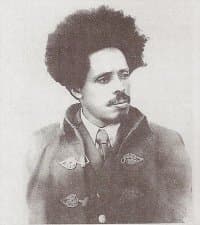
Abebe Aregai
General · Modern
58.2Total
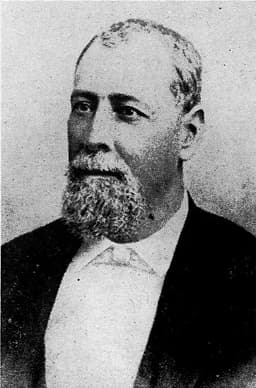
Justo Rufino Barrios
General · Modern
58.6Total
Basic Information
Born
1903
1835
Died
1960
1885
Era
Modern
Modern
Nationality
Ethiopia
Guatemala
Occupation
General
General
Civilization
Other
Western
Score Comparison
Military (10%)
70.0
52.5
Political (20%)
53.8
72.0
Influence (20%)
62.0
60.0
Legacy (20%)
50.0
49.2
Leadership (15%)
62.0
65.0
Strategy (15%)
58.0
55.0
TOTAL
58.2
58.6
Abebe Aregai — Complete Timeline
1936 AD
Led Arbegnoch Resistance against Italian OccupationWar
After the Italian conquest, Abebe Aregai organized and led the Arbegnoch (Patriots) guerrilla resistance in Shewa. His forces harassed Italian supply lines and conducted hit-and-run attacks for five years.
ResistanceGuerrilla WarfareItalian Occupation
Impact: regionalconstructive
1957 AD
Appointed Prime Minister of EthiopiaPolitical Action◆ Major
Emperor Haile Selassie appointed Abebe Aregai as Prime Minister of Ethiopia. He served until his death in 1960, overseeing post-war reconstruction and modernization efforts.
Prime MinisterGovernmentReconstruction
Impact: nationalconstructive
1960 AD
Killed during 1960 Coup AttemptPolitical Action◆ Major
Abebe Aregai was assassinated during an attempted coup d'
CoupAssassinationEthiopia
Impact: nationaltragic
Justo Rufino Barrios — Complete Timeline
1871 AD
Enacted the Liberal Reforms of 1871Reform
Justo Rufino Barrios, after coming to power, implemented sweeping liberal reforms. These included the separation of church and state, confiscation of church lands, establishment of secular education, and promotion of coffee cultivation for export.
GuatemalaLiberal ReformSecularization
Impact: nationalprogressive
1873 AD
Modernized Guatemala's InfrastructureReform◆ Major
Barrios oversaw the construction of roads, telegraph lines, and railways, particularly to support coffee exports. He also promoted immigration and foreign investment, transforming Guatemala's economy.
GuatemalaInfrastructureEconomic Development
Impact: nationalconstructive
1885 AD
Killed at the Battle of ChalchuapaWar
Barrios was killed in battle at Chalchuapa, El Salvador, while leading an invasion to forcibly reunify Central America. His death ended the unification attempt and preserved the sovereignty of the individual Central American states.
Central AmericaBattleDeath
Impact: regionaltragic
Declared the Unification of Central AmericaPolitical Action◆ Major
Barrios unilaterally declared the reunification of the Central American republics by force. He issued a decree proclaiming himself supreme military commander of a unified Central America, leading to war with neighboring states.
Central AmericaUnificationWar
Impact: regionaldestructive
Expert Analysis
Abebe Aregai vs Justo Rufino Barrios
# The General Who Governed: Abebe Aregai and Justo Rufino Barrios
On a dusty battlefield in El Salvador in April 1885, a Guatemalan general lay dead, his dream of a unified Central America shattered with his skull. Seventy-five years later and an ocean away, an Ethiopian prime minister was gunned down in his own capital, caught between a rebellious bodyguard and an emperor he had served for decades. Both men were generals who became heads of government. Both died violently in the prime of their power. But the paths that led them to those ends—and the legacies they left behind—could hardly have been more different.
Origins
Abebe Aregai was born in 1903 into the highlands of Shewa, Ethiopia, a land that had never been colonized. He grew up in a society where feudal loyalty to the emperor was the highest virtue, where honor was measured in courage against foreign invaders, and where the Church and crown were inseparable. His Ethiopia was a proud, ancient kingdom that had defeated an Italian army at Adwa in 1896, but by the 1930s, a new and more modern Italian threat loomed.
Justo Rufino Barrios, born in 1835 in San Lorenzo, Guatemala, came of age in a very different world. Central America had just emerged from Spanish colonial rule and was fragmenting into squabbling republics. Barrios was a *ladino*—of mixed indigenous and European ancestry—in a society rigidly divided by race and class. He grew up watching conservative landowners and Catholic bishops dominate a weak state, and he burned with a Liberal's desire to smash that old order.
The difference in their origins was fundamental: Aregai was defending an ancient civilization; Barrios was trying to build a new one.
Rise to Power
Aregai's rise was forged in fire. In 1936, after Emperor Haile Selassie fled into exile and the Italian army conquered Addis Ababa, Aregai did not surrender. He retreated into the mountains of Shewa and organized the *Arbegnoch*—the Patriots—a guerrilla resistance that made Italian occupation a nightmare. He was not a brilliant tactician; his Strategy score of 59.0 reflects a man who relied more on endurance than maneuver. But his Leadership score of 84.5 tells the real story: he held together a fragmented resistance through sheer force of personality, keeping hope alive when all seemed lost. When the Emperor returned in 1941, Aregai emerged from the hills as a national hero.
Barrios rose differently. He was a coffee planter and a Liberal revolutionary. In 1871, he helped overthrow Guatemala's conservative government, and by 1873, he was president. His path was political from the start—a man who seized power through a coup, not through defending a throne.
Leadership & Governance
As prime minister from 1957, Abebe Aregai governed as the Emperor's loyal servant. His Political score of 79.4 reflects a man who understood that in Ethiopia, power flowed from the throne. He modernized the bureaucracy, built roads, and tried to reform a feudal system without angering the nobility. He was a bridge between the old and the new—a guerrilla leader who now wore a suit and attended cabinet meetings. But he never forgot that he served Haile Selassie, not the other way around.
Barrios was the opposite. With a Political score of 72.0, he was a revolutionary in power. He separated church and state, expropriated monastic lands, built railways and telegraph lines, and promoted coffee exports. He was modernizing Guatemala at gunpoint, crushing conservative opposition and indigenous resistance alike. His reforms were sweeping—but they were imposed, not negotiated.
The key difference: Aregai governed by consensus under a monarch; Barrios governed by decree as a dictator.
Triumph & Tragedy
Aregai's greatest triumph was the resistance itself. For five years, from 1936 to 1941, he kept the Ethiopian flag flying in the mountains. His greatest tragedy came on December 13, 1960, when the Imperial Bodyguard attempted a coup. Aregai, now 57 years old, went to negotiate with the rebels—and was shot dead. He had survived Italian machine guns only to die at the hands of his own countrymen.
Barrios's triumph was the transformation of Guatemala. He turned a backward colony into a modern coffee republic, building infrastructure that lasted for generations. His tragedy was his obsession: the unification of Central America. In 1885, he declared himself the unifier and invaded El Salvador. At the Battle of Chalchuapa, he rode into battle at the head of his troops—and was killed by a bullet. His dream died with him.
Character & Destiny
Aregai was patient, loyal, and pragmatic. He knew that Ethiopia's strength lay in its ancient institutions, and he worked within them. His death was a tragedy of timing—a loyalist killed by rebels who didn't understand that loyalty to the Emperor was the source of his power.
Barrios was impatient, visionary, and ruthless. He believed that change had to be forced, that the old order had to be smashed. His death was a tragedy of ambition—a man who wanted too much, too fast, and died trying to take it.
One man preserved; the other transformed. One died defending a throne; the other died trying to build an empire.
Legacy
Ethiopia remembers Abebe Aregai as a patriot and a martyr. His name is on schools and streets, but his true legacy is the example he set: that resistance is possible, that courage can outlast occupation, and that a general can also be a statesman. His Leadership score of 84.5 is his highest—and it is deserved.
Guatemala remembers Justo Rufino Barrios as the "Reformer"—but also as a dictator. His infrastructure still stands, but his attempt at unification is seen as a quixotic failure. His Legacy score of 67.7 reflects a man remembered more for his ambition than his achievement.
Conclusion
Two generals, two continents, two visions of power. Abebe Aregai fought to preserve what was old; Justo Rufino Barrios fought to create what was new. One died defending a system he loved; the other died attacking a system he hated. Both were men of courage and conviction, but the worlds they served could not have been more different. In the end, the question is not which was greater—but which kind of leader does history need more: the one who holds a civilization together, or the one who tries to tear it down and build again?
Rankings
🥇
Justo Rufino BarriosLeader
Mil: 52.5Pol: 72.0Inf: 60.0
58.6
🥈
Abebe Aregai
Mil: 70.0Pol: 53.8Inf: 62.0
58.2
+0.4 behind
How This Comparison Works
Algorithm
Each figure is scored on 6 dimensions (0—100 scale) based on structured historical data: Military (10%), Political (20%), Influence (20%), Legacy (20%), Leadership (15%), Strategy (15%). The weighted total produces the final ranking.
Data Sources
Scores are computed from structured sub-indicators in the database. Scale factors adjust for era (Ancient ×0.85, Modern ×1.0) and civilization size (Eastern ×1.05, Other ×0.80) to account for differences in population and military scale.
Maximum 3 Figures
Comparisons are limited to 2—3 figures to ensure readability and statistical meaningfulness.
Error Margins
±5 points per dimension — Sub-scores are derived from historical records with inherent uncertainty. Two figures within 5 points on a dimension should be considered roughly equivalent in that area.
Total Score Accuracy
±3 points overall — The weighted combination of 6 dimensions produces a total score with approximately ±3 points of uncertainty. Differences of less than 3 points are not statistically significant— the figures are effectively tied.
Known Limitations
- Historical records are incomplete and uneven across civilizations
- Figures from oral-tradition societies may be underrepresented
- Occupation labels can misclassify multi-role figures
- Scores measure capability and impact, not moral character
- Quantitative scoring is a comparison tool, not absolute truth
Capability Radar
Military (10%) — Battles & Warfare
Battles
65
45
Win Rate
60
55
Expansion
40
55
Political (20%) — Governance & Reform
Reform
45
70
Diplomacy
60
45
Economy
40
55
Influence (20%) — Cultural & Global Reach
Cultural
45
40
Global
35
30
Legacy (20%) — Historical Impact
Historical
55
50
Longevity
40
35
Leadership (15%) — Power & Stability
Tenure
55
50
Stability
50
30
Strategy (15%) — Tactics & Innovation
Strategy
75
50
Tactics
70
40
Reform
50
60
Similar Comparisons
Comments & Discussion
BATTLEFIELD_BOOKWORM6/16/2026
Barrios was a strategic visionary who got himself killed trying to force unification through sheer frontal assault—idiotic for a general, but fixable if he'd had a second-in-command with a brain. Abebe Aregai, on the other hand, was a master of guerrilla warfare against Italians in the 1930s, yet failed to adapt his tactics to internal palace coups. One died achieving nothing; the other died protecting a system that betrayed him. Pure tactical irony.
数据猎手6/16/2026
把两位将军放在一起比较本身就有问题。Aregai的军事成就有据可查——1936-1941年游击战消灭超过1000名意大利士兵。但Barrios的所谓“战绩”主要来自国内政变和镇压原住民起义,这些都是政治内耗,不是真正的战略胜利。更讽刺的是,Barrios根本没活到统一中美洲的那一天,而Aregai至少在埃塞俄比亚抵抗战中留下了确凿的战场记录。数据不会骗人。
CLASSICS_CRITIC6/16/2026
Barrios governed as a ruthless modernizer—he built railroads, confiscated Church lands, and imposed secular education, all while crushing dissent with an iron fist. Aregai, by contrast, was the ultimate traditionalist: he kneeled to Haile Selassie's feudal order and enforced a system where loyalty to the emperor trumped all. Which is more honourable? Neither. Barrios died for a failed dream of nationalism; Aregai died for a failed dream of loyalty. Both are cautionary tales about inflexible gove
历史老炮6/16/2026
拿Abebe Aregai跟Barrios比,简直是侮辱埃塞俄比亚人的智商。Aregai是二战期间唯一一个在非洲战场上击败过意大利正规军的本土将领,有实打实的战功。Barrios呢?一个靠政变上台的军事强人,对内杀自己人,对外打不过萨尔瓦多,最后死在自己发起的疯癫战争中。论军事能力、论国家忠诚,Aregai甩他十条街。要我说,Barrios根本不配跟Aregai相提并论。
REVISIONIST_SHAKE6/16/2026
Both men are celebrated as heroes in their national narratives, but let's call this what it is: two strongmen who rode military careers into dictatorial power. Barrios enslaved thousands of Maya workers for his railroad projects; Aregai presided over a system where peasants were tied to feudal estates. Their "greatness" is a myth manufactured by posthumous propaganda. The real story is that both died exactly how they lived—through violence they themselves had normalized. Stop romanticizing them.